My Ship Sheet Music Preview

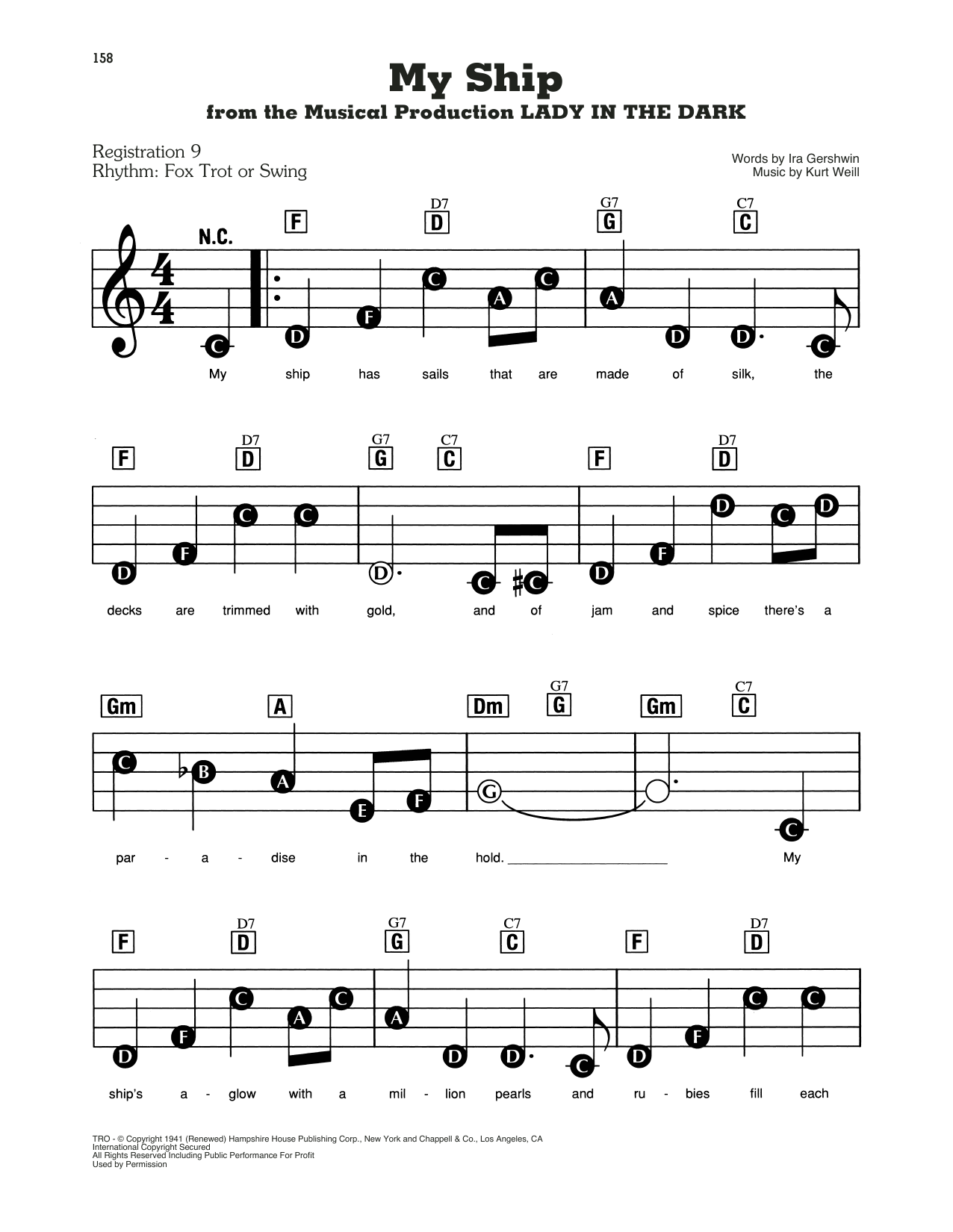
My Ship: E-Z Play Today

As performed by Kurt Weill

Item: 35-DS00449762

Digital Download
$4.99
Description

My Ship: E-Z Play Today isn't in MakeMusic Cloud just yet...but it could be. Let us know you'd like to see it, and you'll help shape what comes next. In the meantime, start a free trial and dive into thousands of interactive titles your students can play along with today.

Sample Audio
No sample audio found.
Sample Video
Additional Details
Publisher: Hal Leonard
Page Count: 3
SKU: 35-DS00449762

More about this title

About the Artist: Kurt Weill

Kurt Weill revolutionized musical theater by fusing modernist composition with popular idiom. His works for stage, written across Europe and America, broke down barriers between "serious" and "entertainment" music, creating a model that composers still follow today. In the classroom, his songs offer students a direct line to understanding how complex harmonies and sophisticated orchestration coexist with memorable, singable melodies.

Why we love this

Weill's harmonic language feels both accessible and compositionally rich, making it ideal for pianists ready to explore jazz and Broadway idioms without oversimplification. The song sits naturally under the hands while rewarding careful attention to voice leading and rhythmic nuance. It's the kind of piece that sounds elegant in a recital but also plays beautifully in a jazz or standards context.

What to expect

Sophisticated yet unguarded, like confiding in someone over drinks at a dimly lit piano bar. The song carries a wistful quality, tinged with both yearning and acceptance, with harmonies that shift unexpectedly to reveal emotional depths beneath a smooth surface.

Who it's for

Pianists comfortable with jazz voicings and those exploring the American Songbook repertoire will find this arrangement approachable yet stimulating. Jazz ensemble members needing solo repertoire and music theory students analyzing twentieth century harmonic practice all benefit from this piece. It works equally well for independent learners and those preparing material for lessons or recitals.

How to get the most out of it

  • Treat the melody as conversational rather than declamatory; Weill wrote for intimate delivery, so resist the urge to over-project
  • Lean into the harmonic turns, particularly chromatic movements that might feel unexpected in a traditional pop song
  • Let rubato breathe naturally across phrases without losing the underlying pulse; this song lives between strict time and expressive freedom
  • Consider the groove of the accompaniment as a character voice equal to the melody, not merely supportive

How to use it

Position this as a bridge between classical recital and jazz program segments, demonstrating how twentieth century theatrical composition influenced popular music. It pairs naturally with other Weill works or alongside standards by Gershwin and Porter in a concert exploring the golden age of American songwriting. Solo pianists can feature it in an evening focused on song arrangements or jazz repertoire.

Skills your students will build

  • Reading and interpreting jazz chord symbols and harmonic extensions
  • Executing rubato while maintaining underlying rhythmic integrity
  • Voicing and balancing melody against accompaniment patterns
  • Recognizing and performing chromatic voice leading typical of Weill's compositional style

You May Also Like