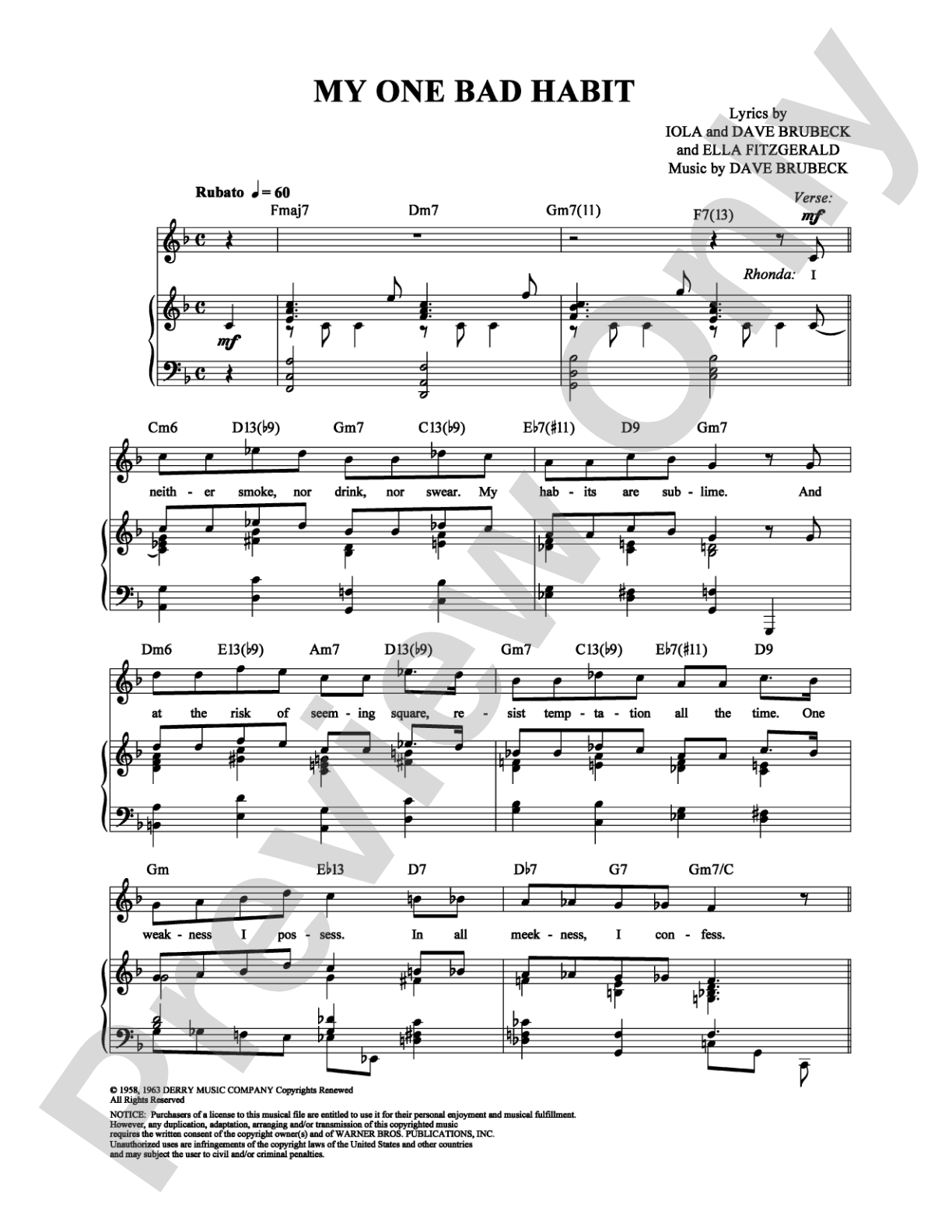
My One Bad Habit: Piano/Vocal/Chords Digital Sheet Music

My One Bad Habit: Piano/Vocal/Chords Digital Sheet Music

Dave Brubeck

Item: 00-PS-0001007

Digital Download
$3.99
Description

My One Bad Habit: Piano/Vocal/Chords Digital Sheet Music isn't in MakeMusic Cloud just yet...but it could be. Let us know you'd like to see it, and you'll help shape what comes next. In the meantime, start a free trial and dive into thousands of interactive titles your students can play along with today.

Sample Audio
No sample audio found.
Sample Video
Additional Details
SKU: 00-PS-0001007

More about this title

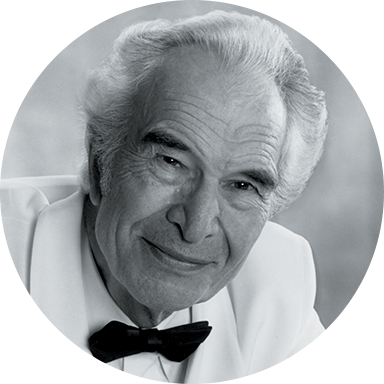
About the Artist: Dave Brubeck

Dave Brubeck

Dave Brubeck stands as one of jazz's most significant voices, equally at home improvising at the piano and crafting meticulously composed works across classical forms. His education under Darius Milhaud at Mills College shaped a distinctive compositional voice that wove jazz language into symphonies, ballets, oratorios, and chamber music. He received a Grammy Lifetime Achievement Award for his jazz contributions, a Presidential Medal of the Arts from President Clinton, and induction into the American Classical Music Hall of Fame in 2003.

Beyond his musical innovations, Brubeck was a trailblazer in breaking racial barriers during the mid-20th century, using his platform and artistry to advance social change. His album "Time Out" became the first jazz recording to sell over a million copies, while works like "Take Five" entered the popular consciousness. Large-scale compositions including the mass "To Hope!" and oratorios such as "The Voice of the Holy Spirit" have been performed by major orchestras and choral ensembles worldwide, cementing his legacy as a composer of serious intent.

Why we love this

Brubeck's jazz compositions translate beautifully to the piano/vocal/chords format, giving singers and pianists direct access to his melodic sophistication and harmonic vocabulary. The chord changes demand real engagement from accompanists, rewarding musicians who understand jazz language while remaining rewarding for those still developing their harmonic fluency.

What to expect

The piece carries Brubeck's trademark blend of conversational ease and harmonic subtlety. A understated emotional quality emerges from the chord changes, moving with the naturalness of a master improviser who has thought deeply about every note.

Who it's for

Vocalists exploring jazz standards and composed repertoire will find genuine artistry in Brubeck's melodic lines. Pianists seeking sophisticated accompaniment parts that engage jazz harmony will value the real musical substance here.

How to get the most out of it

  • Let the chords breathe; resist rushing the harmonic movement, especially in passages with chromatic alterations or extended jazz sonorities that need space to register.
  • Reference recorded versions to internalize Brubeck's phrasing conventions, which often favor rubato and a slight shuffle swing feel rather than mechanical evenness.
  • Balance the vocal line with accompaniment textures that complement rather than compete; in Brubeck's writing, the piano often carries as much melodic interest as the voice.

How to use it

Pair this with other jazz standards in a recital program to demonstrate the breadth of composed jazz repertoire beyond pop-jazz conventions. It works especially well in intimate concert settings where the audience can appreciate both the vocal line and the accompaniment's sophistication.

Skills your students will build

  • Reading and performing jazz chord symbols in a vocal context
  • Comping techniques appropriate to ballad-style accompaniment
  • Interpreting jazz phrasing and time feel in notated music
  • Understanding how melody and harmony interact in composed jazz
  • Navigating chromatic and extended harmony

You May Also Like