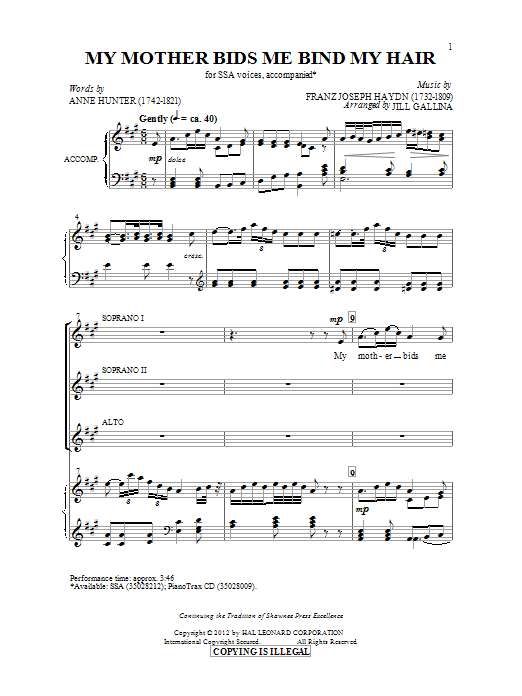
Joseph Haydn (1732-1809) shaped the Classical symphony and string quartet while serving as court composer for the Esterházy family in Hungary. His prolific output across every genre reflects a composer who understood voices intimately; he wrote solo songs, operas, and choral works that sit comfortably in the human range while maintaining harmonic sophistication. For choral directors, Haydn represents a sweet spot: music that sounds elegant and refined without demanding virtuosity, yet rewards careful attention to phrasing and balance.
Haydn's approach to text painting and emotional directness appealed to singers and audiences alike. His melodies breathe naturally, and his harmonies support clarity of voice. This makes his songs ideal vehicles for developing ensemble awareness and vocal line independence.