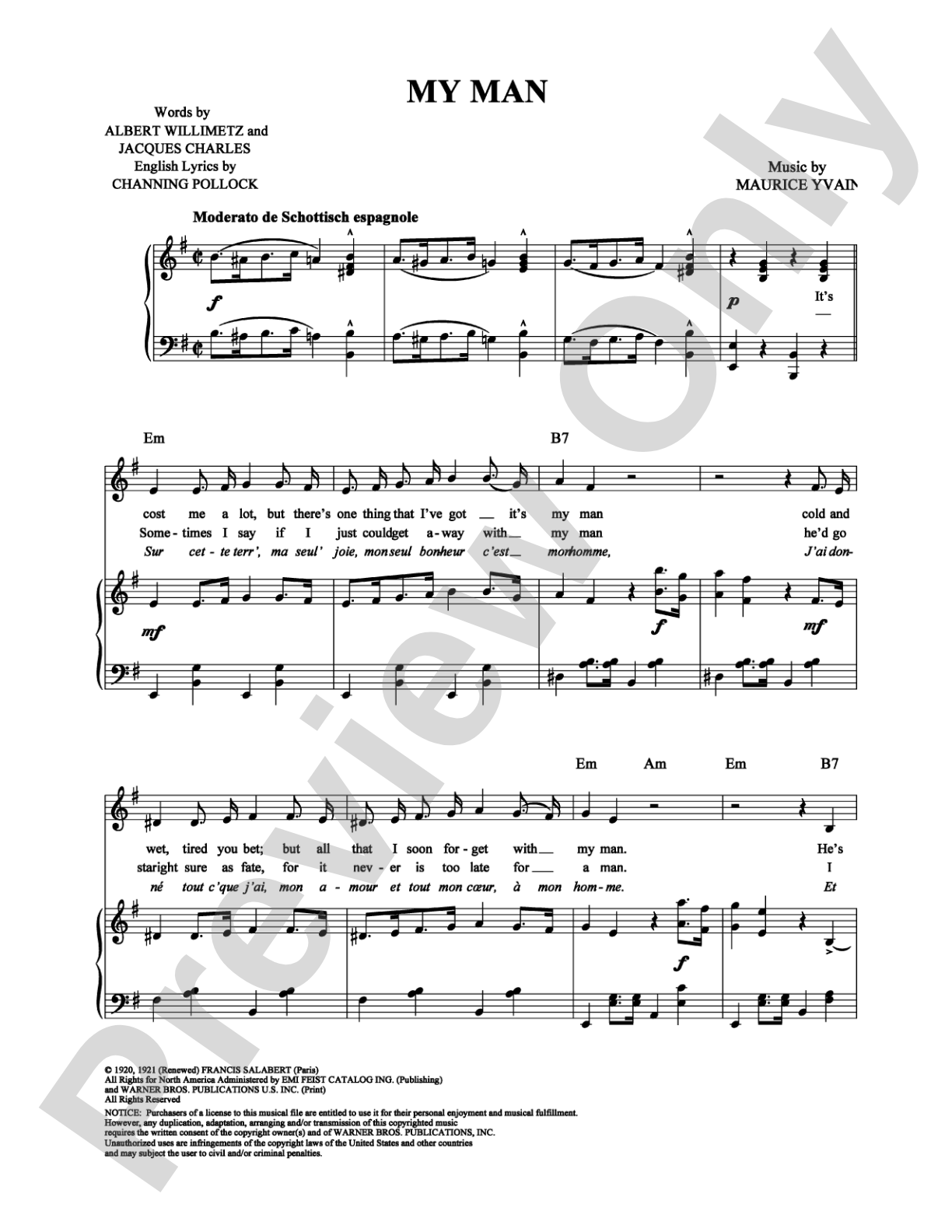
My Man: Piano/Vocal/Chords Digital Sheet Music

My Man: Piano/Vocal/Chords Digital Sheet Music

Glenn Miller, Maurice Yvain

Item: 00-PS-0004348

Digital Download
$3.99
Description

My Man: Piano/Vocal/Chords Digital Sheet Music isn't in MakeMusic Cloud just yet...but it could be. Let us know you'd like to see it, and you'll help shape what comes next. In the meantime, start a free trial and dive into thousands of interactive titles your students can play along with today.

Sample Audio
No sample audio found.
Sample Video
Additional Details
SKU: 00-PS-0004348

More about this title

About the Artist: Glenn Miller

Glenn Miller led one of the most commercially successful big bands of the swing era, defining the sound of the 1940s with his distinctive clarinet-led reed section and smooth orchestral arrangements. Though Miller's own recording career was relatively brief (1937-1942), his influence on American popular music remains substantial, and his compositions and arrangements continue to appeal to musicians across genres and skill levels.

Why we love this

This standard sits perfectly in that goldmine repertoire where accessibility and musical substance overlap. The harmony and melody are sophisticated enough to keep musicians engaged, yet the form and phrasing make it approachable for vocalists and pianists building their jazz and standards vocabulary.

What to expect

A tender, conversational melody that draws the listener close. The harmony unfolds with a classic swing-era warmth, and the form invites both solemnity and subtle swing depending on the interpreter's touch.

Who it's for

Vocalists and pianists exploring the American songbook, from intermediate students building confidence with standards to experienced musicians seeking reliable repertoire for recitals, competitions, or cabaret settings.

How to get the most out of it

  • Shape the vocal line with natural phrasing rather than strict rhythmic precision; the warmth of the melody depends on breathing where the lyrics suggest it, not where the bar line ends.
  • Use the chord symbols as a departure point for accompaniment. Simple voicings in the left hand often serve the vocalist better than dense block chords that fight for space.
  • Balance the vocalist's emotional delivery with the piano's rhythmic foundation. The standard form expects the piano to support, not fill every moment.

How to use it

Pair this with other standards from the same era to create a themed recital set, or place it as a vocal feature in a concert that bridges classical and popular music. It works equally well as an intimate solo piece or as a bridge between more substantial repertoire.

Skills your students will build

  • Reading chord symbols and improvising or voicing piano accompaniment
  • Shaping a lyrical vocal line over harmonic changes
  • Coordinating melody, harmony, and text in a jazz/standards context
  • Interpreting swing-era phrasing and style conventions

You May Also Like