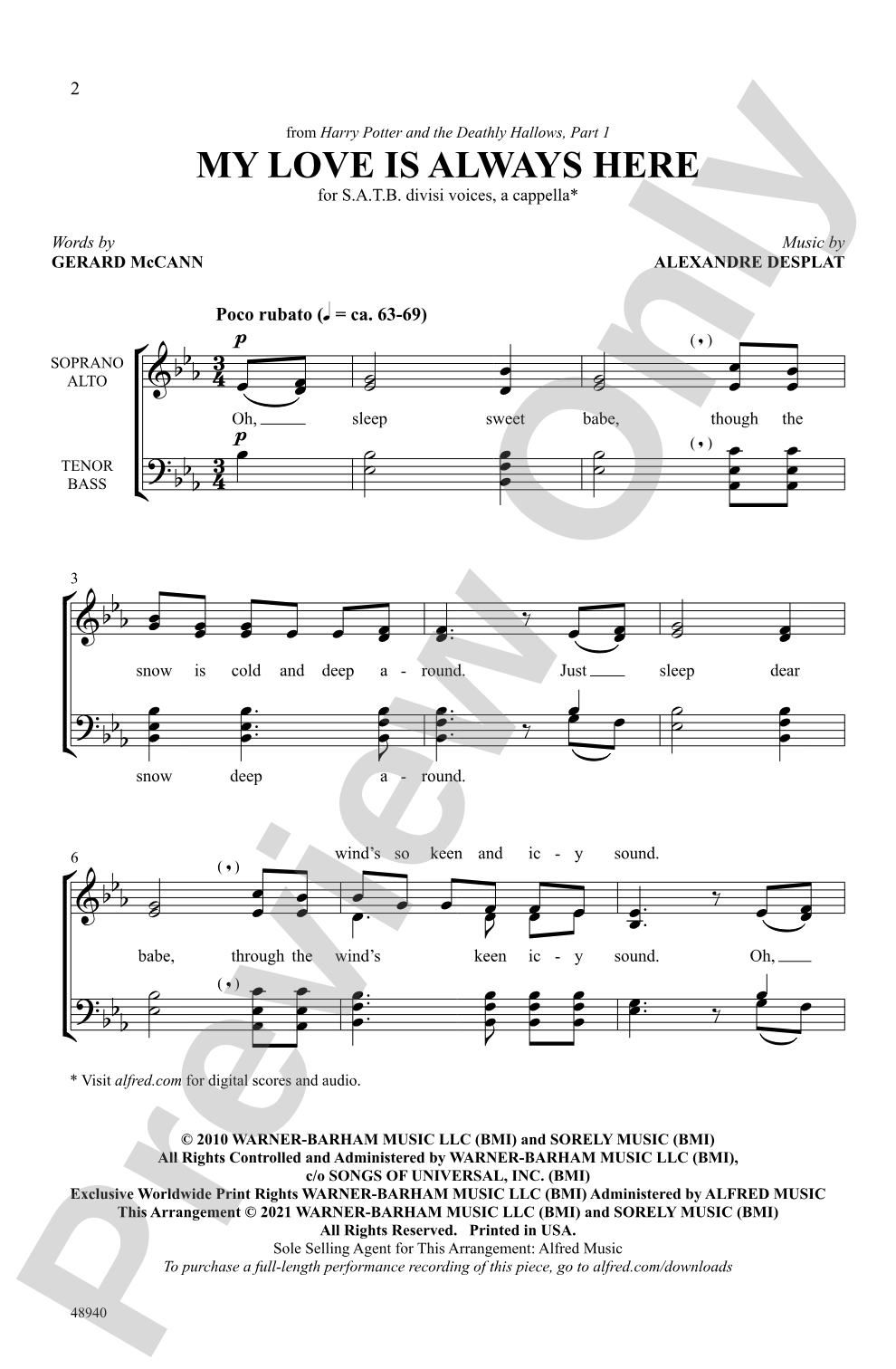
Alexandre Desplat delivers a lovely a cappella lullaby that may be programmed at any time of year. Simple and sincere, traditional choral writing leads singers through a warm progression of sonorities that allow room for expressive word stress. While plenty of soft singing is required, the ABA form grows to a glorious forte at the heart of the piece. This song can be heard in the background of a scene at Godric's Hollow in Harry Potter and the Deathly Hallows, Part 1.
Discover MakeMusic Cloud: thousands of interactive titles your students can play along with today.
Alexandre Desplat is a French composer best known for his film scores, including the Harry Potter and Fantastic Beasts franchises. His work across cinema, theatre, and concert music demonstrates a gift for melody and orchestration that translates beautifully to choral writing. Desplat's compositions for singers often prioritize accessibility and emotional directness, making his pieces engaging for both performers and audiences.
Why we love this
This piece captures something rare: a film score moment that works perfectly as concert repertoire without feeling derivative or gimmicky. The ABA structure builds genuinely (soft opening, powerful center, return to intimacy) rather than relying on textural tricks, and the divisi writing creates rich harmonic color without demanding excessive rehearsal time. Choirs at any level will recognize the melodic warmth immediately.
What to expect
A gentle, luminous lullaby that feels both cinematic and intimate. The warm harmonic progression unfolds without rush, creating moments of stillness and reflection. When the piece builds toward its forte center, it blossoms unexpectedly, then settles back into quiet comfort like a musical embrace.
Who it's for
This octavo suits intermediate to advanced high school choirs and community ensembles comfortable with divisi writing and a cappella singing. The piece works equally well for concert programs and festival competitions, and its moderate difficulty means singers can focus on line and expression rather than navigating complex harmony.
How to get the most out of it
Balance the divisi voices in the inner sections so no single line dominates; the effect depends on blend, not solo clarity.
Shape the forte climax with attention to text stress and vowel purity rather than raw volume; let the harmonic progression carry the intensity.
In the softer passages, resist the temptation to slow down; maintain gentle forward motion to keep the lullaby quality alive.
Use the return to the opening material (A section reprise) as an opportunity to deepen expression without changing tempo or dynamics significantly.
How to use it
Program this as a reflective anchor in a concert program focused on vocal intimacy or a cappella singing. It pairs well alongside other film scores or art song arrangements, and its brevity (four pages) makes it ideal for a transition moment between more energetic repertoire. The piece also shines in festival settings where its sincerity and musicality earn strong feedback.
Skills your students will build
Balancing divisi voices to create unified harmonic color
Sustaining expressive line in a cappella singing without instrumental support
Shaping dynamic arc and emotional arc together in ABA form
Executing soft dynamics with full, resonant tone quality
You May Also Like
Scan to Complete Your Purchase
Use your phone's camera to scan the code below
You'll log in on your phone and the order will be added to your account