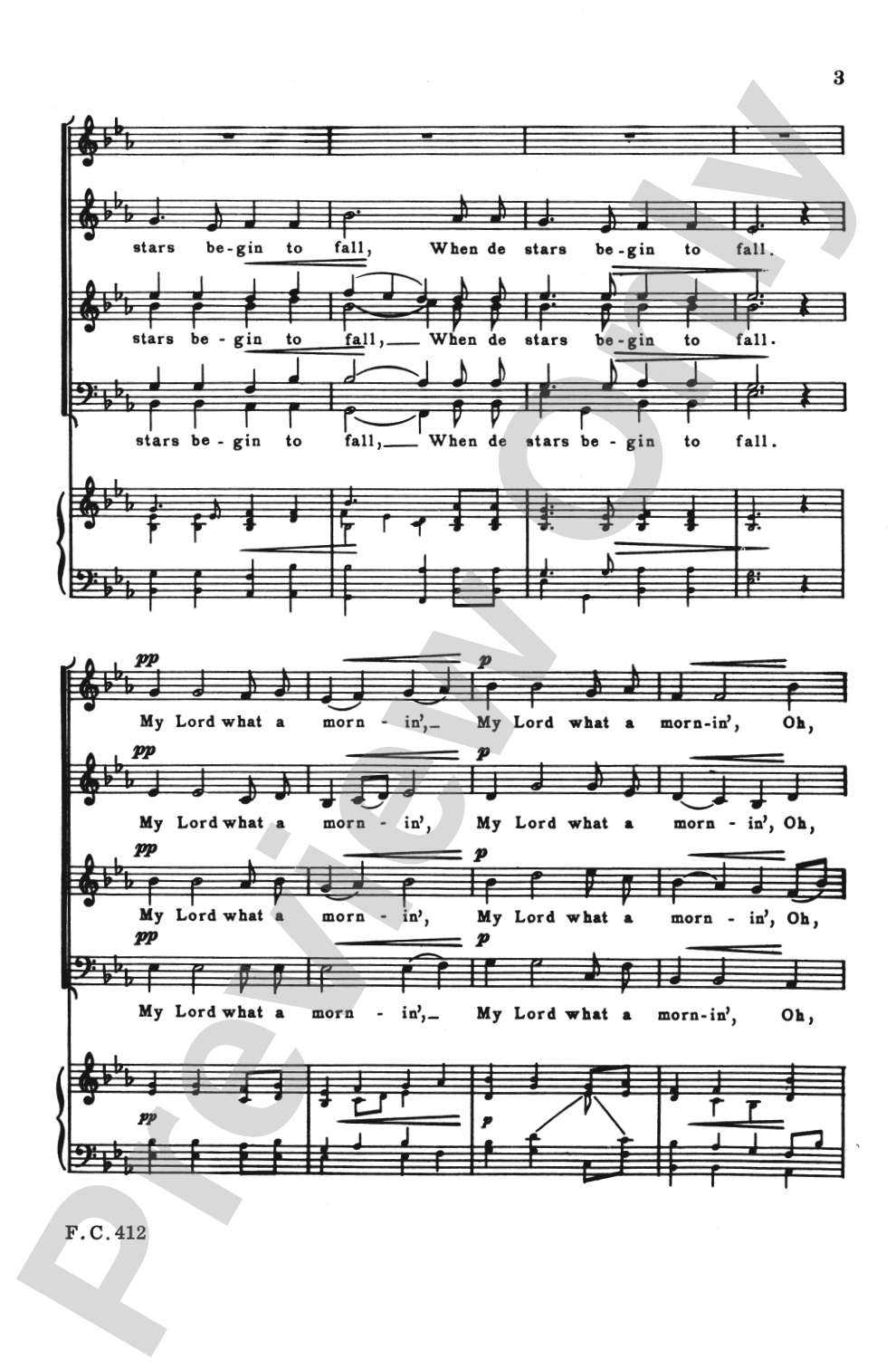
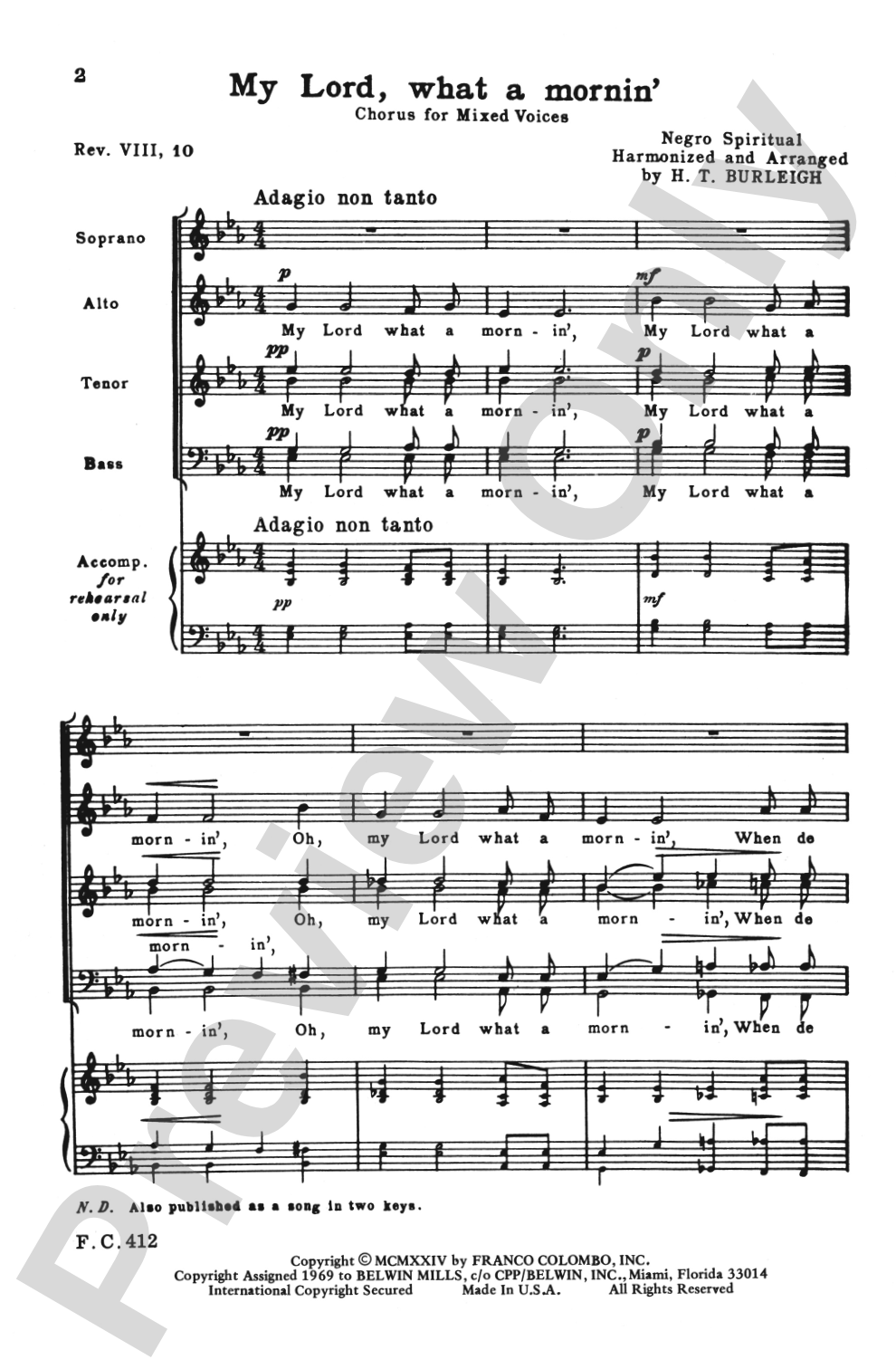
My Lord, What a Mornin' Sheet Music Preview

My Lord, What a Mornin': SATB, a cappella Choral Octavo

Spiritual / arr. Harry T. Burleigh

Level: Moderately Difficult

Item: 00-PO-0002592

Digital Download
$2.05

Minimum order quantity: 20 copies

Description
This spiritual gem comes from the Franco Colombo catalog---Harry Burleigh's moving arrangement of the African-American spiritual. This work requires a sensitive touch from the singers, yet is effective, whether performed by small or large ensembles.

My Lord, What a Mornin': SATB, a cappella Choral Octavo isn't in MakeMusic Cloud just yet...but it could be. Let us know you'd like to see it, and you'll help shape what comes next. In the meantime, start a free trial and dive into thousands of interactive titles your students can play along with today.

Sample Audio
0:00
0:00
Sample Video
Additional Details
Series: Franco Colombo Choral Series
Publisher: Alfred Music
Page Count: 8
SKU: 00-PO-0002592

More about this title

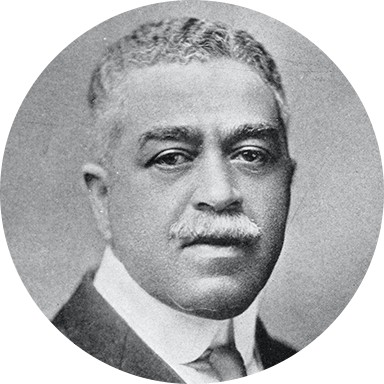
About the Arranger: Harry T. Burleigh

Harry T. Burleigh

Harry Thacker Burleigh (1866–1949) was a singer and composer whose scholarly work with African-American spirituals shaped American choral music. A student of Antonín Dvořák at the National Conservatory of Music in New York, Burleigh introduced the master composer to the spiritual tradition through his own singing, leaving a lasting mark on Dvořák's understanding of American musical culture.

Burleigh spent over fifty years as a soloist in prominent New York churches, including St. George's Church and Temple Emanuel, while composing more than 200 songs and creating arrangements that remain cornerstones of the choral repertoire. His spirituals are prized for their respect toward the source material and their accessibility across ensemble sizes and skill levels.

Why we love this

Burleigh's arrangement captures the profound emotional weight of this spiritual without requiring elaborate instrumental accompaniment or technical pyrotechnics. The piece sits comfortably for mixed voices at this level while maintaining enough musical sophistication to feel substantial in any concert context, making it equally valuable for festival competition or community performance.

What to expect

Morning light breaking through darkness, tinged with both hope and the weight of history. The voices move together like a collective witness, unadorned and honest, finding strength in unison and warmth in the gentle harmonies that bloom between the lines.

Who it's for

This arrangement serves choirs at the intermediate-advanced level who are ready to explore the spiritual tradition with musical maturity. It works equally well for competitive festival choirs seeking an accessible yet substantive selection and for community or church ensembles performing without accompaniment.

How to get the most out of it

  • Shape each phrase with long, connected lines rather than breaking on every rest; the spiritual's narrative strength depends on breathing as a unified ensemble.
  • Balance the inner voices carefully in unison and two-part passages so that the harmonic movement remains transparent without overshadowing the melody.
  • Allow rubato in the final cadences to reflect the contemplative, reverent character of the text.
  • Approach dynamics as gradual waves of color rather than sudden shifts, honoring the intimate, spiritual nature of the piece.

How to use it

Program this early in a concert to establish a reflective tone, or use it as a spiritual anchor in a set that spans multiple genres and traditions. Its modest page count and unaccompanied format make it ideal as a quick inclusion for festival showcases or as a closing piece for services that call for contemplative music.

Skills your students will build

  • Singing SATB harmony with rhythmic precision while maintaining lyrical phrasing
  • Balancing blend and transparency when multiple voice parts move in parallel motion
  • Interpreting spiritual texts with sensitivity and cultural respect
  • Sustaining musical focus in extended a cappella passages without instrumental reference
  • Shaping dynamics and tempo flexibly within a small ensemble context

You May Also Like