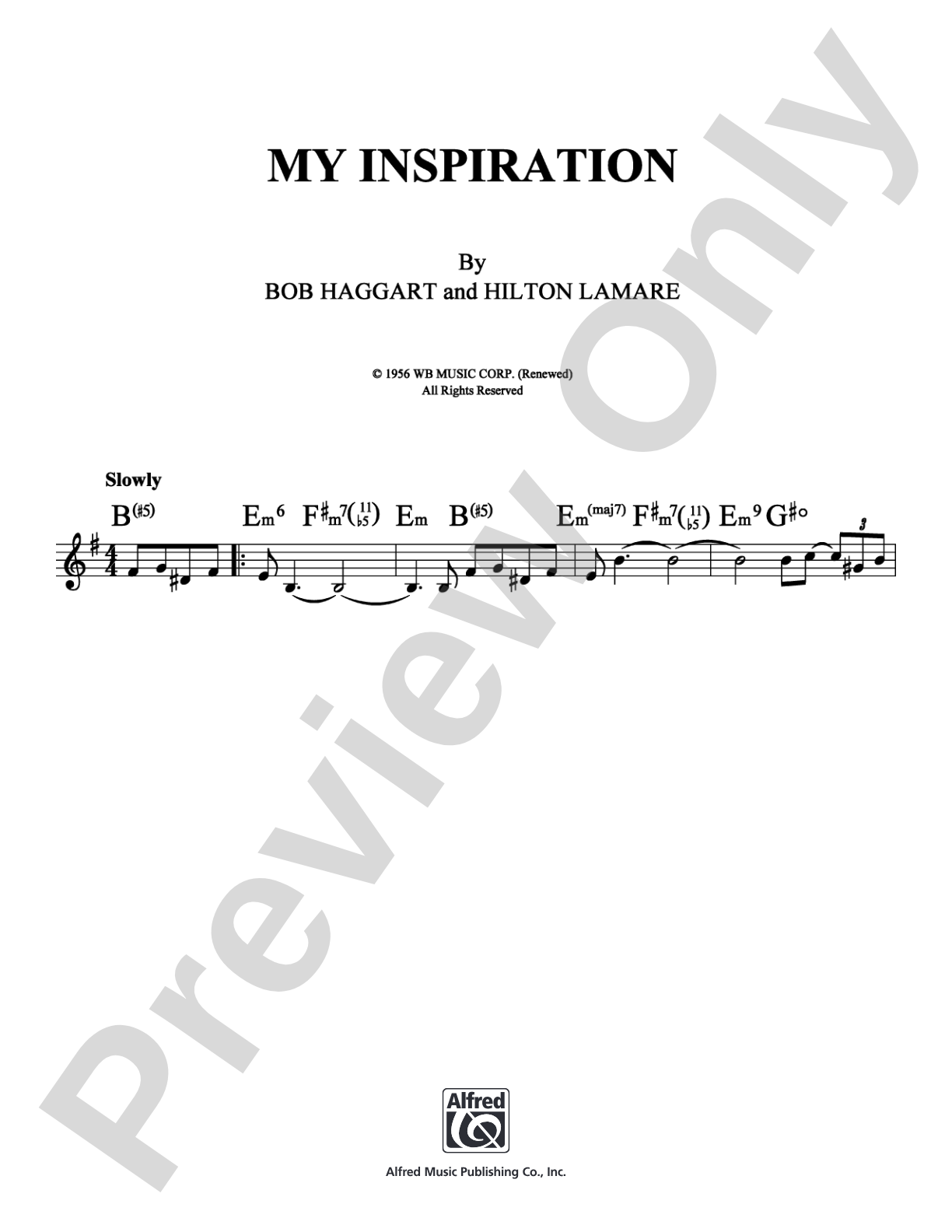
My Inspiration: Lead Sheet Digital Sheet Music

My Inspiration: Lead Sheet Digital Sheet Music

Bob Haggart, Hilton Lamare

Item: 00-PS-0006956

Digital Download
$1.99
Description

My Inspiration: Lead Sheet Digital Sheet Music isn't in MakeMusic Cloud just yet...but it could be. Let us know you'd like to see it, and you'll help shape what comes next. In the meantime, start a free trial and dive into thousands of interactive titles your students can play along with today.

Sample Audio
No sample audio found.
Sample Video
Additional Details
SKU: 00-PS-0006956

More about this title

About the Artist: Bob Haggart

Bob Haggart (1914-1998) was a bassist and composer whose career spanned the swing era through the 1990s. He led the Boston Pops Swing Orchestra and became known for his sophisticated compositions and arrangements that bridged jazz and classical traditions.

Why we love this

Lead sheets capture the essence of a standard without prescribing every harmonic detail, making them ideal for jazz ensembles that value both authenticity and interpretive freedom. Haggart's melody sits naturally under the hand and invites the kind of creative reharmonization that separates community jazz bands from rote readings.

What to expect

Lyrical and graceful, with the kind of straightforward elegance that lets each player's musicianship show. The melody unfolds with natural phrasing that invites legato playing and thoughtful dynamics.

Who it's for

Jazz ensemble directors and musicians developing their skills in reading lead sheets, interpreting standards, and collaborative reharmonization. Small combos, big bands, and jazz classes all benefit from learning pieces that demand attention to melody, harmony, and ensemble balance.

How to get the most out of it

  • Treat the melody as a point of departure, not a ceiling. Your rhythm section should lock into the core changes while front-line instruments explore variations on phrasing and articulation.
  • Balance clarity with swing. The lead line needs to cut through the ensemble, but the accompaniment should breathe with the rhythm section's feel rather than rushing or dragging.
  • Pay attention to the implied harmonic movement. Even a simple-looking melody often sits on chord extensions or color tones that will guide your improvisation and comping choices.

How to use it

Feature this in a jazz concert that showcases your ensemble's improvisational maturity, or use it as a teaching piece early in the semester to establish shared vocabulary around comping, voicing, and soloists' approaches to standards.

Skills your students will build

  • Reading and interpreting lead sheets in a jazz context
  • Harmonic analysis and reharmonization
  • Balancing written melody with ensemble accompaniment
  • Developing conversational phrasing and swing feel

You May Also Like