
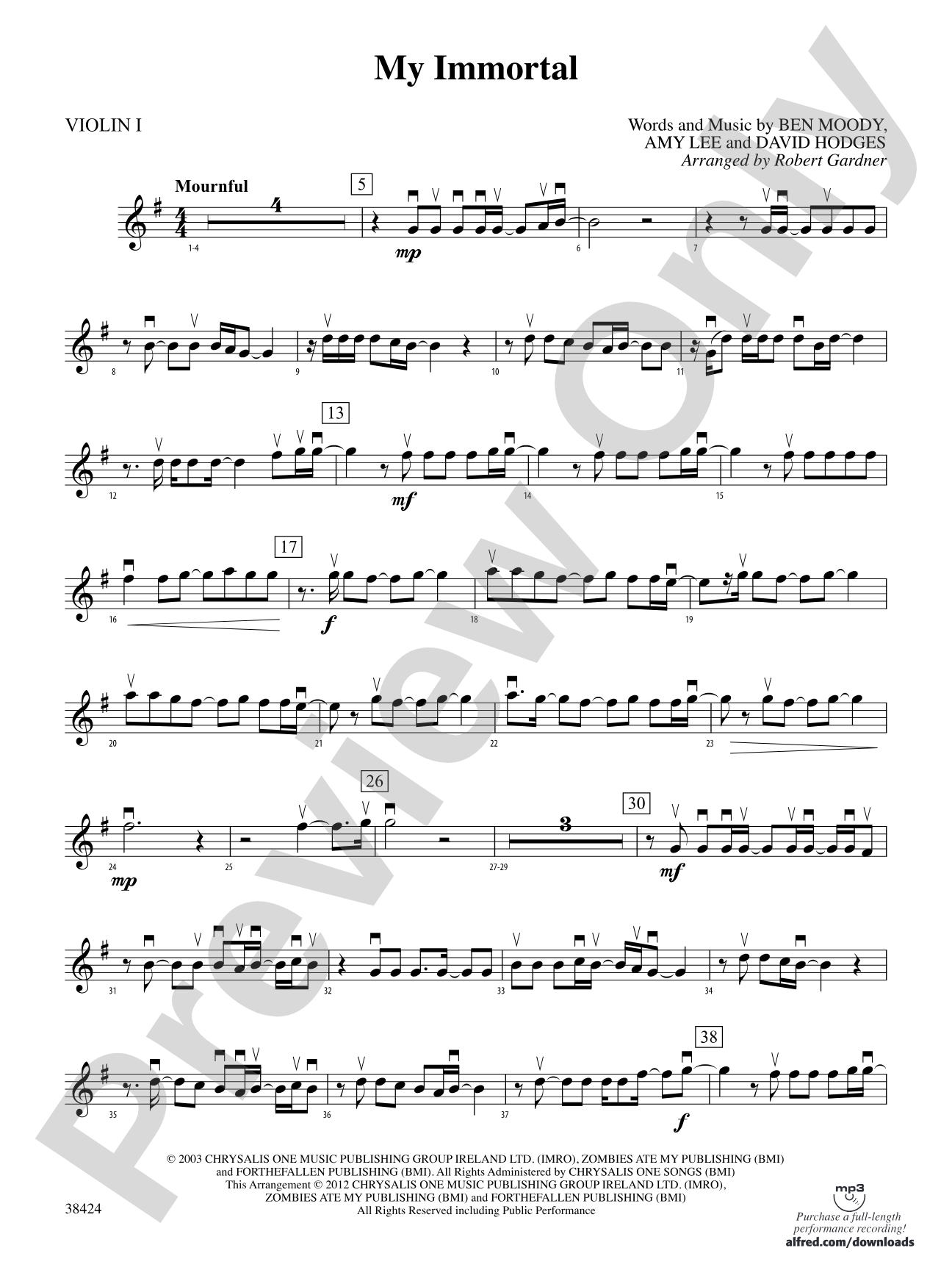

My Immortal: 1st Violin
As performed by Evanescence
Words and music by Ben Moody, Amy Lee, and David Hodges / arr. Robert Gardner
Grade: 3
Item: 00-PC-0015491_VN1
$5.99
Pickup currently not available
Description
This Grammy-nominated single performed by the rock band Evanescence portrays deep emotion and a great rock style---perfect to work on musicianship. Though extremely accessible, with all parts in first position and a diatonic tonality in G major, this piece will challenge your group with its independent voicing and syncopated rhythms in the melodic lines. This piece will add variety to any concert and fit nicely in a festival program, especially one that utilizes several different genres.


Don't just read it, hear it, play along with it, and watch your students grow with it. In MakeMusic Cloud, My Immortal: 1st Violin comes alive with professional accompaniment, adjustable tempo, and built-in practice tools that turn solo practice into real progress.
Open in the Player
Jump straight in and assign it today.
Start Your Free Trial
Open this title and explore the full library in minutes.
Sample Audio
1
Audio File
--:--
0:00
0:00
Sample Video
No sample videos found.
Additional Details
Series:
Pop Intermediate String Orchestra
Publisher:
Alfred Music
Page Count:
72
SKU:
00-PC-0015491_VN1
More about this title
About the Composer: Ben Moody
Ben Moody co-founded Evanescence in 1995 and served as the band's guitarist, keyboardist, and primary songwriter throughout their most commercially successful period. His compositions for the band blended classical instrumentation with heavy rock elements, creating a signature sound that earned Grammy nominations and widespread recognition in the early 2000s. Moody's work demonstrates sophisticated harmonic writing and emotional depth, qualities that translate effectively to educational arrangements.
Why we love this
Robert Gardner's arrangement captures the haunting atmosphere and emotional weight of the original without sacrificing accessibility for young string players. The independent voicing creates genuine parts work while the syncopated rhythms keep the ensemble engaged and prevent this from feeling like a "safe" crossover piece. Programming this alongside traditional repertoire signals to your students and audience that artistry exists across all genres.
What to expect
The piece unfolds with a quiet, introspective quality that gradually builds emotional intensity without sacrificing its accessible harmonic foundation. Each section contributes to a layered texture that feels both modern and orchestral, creating a contemplative soundscape that engages the listener from the opening measures.
Who it's for
String orchestras at the Grade 3 level seeking repertoire that authentically represents contemporary music while building musicianship through thoughtful part writing. This arrangement works for programs that value genre diversity and want to connect with students through music they recognize and admire.
How to get the most out of it
- Shape the melodic lines with attention to the syncopated rhythms rather than fighting them; let the natural emphasis in the syncopation drive the phrasing forward.
- Balance the independent voicing carefully so that each part registers clearly without one section overpowering the others, especially when sustained notes accompany the melody.
- Lean into the emotional content of the arrangement; this piece rewards string players who think about vocal production and the weight behind each note rather than technical precision alone.
- Establish the G major tonality clearly in early rehearsals so that the first-position fingerings feel purposeful rather than restrictive.
How to use it
Include this as a centerpiece in a concert that balances classical and contemporary works, placing it alongside pieces that complement its emotional arc rather than immediately before or after unrelated material. The arrangement's concert-hall sophistication makes it suitable for festival programming where genre variety is valued, and it provides a natural bridge between traditional string repertoire and the musical worlds your students actually inhabit.
Skills your students will build
- Reading and executing syncopated rhythms within diatonic harmonic frameworks
- Maintaining independent melodic lines while supporting ensemble balance
- Shaping sustained tones with dynamic control and expressive intent
- Collaborating on part writing that requires careful listening and adjustment across multiple voice parts