
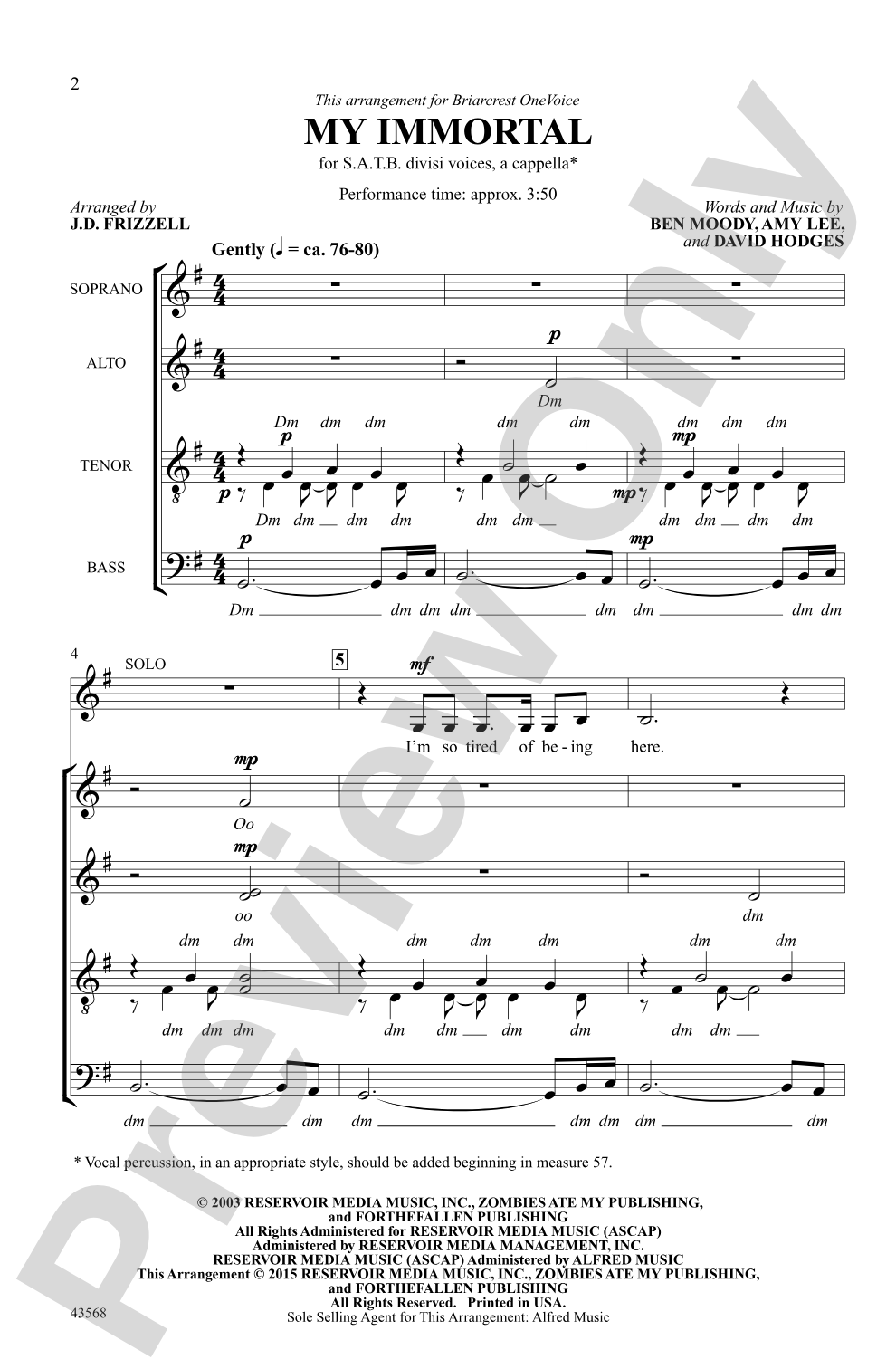
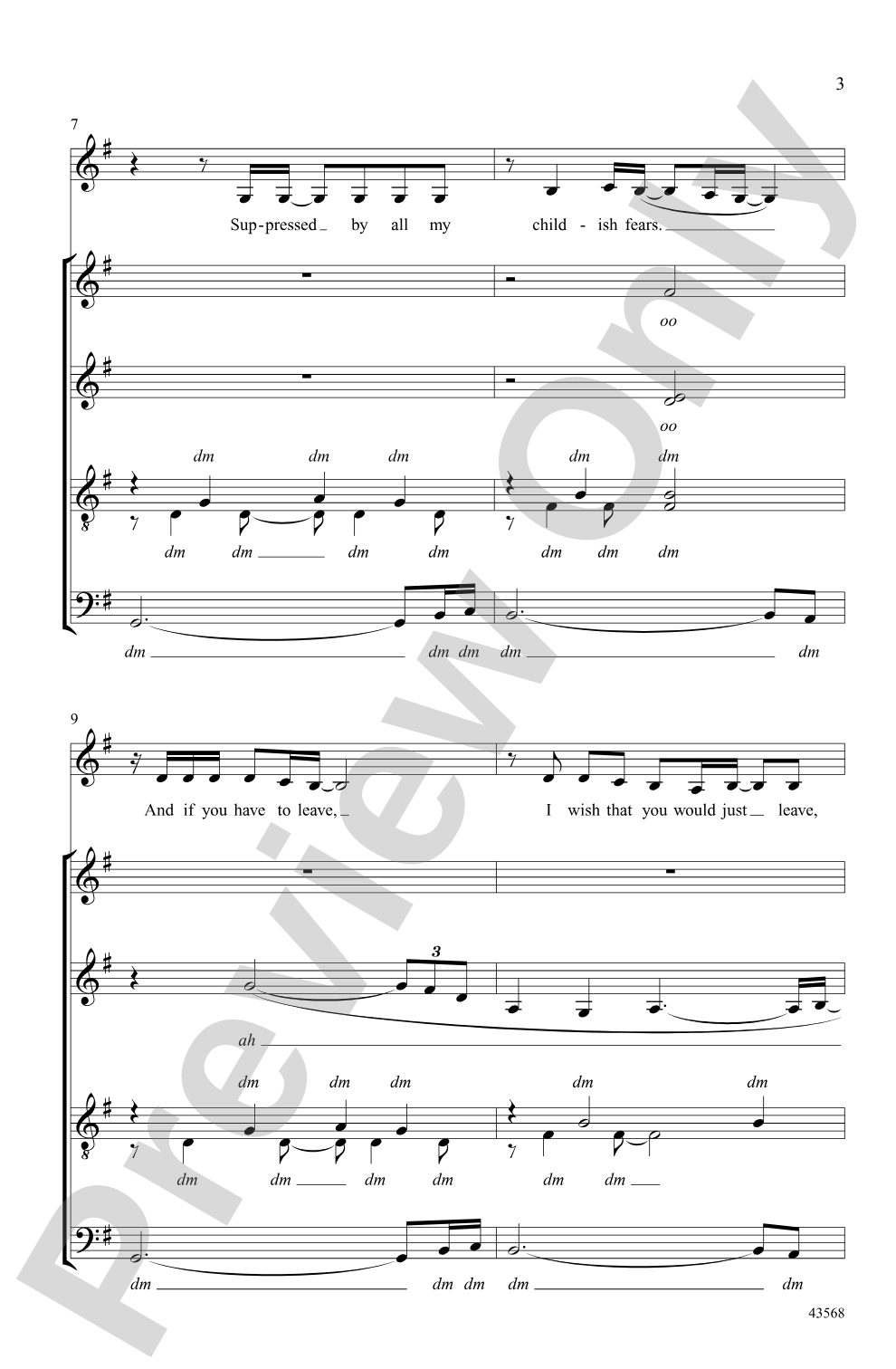
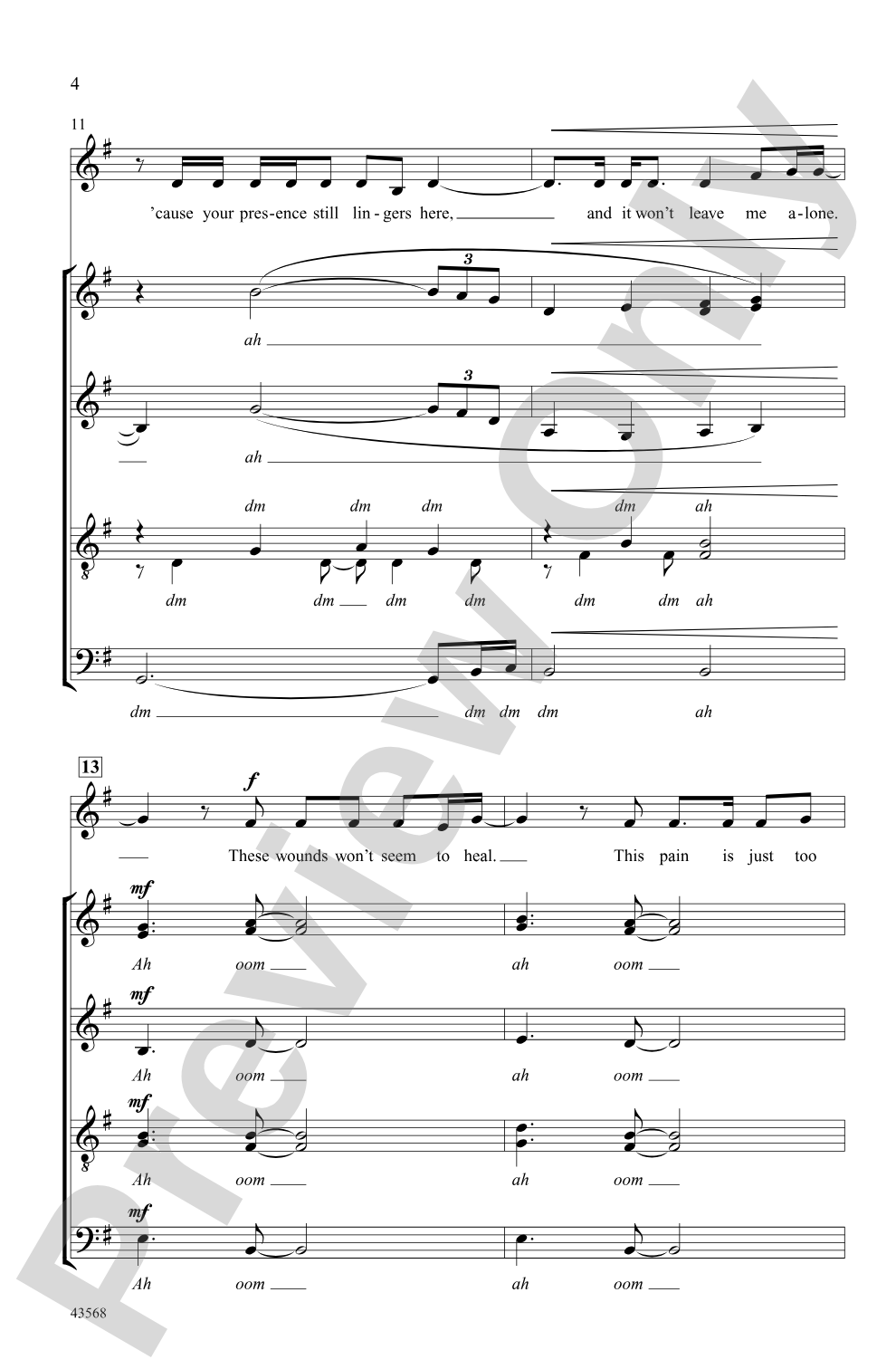

My Immortal: SATB divisi, a cappella Choral Octavo
Recorded by Evanescence
Words and music by Ben Moody, Amy Lee, and David Hodges / arr. J. D. Frizzell
Item: 00-PO-0003443
$2.10
Minimum order quantity: 20 copies
Pickup currently not available
Related Items
My Immortal: SATB divisi, a cappella Choral Octavo |
$2.10
|
View |
Description
American rock band Evanescence had a top ten hit with this rock ballad from their debut album Fallen. Features an alto solo. Recording provided by Briarcrest OneVoice, directed by J. D. Frizzell.


My Immortal: SATB divisi, a cappella Choral Octavo isn't in MakeMusic Cloud just yet...but it could be. Let us know you'd like to see it, and you'll help shape what comes next. In the meantime, start a free trial and dive into thousands of interactive titles your students can play along with today.
Request This Title
Tell us you want it.
Start Your Free Trial
Explore everything that's ready to play right now.
Sample Audio
1
Audio File
--:--
0:00
0:00
Sample Video
No sample videos found.
Additional Details
Series:
Alfred Pop Choral Series
Publisher:
Alfred Music
Page Count:
16
SKU:
00-PO-0003443
More about this title
About the Composer: Ben Moody
Ben Moody co-founded Evanescence in 1995 and served as the band's lead guitarist and primary songwriter during their breakthrough years. His compositional voice shaped the gothic rock and metal-influenced sound that defined Fallen, the 2003 debut album that introduced millions of listeners to Evanescence's cinematic approach to song structure and emotional intensity. Though he departed the band in 2003, Moody's work on flagship tracks like "My Immortal" remains central to the band's legacy in popular music.
Why we love this
This arrangement brings one of the 2000s' most recognizable rock ballads into the choral repertoire without sacrificing the song's emotional weight or contemporary appeal. The divisi SATB writing with an alto solo feature creates a natural focal point while allowing singers to experience the vulnerability that makes the original recording so compelling. Programming this gives your choir a modern anchor that resonates with students and audiences alike.
What to expect
The arrangement captures the song's haunting, introspective quality through sparse harmonic choices and the contrast between the solo voice and the ensemble. There's a sense of crystalline sadness, with moments where the harmony swells into fuller texture before pulling back into vulnerability. Singing this demands emotional presence and a willingness to sit with restraint rather than push for power.
Who it's for
This octavo works best for choirs with solid blend and intonation skills who are ready for contemporary repertoire. It suits programs seeking music that speaks to younger singers' own cultural references while building musicianship through thoughtful arranging. Ensembles performing pop choral literature or programming modern secular music for concert or festival will find this a natural fit.
How to get the most out of it
- Shape the alto solo with vocal storytelling rather than technical display; this song lives in restraint and intimacy, not virtuosity.
- Use the provided recording as a listening reference for phrasing and emotional arc, then encourage singers to find their own authentic delivery within that framework.
- Balance the divisi sections so supporting voices blend seamlessly without disappearing; the harmony should feel like a vocal bed, not a distraction.
- Pay attention to dynamics across all four measures of silence or sparse texture; these moments are as important as the sung ones.
How to use it
Program this as a standalone contemporary piece on a concert mixing classical and modern work, or build a thematic set around songs of loss and reflection. It works particularly well in spring concerts or festivals celebrating choral pop literature, where it will anchor the programming with a song your audience already knows. The recording allows for flexible performance options if you need accompaniment support or want to layer the octavo over the original track.
Skills your students will build
- Singing a cappella with precise intonation across divisi SATB parts
- Balancing solo voice against ensemble background
- Interpreting contemporary song through classical choral technique
- Sustaining emotional narrative across a ballad-length piece
- Blend and balance in divisi voicing