My Heart Stood Still Sheet Music Preview

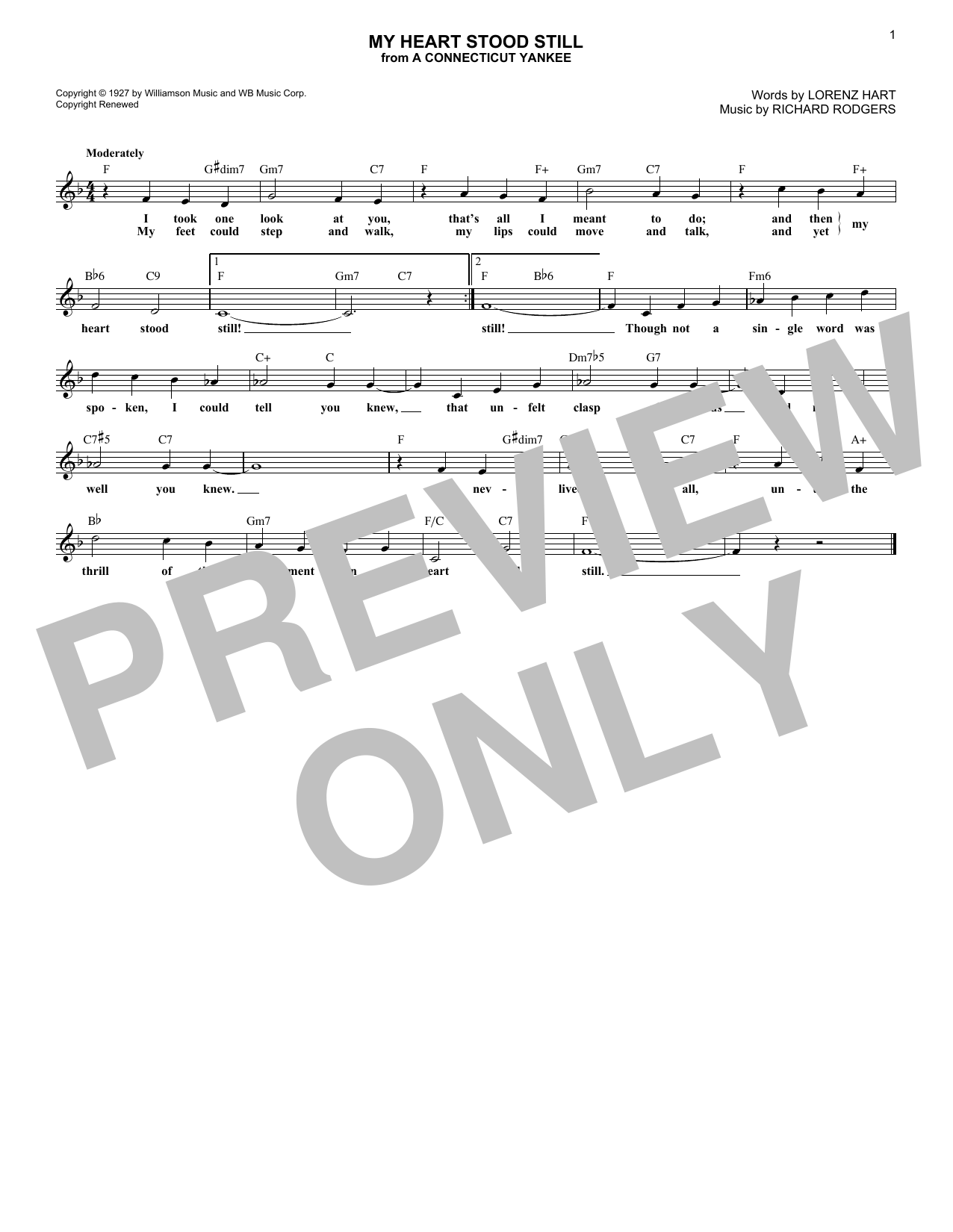
My Heart Stood Still: Lead Sheet / Fake Book

As performed by Rodgers & Hart

Item: 35-DS00410583

Digital Download
$3.99
Description

My Heart Stood Still: Lead Sheet / Fake Book isn't in MakeMusic Cloud just yet...but it could be. Let us know you'd like to see it, and you'll help shape what comes next. In the meantime, start a free trial and dive into thousands of interactive titles your students can play along with today.

Sample Audio
No sample audio found.
Sample Video
Additional Details
Publisher: Hal Leonard
Page Count: 1
SKU: 35-DS00410583

More about this title

About the Artist: Rodgers & Hart

Richard Rodgers and Lorenz Hart formed one of Broadway's most influential songwriting partnerships, creating standards that defined the Golden Age of musical theatre. Their work from the 1920s through the 1940s established the template for American popular song: sophisticated harmonies, witty lyrics, and melodies that lodge themselves in memory after a single hearing. Beyond their theatrical success, their catalog has become essential material for jazz musicians, vocalists, and music students exploring songwriting craft.

Why we love this

This is a lead sheet, which means it's built for interpretation. The melody and chord changes give singers and pianists room to inhabit the song rather than reproduce it. Rodgers' harmonic language here feels both accessible and sophisticated; there are plenty of teaching moments for students learning to navigate jazz changes without the composition becoming a technical obstacle.

What to expect

The title itself captures the emotional core. This is a song about sudden, overwhelming recognition of love; the music delivers tenderness without sentimentality. The melody sits high and open, creating vulnerability, while Rodgers anchors it with harmonies that feel both warm and slightly sophisticated. It's the kind of song where a single sustained note can carry enormous weight.

Who it's for

Vocalists building a standards repertoire will find this essential. Pianists and keyboardists using lead sheets to develop comping skills and harmonic understanding benefit from Rodgers' clear, intentional changes. This works equally well for jazz ensembles, solo performers, and voice students exploring American songbook literature.

How to get the most out of it

  • Pay attention to the lyric phrasing even if you're reading only the melody line. The words shape the natural breath points and rubato in ways that pure music notation misses.
  • Approach the comping with sensitivity to the vocalist's pacing. This song rewards space and doesn't demand constant harmonic activity.
  • Experiment with how straight or behind-the-beat you sit rhythmically. Small timing adjustments change the song's intimacy considerably.

How to use it

Pair this with other standards from the same era to create a concert segment that demonstrates the craft of American popular song. It also serves beautifully as a solo feature for your strongest vocalist, or as a warm pedagogical starting point for jazz combo students learning to interpret lead sheets without getting caught up in overly complex harmony.

Skills your students will build

  • Reading and interpreting lead sheet notation
  • Voice leading through jazz changes
  • Phrasing melody in relation to lyrical intent
  • Comping and harmonic accompaniment at the keyboard
  • Understanding Tin Pan Alley and early Broadway harmonic language

You May Also Like