My Heart Is In the East Sheet Music Preview

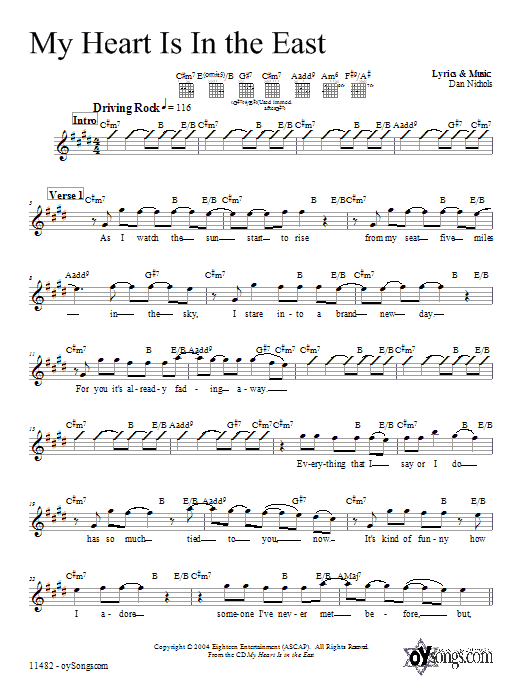
My Heart Is In the East: Lead Sheet / Fake Book

As performed by Dan Nichols

Item: 35-DS00090489

Digital Download
$3.99
Description

My Heart Is In the East: Lead Sheet / Fake Book isn't in MakeMusic Cloud just yet...but it could be. Let us know you'd like to see it, and you'll help shape what comes next. In the meantime, start a free trial and dive into thousands of interactive titles your students can play along with today.

Sample Audio
No sample audio found.
Sample Video
Additional Details
Publisher: Hal Leonard
Page Count: 4
SKU: 35-DS00090489

More about this title

About the Artist: Dan Nichols

Dan Nichols is a composer and arranger known for his work in Jewish liturgical and folk music. His arrangements bring traditional melodies into contemporary settings, bridging classical technique with accessible performance practices for ensembles and soloists alike.

Why we love this

This lead sheet captures a piece of emotional weight and cultural resonance without demanding virtuosic technique. The four-page format gives singers and pianists enough harmonic specificity to arrange freely while staying grounded in the melody's lyrical arc.

What to expect

Contemplative and deeply rooted. The melody unfolds with longing and reflection, supported by harmonic movement that feels both traditional and emotionally transparent. This is music that invites listening; it rewards performers who linger over its phrases.

Who it's for

Singers seeking meaningful repertoire with folk roots, pianists building a library of lead sheets for collaborative work, and educators looking for pieces that carry cultural and spiritual substance. The fake book format makes it accessible to musicians reading at a variety of levels.

How to get the most out of it

  • Shape the vocal line with the text's emotional intention rather than mechanical phrasing; let the words guide your breath points and dynamic contours.
  • Anchor the piano voicings to your ensemble's harmonic palette; sparse rootless voicings often sing more clearly than dense block chords.
  • Establish the tonal center early and listen carefully to the relationship between melody and harmony to avoid pitch drift during performance.

How to use it

Pair this with other Jewish folk traditions or use it in a program exploring diaspora narratives and cultural memory. It works equally well as a solo recital piece or as part of a chamber collaboration, and its intimate scope makes it suitable for both concert and service settings.

Skills your students will build

  • Reading and interpreting lead sheet notation
  • Balancing melodic singing with harmonic accompaniment
  • Improvising and voicing chord changes
  • Maintaining tonal center in modal or traditional melodic contexts

You May Also Like