My Girl (arr. Craig McLeish) Sheet Music Preview

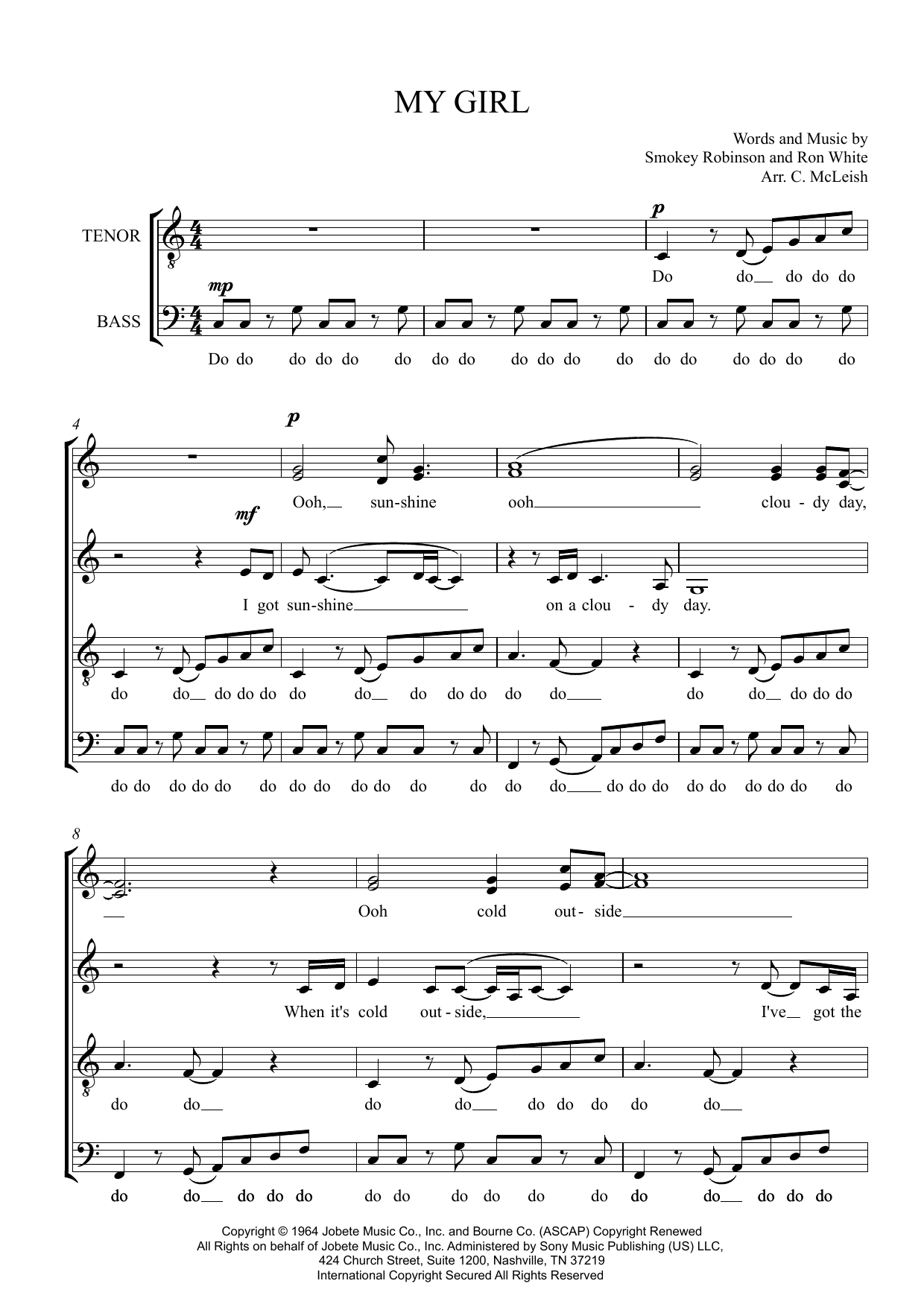
My Girl (arr. Craig McLeish): SSATB Choral Octavo

As performed by Smokey Robinson and Ronald White / Arranged by Craig McLeish

Item: 35-DS01533656

Digital Download
$1.99
Description

My Girl (arr. Craig McLeish): SSATB Choral Octavo isn't in MakeMusic Cloud just yet...but it could be. Let us know you'd like to see it, and you'll help shape what comes next. In the meantime, start a free trial and dive into thousands of interactive titles your students can play along with today.

Sample Audio
No sample audio found.
Sample Video
Additional Details
Publisher: Hal Leonard
Page Count: 7
SKU: 35-DS01533656

More about this title

About the Artist: Smokey Robinson and Ronald White

Smokey Robinson and Ronald White wrote "My Girl" in 1960 as part of The Miracles, one of Motown's most influential vocal groups. Robinson's gift for crafting memorable melodies and emotionally direct lyrics made him a cornerstone of the label's sound, and this song became one of his signature compositions. The track showcases the warmth and accessibility that defined early Motown productions, making it a perfect entry point for exploring how popular music can carry genuine emotional weight.

Robinson's songwriting emphasizes clarity and singability, qualities that transfer beautifully to choral arrangements. His work has influenced generations of musicians across genres, from pop to R&B to rock, and remains a staple in music education because it demonstrates how simplicity and sincerity create lasting impact.

Why we love this

Craig McLeish's arrangement captures the sweetness and directness of the original while giving each voice part something genuinely musical to sing. The familiar melody and straightforward harmonic language mean your singers can focus on blend and communication rather than technical survival, which makes this perfect for building ensemble confidence and musicality in mixed or all-female choirs.

What to expect

Warmth and affection permeate every measure. The arrangement invites singers to experience what makes the original so enduring: the simple, profound act of expressing devotion without pretense. Singing this piece should feel like sharing something genuine rather than performing a technical exercise.

Who it's for

Choirs looking for repertoire that's accessible without being shallow, and directors who want to teach musicality through material their students genuinely love. This works equally well for high school mixed choirs, adult community choirs, and college groups needing a crowd-pleasing yet musically legitimate pop arrangement.

How to get the most out of it

  • Balance the lead line with supportive harmonies so the melody remains the focal point without anyone straining. This isn't a piece that needs dramatic dynamics; let the lyrical content do the emotional work.
  • Lock in the rhythmic feel during sectionals by grounding the piece in its groove rather than treating it as art song. A light swing or slight emphasis on the backbeat helps capture that Motown character.
  • Shape phrases around lyrical meaning rather than resting at barlines. The song's power comes from sustained emotional line, so encourage singers to breathe where the text breathes, not necessarily where the notation suggests.
  • Keep vowel sounds warm and open, especially on sustained notes. This repertoire calls for a resonant, approachable tone that never sounds forced or overly formal.

How to use it

Anchor a pop music showcase or include it in a concert exploring songwriting across genres. It also serves as an excellent bridge between more classical programming and contemporary work, helping audiences understand that good music transcends era or genre. Consider pairing it with other Motown-era arrangements to create a coherent thematic set.

Skills your students will build

  • Balancing melody with harmonic support in pop-influenced textures
  • Sustaining legit blend across four voice parts with varied ranges
  • Rhythmic precision in groove-based settings
  • Singing with emotional directness without overcomplification
  • Interpreting popular music with musical integrity

You May Also Like