
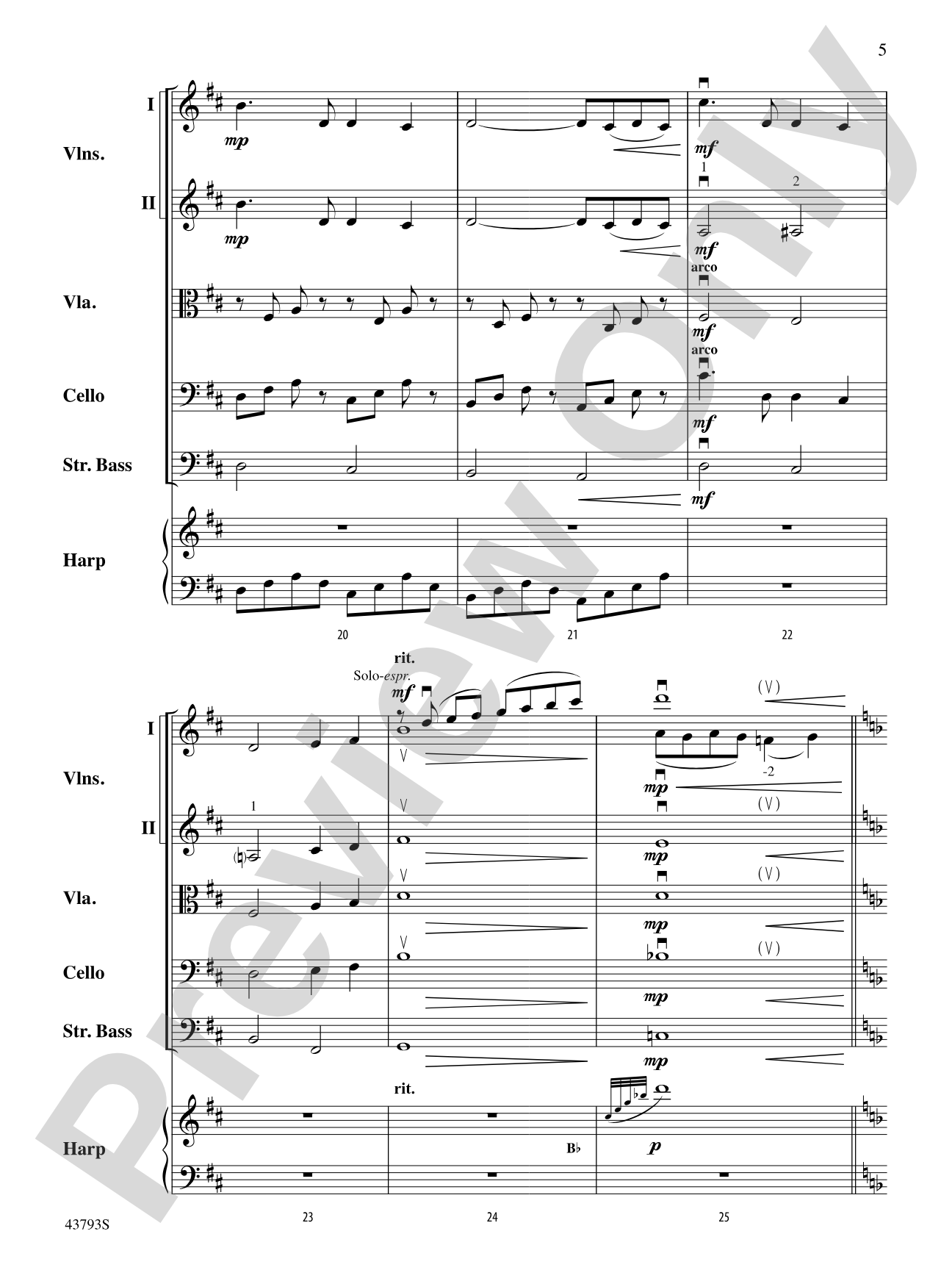
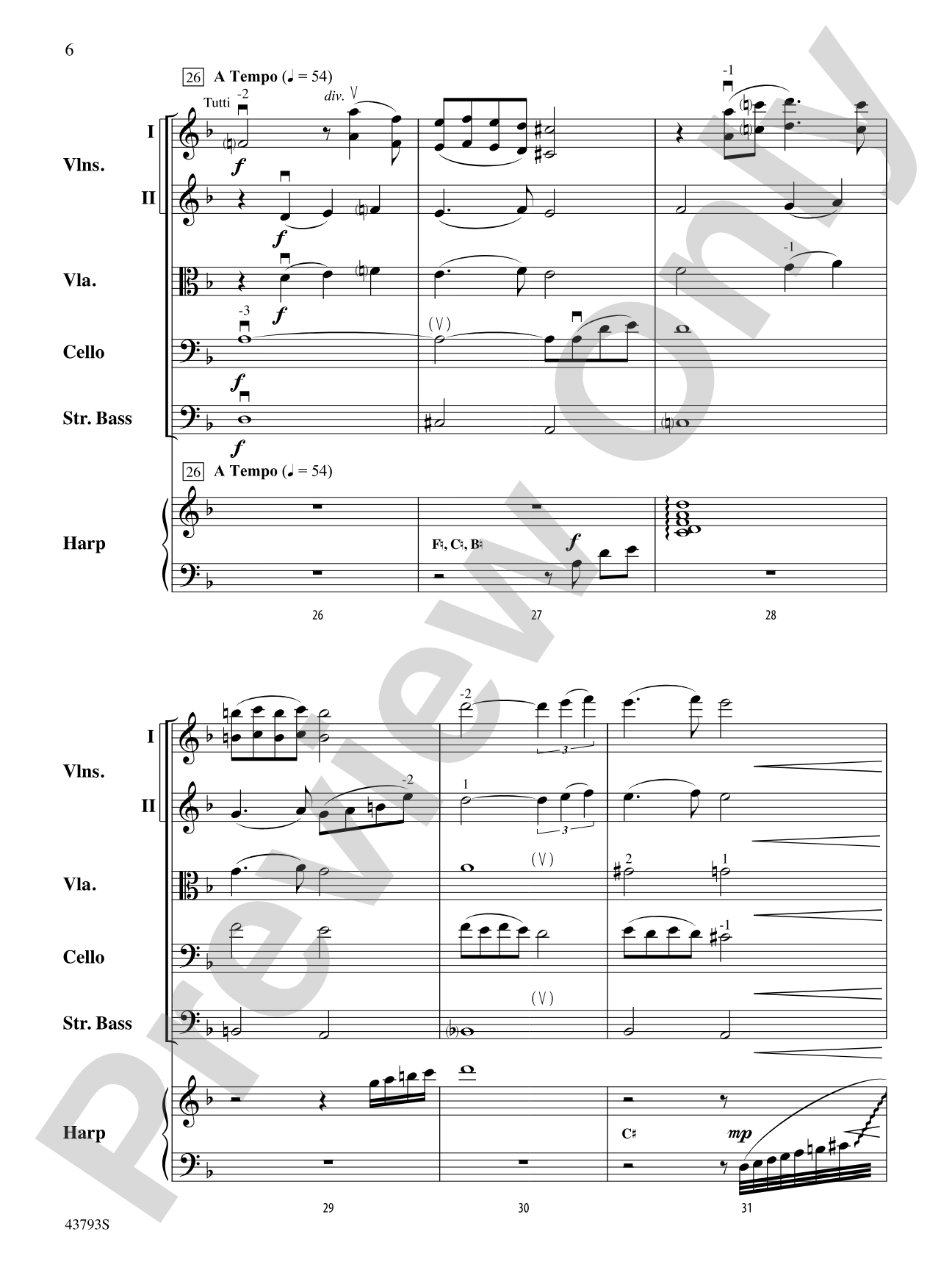
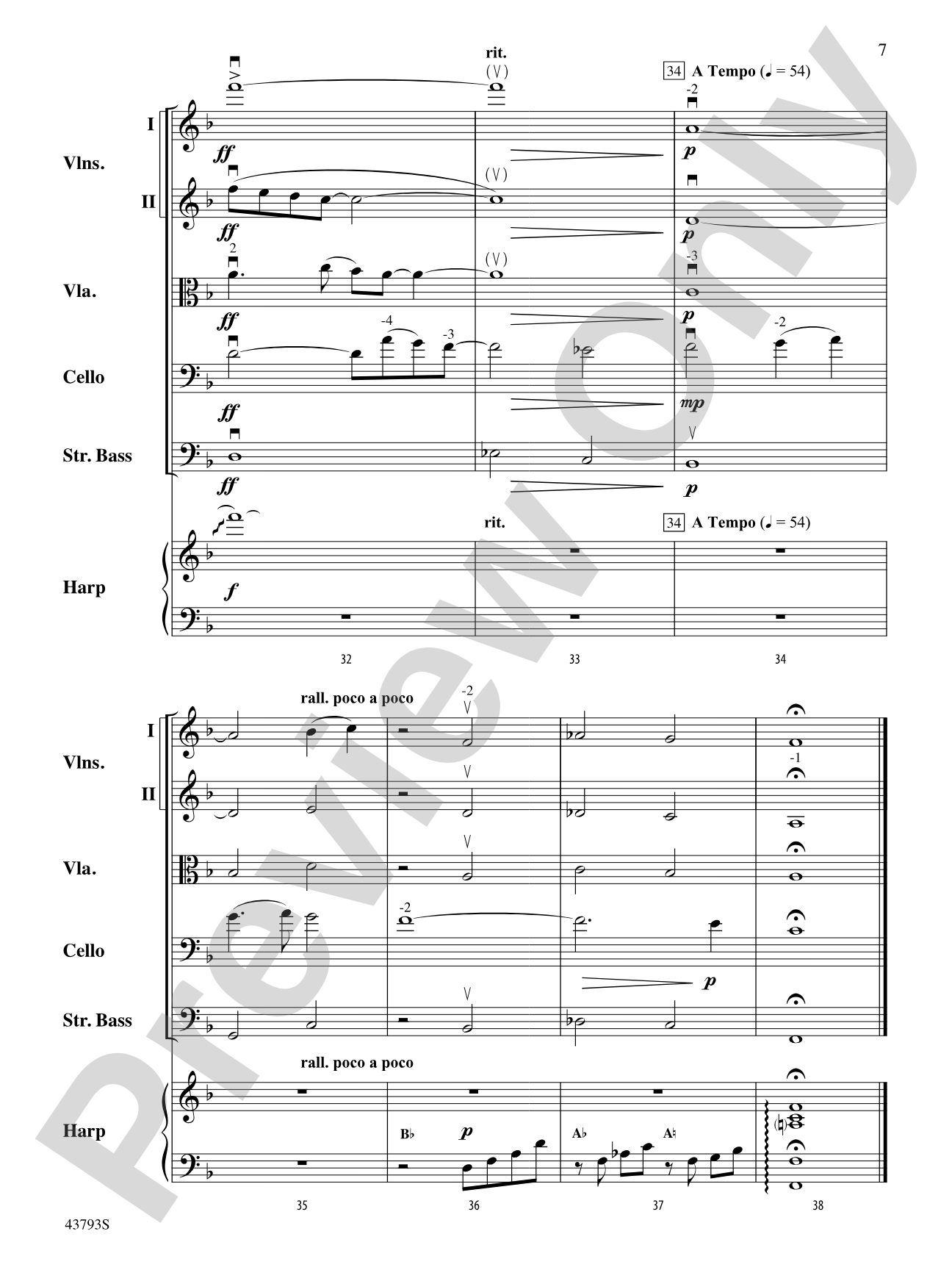


My Funny Valentine: Score
Words by Lorenz Hart, music by Richard Rodgers / arr. Jeffrey E. Turner
Grade: 3
Item: 00-PR-0005136
$9.00
Pickup currently not available
Description
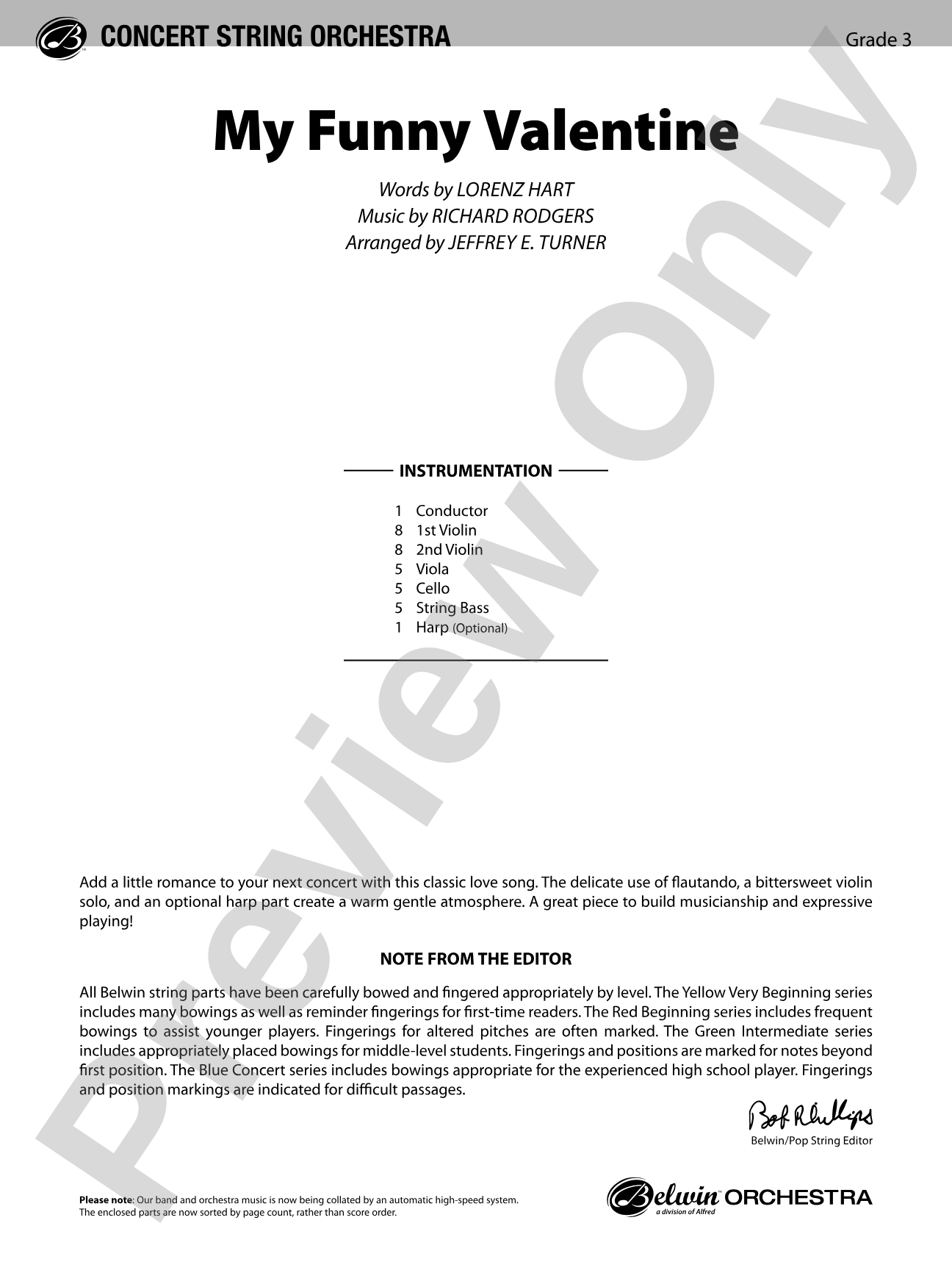
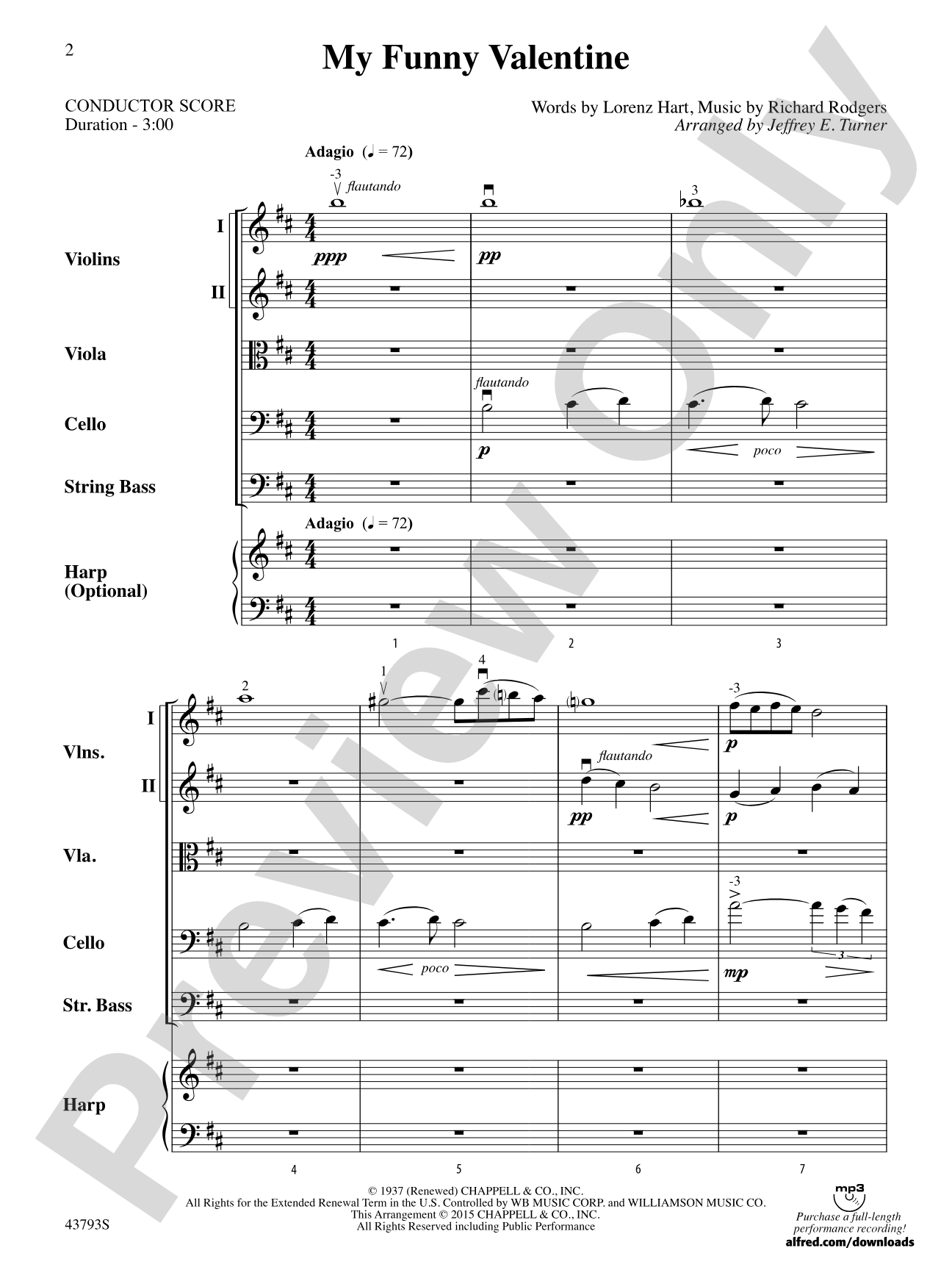
Add a little romance to your next concert with this classic love song. The delicate use of flautando, a bittersweet violin solo, and an optional harp part create a warm gentle atmosphere. A great piece to build musicianship and expressive playing! (3:00)


Don't just read it, hear it, play along with it, and watch your students grow with it. In MakeMusic Cloud, My Funny Valentine: Score comes alive with professional accompaniment, adjustable tempo, and built-in practice tools that turn solo practice into real progress.
Open in the Player
Jump straight in and assign it today.
Start Your Free Trial
Open this title and explore the full library in minutes.
Sample Audio
1
Audio File
--:--
0:00
0:00
Sample Video
No sample videos found.
Additional Details
Series:
Pop Concert String Orchestra
Publisher:
Alfred Music
Page Count:
64
SKU:
00-PR-0005136
More about this title
About the Composer: Lorenz Hart
Lorenz Hart (1895-1943) was one of Broadway's most inventive lyricists, partnering with composer Richard Rodgers to create some of the American musical theater's most enduring songs. Hart's wit, sophistication, and emotional depth transformed popular song into genuine art, influencing generations of composers and lyricists who followed. His collaboration with Rodgers produced standards that remain central to the Great American Songbook, valued by music educators for their melodic clarity and emotional accessibility.
Richard Rodgers (1902-1979) composed melodies of remarkable simplicity and elegance, often in partnership with Hart. His gift for writing singable, memorable lines that also sustain orchestral arrangement made him a model for American musical theater composers. Rodgers' music has become essential to string orchestra and vocal repertoire in educational settings, prized for its harmonic sophistication beneath its approachable surface.
Why we love this
Jeffrey E. Turner's arrangement captures the song's intimate quality while giving string players genuine musical substance. The optional harp adds shimmer without overshadowing the orchestration, and the featured violin solo ensures your concertmaster or strong section violinist has a moment to shine. At Grade 3, this sits at exactly the sweet spot where students can handle the musical demands while feeling genuinely moved by what they're playing.
What to expect
Warmth and vulnerability define this reading. The delicate flautando creates an atmosphere of tenderness, while the violin solo communicates yearning without sentimentality. The piece sustains a gentle intimacy throughout its three minutes, inviting audiences into a quiet moment of reflection.
Who it's for
This arrangement serves string orchestras at the intermediate level, from high school programs to community ensembles seeking literature with genuine emotional sophistication. Directors programming concerts that balance standard classical repertoire with beloved popular standards will find this bridges both worlds effortlessly.
How to get the most out of it
- Establish the character in the first few measures by prioritizing the flautando texture; this technique requires light bows and a delicate touch near the bridge, so allow rehearsal time for players to adjust their sound accordingly.
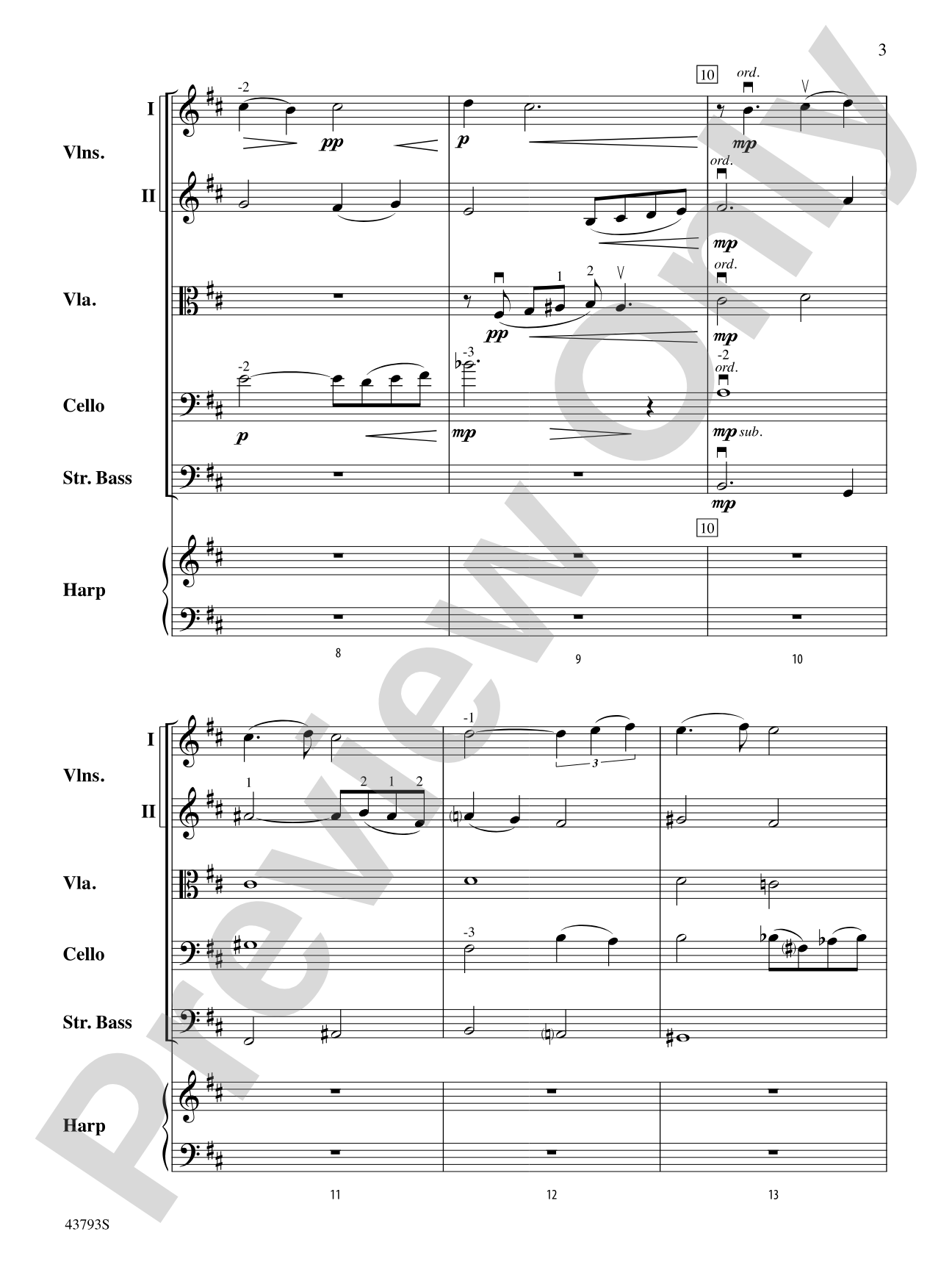
- Balance the featured violin solo so it sings clearly above the accompaniment without dominating the ensemble's harmonic support.
- Shape each phrase with gentle rubato, especially in the solo passages; the music breathes naturally when conductors avoid metronomic rigidity.
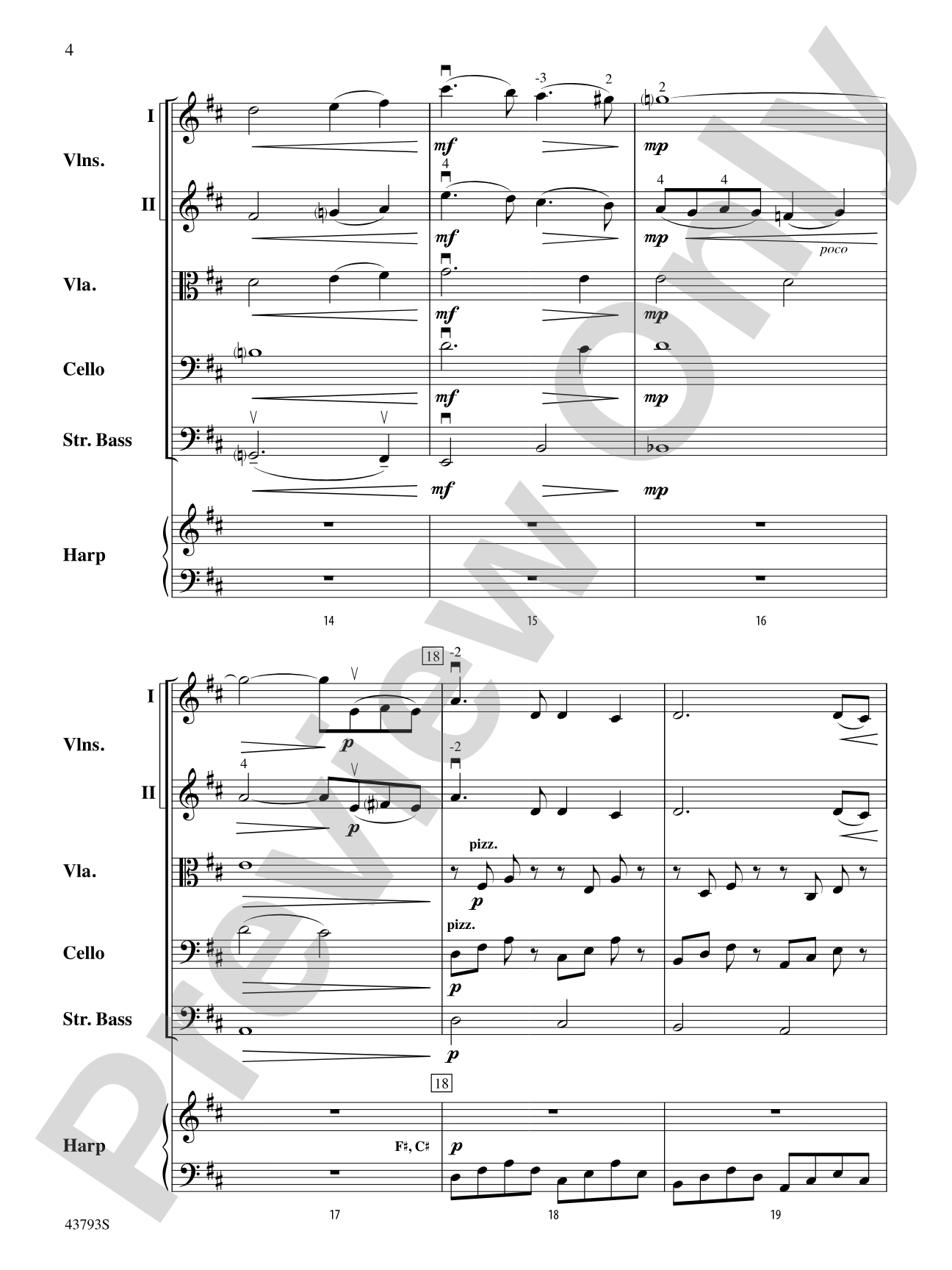
- If using the optional harp part, tune its entrance carefully so it enhances rather than fills space; many orchestras find harp works best in the second half of the arrangement.
How to use it
Consider this as a programming bridge between a major classical work and upbeat contemporary selections, or pair it with other Great American Songbook arrangements to build a thematic concert around American musical theater. It also works beautifully as a closing piece on a spring concert, offering audiences a lyrical, generous final impression.
Skills your students will build
- Flautando technique and tone control
- Solo playing with accompaniment balance
- Phrase shaping and expressive interpretation
- Reading divisi passages
- Ensemble blend in sustained harmonic passages