
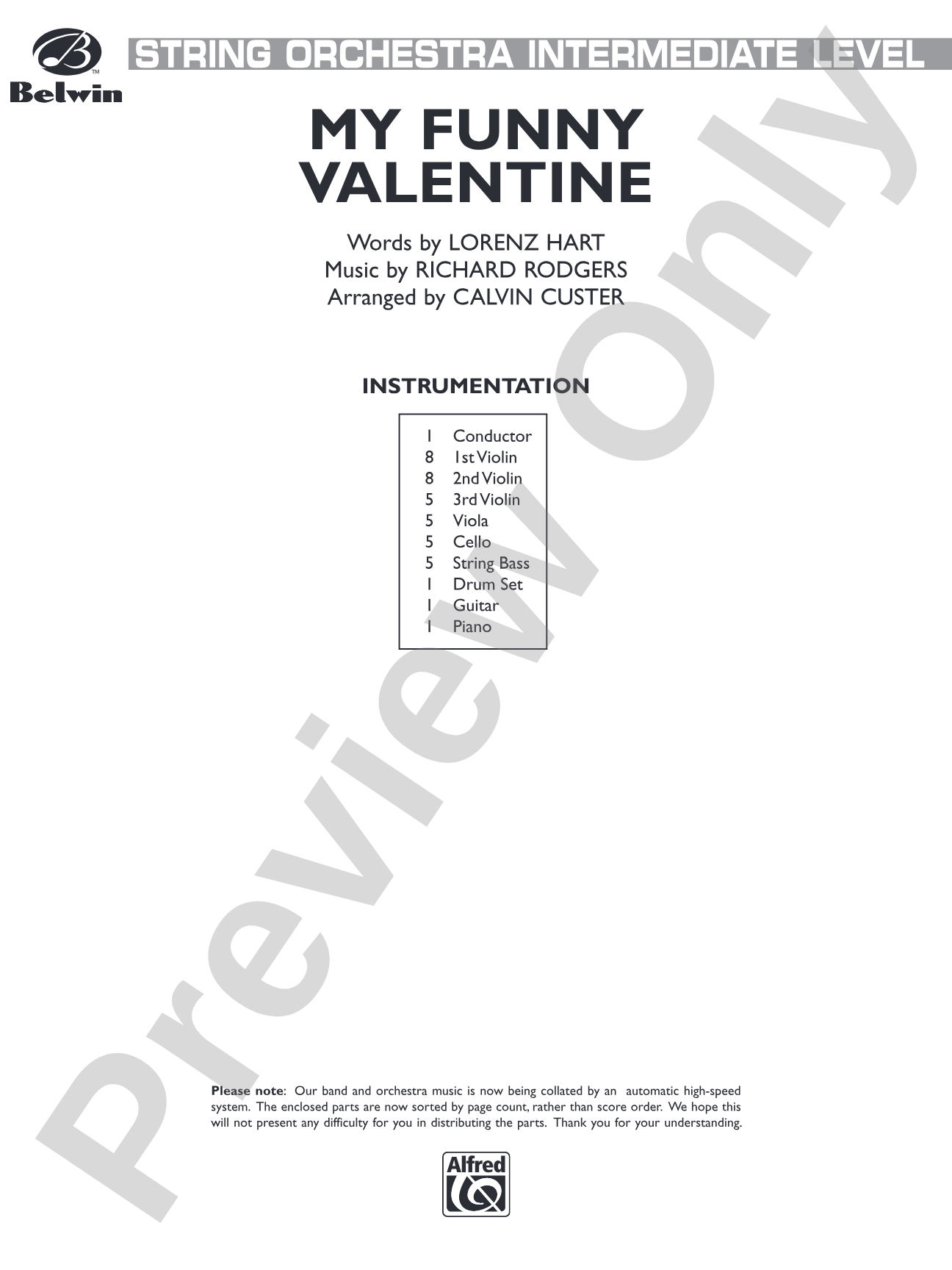
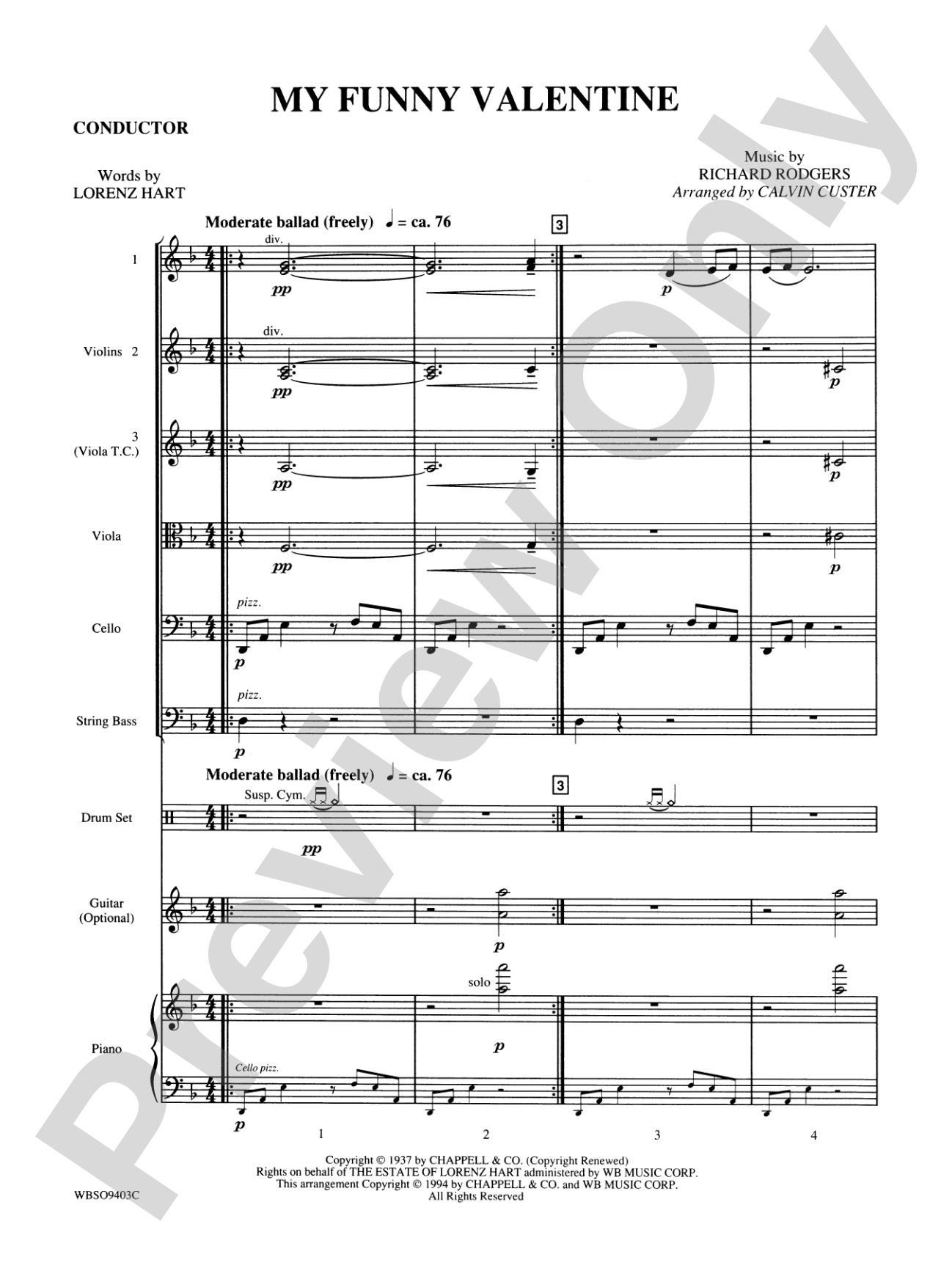
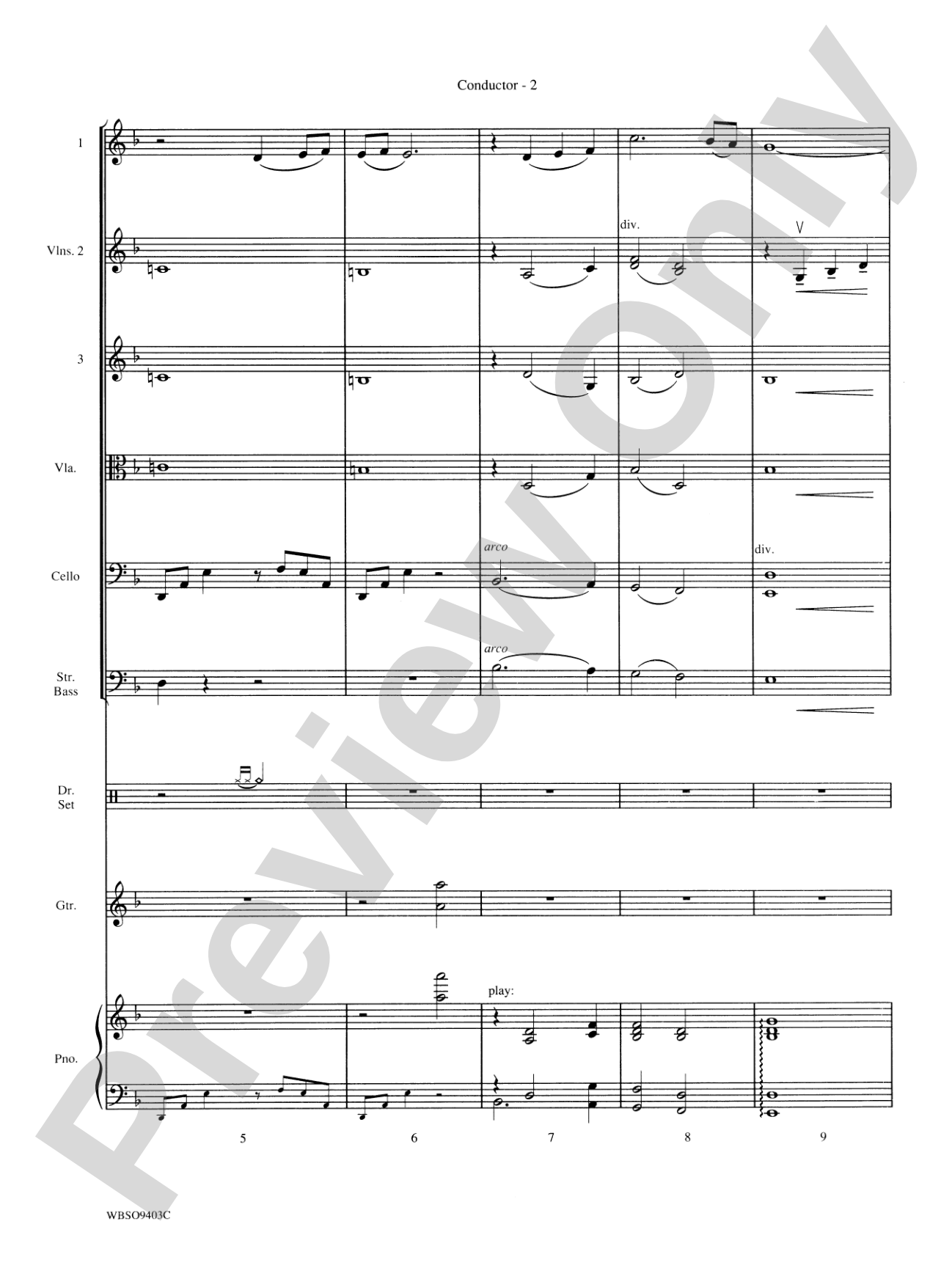
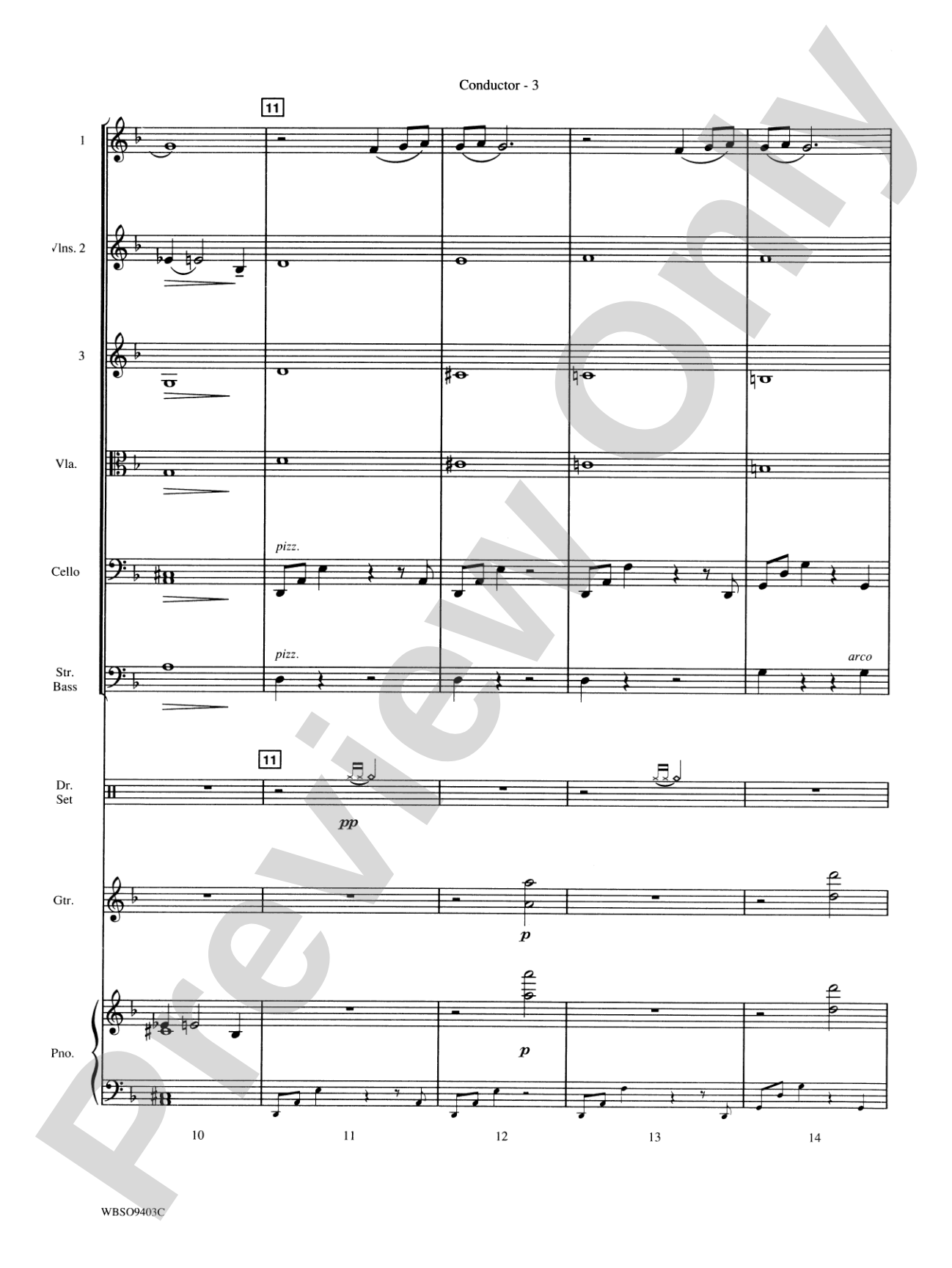
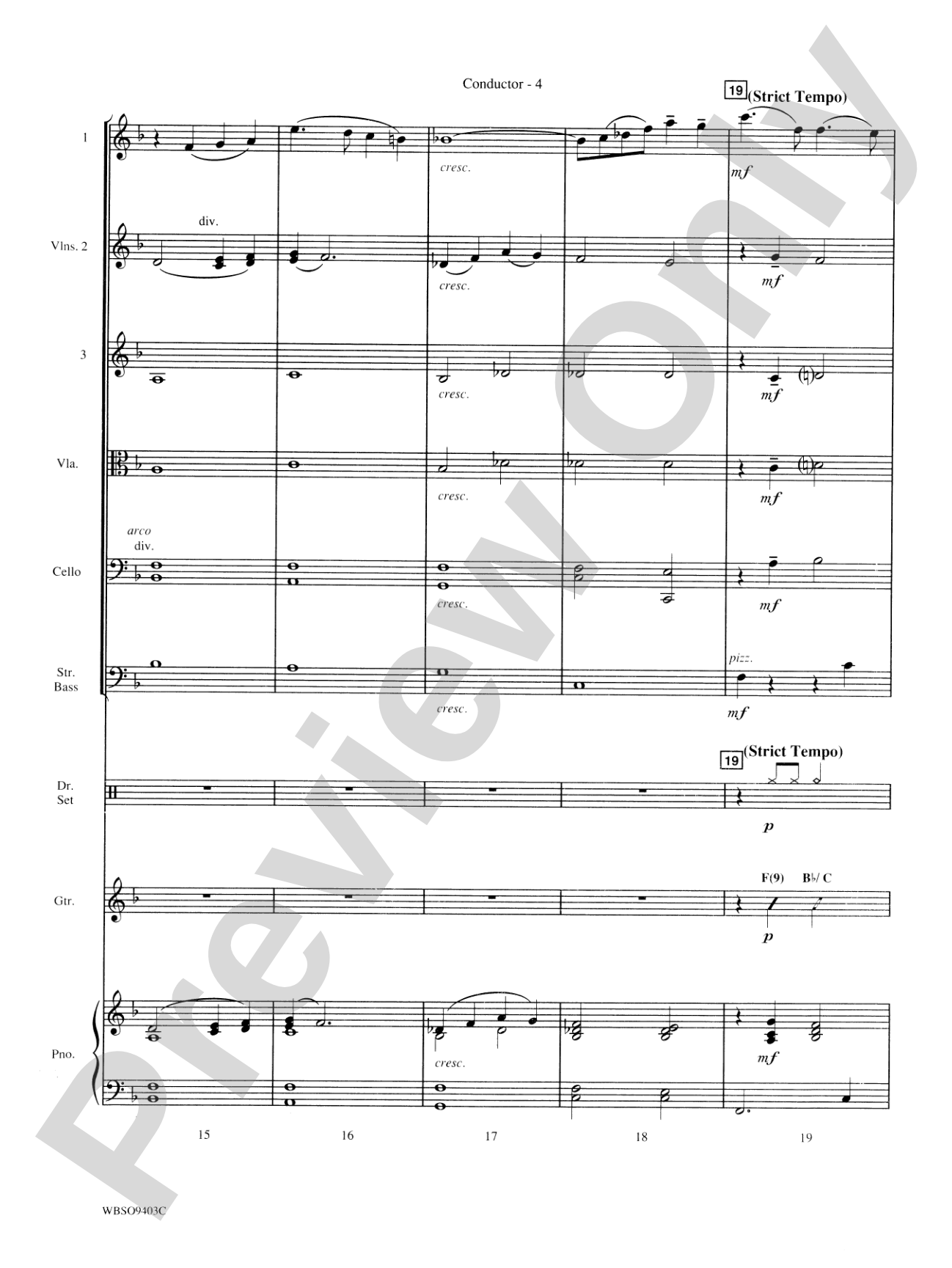
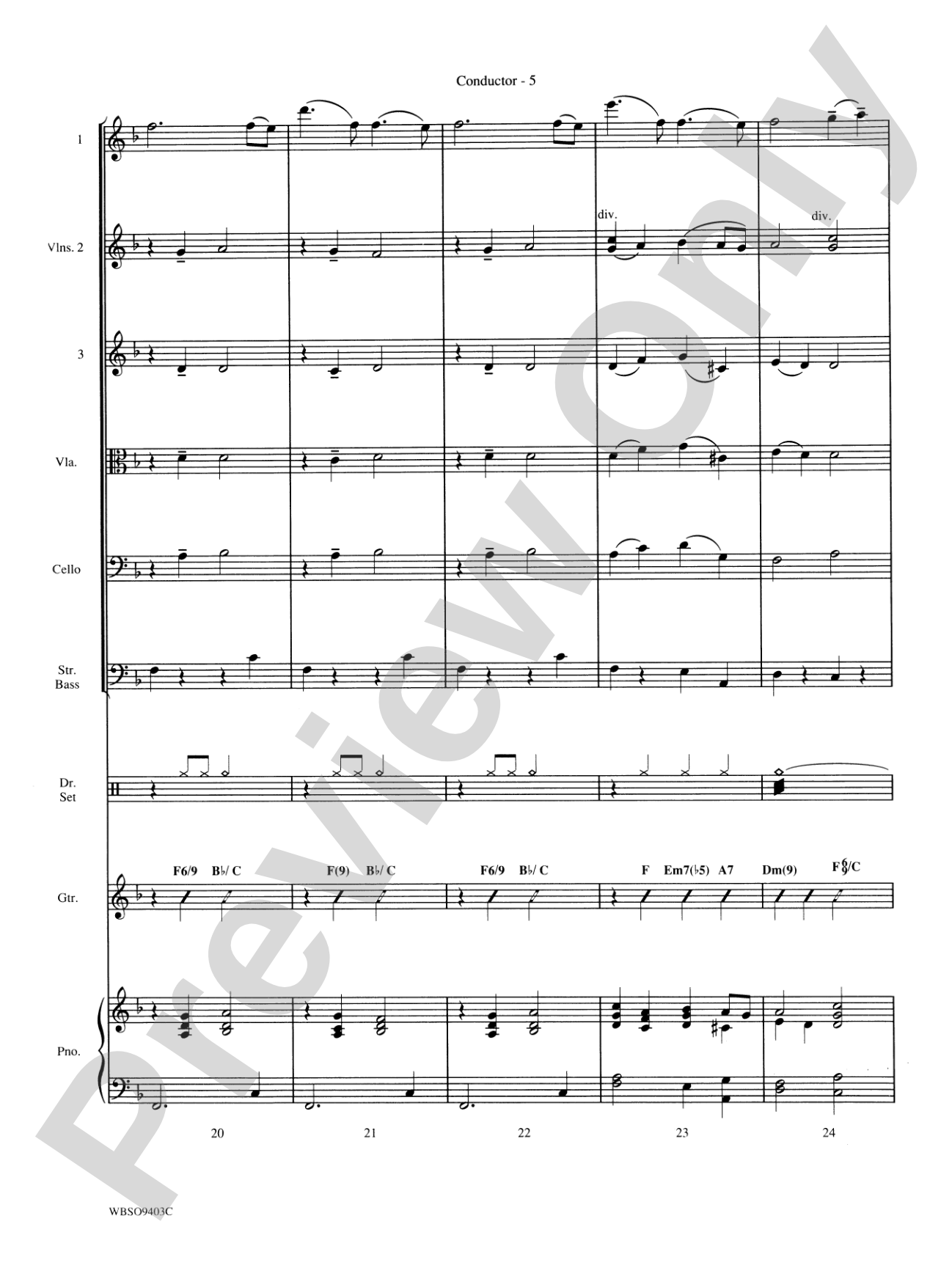
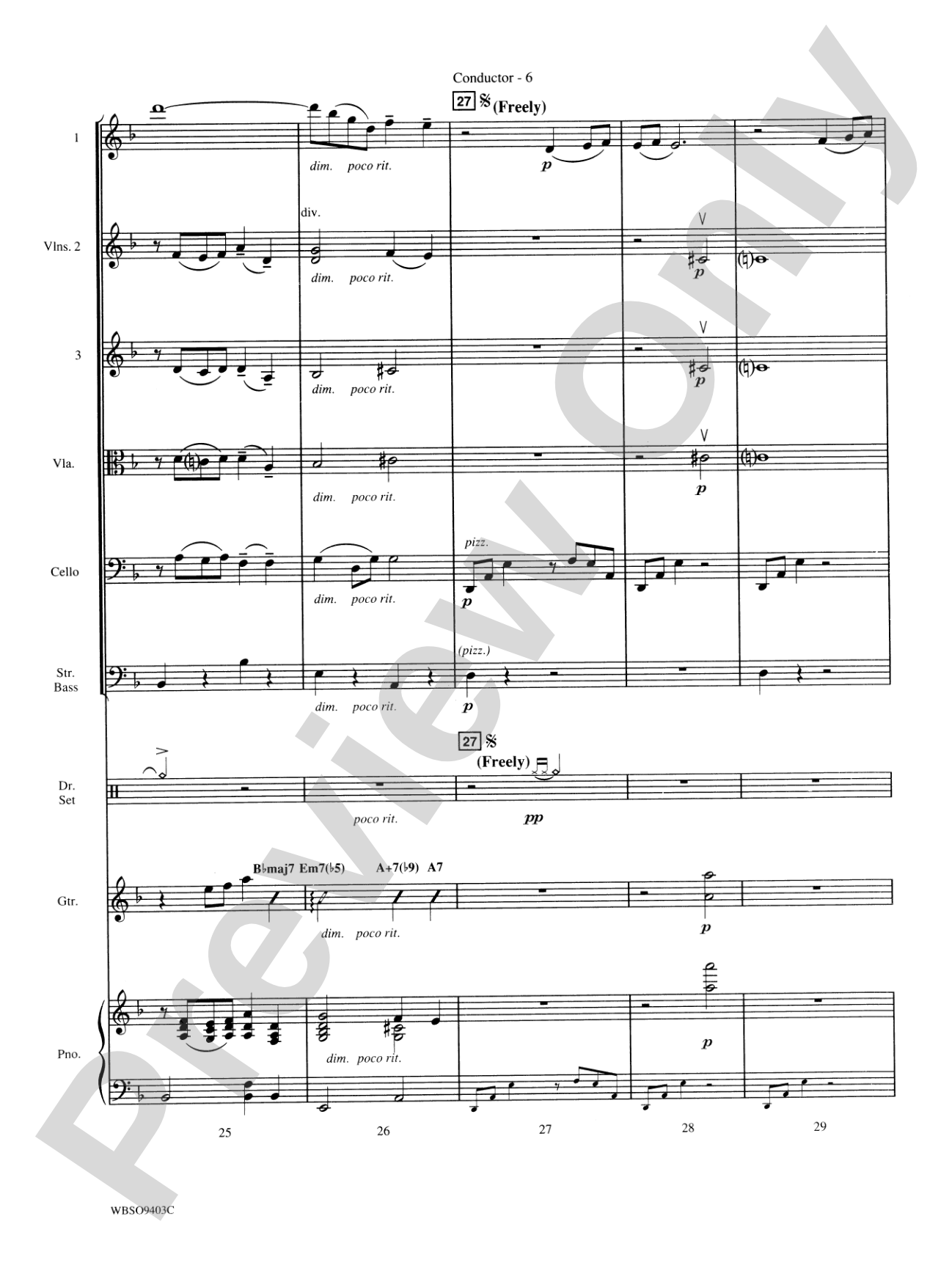
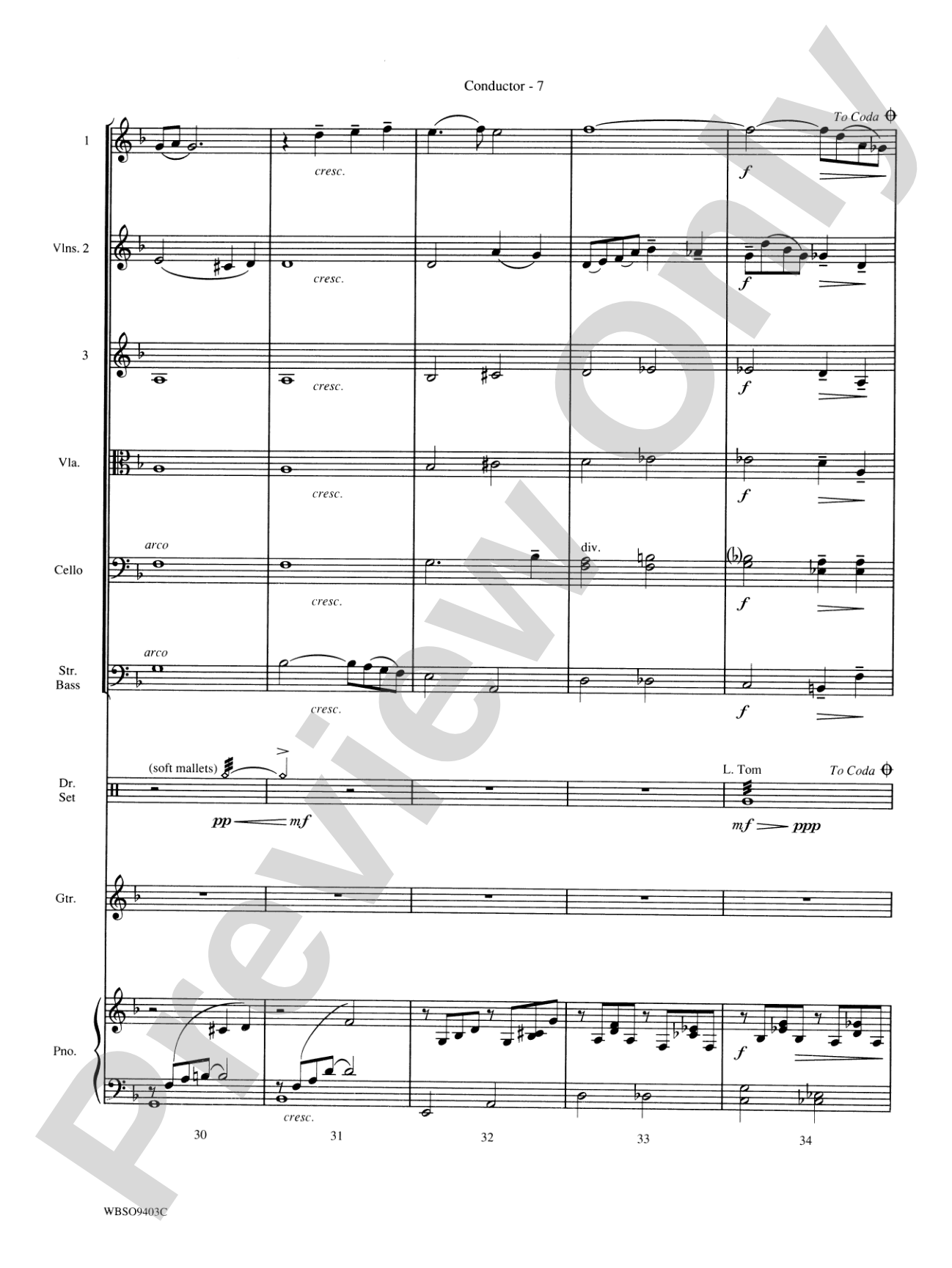
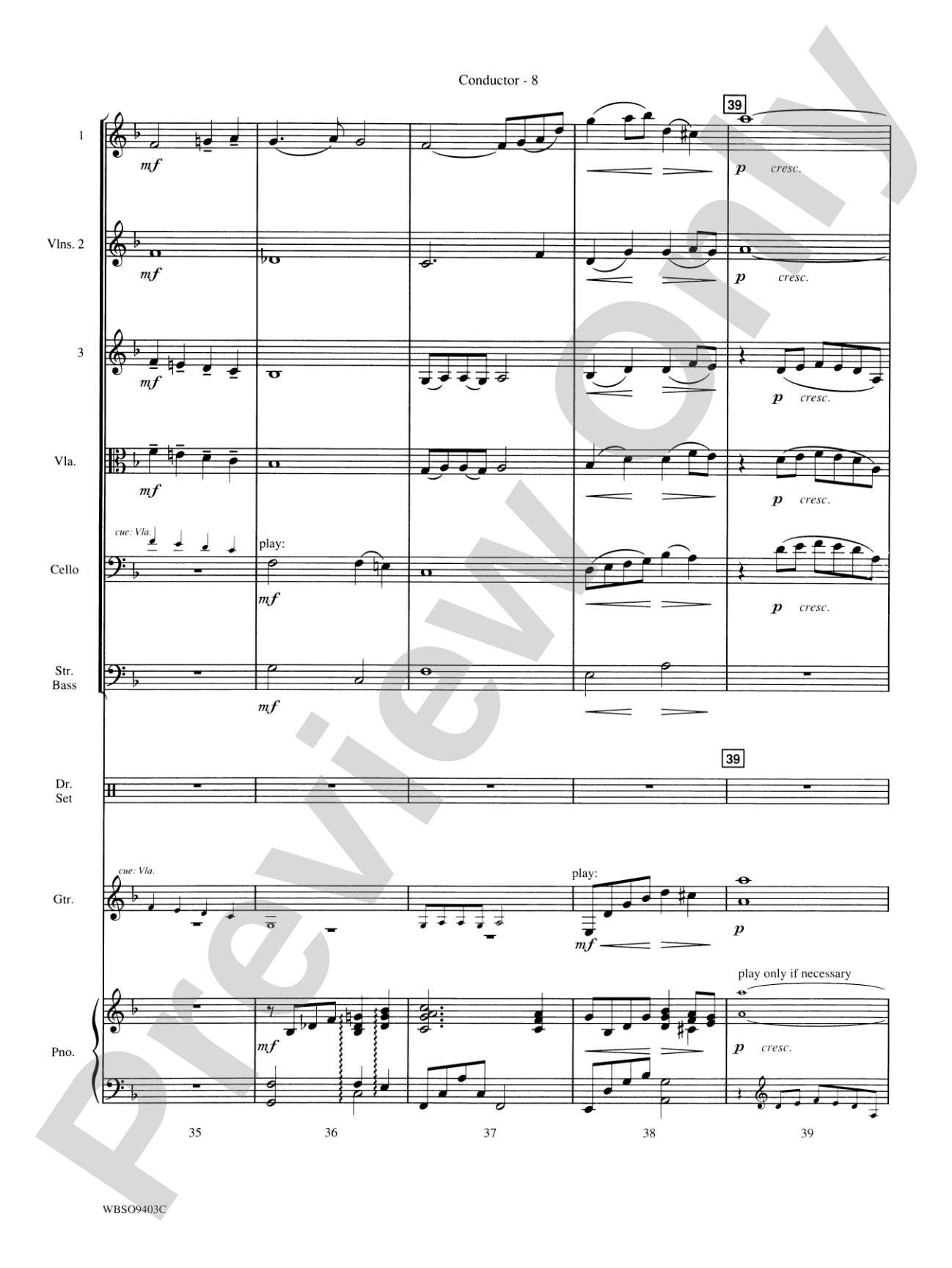
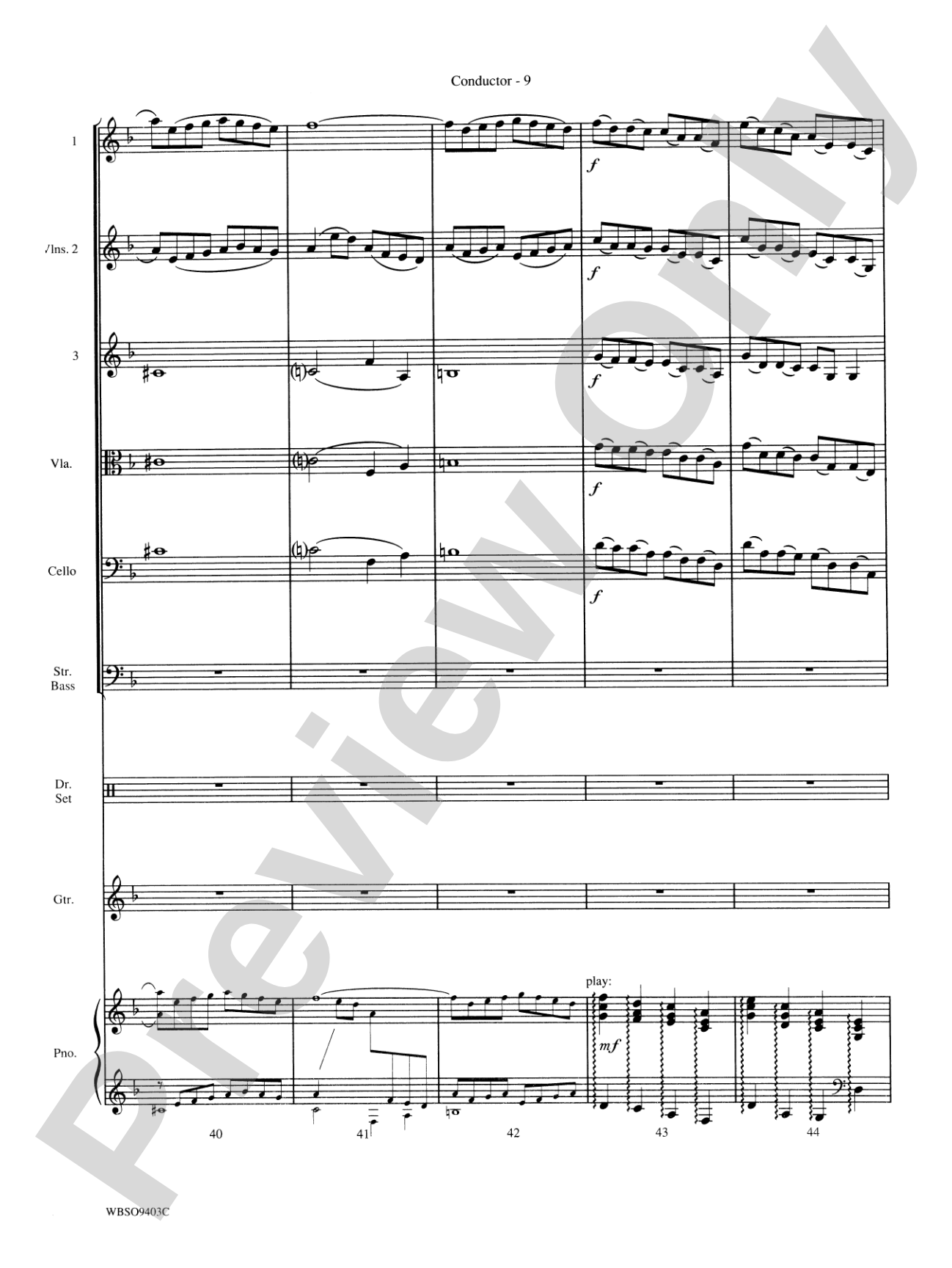
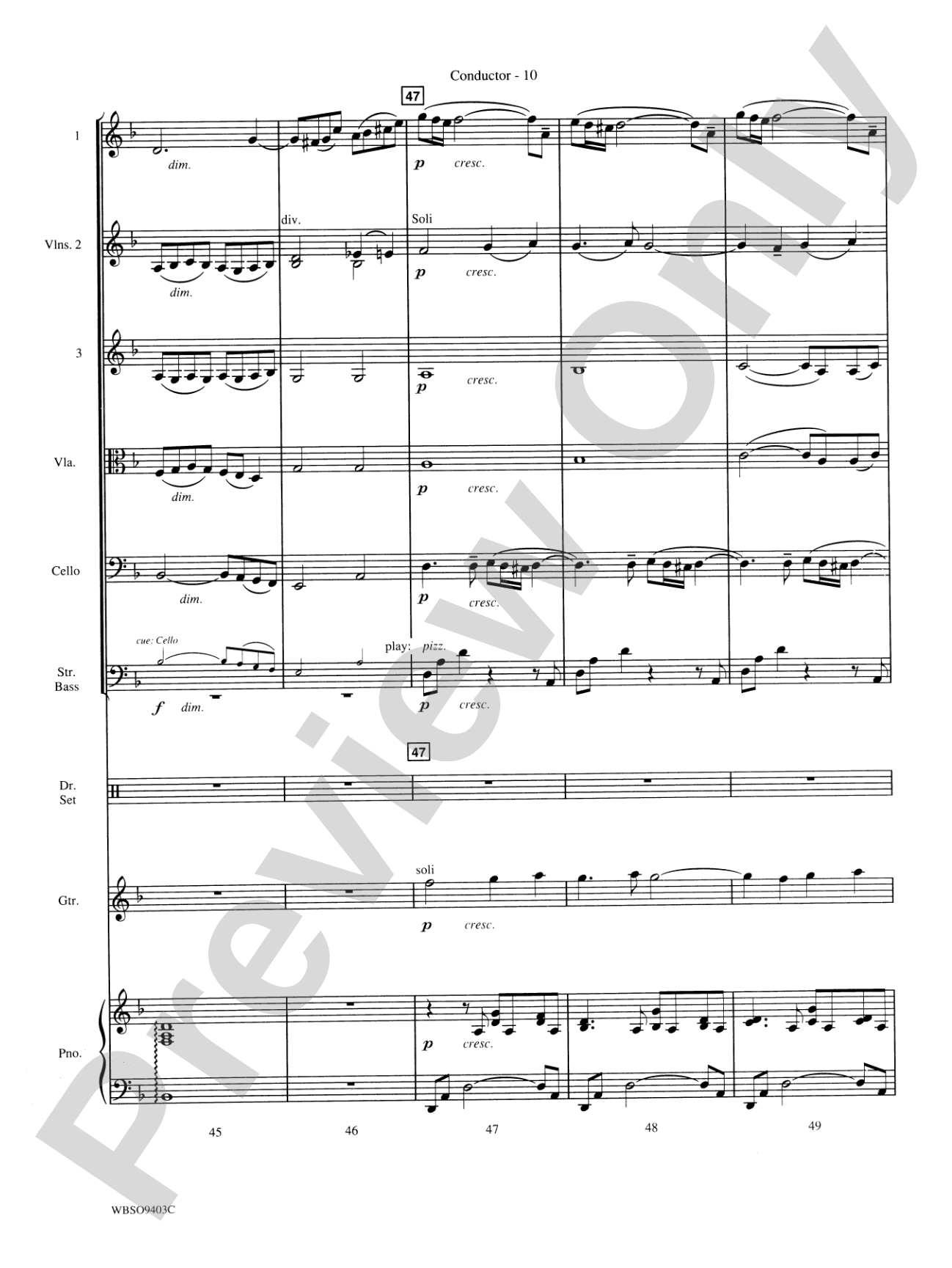
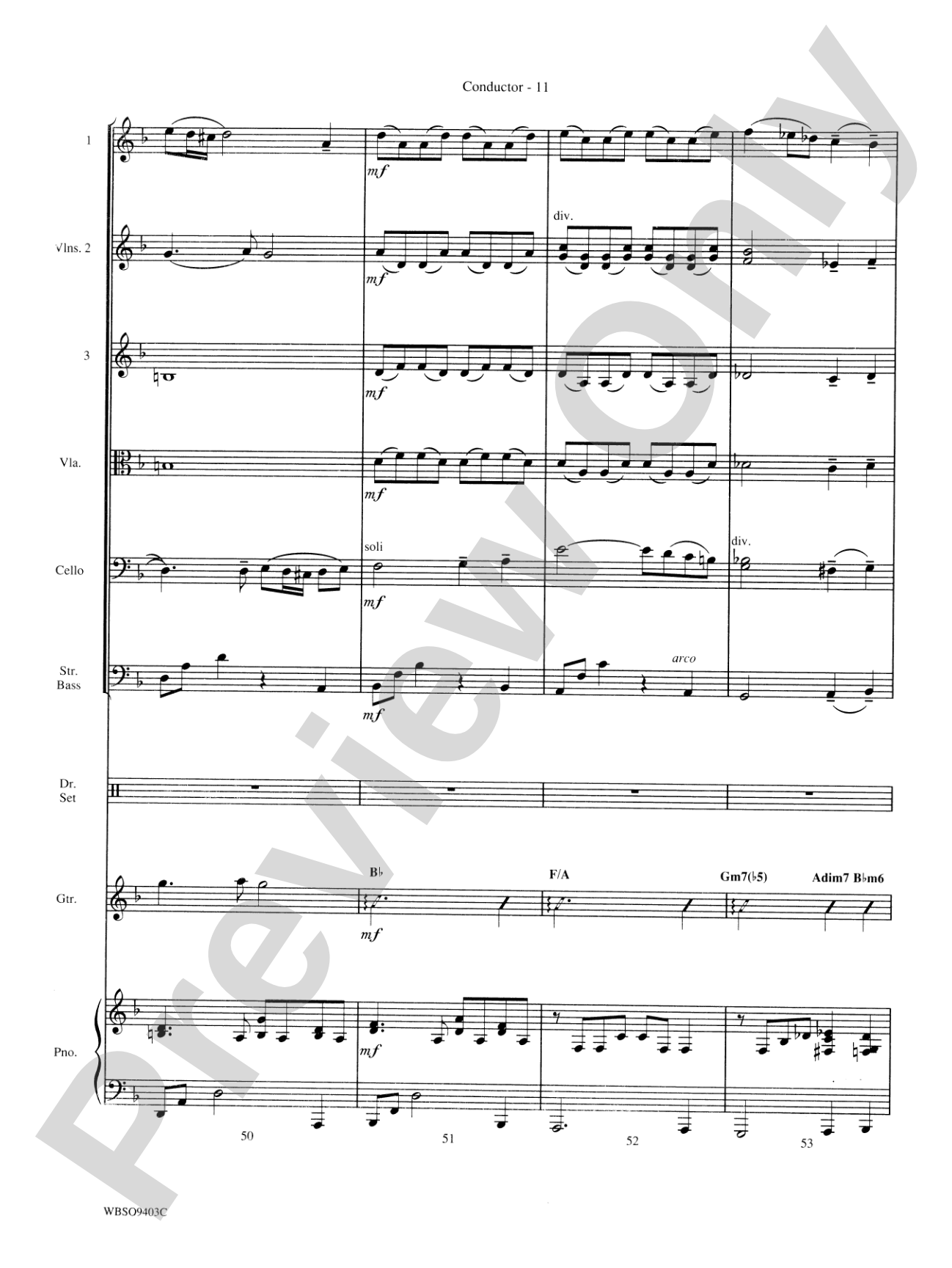
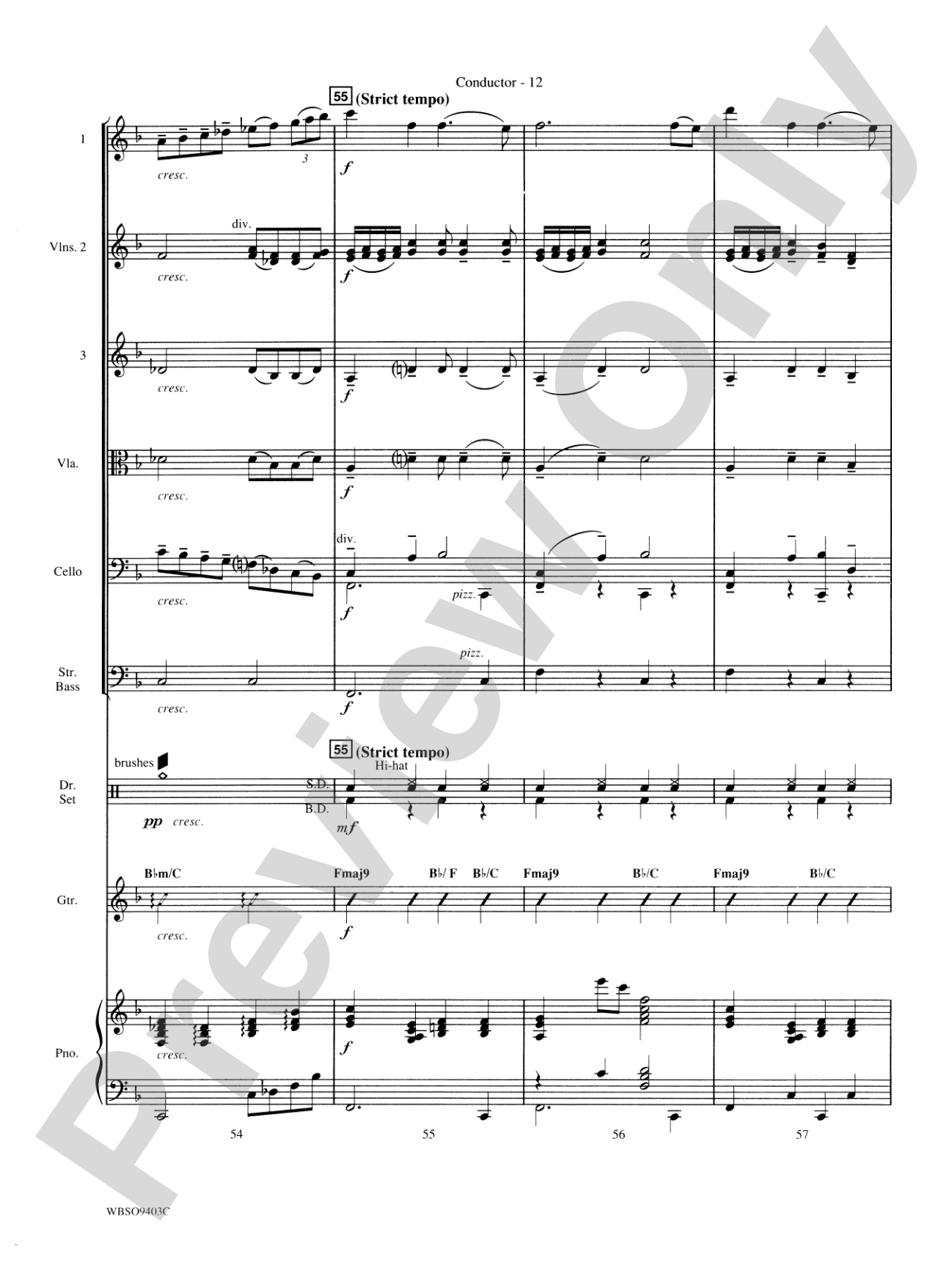
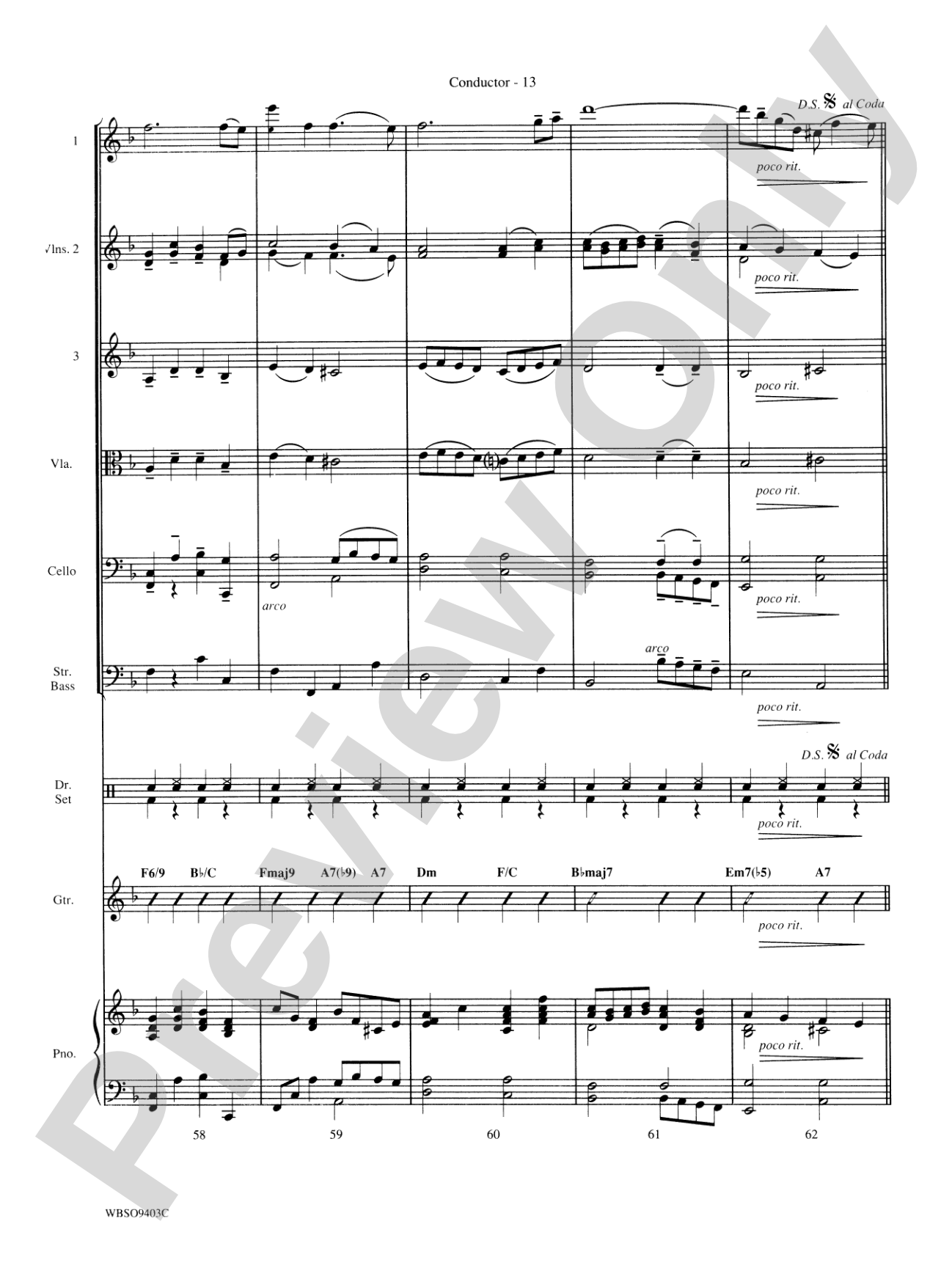
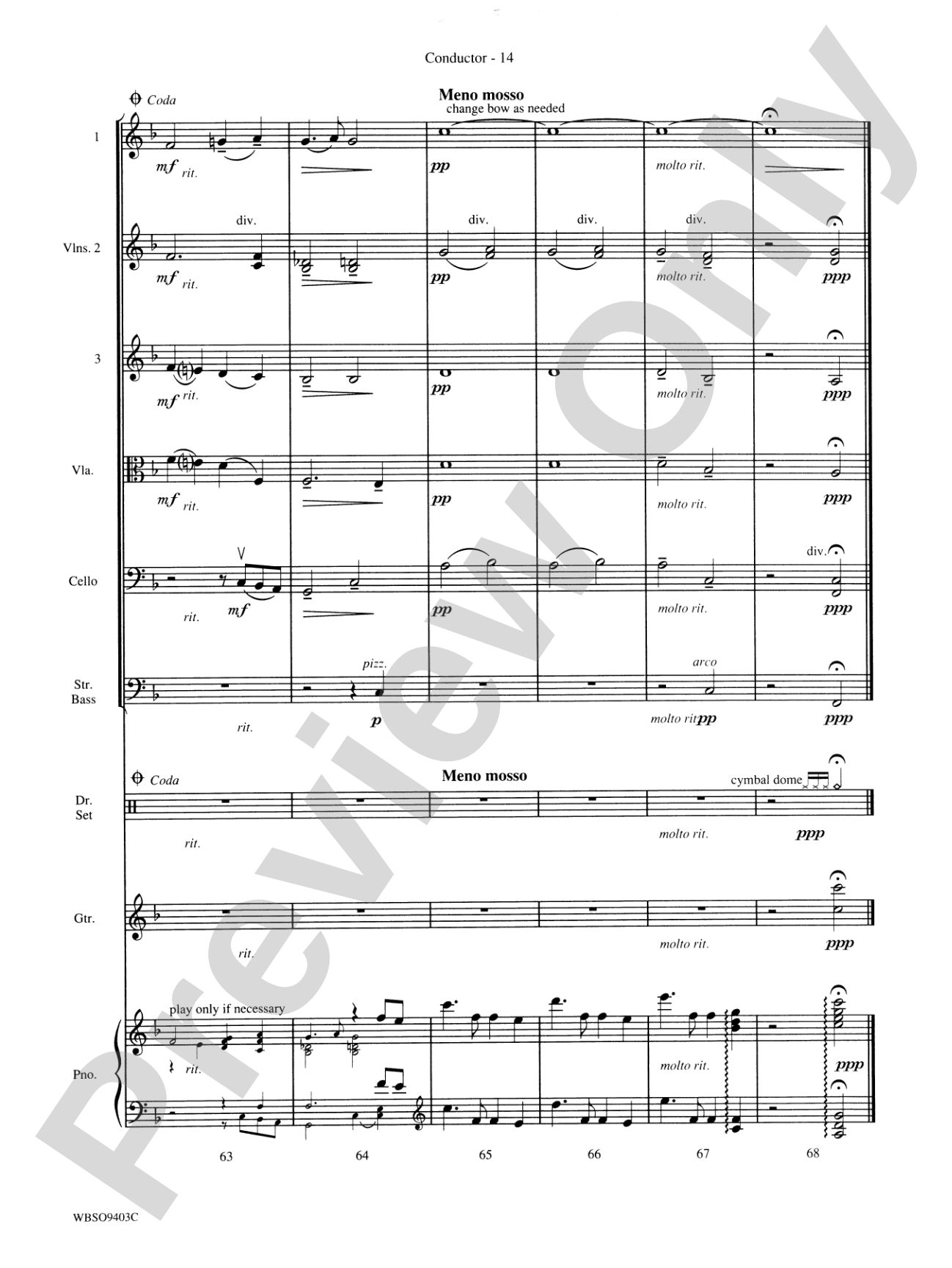


My Funny Valentine: String Orchestra Conductor Score & Parts
Music by Richard Rodgers, lyrics by Lorenz Hart / arr. Calvin Custer
Grade: 3.5
Item: 00-PK-0002685

$50.00
One moment…
Description
You will achieve brilliance from the strings and with an added rhythm section (piano, bass, drums, and guitar) you'll have a modern, contemporary piece that is most appealing. Read the lyrics to the players, add the beautiful melody, and listen to some inspired playing. (4:31)


Don't just read it, hear it, play along with it, and watch your students grow with it. In MakeMusic Cloud, My Funny Valentine: String Orchestra Conductor Score & Parts comes alive with professional accompaniment, adjustable tempo, and built-in practice tools that turn solo practice into real progress.
Open in the Player
Jump straight in and assign it today.
Start Your Free Trial
Open this title and explore the full library in minutes.
Sample Audio
1
Audio File
--:--
0:00
0:00
Sample Video
No sample videos found.
Additional Details
Series:
Pop Intermediate String Orchestra
Publisher:
Alfred Music
Page Count:
63
SKU:
00-PK-0002685
More about this title
About the Composer: Richard Rodgers
Richard Rodgers (1902-1979) composed some of the most enduring melodies in American musical theater, collaborating with lyricists Lorenz Hart and later Oscar Hammerstein II. His gift for singable, emotionally direct melody made his songs standards that musicians across all genres continue to interpret and reharmonize decades after their Broadway debuts.
Why we love this
This arrangement gives string orchestras immediate access to one of Broadway's most sophisticated love songs without sacrificing the lush harmonic sophistication Rodgers intended. The addition of rhythm section instruments creates genuine ensemble texture and teaches young players how classical strings interact with contemporary rhythm, not just how to color around a simple melody.
What to expect
Wry tenderness. The melody carries both affection and irony, never quite letting the sentiment become saccharine. The harmonic movement is sophisticated without sounding academic, and the added rhythm section gives it a contemporary, almost chamber jazz warmth that makes the song feel present rather than preserved.
Who it's for
String orchestras at the intermediate level who want to expand into American songbook repertoire without stepping into pure classical transcription. This works well for groups ready to balance parts across a larger ensemble and coordinate with rhythm section instruments.
How to get the most out of it
- Shape the opening melody with long-lined phrasing; resist the urge to make each phrase self-contained. Let the harmonic progression carry the line forward.
- Balance the rhythm section carefully so the piano, bass, and drums support rather than drive the strings. This is a conversation, not a rhythm section with string accompaniment.
- Pay attention to the lyrical content even as an instrumental ensemble. Rodgers composed these melodies for singing; performing them idiomatically means respecting where the breaths and cadences live.
- Use the recorded accompaniment to establish tempo and feel, but rehearse the string parts independently first so players own the intonation and phrasing before adding the rhythm section.
How to use it
Pair this with other Great American Songbook standards to build a concert around American musical theater, or use it as a contrasting lighter moment in a program that otherwise features classical string repertoire. The moderate length and Grade 3.5 difficulty make it a solid choice for mid-year concerts when ensemble cohesion is developing.
Skills your students will build
- Balancing melody and harmony across multiple string parts
- Coordinating with rhythm section instruments in a contemporary style
- Maintaining lyrical phrasing in instrumental context
- Reading and interpreting jazz-influenced harmonic language
- Adjusting intonation for altered and extended harmonies