
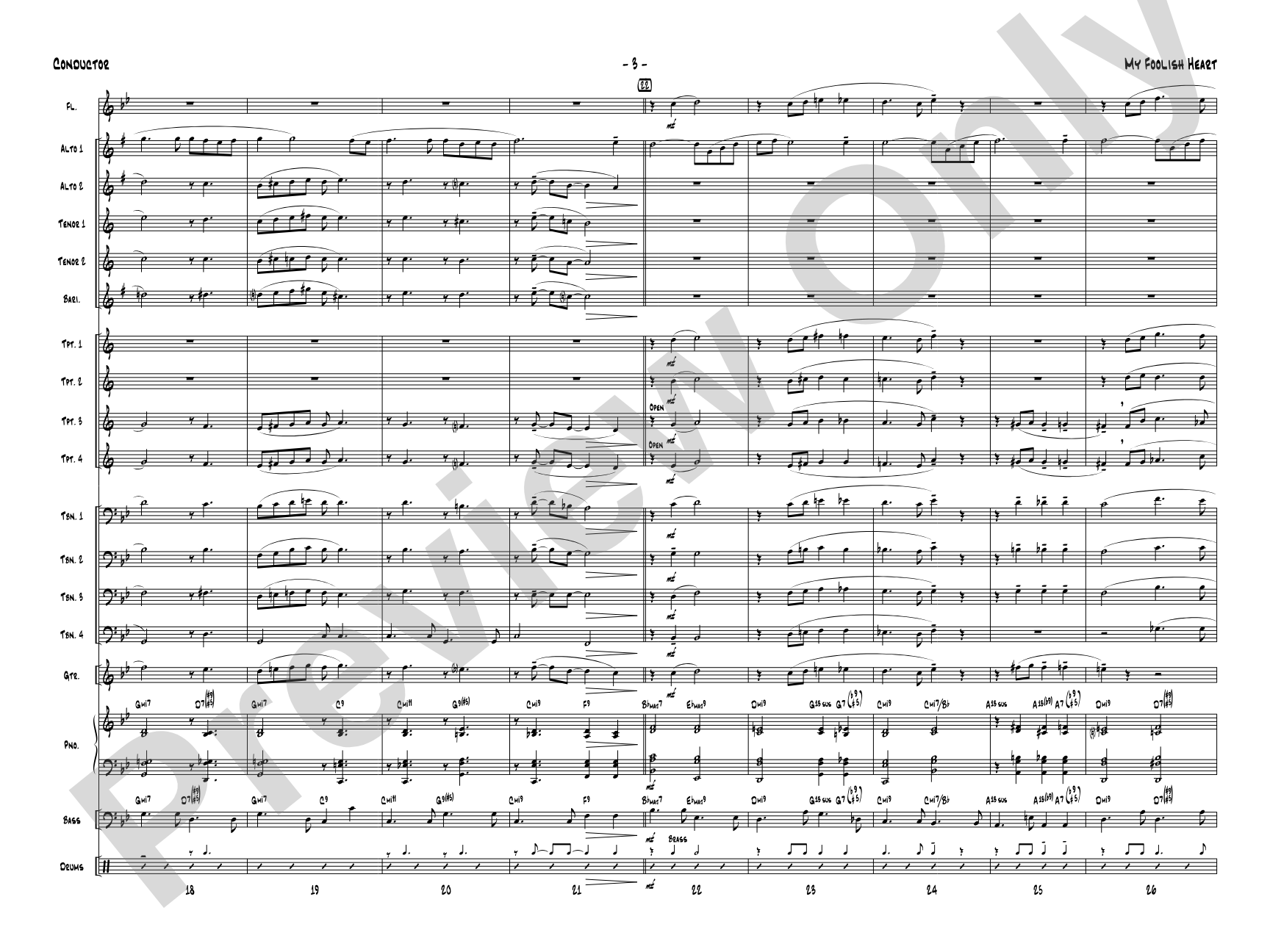
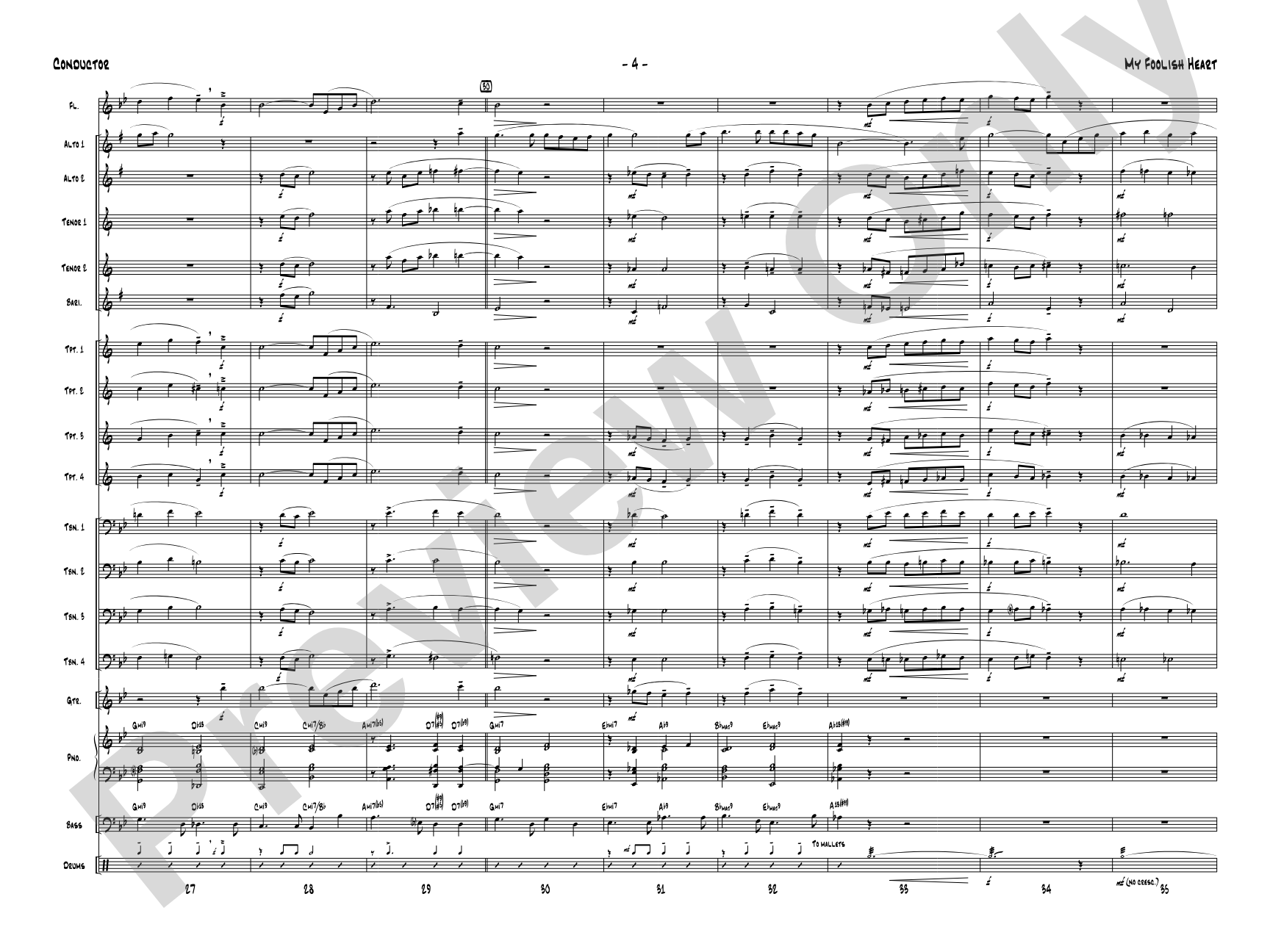
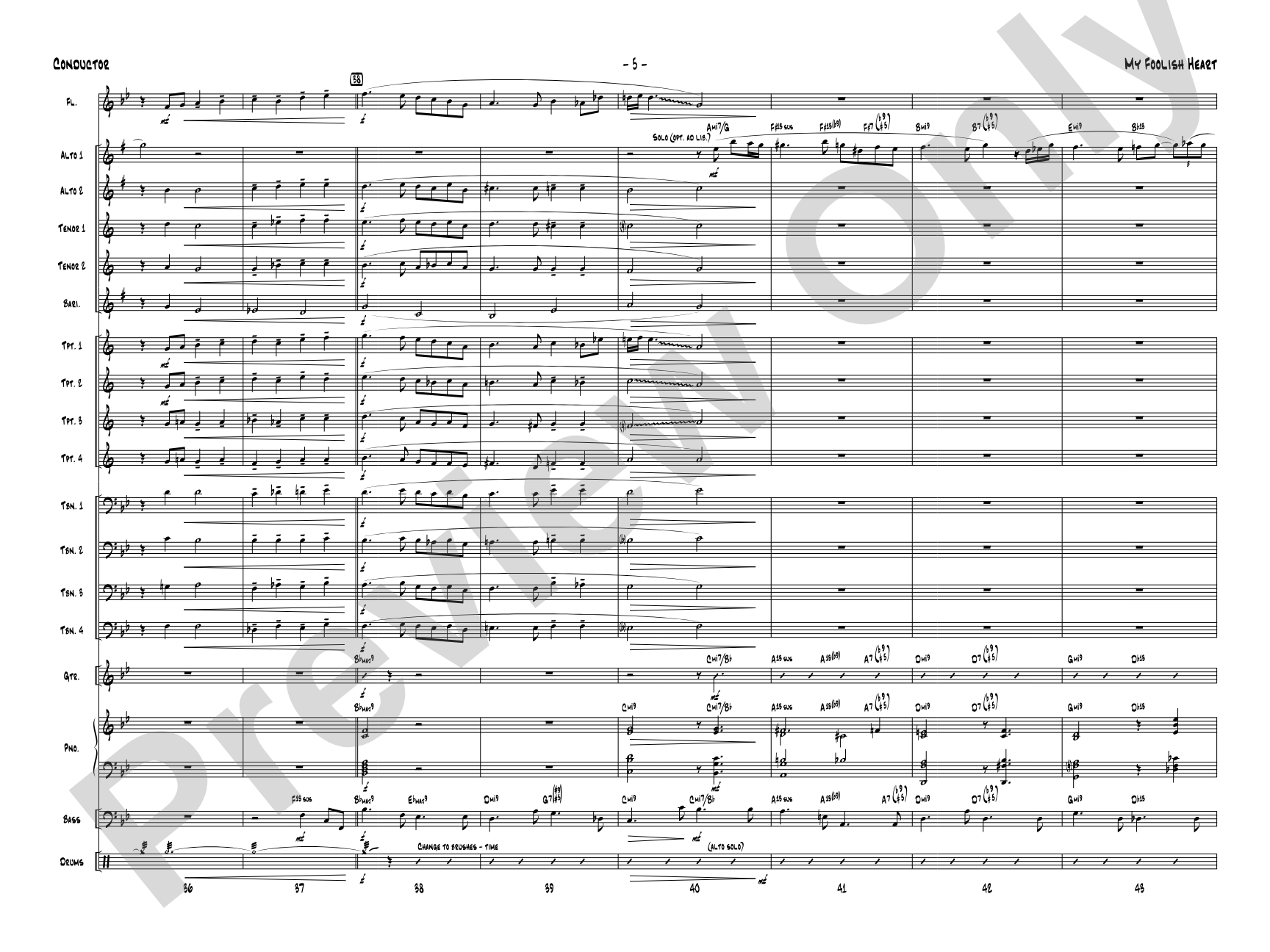
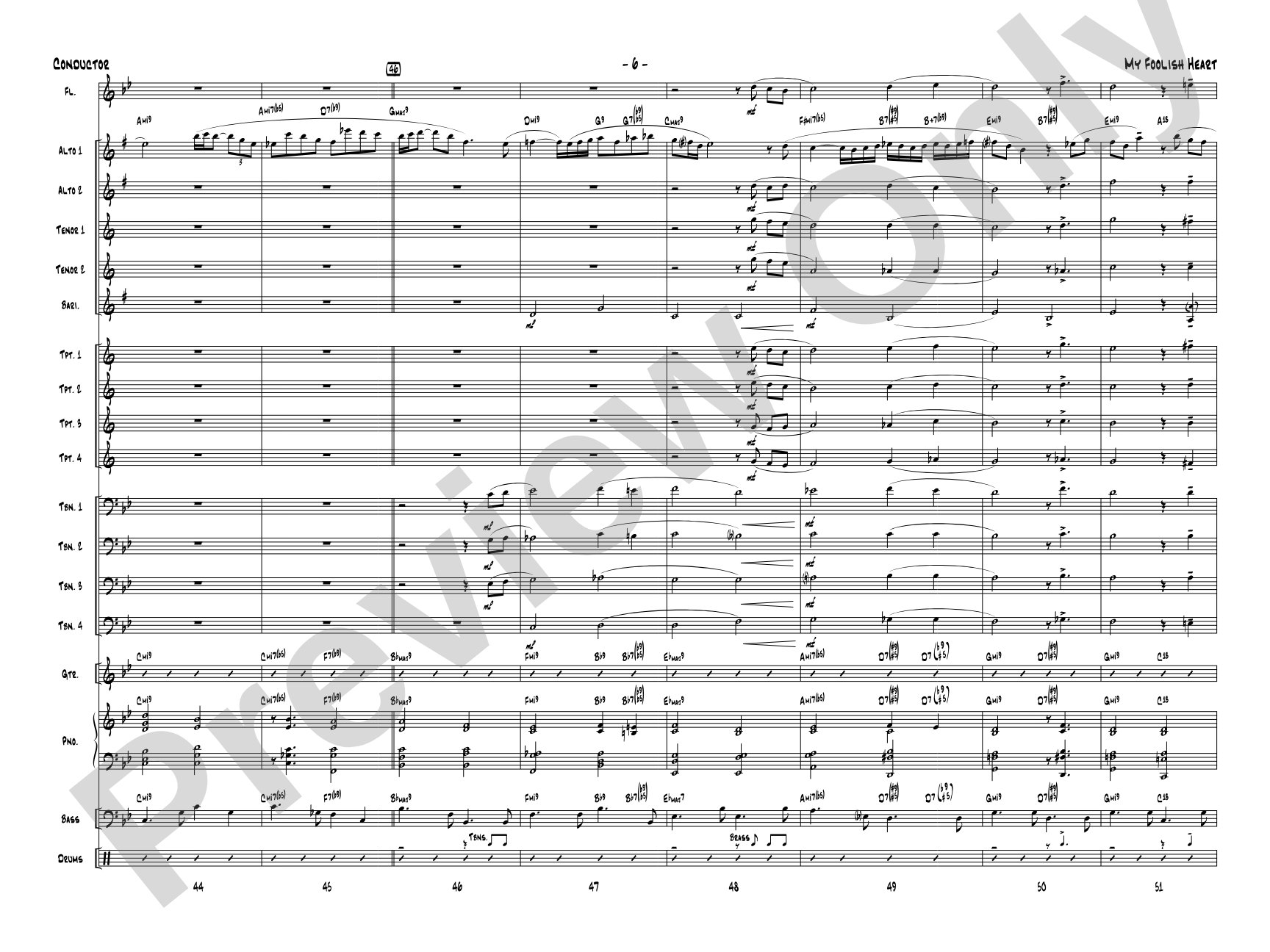
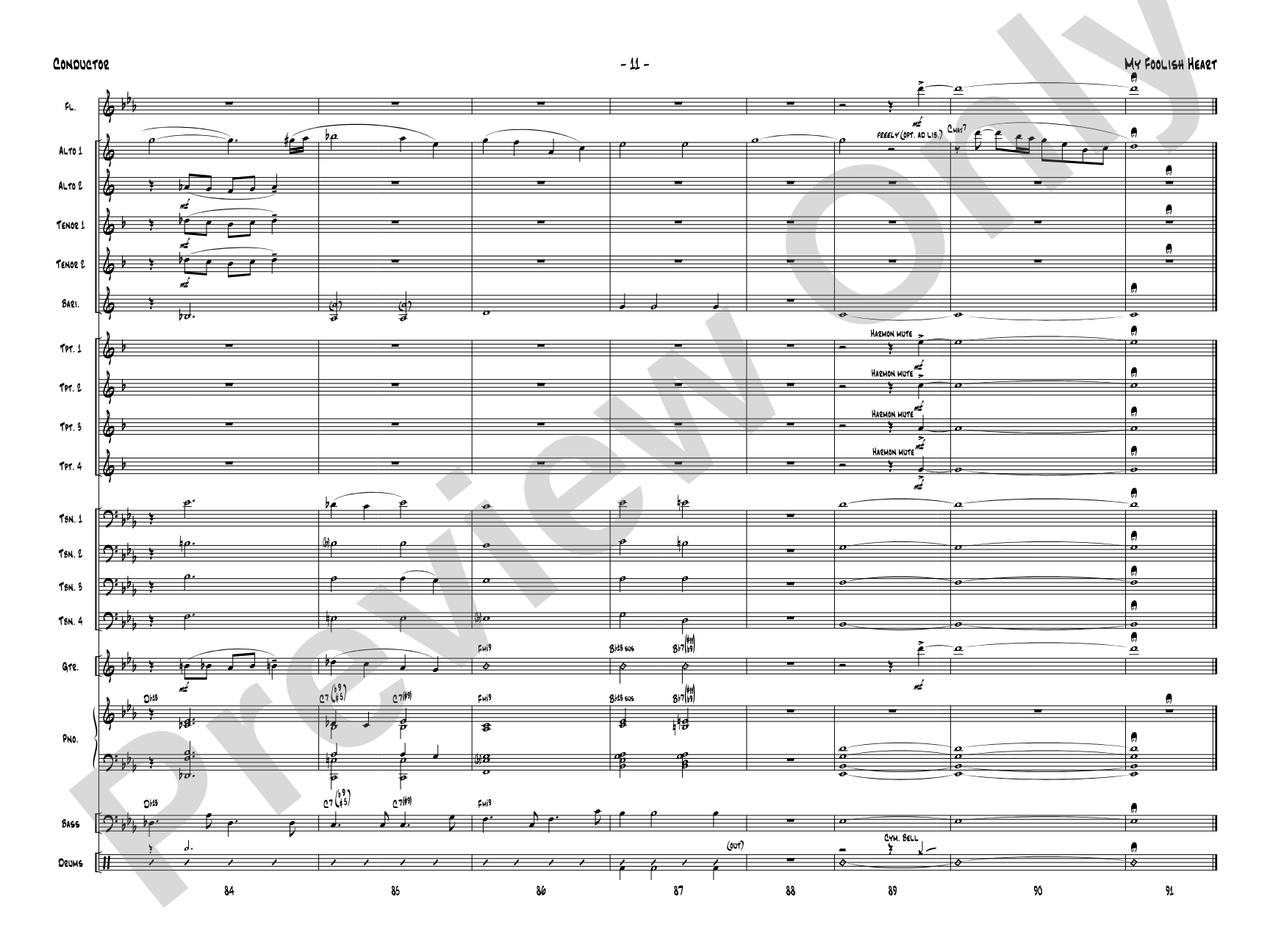




My Foolish Heart: Jazz Ensemble Conductor Score & Parts
Music by Victor Young, lyrics by Ned Washington / arr. Dave Rivello
Grade: 3 (Medium)
Item: 00-PK-0005021

$52.00
One moment…
Description
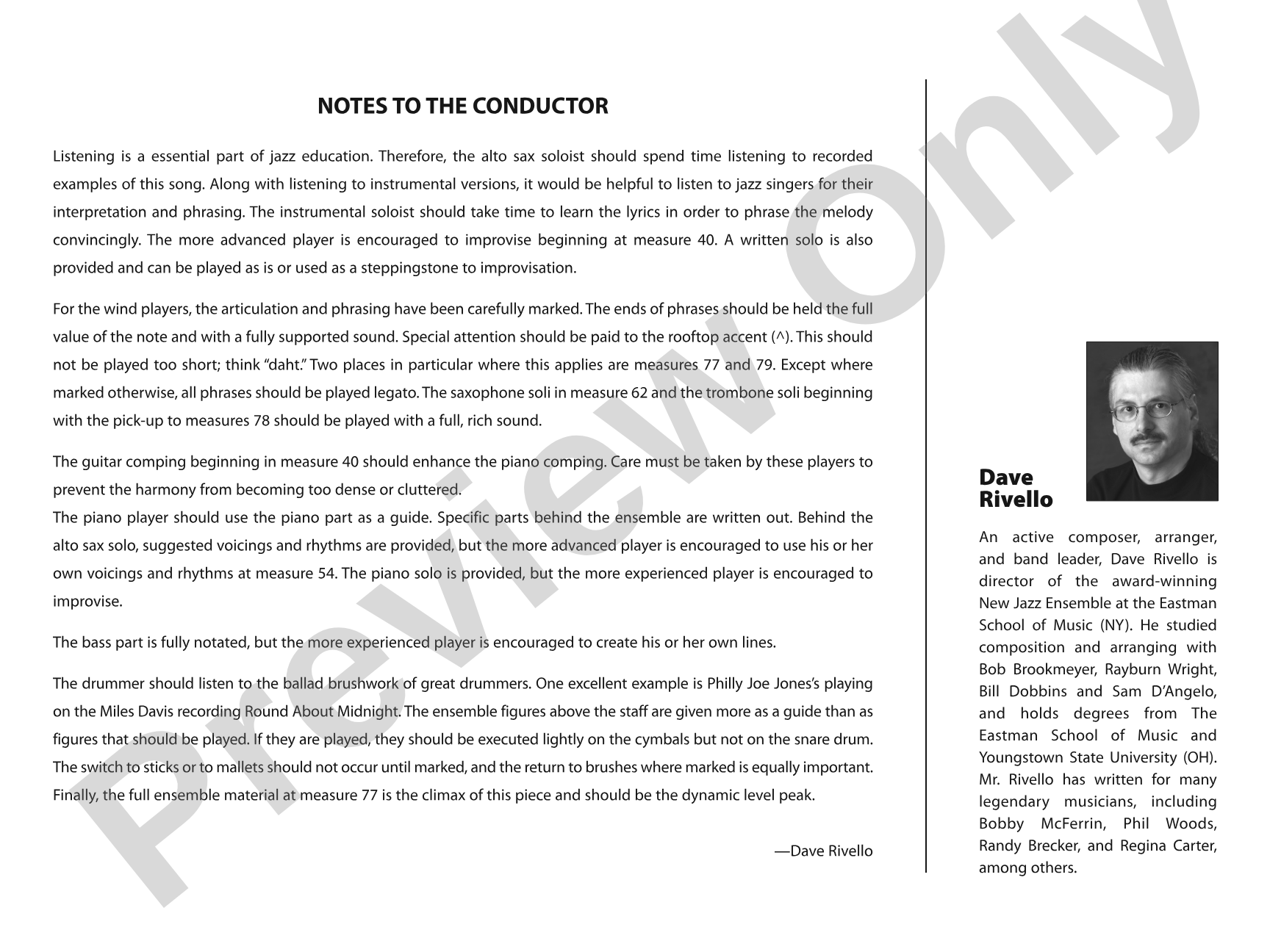
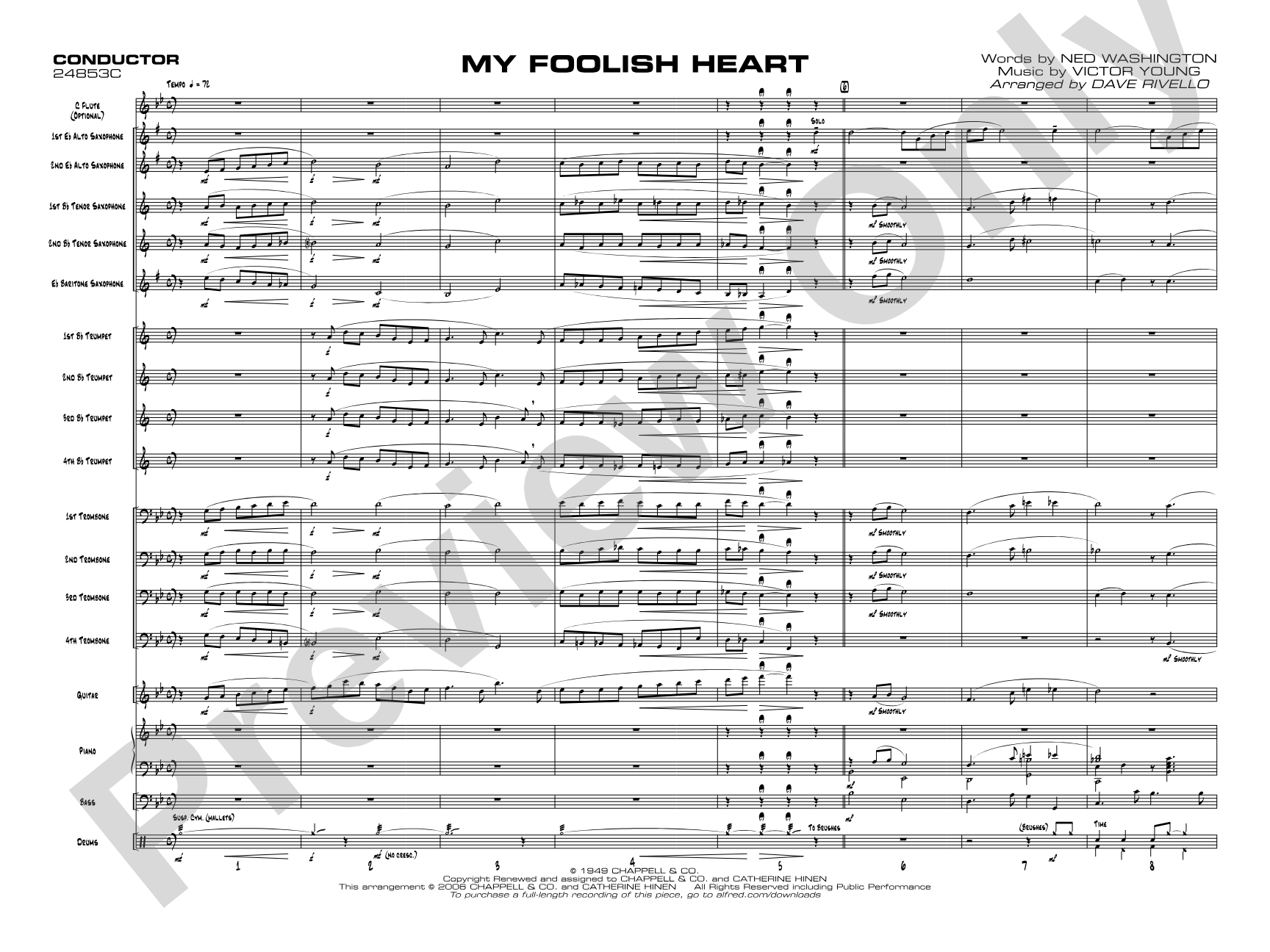
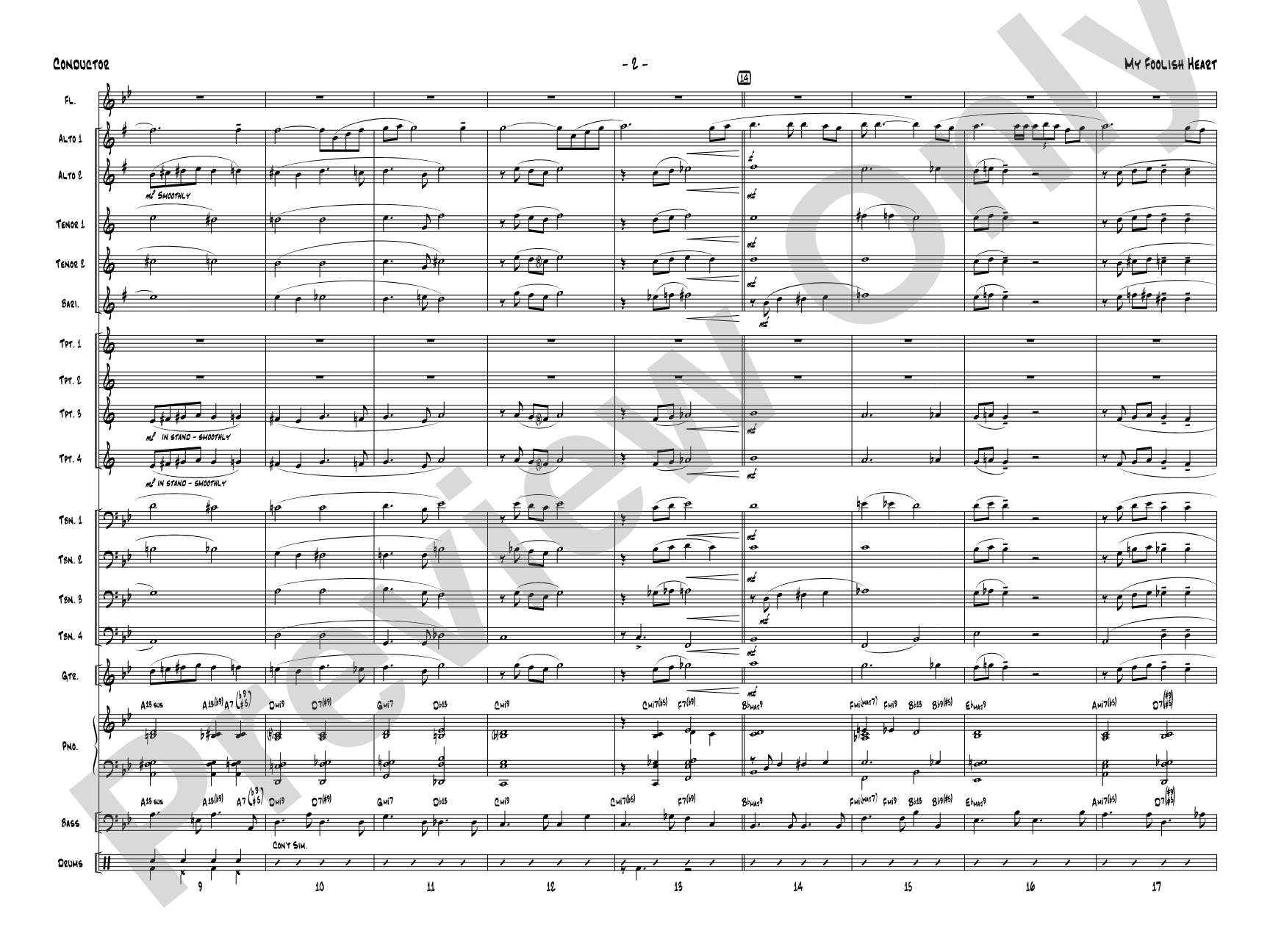
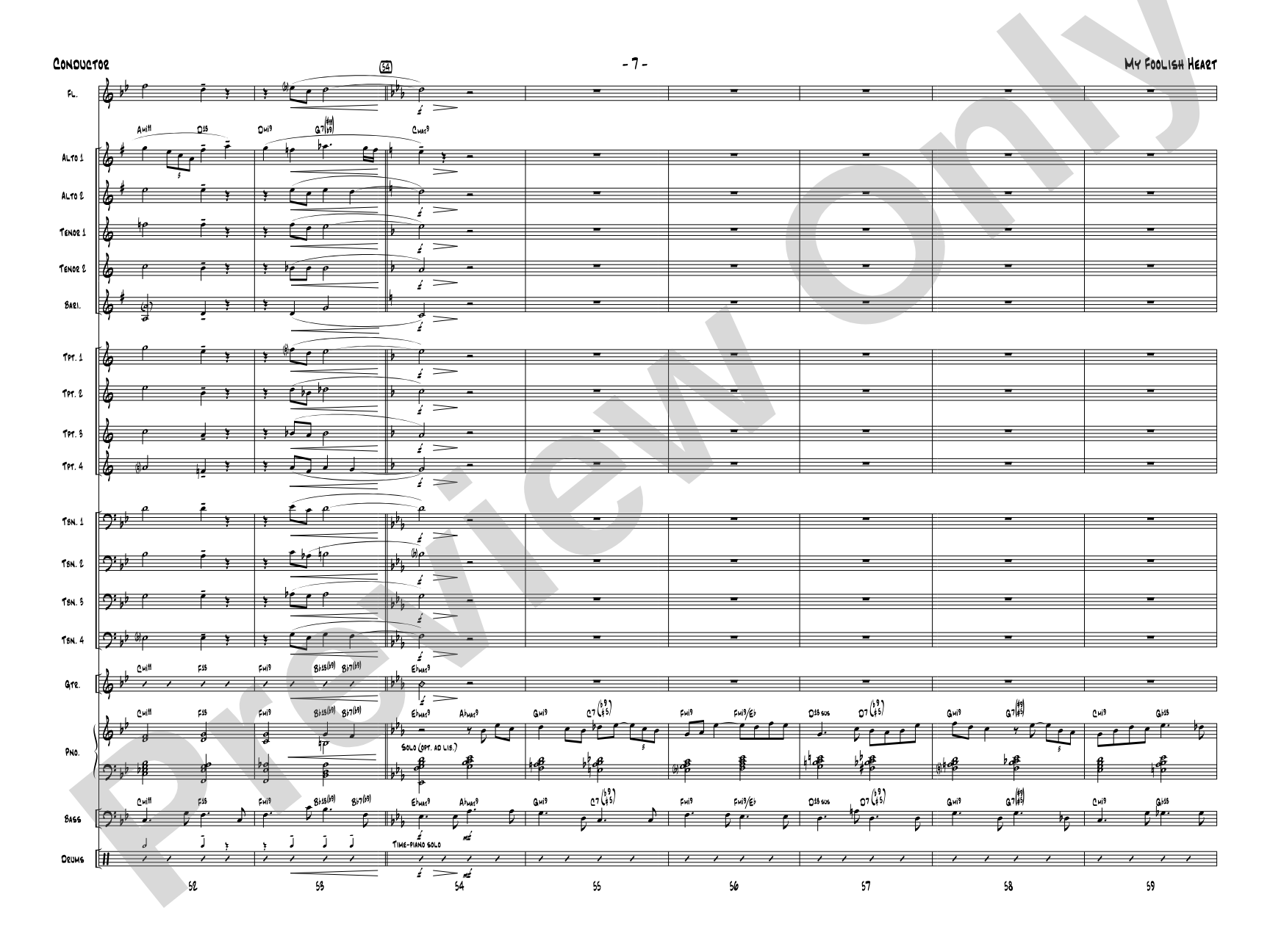
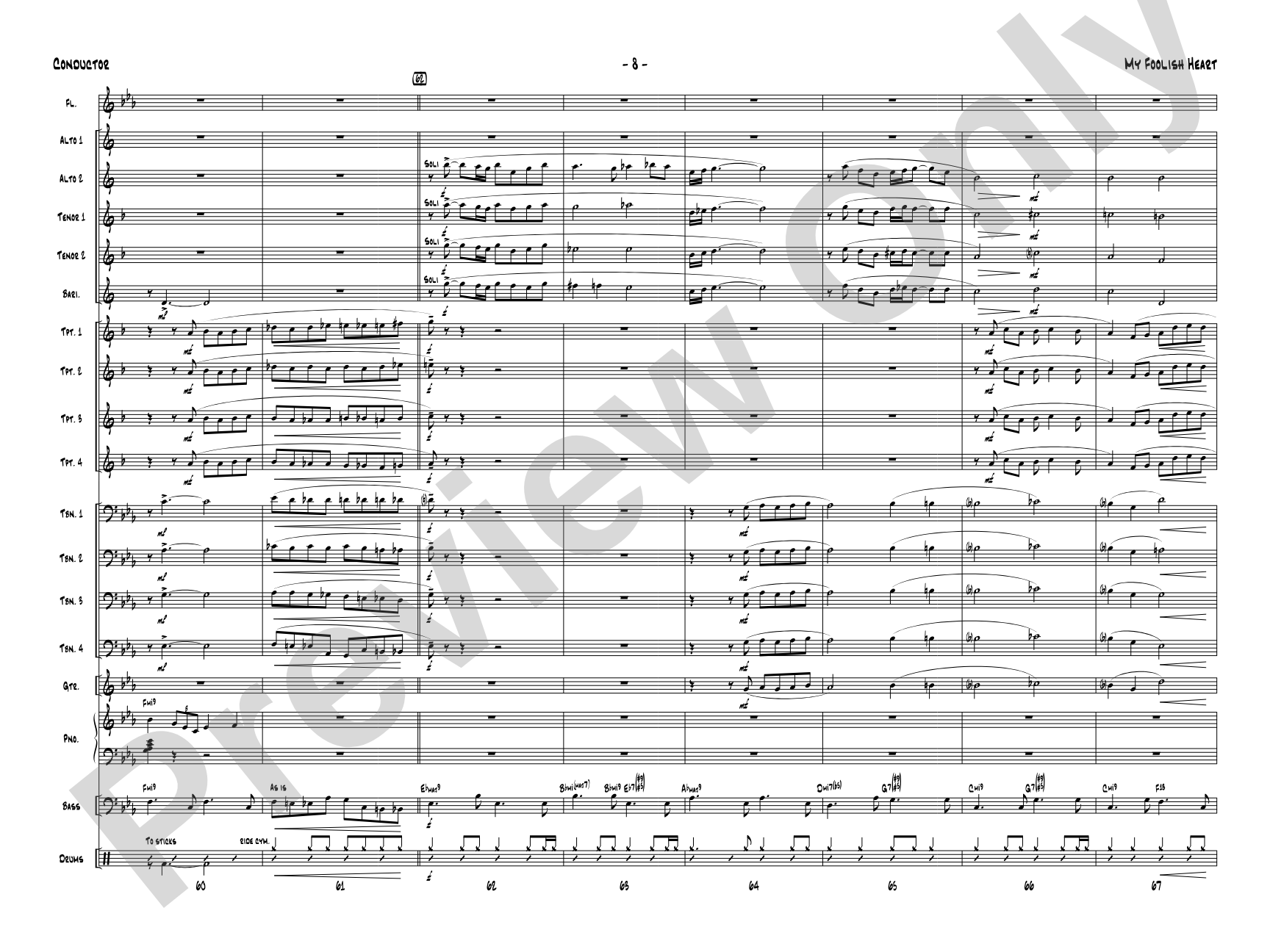
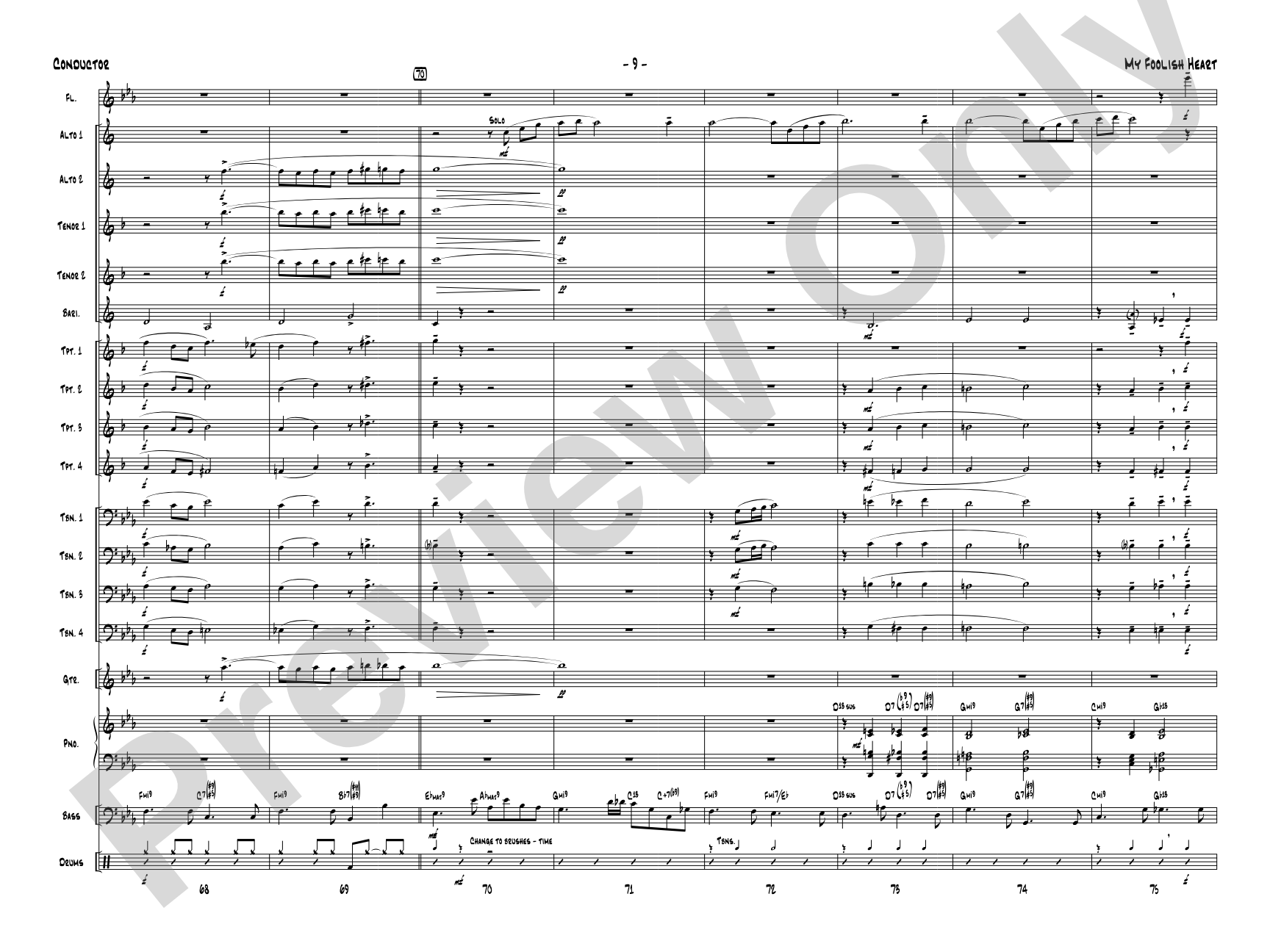
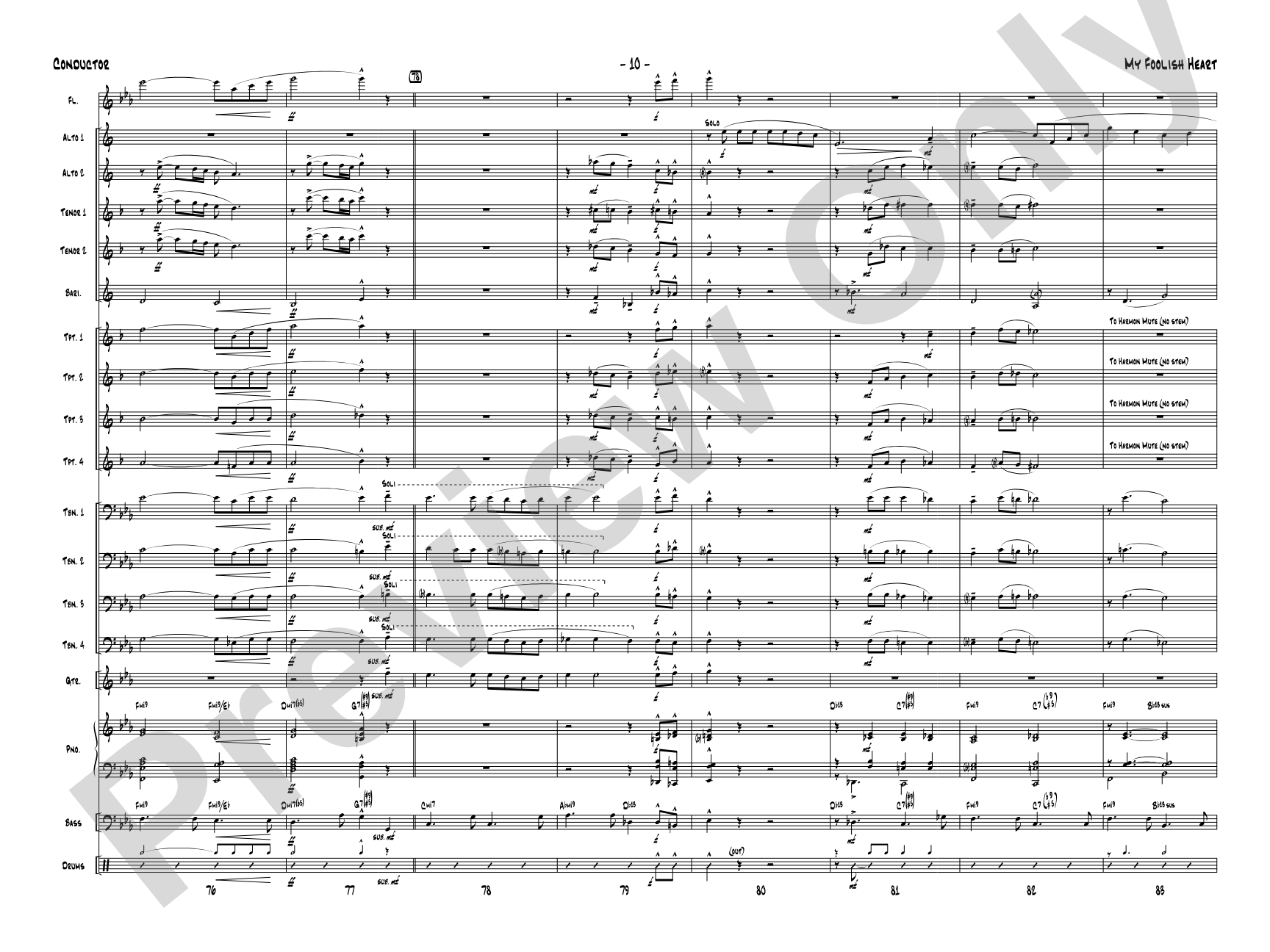
"My Foolish Heart" is a gorgeous ballad feature for alto saxophone. Arranged by Dave Rivello, this chart is lush with beautiful textures but very accessible to the Grade 3 level. Lead trumpet range is to written A above the staff, and everything is written-out for the alto sax soloist. Very Kenton-ish! This title is available in MakeMusic Cloud.


Don't just read it, hear it, play along with it, and watch your students grow with it. In MakeMusic Cloud, My Foolish Heart: Jazz Ensemble Conductor Score & Parts comes alive with professional accompaniment, adjustable tempo, and built-in practice tools that turn solo practice into real progress.
Open in the Player
Jump straight in and assign it today.
Start Your Free Trial
Open this title and explore the full library in minutes.
Sample Audio
1
Audio File
--:--
0:00
0:00
Sample Video
Additional Details
Series:
Jazz Band Series
Publisher:
Alfred Music
Page Count:
96
SKU:
00-PK-0005021
More about this title
About the Composer: Victor Young
Victor Young (1900-1956) was a prolific composer and conductor whose film scores and popular songs defined the sound of mid-century American cinema. His gift for melody and orchestration made him one of the most recorded composers of his era, with "My Foolish Heart" becoming a jazz standard through countless interpretations. Young's ability to write music that balanced sophistication with immediate emotional appeal has kept his work central to jazz repertoire.
Young's career spanned radio, film, and television, and his understanding of both pop sensibility and orchestral color shaped how arrangers continue to adapt his compositions. His melodies have become vehicles for musicians at every level to explore jazz phrasing and ensemble textures.
Why we love this
Dave Rivello has captured the essence of what makes this ballad special: lush voicings that sound far more complex than Grade 3 players can reasonably execute, yet the writing stays accessible throughout. The alto saxophone feature gives your section a genuine soloist moment without overshadowing the ensemble's role in shaping the emotional arc, and that Stan Kenton influence in the orchestration adds sophisticated texture without demanding advanced technique.
What to expect
Warm and introspective, with the kind of lush harmonies that make an ensemble sound more experienced than it is. The piece unfolds with the intimacy of a late-night jazz club, where restraint and nuance matter more than volume, and every instrument contributes to a shared emotional story.
Who it's for
Directors seeking a sophisticated yet achievable ballad feature that satisfies both player and audience at the Grade 3 level. Alto saxophonists who want to explore jazz phrasing within a support structure that's genuinely musical, not just a vehicle for the melody.
How to get the most out of it
- Let the ensemble establish the ballad's atmosphere in the opening before the alto soloist enters; the foundation they create determines how the solo will land emotionally.
- Balance the written-out alto saxophone line so it speaks clearly above the voicings without swallowing the harmonic colors underneath.
- Shape phrases through dynamics and articulation rather than tempo fluctuation; this arrangement works best when the pulse remains steady and predictable.
- Pay attention to the lead trumpet's upper register passages (up to written A); they're well-written but need careful breath support to maintain tone quality at that height.
How to use it
This works beautifully as a concert centerpiece that showcases your ensemble's tonal control and musicality without technical pyrotechnics. Pair it with a more energetic swing chart to highlight the range of what your group can express, or use it as a closer for a program that needs a graceful, contemplative exit.
Skills your students will build
- Jazz phrasing and breath control in a ballad context
- Reading and balancing written-out instrumental voicings
- Accompanying a featured soloist while maintaining ensemble cohesion
- Sustained tone production in the upper register (lead trumpet)
- Interpreting chord changes and harmonic movement in real time