My Favorite Things Sheet Music Preview

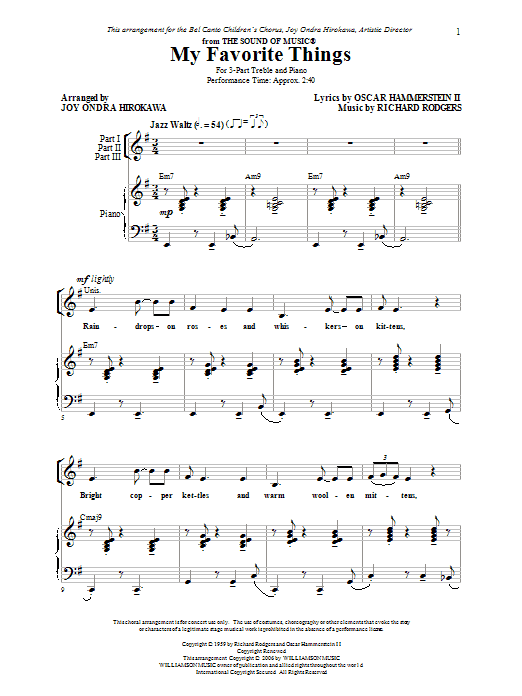
My Favorite Things: 3-Part Treble Choral Octavo

Arranged by Joy Ondra Hirokawa

Item: 35-DS00025650

Digital Download
$2.99
Description

My Favorite Things: 3-Part Treble Choral Octavo isn't in MakeMusic Cloud just yet...but it could be. Let us know you'd like to see it, and you'll help shape what comes next. In the meantime, start a free trial and dive into thousands of interactive titles your students can play along with today.

Sample Audio
No sample audio found.
Sample Video
Additional Details
Publisher: Hal Leonard
Page Count: 12
SKU: 35-DS00025650

More about this title

About the Arranger: Joy Ondra Hirokawa

Joy Ondra Hirokawa is a choral arranger known for her accessible yet musically sophisticated treatments of jazz standards and popular repertoire for treble voices. Her arrangements balance singability with harmonic interest, making them valuable resources for directors building jazz literacy in younger or less experienced choirs.

Why we love this

Hirokawa's voicing honors the swing and sophistication of Rodgers and Hammerstein's masterpiece while staying within the range and technical reach of developing singers. The 3-part texture opens this beloved standard to treble choirs that might otherwise lack appropriate jazz arrangements at an intermediate level.

What to expect

Warm and reflective, with the gentle sophistication of a jazz standard filtered through choral color. The arrangement lets the iconic melody shine while surrounding it with lush harmonic support that feels both contemporary and timeless.

Who it's for

Treble choirs at the intermediate level who are ready to explore jazz and musical theater repertoire beyond traditional concert works. This arrangement works especially well for groups with some choral experience but limited exposure to swing style.

How to get the most out of it

  • Nail the rhythmic swing of the melody line by listening closely to a vocal jazz recording before rehearsals begin; the phrasing sits differently than in classical treatments.
  • Balance the inner voices carefully so the harmonic color supports rather than obscures the tune.
  • Encourage singers to use natural diction and legit tone, avoiding oversinging the jazz idiom.

How to use it

Include this on a pops concert or lighter spring program where you want to shift the mood into jazz without abandoning the elegance the piece demands. Pairing it with other Rodgers and Hammerstein selections or a broader musical theater set creates natural programming momentum.

Skills your students will build

  • Swing rhythms and jazz phrasing conventions
  • Blend and balance in close three-part voicing
  • Dynamic control across an introspective melody
  • Stylistic flexibility moving between classical and jazz idioms

You May Also Like