My Favorite Pets Sheet Music Preview

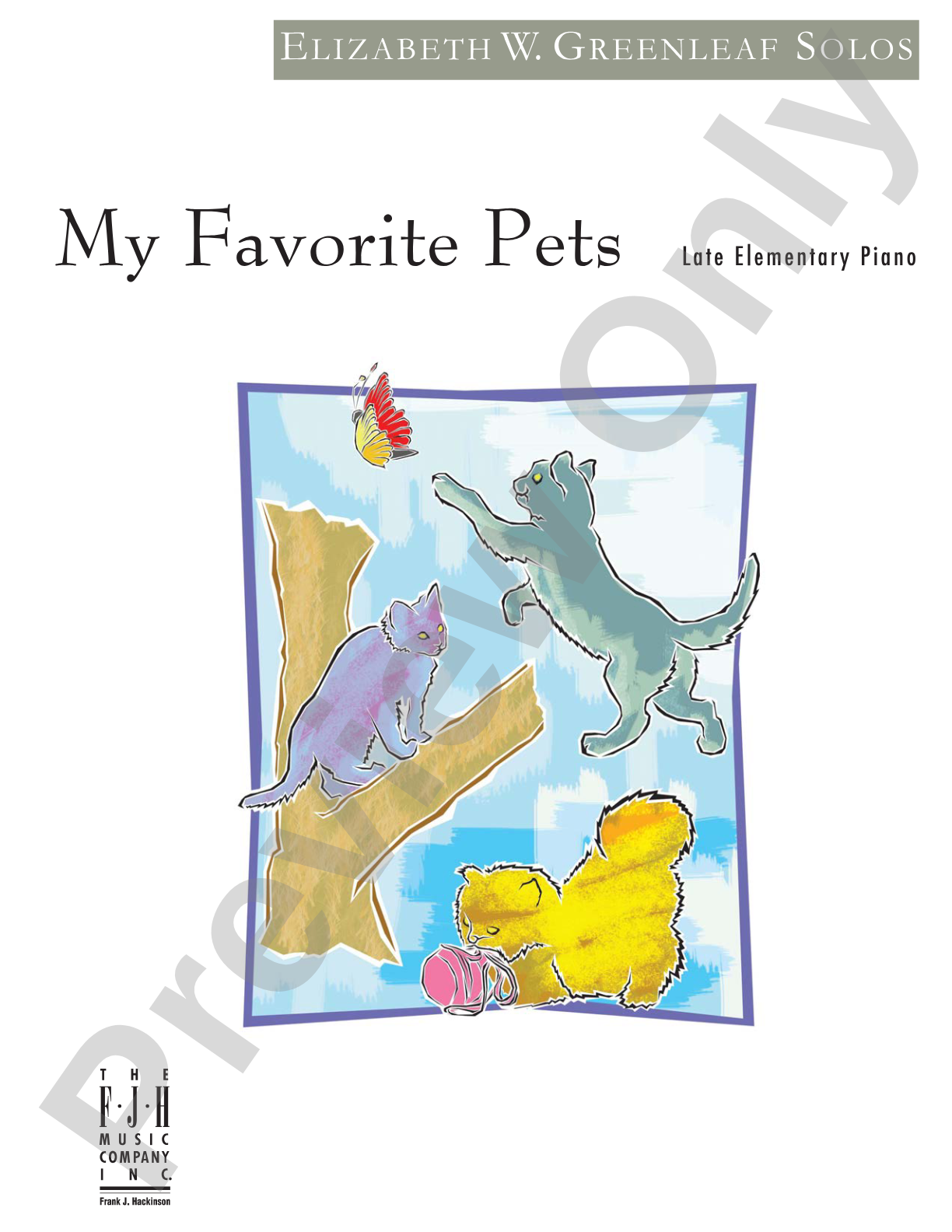
My Favorite Pets: Piano

By Elizabeth W. Greenleaf

Item: 98-DW9230

Digital Download
$2.50
Description
This late elementary piece provides constant changes in legato to staccato articulations and gives clues along the way to answer the riddle-like question, "Who are my favorite pets?" There are some shifts in fingering to keep students from playing in one hand position.

My Favorite Pets: Piano isn't in MakeMusic Cloud just yet...but it could be. Let us know you'd like to see it, and you'll help shape what comes next. In the meantime, start a free trial and dive into thousands of interactive titles your students can play along with today.

Sample Audio
No sample audio found.
Sample Video
Additional Details
Series: Written For You
Publisher: The FJH Music Company, Inc.
SKU: 98-DW9230

More about this title

Why we love this

Greenleaf crafts a piece that teaches articulation control through narrative engagement rather than drill. Students stay invested because they're solving a mystery, not just practicing legato and staccato switching, which means they listen critically to their own playing.

What to expect

Playful and detective-like, with the music shifting between smooth, connected phrasing and bouncy, separated notes. The riddle structure keeps the listener guessing while showcasing a young pianist's growing control over contrasting articulations.

Who it's for

Late elementary pianists ready to move beyond consistent hand positions and who respond well to programmatic elements. This piece suits students who benefit from a concrete story to anchor their technical practice.

How to get the most out of it

  • Map out the articulation changes in pencil before the first run-through. Circle or underline every staccato marking so fingering shifts don't distract from the articulation work.
  • Practice the legato and staccato sections separately at a comfortable tempo, then gradually integrate them. The contrast will be sharper and the transitions cleaner.
  • Pay attention to hand position shifts as compositional clues. Each new hand position often signals a new pet in the riddle, so use the physical change to reinforce the musical idea.

How to use it

Feature this in a recital or studio class where humor and storytelling resonate with families. It works especially well on a program alongside other narrative or descriptive pieces, or as a bridge piece that signals a student's readiness for more expressive, character-driven repertoire.

Skills your students will build

  • Legato to staccato articulation control and rapid switching
  • Hand position shifts and corresponding fingering adjustments
  • Listening for and executing contrasting touch within a single piece

You May Also Like