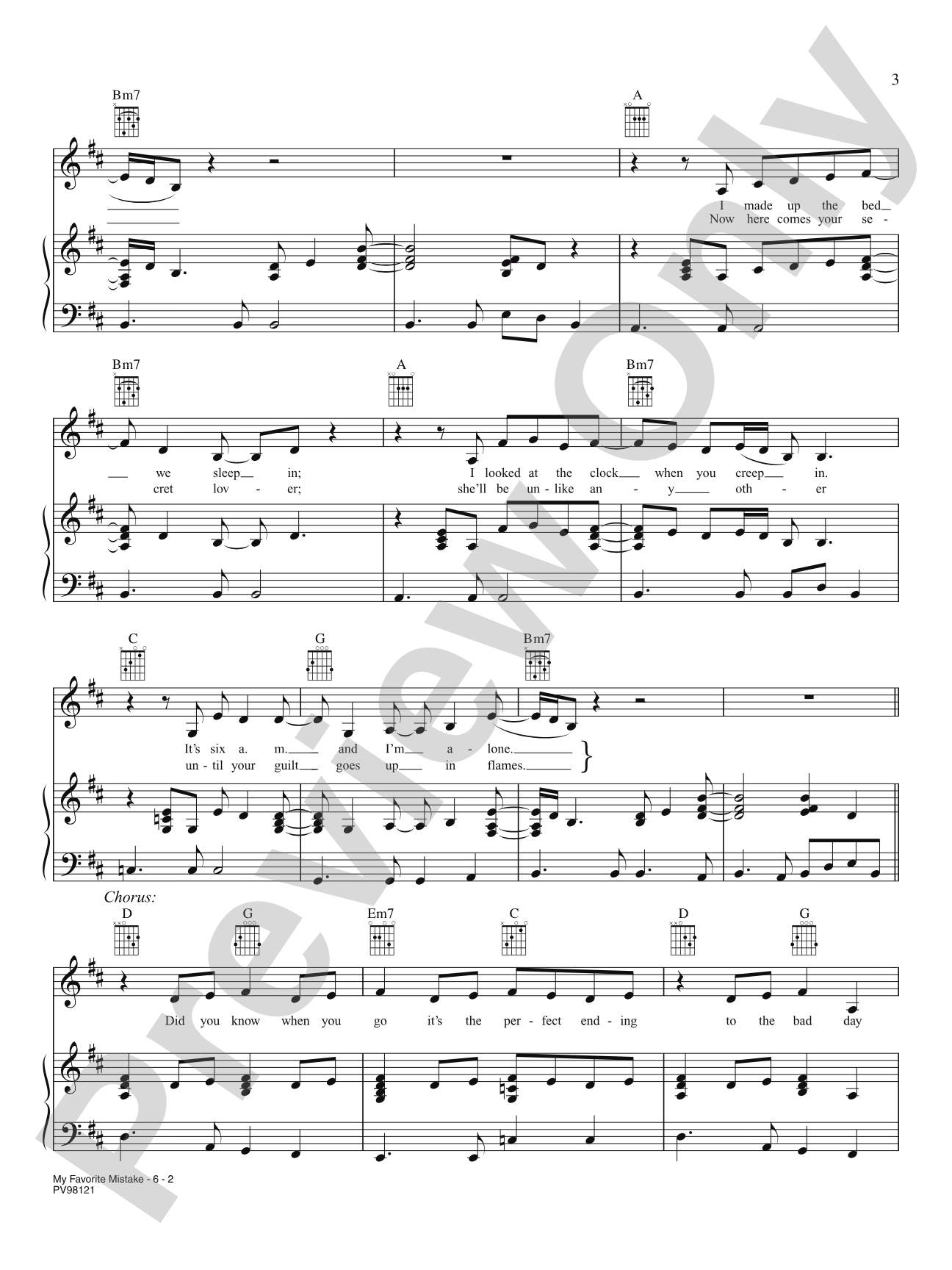
My Favorite Mistake Sheet Music Preview

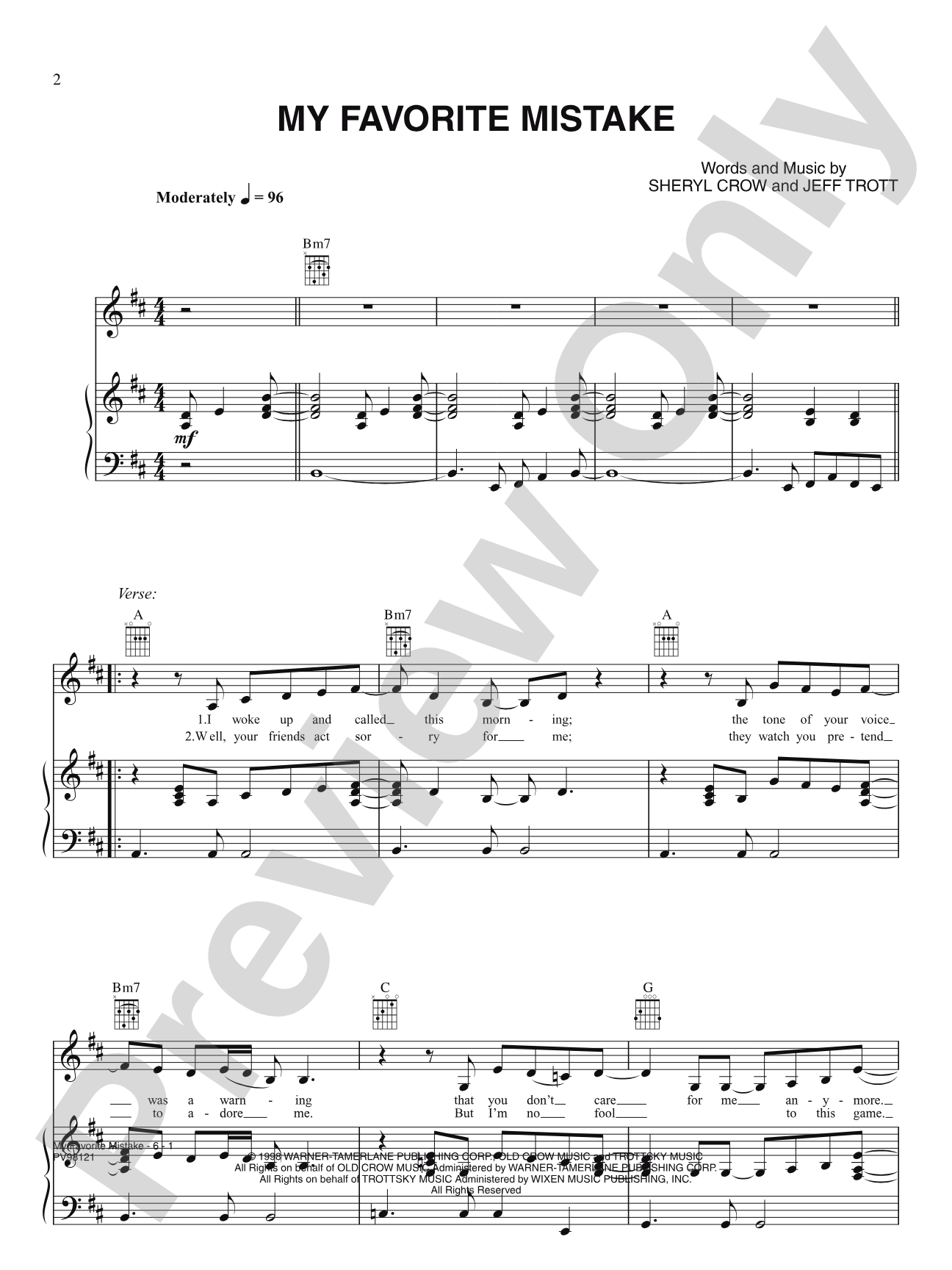
My Favorite Mistake: Piano/Vocal/Chords

Recorded by Sheryl Crow

Item: 00-PIP-000210

Digital Download
$3.99
Description

My Favorite Mistake: Piano/Vocal/Chords isn't in MakeMusic Cloud just yet...but it could be. Let us know you'd like to see it, and you'll help shape what comes next. In the meantime, start a free trial and dive into thousands of interactive titles your students can play along with today.

Sample Audio
No sample audio found.
Sample Video
Additional Details
Publisher: Alfred Music
Page Count: 8
SKU: 00-PIP-000210

More about this title

About the Artist: Sheryl Crow

Sheryl Crow rose to prominence in the 1990s as a singer-songwriter and multi-instrumentalist whose work bridged pop, rock, and country sensibilities. Her vocal style—conversational and deeply expressive—combined with her gift for crafting memorable melodies made her one of the decade's most distinctive artists. Crow's approach to songwriting emphasizes emotional authenticity and narrative clarity, qualities that shine through in her most enduring compositions.

For music students and performers, Crow's catalog offers valuable lessons in vocal phrasing, dynamic restraint, and the interplay between lyrical content and melodic shape. Her work demonstrates how strong melodic writing and honest vocal delivery can anchor a song across multiple genres and generations.

Why we love this

This song captures the conversational vocal style that defined Crow's artistry, giving vocalists a chance to develop nuance in storytelling and emotional restraint. The piano arrangement sits comfortably for singers who are still building their range and confidence, while the chord progressions offer intermediate pianists room to develop sensitivity and accompaniment technique. It's a contemporary song choice that resonates with performers across age groups, making it valuable for mixed recitals or young adult vocal programs.

What to expect

The song carries a reflective, almost rueful tone—there's affection mixed with hard-won wisdom. The melody moves naturally through the harmonic landscape, neither overly complicated nor simplistic, creating space for the singer to convey layers of feeling without vocal gymnastics.

Who it's for

Vocalists working on contemporary pop-rock material who want to develop phrasing skills and emotional authenticity will find this song especially rewarding. Pianists seeking accessible accompaniment repertoire that still offers genuine musicality and harmonic interest will appreciate the balance of playability and sophistication. Teachers looking for songs that bridge classical training with modern repertoire will find this a practical choice for mixed recitals, vocal ensembles, or showcase performances.

How to get the most out of it

  • Honor the conversational phrasing in the melody; the vocal line works best when it feels like natural speech rather than sung phrases, so listen for where Crow lets the music breathe and follow those instincts.
  • Balance the piano's role as both rhythmic anchor and emotional underscore; resist the urge to drive the accompaniment too hard, allowing space for the vocal line to sit comfortably in the foreground.
  • Pay attention to the chord voicings provided; they give hints about harmonic color and emotional tone, so exploring different inversions and voicing options can deepen the song's impact.
  • Shape the dynamics across the full song arc rather than treating each section identically; the subtle emotional shifts between verses and chorus become much clearer with thoughtful volume and intensity choices.

How to use it

This works well in a contemporary vocal showcase or mixed recital where you want to anchor pop-rock material between classical and musical theater selections. The eight-page format keeps rehearsal manageable while offering enough musical substance to feel like a substantial performance piece, making it suitable for advanced vocal students preparing for college auditions or recital requirements.

Skills your students will build

  • Interpretive phrasing and vocal storytelling in contemporary popular music
  • Piano accompaniment technique with attention to rhythmic flexibility and dynamic support
  • Reading and realizing lead-sheet chord symbols in practical performance contexts
  • Balancing vocal and instrumental roles while maintaining emotional cohesion

You May Also Like