
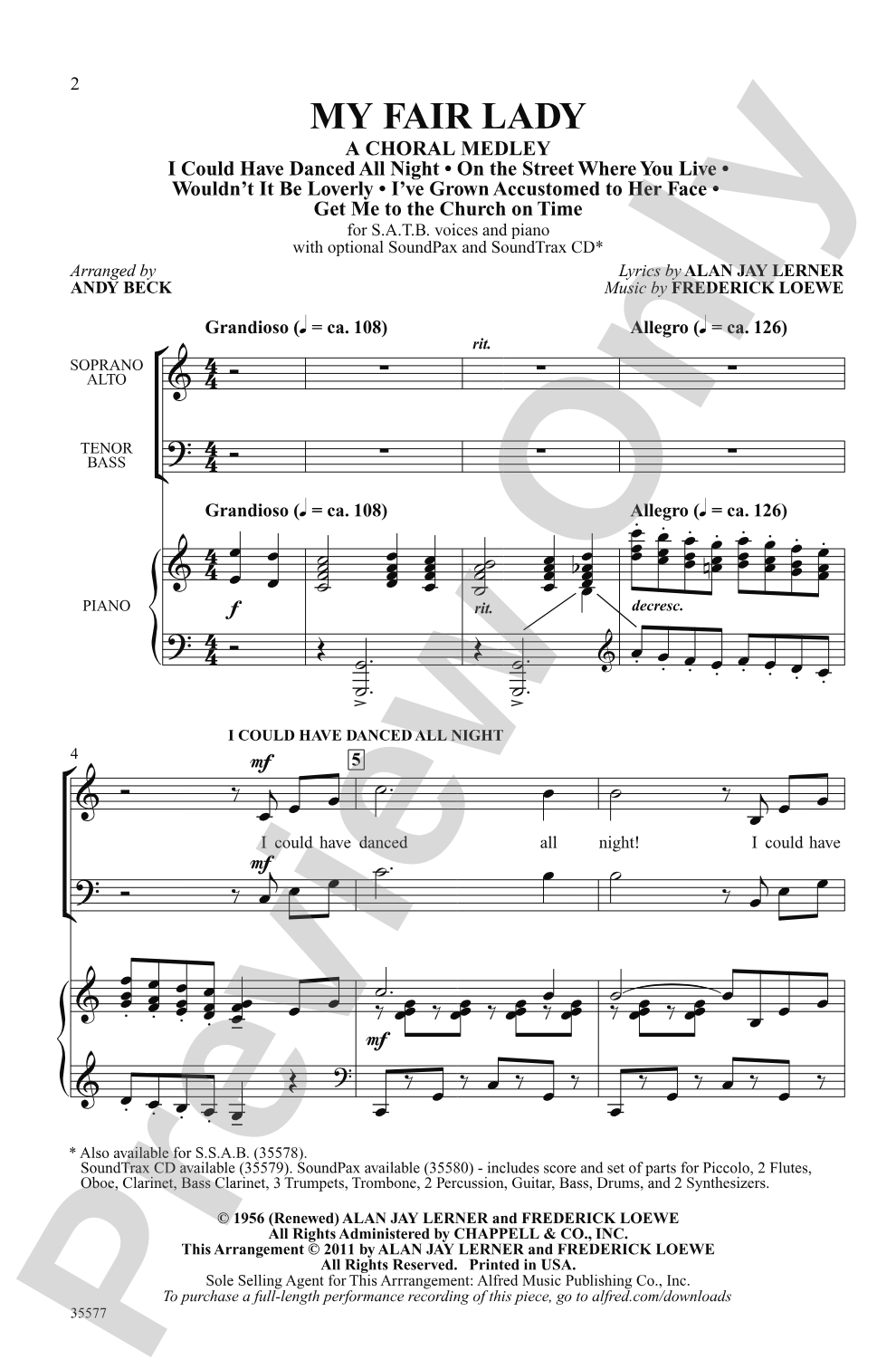
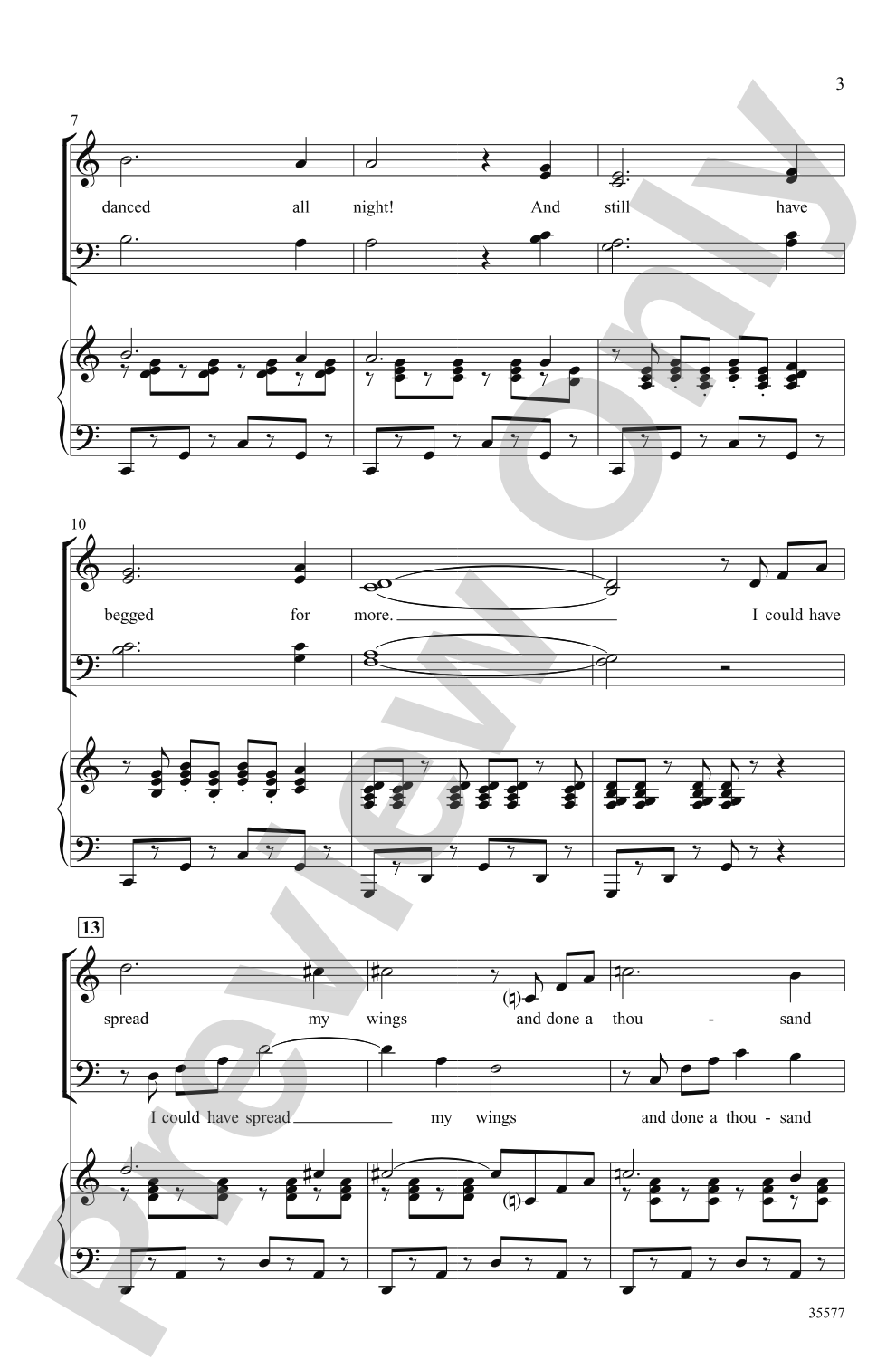
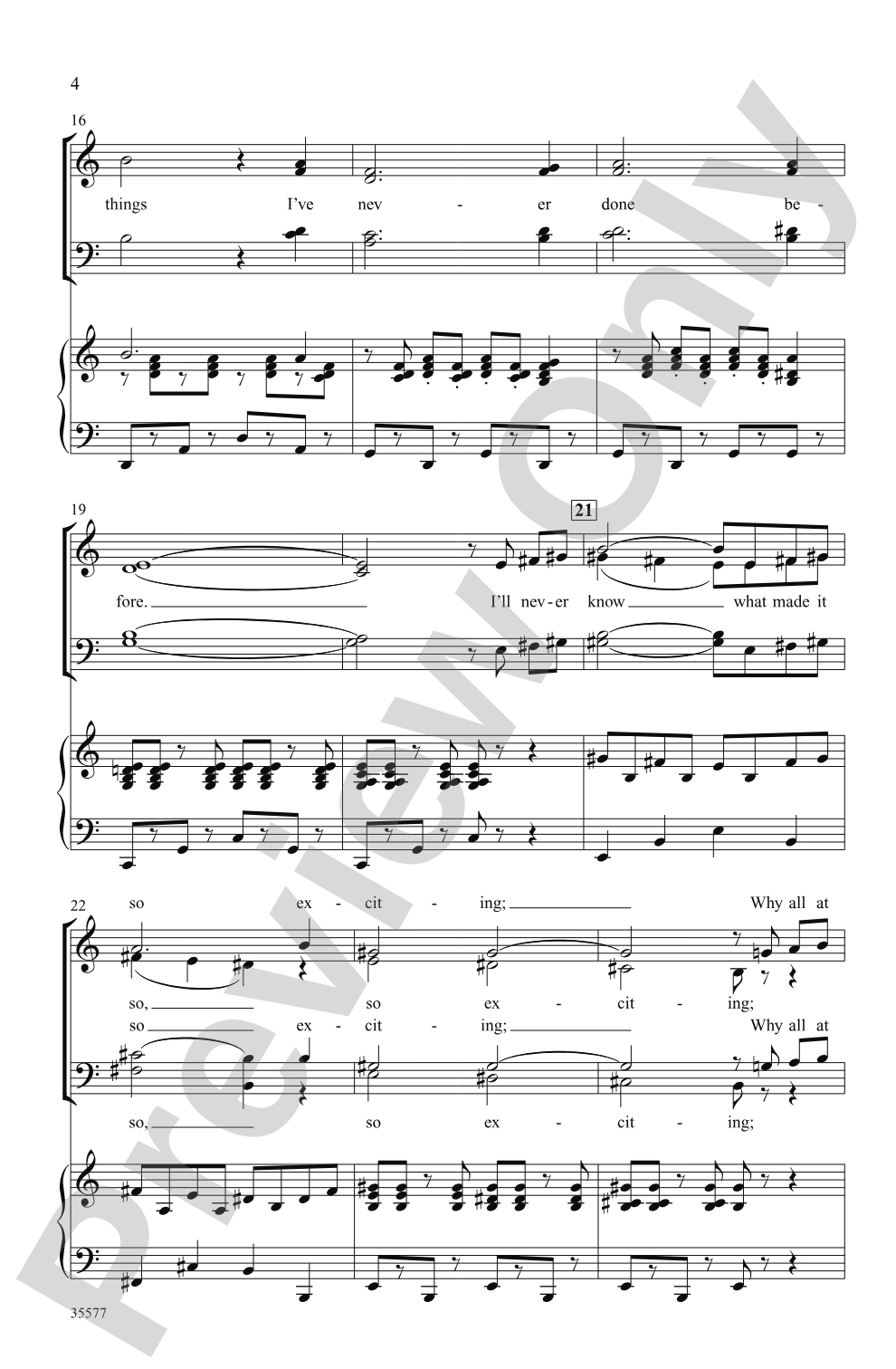
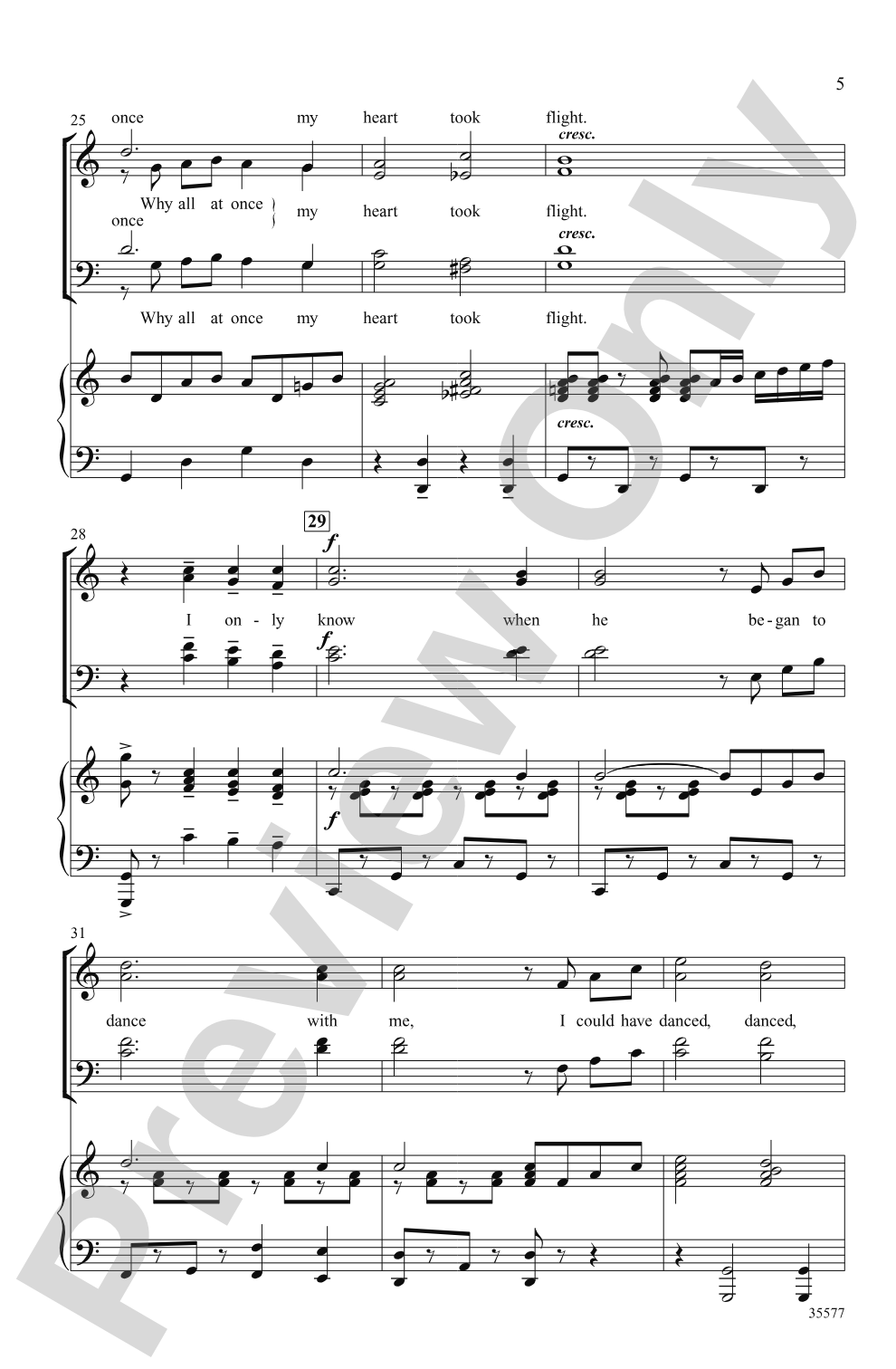
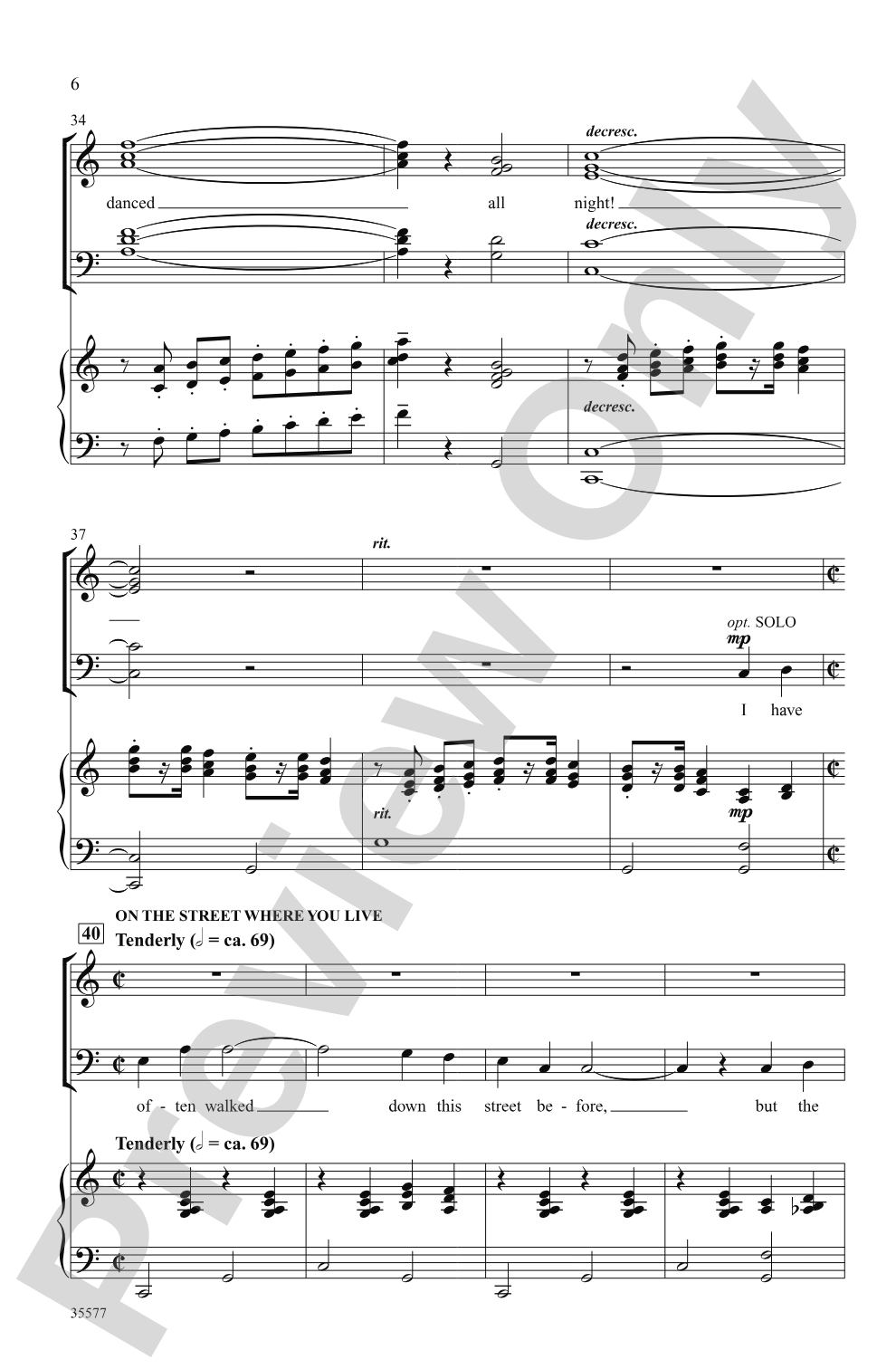
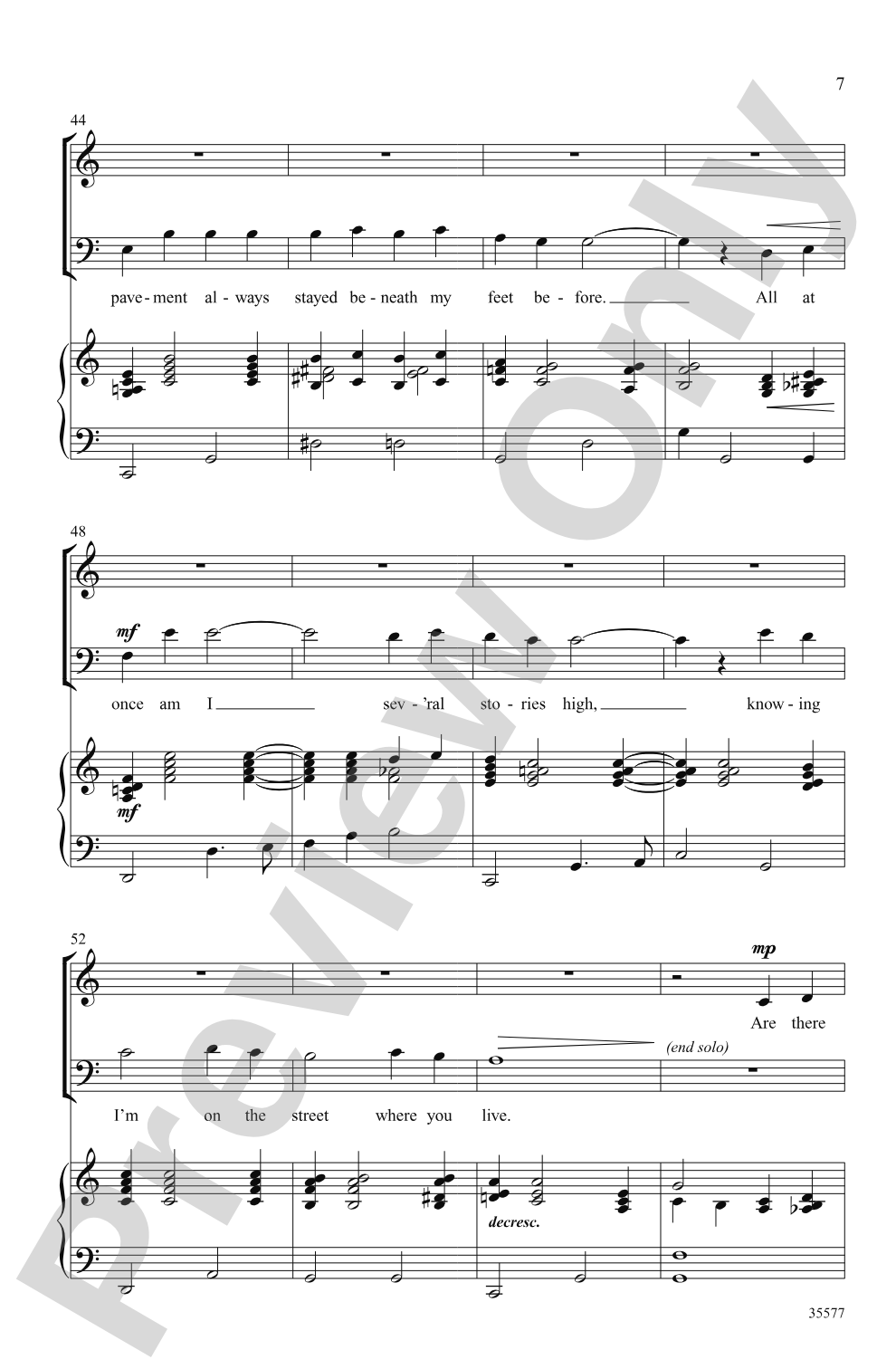

My Fair Lady: SATB Choral Octavo
A Choral Medley: I Could Have Danced All Night / On the Street Where You Live / Wouldn't It Be Loverly / I've Grown Accustomed to Her Face / Get Me to the Church On Time
Lyrics by Alan Jay Lerner, music by Frederick Loewe / arr. Andy Beck
Item: 00-PO-0000998
$3.50
Minimum order quantity: 20 copies
One moment…
Related Items
My Fair Lady: SoundTrax Digital Audio Download |
$49.99
|
View | |
My Fair Lady: SSAB Choral Octavo |
$3.50
|
View | |
My Fair Lady: Choral SoundPax |
$60.00
|
View | |
My Fair Lady: SATB Choral Octavo |
$3.50
|
View | |
My Fair Lady: SSAB Choral Octavo |
$3.50
|
View | |
My Fair Lady: Choral Octavo SoundTrax CD |
$49.99
|
View | |
My Fair Lady: Choral SoundPax |
$60.00
|
View |
Description
Rediscover the impressive music from the Broadway and Hollywood blockbuster My Fair Lady. These indelible stage and screen songs are classics of American musical theatre and are as impressive today as when at the height of their popularity. Rich choral moments, theatrical solo opportunities, and sweeping orchestrations offer 7-minutes of first-class entertainment.


My Fair Lady: SATB Choral Octavo isn't in MakeMusic Cloud just yet...but it could be. Let us know you'd like to see it, and you'll help shape what comes next. In the meantime, start a free trial and dive into thousands of interactive titles your students can play along with today.
Request This Title
Tell us you want it.
Start Your Free Trial
Explore everything that's ready to play right now.
Sample Audio
1
Audio File
--:--
0:00
0:00
Sample Video
No sample videos found.
Additional Details
Series:
Alfred Pop Choral Series
Publisher:
Alfred Music
Page Count:
28
SKU:
00-PO-0000998
More about this title
About the Composer: Frederick Loewe
Frederick Loewe (1901–1988) was an Austrian-American composer who fundamentally shaped the golden age of Broadway musical theatre. Alongside lyricist Alan Jay Lerner, he created some of the most enduring scores in theatrical history, including Brigadoon, Paint Your Wagon, Gigi, and My Fair Lady. His gift for memorable melody, sophisticated harmonic language, and orchestral color set a standard that continues to influence musical theatre composition today.
Loewe's training in classical composition and piano performance gave his stage works a musical depth that appealed equally to concert audiences and Broadway crowds. My Fair Lady, which premiered in 1956, remains his masterpiece: a score that seamlessly blends witty patter songs with sweeping romantic moments and demonstrates why Loewe's work remains central to any serious study of American musical theatre.
Why we love this
Andy Beck's arrangement captures the theatrical grandeur of Loewe's original orchestrations while keeping the choral writing singable and dramatically engaging across all four voice parts. The variety of musical moments—from character-driven solos to lush harmonic passages—makes this feel like a fully realized theatrical experience rather than a simplified choral medley. Programming this octavo signals to your audience that your choir can command both musical sophistication and entertainment value.
What to expect
Seven minutes of charm, wit, and romantic sweep. The music moves effortlessly from intimate character moments to grand ensemble passages, shifting in tone from playful to sincere without losing its theatrical energy. Singing this octavo feels like stepping into a world of elegance and sophistication where melody and harmony serve storytelling.
Who it's for
This octavo works well for intermediate to advanced high school or college choirs seeking repertoire that combines musical substance with theatrical appeal. Singers gain experience with sophisticated harmonic writing and character work while audiences enjoy music they recognize and love from one of theatre's most celebrated scores.
How to get the most out of it
- Lean into character with the solo lines. This is theatrical music, so the soloists should inhabit their moments with personality; the choir supports these scenes rather than overshadowing them.
- Balance the SATB texture carefully in the ensemble passages. Loewe's harmonies are rich, and each voice part carries melodic interest; avoid letting any section disappear.
- Use the recorded accompaniment strategically during rehearsal to hear how the arrangement sits against the full orchestration, then gradually reduce reliance on it as singers internalize their parts.
- Pay attention to diction and articulation to maintain clarity in faster passages. Clean consonants and well-shaped vowels preserve both the wit and the musicality.
How to use it
This works beautifully as a standalone choral feature that gives your choir a rest from more classical or contemporary fare while still demonstrating musicianship. It also pairs naturally with other American musical theatre selections or serves as a bridge between a classical first half and a lighter second half of a concert. Consider programming it when your audience expects to hear familiar, beloved music performed with genuine artistry.
Skills your students will build
- Balancing theatrical character work with ensemble blend in SATB voicing
- Reading and executing Loewe's sophisticated harmonic progressions
- Maintaining musical clarity and diction in theatrical contexts
- Interpreting solo passages with personality while maintaining choral cohesion