
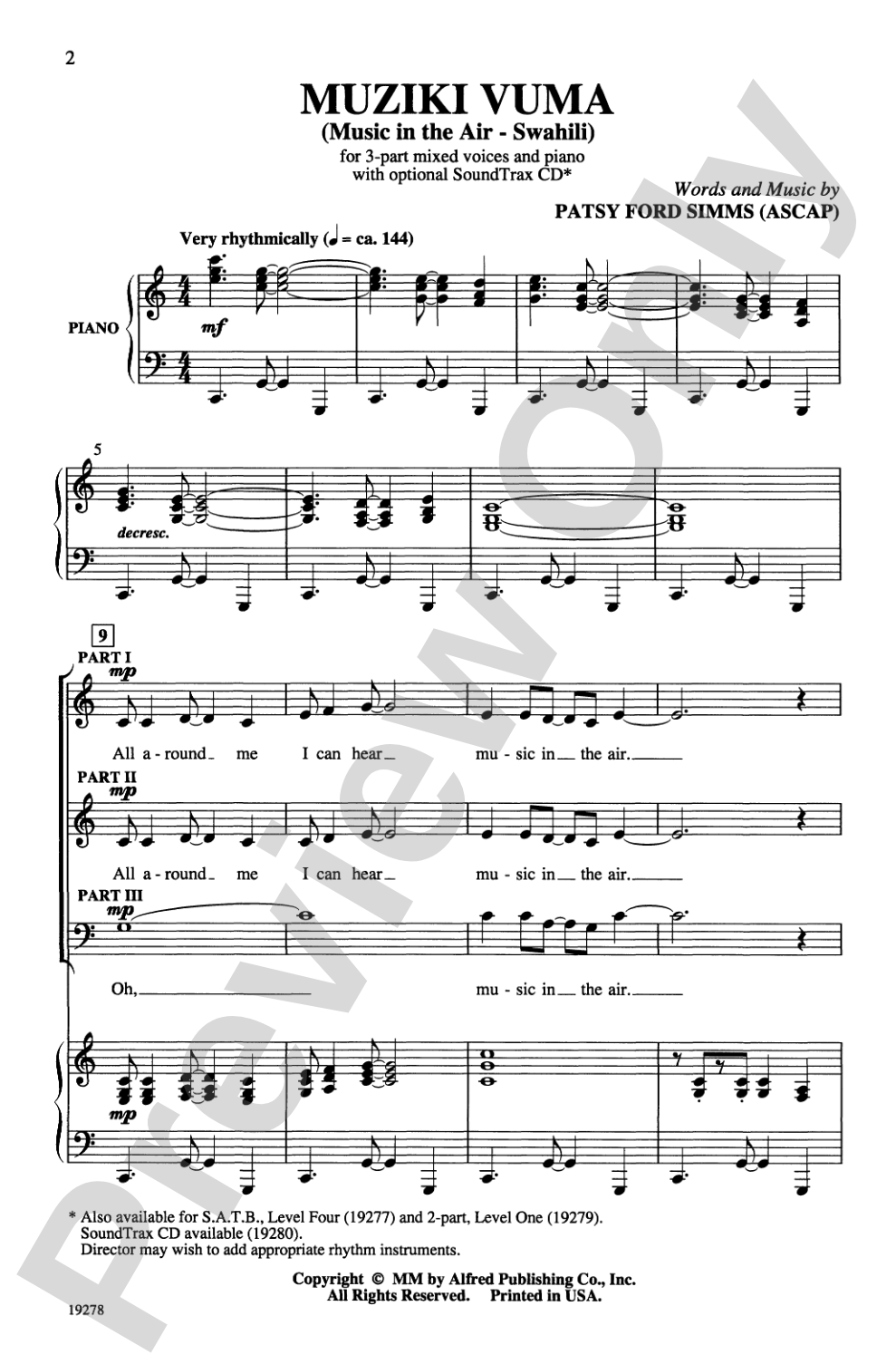
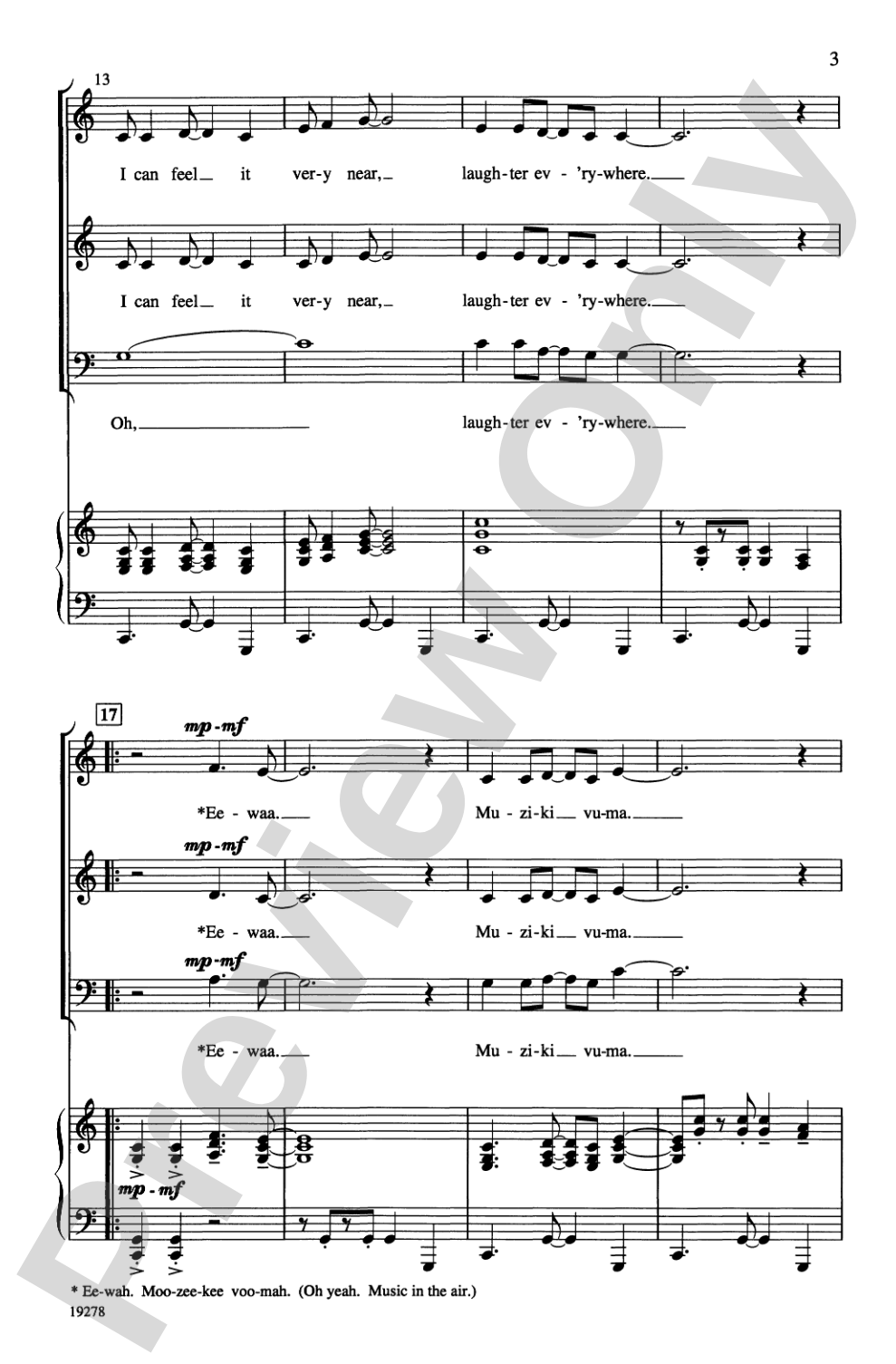

Muziki Vuma (Music in the Air - Swahili): 3-Part Mixed Choral Octavo
(Music in the Air -- Swahili)
Music by Patsy Ford Simms
Item: 00-PO-0004154
$2.25
Minimum order quantity: 20 copies
Pickup currently not available
Related Items
Muziki Vuma: SATB Choral Octavo |
$2.25
|
View | |
Muziki Vuma (Music in the Air - Swahili): 2-Part Choral Octavo |
$2.25
|
View | |
Muziki Vuma: SATB Choral Octavo |
$2.25
|
View | |
Muziki Vuma: 3-Part Mixed Choral Octavo |
$2.25
|
View | |
Muziki Vuma: 2-Part Choral Octavo |
$2.25
|
View | |
Muziki Vuma: Choral Octavo SoundTrax CD |
$27.99
|
View |
Description
Muziki Vuma means "music in the air" in Swahili, and the text of this infectious, cross-cultural piece is a combination of English and Swahili. It's rhythmic, with an African pulse, and the melodies reflect its African heritage. Rhythm instruments can be easily added, or use the African feel of the SoundTrax CD. Great for choirs of all ages; one of the three editions will be perfect for your group. A fun-to-sing, easy-to-learn cross-cultural piece for your general concerts. Included on Sally's "In the Spotlight!" Video, #19803.


Muziki Vuma (Music in the Air - Swahili): 3-Part Mixed Choral Octavo isn't in MakeMusic Cloud just yet...but it could be. Let us know you'd like to see it, and you'll help shape what comes next. In the meantime, start a free trial and dive into thousands of interactive titles your students can play along with today.
Request This Title
Tell us you want it.
Start Your Free Trial
Explore everything that's ready to play right now.
Sample Audio
1
Audio File
--:--
0:00
0:00
Sample Video
Additional Details
Series:
Alfred Archive Edition: Alfred Choral Designs
Publisher:
Alfred Music
Page Count:
12
SKU:
00-PO-0004154
More about this title
About the Composer: Patsy Ford Simms
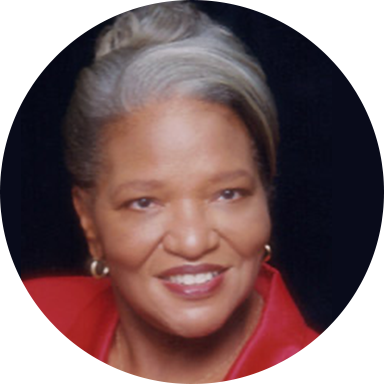
Patsy Ford Simms began her publishing career in 1981 and has since created over 300 compositions and arrangements for educational and church settings across multiple publishing houses, including Shawnee Press. Her prolific output emerged from a practical need: during her early years teaching, she found few suitable choral octavos written for junior high and middle school voices, so she began writing them herself.
Simms holds a Bachelor of Science in Music Education from Knoxville College, a Master of Education from the University of Louisville, and a doctorate in Music Education from Columbia Pacific University. Over 30 years in the classroom (spanning grades K-12 and the Youth Performing Arts School), she earned recognition as an arranger, composer, and clinician, presenting her work internationally in Italy and Africa. Her catalog includes commissioned pieces and musicals centered on African American history. Two of her compositions were selected for MENC World's Largest Concerts, and she has received numerous ASCAP Special Music Awards.
Why we love this
Simms wrote this piece directly from her understanding of what middle and high school singers need: material that's genuinely fun to learn and sing, not patronizing or overly simplistic. The bilingual English-Swahili text and African rhythmic drive give your singers something culturally rich to connect with, while the three-part mixed voicing keeps the harmonic language accessible and the part-writing singable across a range of abilities.
What to expect
The piece pulses with infectious rhythmic energy grounded in African musical traditions. The combination of English and Swahili text creates a bridge between cultures, while the melodic lines have an earthy, memorable quality that sits comfortably in the voice.
Who it's for
This octavo suits choirs across a wide age range, from middle school through adult ensembles seeking approachable, engaging concert repertoire. Any group wanting to program multicultural material without wrestling with complex harmonies or extended ranges will find this a natural fit.
How to get the most out of it
- Establish the African pulse early in rehearsal by having the ensemble clap the underlying rhythm pattern before singing any pitches; this locks in the piece's fundamental character and makes the melody line feel more natural when it arrives.
- Layer in rhythm instruments gradually once the singers are secure with the melody and text. Start with a single djembe or frame drum on the beat, then add shakers or other percussion that reinforces the rhythmic cells Simms emphasizes.
- Attend to the Swahili pronunciation carefully and have singers speak the text rhythmically in unison before adding melody; clear diction of the African language is part of the piece's identity and impact.
- If using the SoundTrax accompaniment, rehearse with it early and often so singers internalize the harmonic and rhythmic context; the recorded track carries the authentic groove.
How to use it
Program this as a vibrant mid-concert lift, especially alongside art music or classical selections; its rhythmic warmth and cross-cultural appeal offer genuine contrast. It also serves as a strong opener or closer for a concert themed around world music, cultural celebration, or joy in singing.
Skills your students will build
- Reading and singing in a non-English language with accurate rhythm and articulation
- Internalizing African rhythmic pulse and syncopation
- Balancing three-part harmonic texture with clear voice independence
- Responding to the groove and maintaining ensemble cohesion with a strong rhythmic foundation