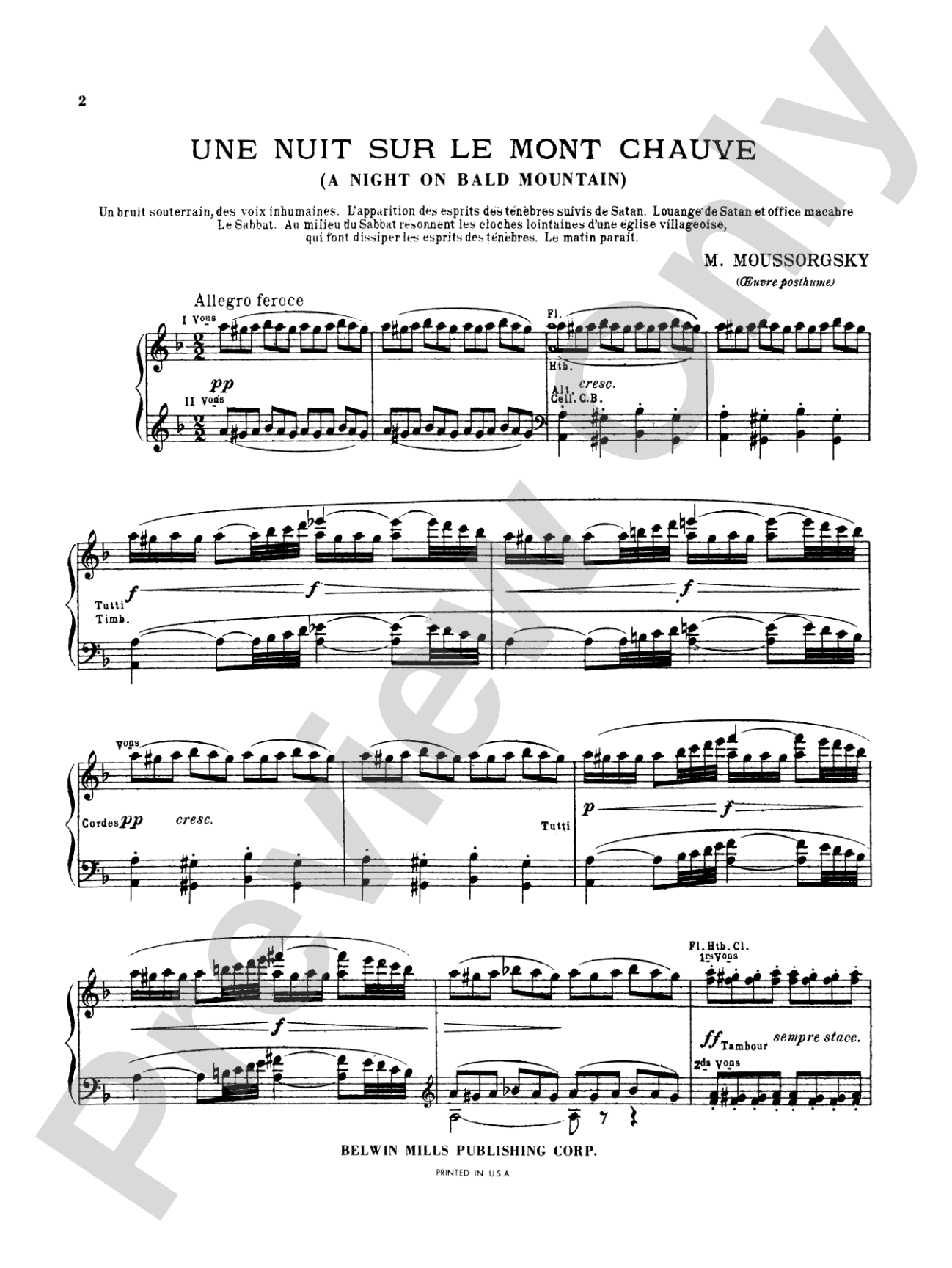
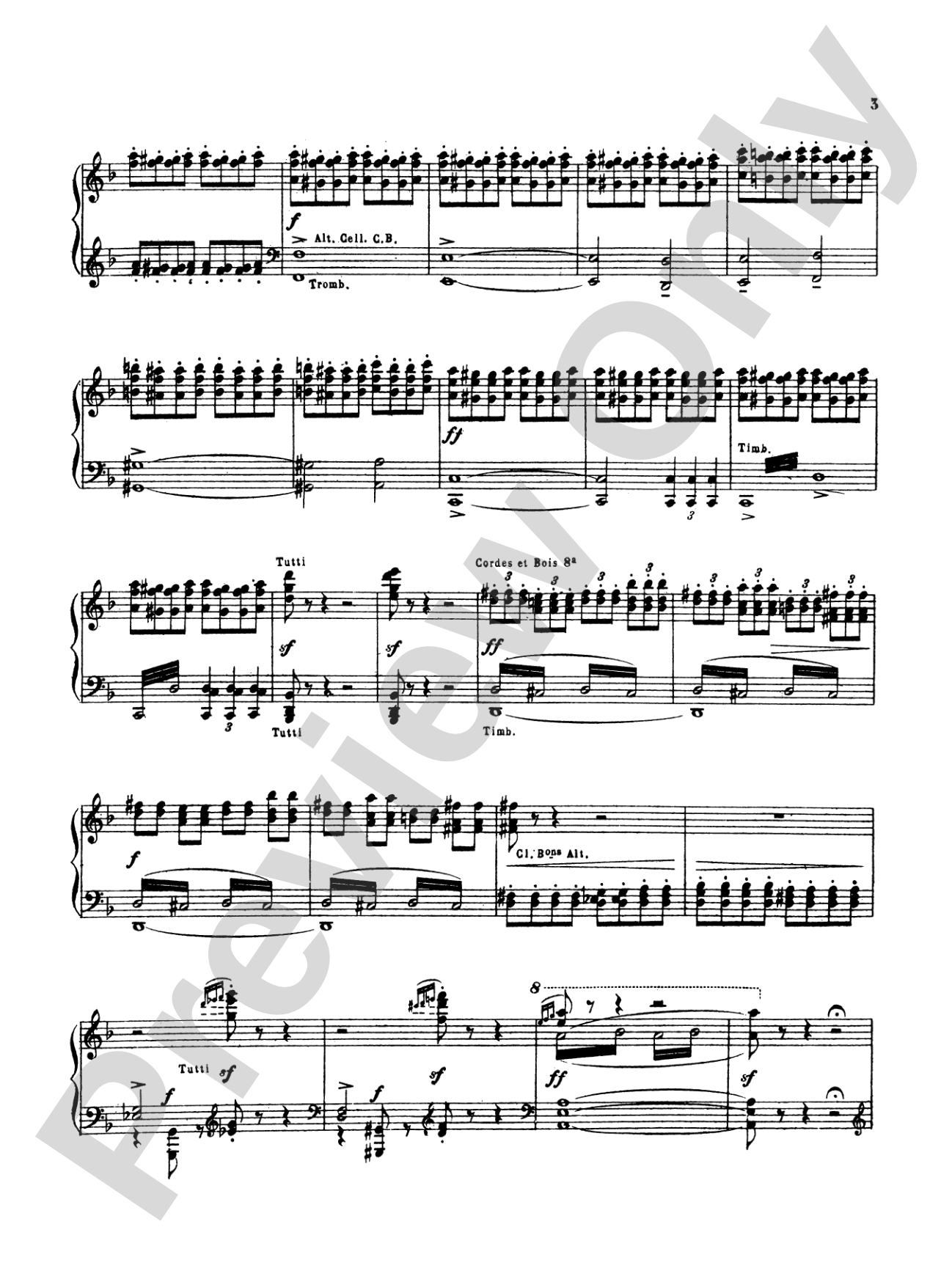
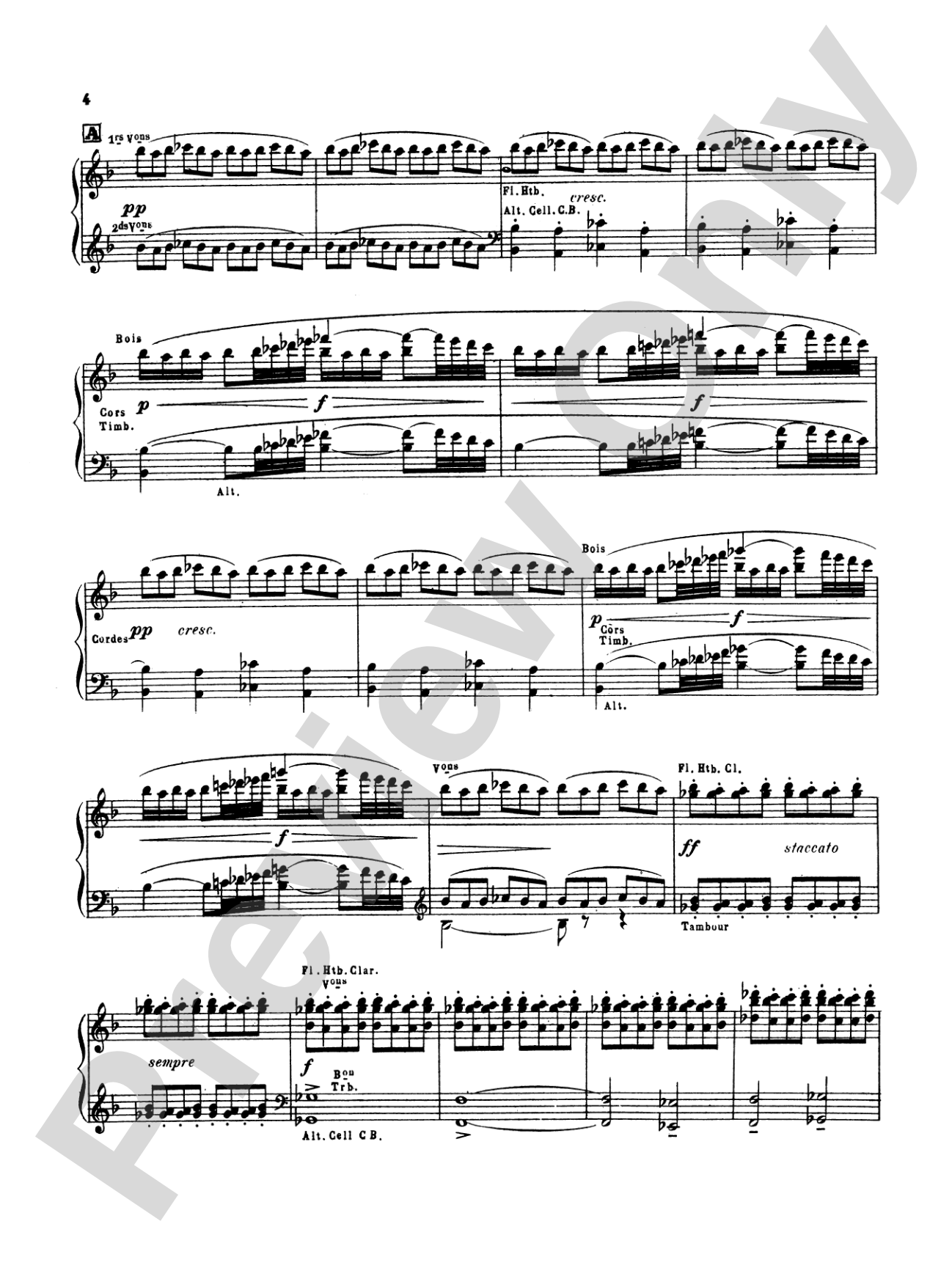
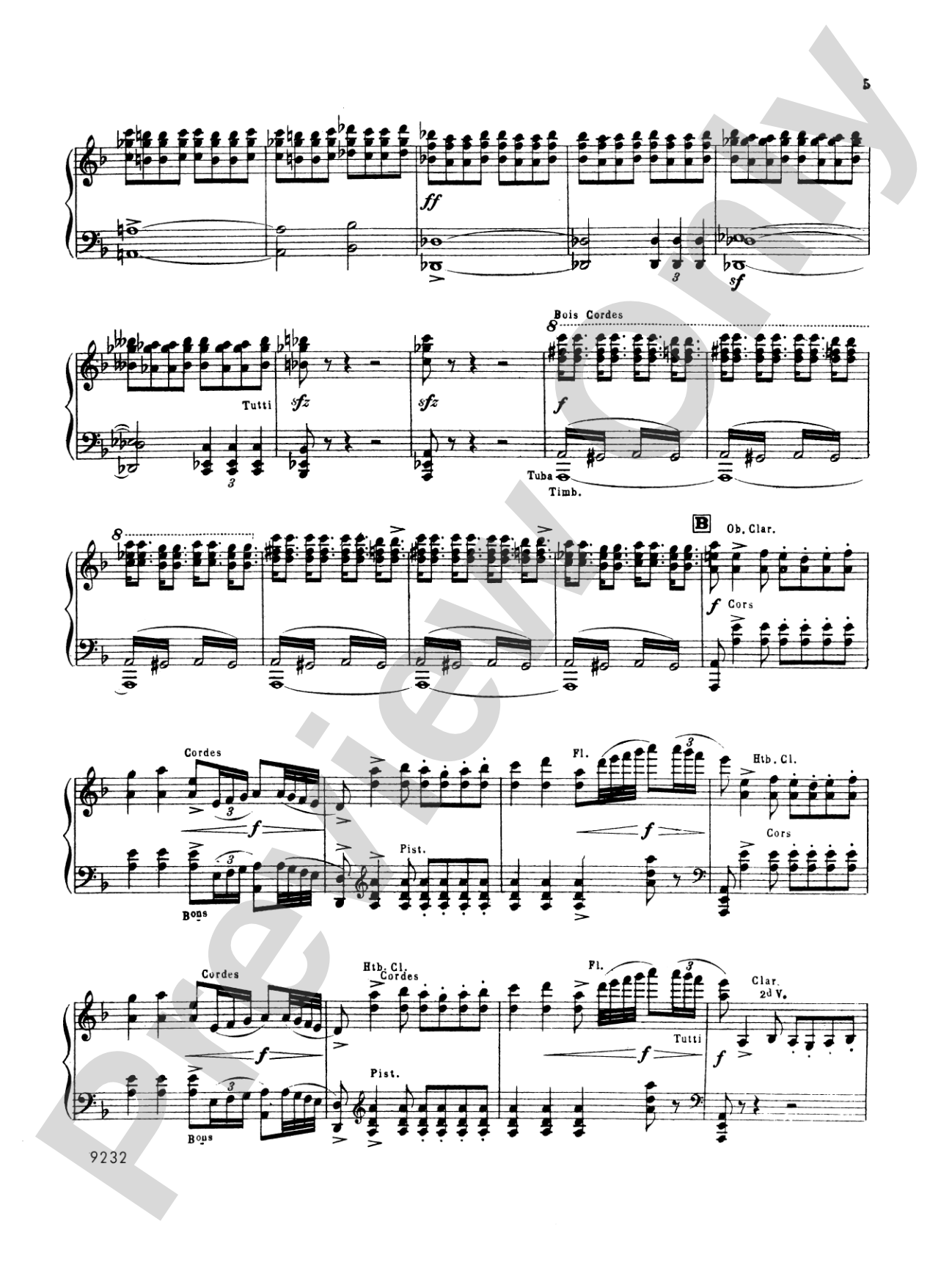
Mussorgsky: A Night on Bald Mountain Sheet Music Preview

Mussorgsky: A Night on Bald Mountain

By Modest Mussorgsky

Level: Advanced

Item: 00-PC-0011945

Digital Download
$7.95
Description

Don't just read it, hear it, play along with it, and watch your students grow with it. In MakeMusic Cloud, Mussorgsky: A Night on Bald Mountain comes alive with professional accompaniment, adjustable tempo, and built-in practice tools that turn solo practice into real progress.

Sample Audio
No sample audio found.
Sample Video
Additional Details
Series: Kalmus Edition
Publisher: Alfred Music
Page Count: 24
SKU: 00-PC-0011945

More about this title

About the Composer: Modest Mussorgsky

Modest Mussorgsky (1839-1881) stands among the most innovative Russian composers of the 19th century, known for his unflinching approach to harmony, orchestration, and musical storytelling. Though largely self-taught and working outside the conservative St. Petersburg Conservatory, he developed a compositional voice rooted in Russian folk music and modal writing that influenced generations of composers across Europe.

Mussorgsky's catalog is relatively modest in size but outsized in ambition. His operas, songs, and orchestral works often drew inspiration from Russian history, literature, and visual art. A Night on Bald Mountain, originally conceived as an orchestral interlude and later adapted for piano, exemplifies his gift for creating vivid, unsettling soundscapes through bold harmonic choices and rhythmic drive. His influence on 20th-century composers extended far beyond Russia, shaping how composers approached color, dissonance, and cultural authenticity in music.

Why we love this

This piano arrangement unleashes one of the most theatrically gripping works in the Romantic repertoire. The piece demands that pianists contend with genuine compositional sophistication: Mussorgsky's modal harmony, irregular phrase structures, and relentless rhythmic energy create a performance challenge that rewards careful study and refuses to sound generic. Advanced students discover that "difficulty" here serves storytelling, not mere virtuosity.

What to expect

From the first unsettling arpeggios, you inhabit a world of shadows and supernatural menace. Mussorgsky builds from mysterious whispers to frenzied celebration, then pulls back into darkness, never letting the listener feel entirely safe. The harmonies refuse to settle; the rhythms push and pull against the meter; every gesture feels both ancient and deeply unsettling.

Who it's for

Advanced pianists seeking substantial Romantic-era repertoire beyond the standard concerto or sonata forms will find genuine artistic depth here. This arrangement suits recital programs, competition repertoire, or advanced studio work where the goal is to develop interpretive maturity alongside technical command. The piece demands pianists who can read fluent chromatic writing and sustain attention through a 10-15 minute arc of mounting tension.

How to get the most out of it

  • Establish the piece's underlying pulse early; Mussorgsky's rhythmic ambiguity and syncopation can obscure meter, so anchor your physical sense of time before adding interpretive rubato.
  • Treat dynamic shifts as structural markers rather than mere expressive gestures. The contrasts between fortissimo climaxes and hushed passages map the narrative arc of the witches' gathering.
  • Approach the modal and chromatic harmonies without trying to resolve them into traditional major or minor tonality. Allow the strangeness to breathe; Mussorgsky's harmonic language is not broken or incorrect, it is intentional.
  • Balance rhythmic precision in the left hand with flexibility in the right. The independence required here strengthens both hands' ability to maintain separate musical lines.

How to use it

Program this as a show-stopping solo that anchors an advanced recital or competition set. Pair it with contrasting Romantic-era works (perhaps something lyrical and songlike) to demonstrate interpretive range. It also serves as a compelling centerpiece for a program exploring Romantic nationalism or 19th-century Russian composition, especially alongside Mussorgsky's other keyboard works.

Skills your students will build

  • Reading chromatic and modal harmonic language outside traditional major/minor tonality
  • Maintaining rhythmic independence between hands while handling complex syncopation
  • Sustaining long-form narrative arc and dramatic tension across multiple sections
  • Executing rapid dynamic shifts and coordinating color changes with structural intent
  • Interpreting 19th-century Russian compositional style with historical awareness

You May Also Like