Musical Moods in G: Viola Sheet Music Preview

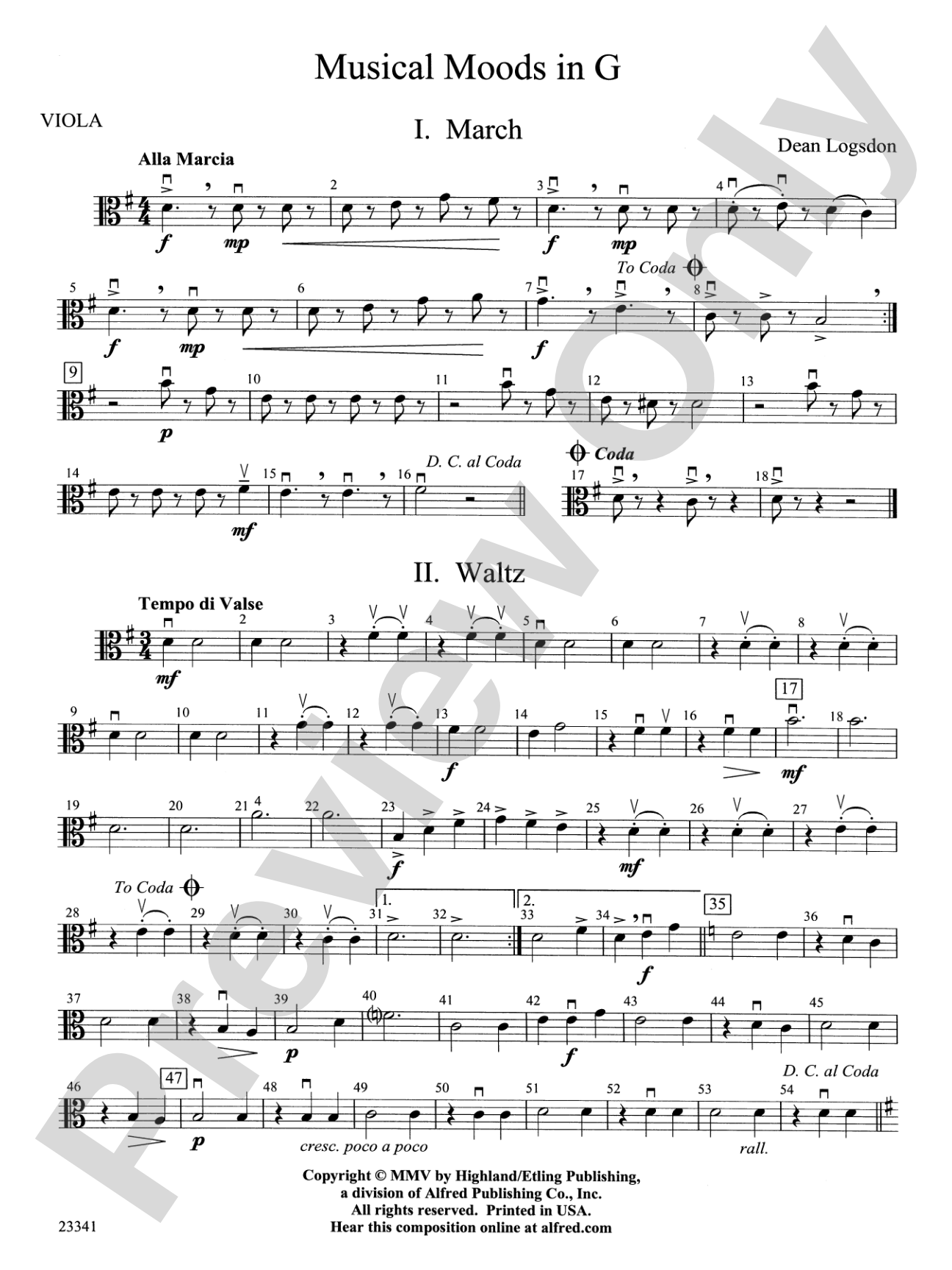
Musical Moods in G: Viola

(I. March, II. Waltz, III. Frolic)

By Dean Logsdon

Item: 00-PC-0000686_VA1

Digital Download
$5.99
Description
Set the mood at your next concert with Musical Moods in G. The piece begins with a short "March," followed by one of music's most well-liked dances, the "Waltz," and finally ending with an easy-going "Frolic." Sure to entertain at your next concert!

Don't just read it, hear it, play along with it, and watch your students grow with it. In MakeMusic Cloud, Musical Moods in G: Viola comes alive with professional accompaniment, adjustable tempo, and built-in practice tools that turn solo practice into real progress.

Sample Audio
0:00
0:00
Sample Video
Additional Details
Series: Highland/Etling String Orchestra
Publisher: Alfred Music
Page Count: 2
SKU: 00-PC-0000686_VA1

More about this title

Why we love this

Logsdon crafts three distinct movements that give your orchestra a complete dramatic arc in just two pages. Each section has its own character and energy, yet they flow naturally together, making this ideal for directors who want programming variety without overwhelming newer ensembles.

What to expect

You move from the crisp precision of a march, through the elegant sway of a waltz, and into the playful energy of a romp. Logsdon's G major setting gives the piece brightness and clarity, creating an arc that feels satisfying and complete.

Who it's for

This three-movement suite works well for intermediate string orchestras ready to explore contrasting styles and moods within a single piece. The accessible length and straightforward key center make it manageable for developing ensembles while still offering genuine musical interest.

How to get the most out of it

  • Bring crisp articulation to the march section to establish forward momentum and character clarity from the opening.
  • Shape the waltz's phrasing carefully; lean into the dance's natural rubato and allow your first violins to sing the melody without rushing the accompaniment.
  • Keep the frolic buoyant and light by maintaining a lifted bow approach in the faster sections and avoiding heavy vibrato.

How to use it

Program this as a concert opener to set a varied tone, or use it as a palate cleanser between heavier works. Its three distinct sections make it effective on festival rotations where you want to showcase your ensemble's stylistic range without committing to a lengthy single piece.

Skills your students will build

  • Articulation control across contrasting tempos and character styles
  • Phrasing and shaping in dance forms (march, waltz, frolic)
  • Ensemble balance when melody passes between voice parts
  • Dynamic contrast between rhythmic and lyrical sections

You May Also Like