
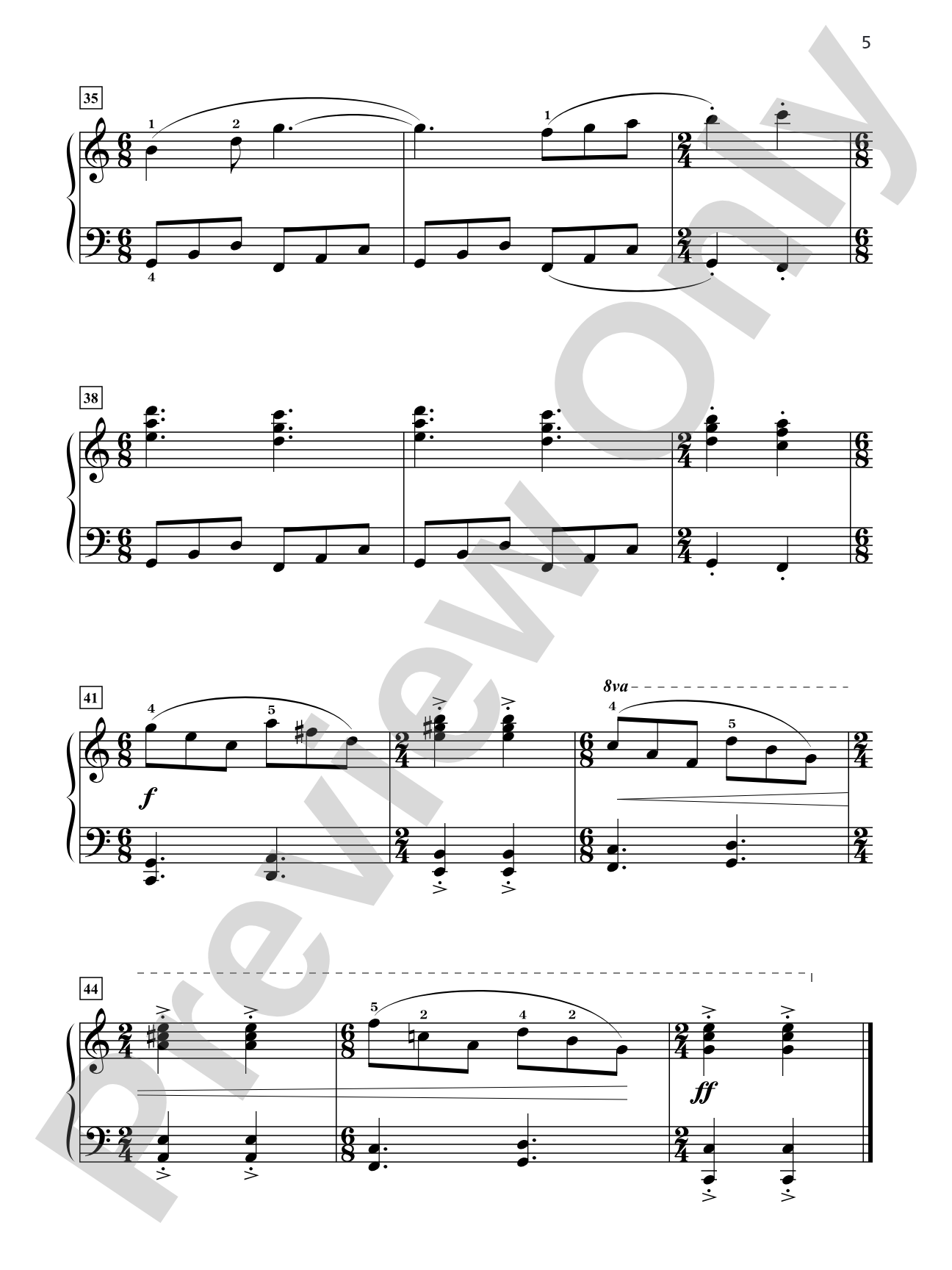

Música Latina, Book 3: 7 Intermediate Piano Solos That Celebrate Latin American Styles: Piano
7 Intermediate Piano Solos That Celebrate Latin American Styles
By Wynn-Anne Rossi
Level: Intermediate
Item: 00-PB-0000538
$6.99
Pickup currently not available
Related Items
Música Latina, Book 3: Piano Book |
$6.99
|
View |
Description
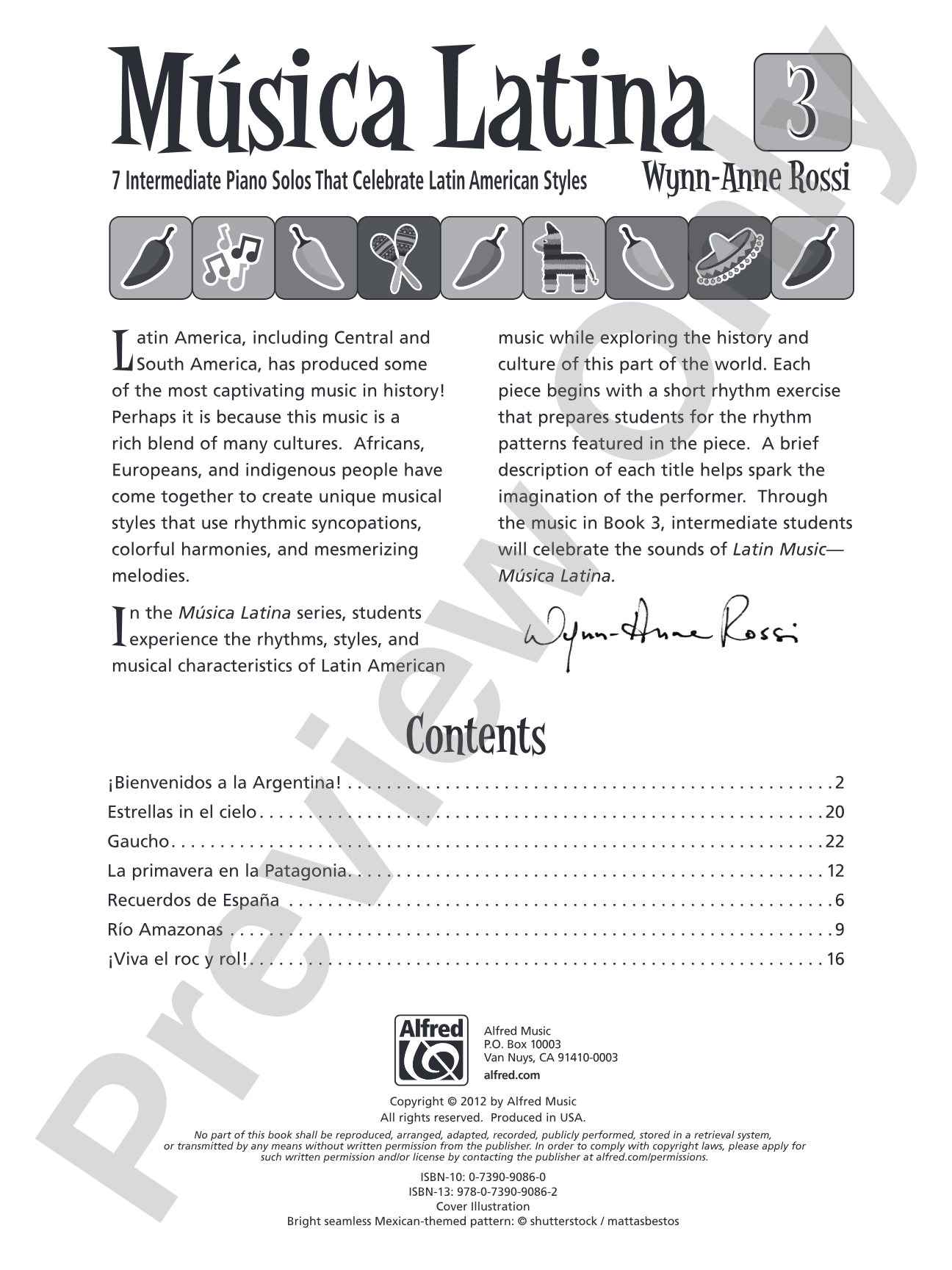
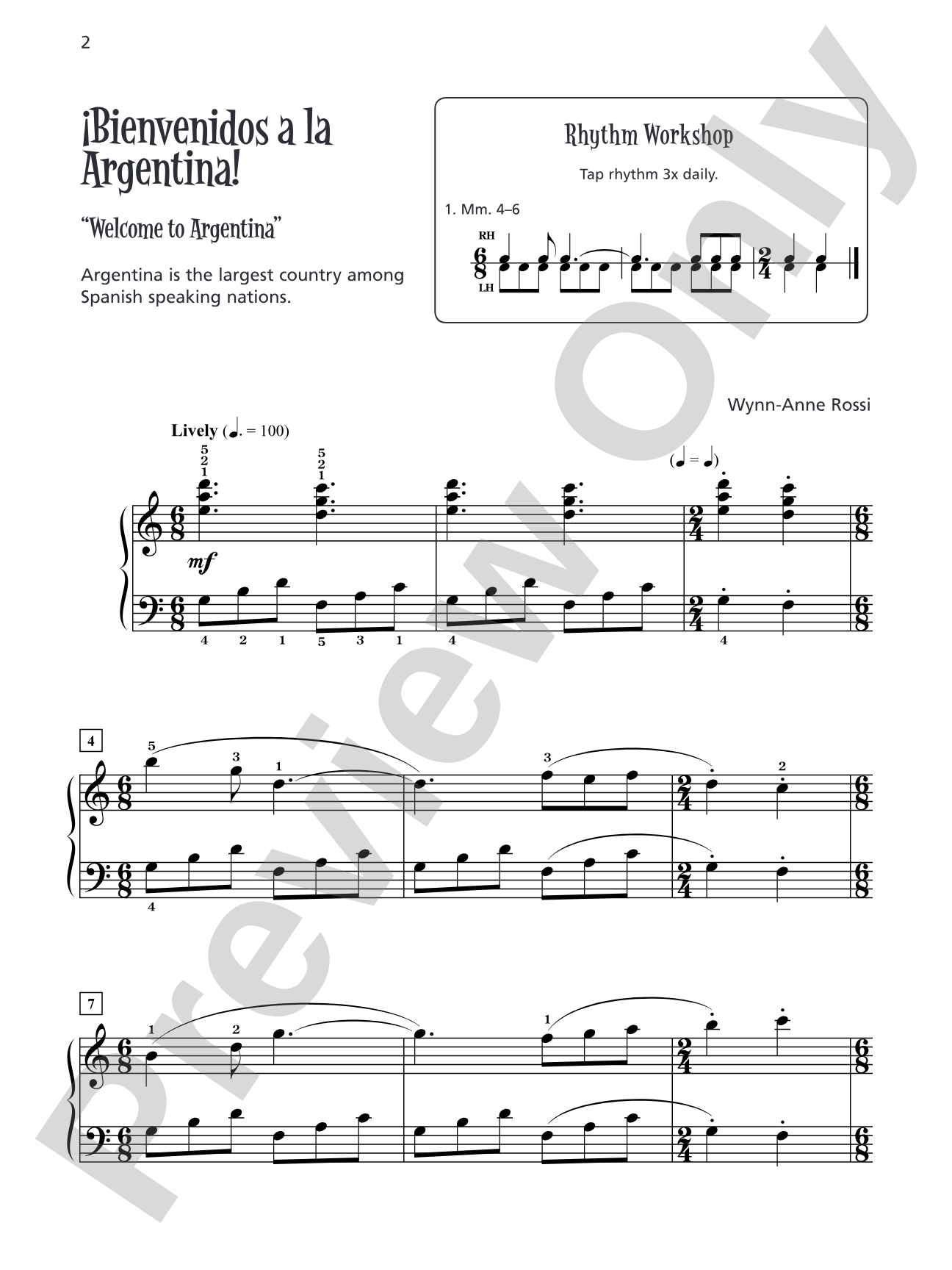
In the Música Latina series, students experience the rhythms, styles, and musical characteristics of Latin American music. Each piece begins with a short rhythm exercise that prepares students for the rhythm patterns featured in the piece. A brief description of each title helps spark the imagination of the performer. Book 3 is written for intermediate level piano students. Titles: ¡Bienvenidos a la Argentina! * Estrellas in el cielo * Gaucho * La primavera en la Patagonia * Recuerdos de España * Río Amazonas * ¡Viva el roc y rol! A Federation Festivals 2020-2024 selection.


Música Latina, Book 3: 7 Intermediate Piano Solos That Celebrate Latin American Styles: Piano isn't in MakeMusic Cloud just yet...but it could be. Let us know you'd like to see it, and you'll help shape what comes next. In the meantime, start a free trial and dive into thousands of interactive titles your students can play along with today.
Request This Title
Tell us you want it.
Start Your Free Trial
Explore everything that's ready to play right now.
Sample Audio
No sample audio found.
Sample Video
1 / 3
Additional Details
Series:
Música Latina
Publisher:
Alfred Music
Page Count:
24
SKU:
00-PB-0000538
More about this title
About the Composer: Wynn-Anne Rossi
Wynn-Anne Rossi is a composer and educator whose work centers on making music accessible and engaging for young pianists. Her compositions blend technical clarity with genuine musical interest, often drawing on world music traditions and cultural themes that broaden students' listening horizons.
Why we love this
Rossi's approach to teaching Latin American styles goes deeper than surface-level rhythmic flavor. Each piece arrives with a preparatory rhythm exercise that removes surprise and builds real confidence, while the brief contextual descriptions turn practice into cultural exploration rather than mere technique work.
What to expect
A musical passport through Latin America. You encounter the energy and rhythmic vitality of Argentine folk traditions, the lush landscape painting of Patagonian springtime, the mysterious atmosphere of the Amazon, and even the cheeky fun of Latin rock and roll. The pieces breathe with regional character while remaining pianistically direct.
Who it's for
Intermediate piano students ready to move beyond classical European repertoire and explore genuine musical traditions. This collection works well for students who've solidified their reading skills and are developing interpretive maturity.
How to get the most out of it
- Work through the opening rhythm exercise before tackling the piece itself. These warm-ups isolate exactly what makes each style distinctive, so you can focus on musical phrasing once you sit down to play through.
- Pay attention to syncopation patterns in each title; they vary significantly between styles. Mark or highlight these moments in your score so they become automatic rather than a point of struggle during performance.
- Listen to recorded examples of authentic Latin American music before performing each piece. Hearing the real rhythmic feel and stylistic nuances will help you avoid playing these as generic "world music" pieces.
How to use it
Program these individually in student recitals to celebrate cultural diversity in your community, or pair several titles together for a thematic concert segment exploring Latin American geography and music traditions. They also work beautifully in interdisciplinary units that combine music with social studies or Spanish language classes.
Skills your students will build
- Syncopated rhythm patterns specific to Argentine, Brazilian, and Afro-Caribbean styles
- Cross-hand coordination in pieces with independent rhythmic layers between hands
- Interpretation of style-specific articulation and dynamic shaping
- Sight-reading confidence through preparatory rhythm exercises tied directly to each piece