
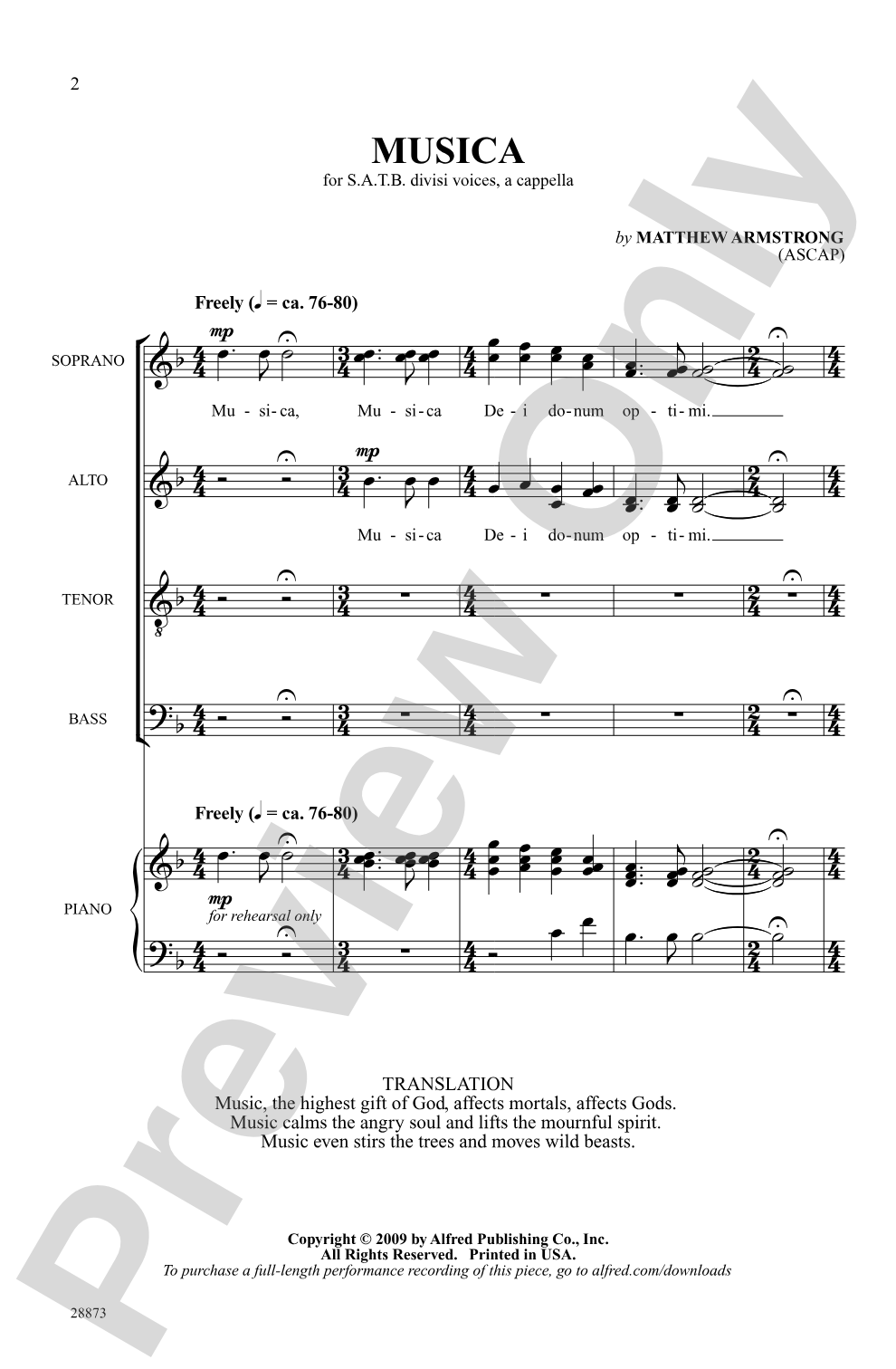
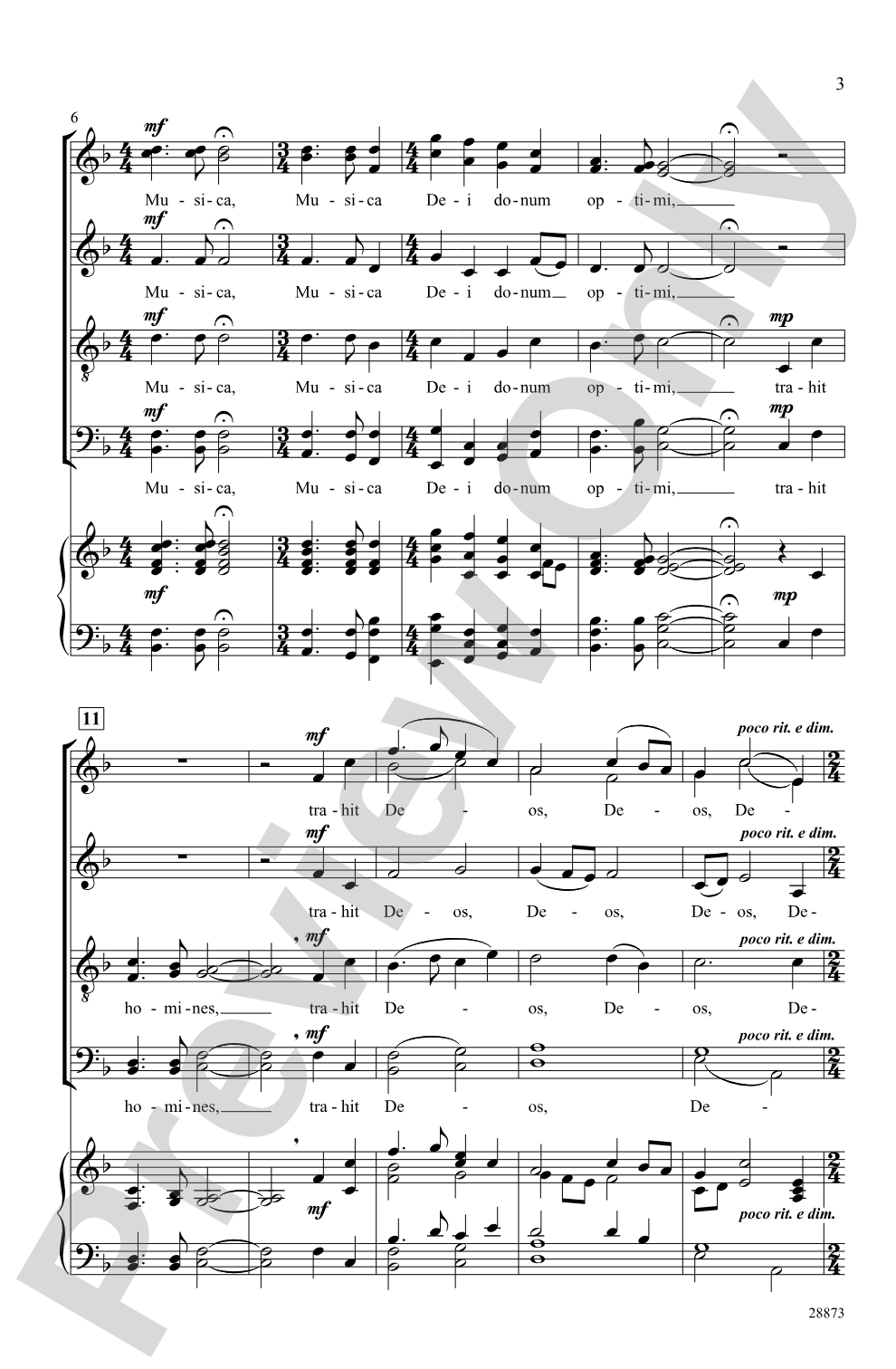

Musica: SATB a cappella Choral Octavo
By Matthew Armstrong
Item: 00-PO-0000592
$1.75
Minimum order quantity: 20 copies
Pickup currently not available
Description
This contemporary setting of the traditional Latin text will show all who hear it that music truly is "the highest gift of God." A powerful choral work of great depth for upper level SATB divisi choirs. Recorded by the Bowling Green State University Collegiate Chorale, Dr. William Skoog, Director.


Musica: SATB a cappella Choral Octavo isn't in MakeMusic Cloud just yet...but it could be. Let us know you'd like to see it, and you'll help shape what comes next. In the meantime, start a free trial and dive into thousands of interactive titles your students can play along with today.
Request This Title
Tell us you want it.
Start Your Free Trial
Explore everything that's ready to play right now.
Sample Audio
1
Audio File
--:--
0:00
0:00
Sample Video
No sample videos found.
Additional Details
Series:
Lawson-Gould
Publisher:
Alfred Music
Page Count:
8
SKU:
00-PO-0000592
More about this title
Why we love this
Armstrong's setting honors the Latin text with musical substance rather than surface beauty alone. The divisi writing creates genuine harmonic complexity without sacrificing singability, and the piece rewards choirs that can hold pitch and phrase with real independence.
What to expect
Contemplative and spacious, with the weight of a sacred text carried entirely by vocal timbre and harmonic resonance. The a cappella setting strips away any harmonic support, placing full responsibility on the singers to create depth and sustain the spiritual character the text demands.
Who it's for
Advanced SATB choirs with strong intonation, independent voice control, and comfort with divisi scoring. This piece suits ensembles that have moved beyond unison-based repertoire and can sustain complex harmonies without guidance from instrumental accompaniment.
How to get the most out of it
- Balance the divisi sections by having singers lock in on sustained pitches before moving together; this prevents the harmonic texture from washing out.
- Treat the Latin text with clear vowel shapes and precise consonant articulation; the weight of the music demands linguistic clarity.
- Reference the Bowling Green State University recording to understand Armstrong's intended pacing and dynamic architecture across the full arc.
- Work individual voice parts in sectionals before full ensemble rehearsals; the divisi writing requires singers to understand their harmonic function, not just their line.
How to use it
Position this as a centerpiece in a concert built around texts about music or the divine. The eight pages and upper-level difficulty make it suitable for a spring concert finale or as part of a thematic program exploring sacred secular music.
Skills your students will build
- Sustaining pitch without instrumental reference in divisi SATB writing
- Independent voice leading while maintaining harmonic balance
- Phonetic accuracy in Latin text with idiomatic vowel and consonant production
- Listening across four independent lines to shape ensemble intonation and blend