
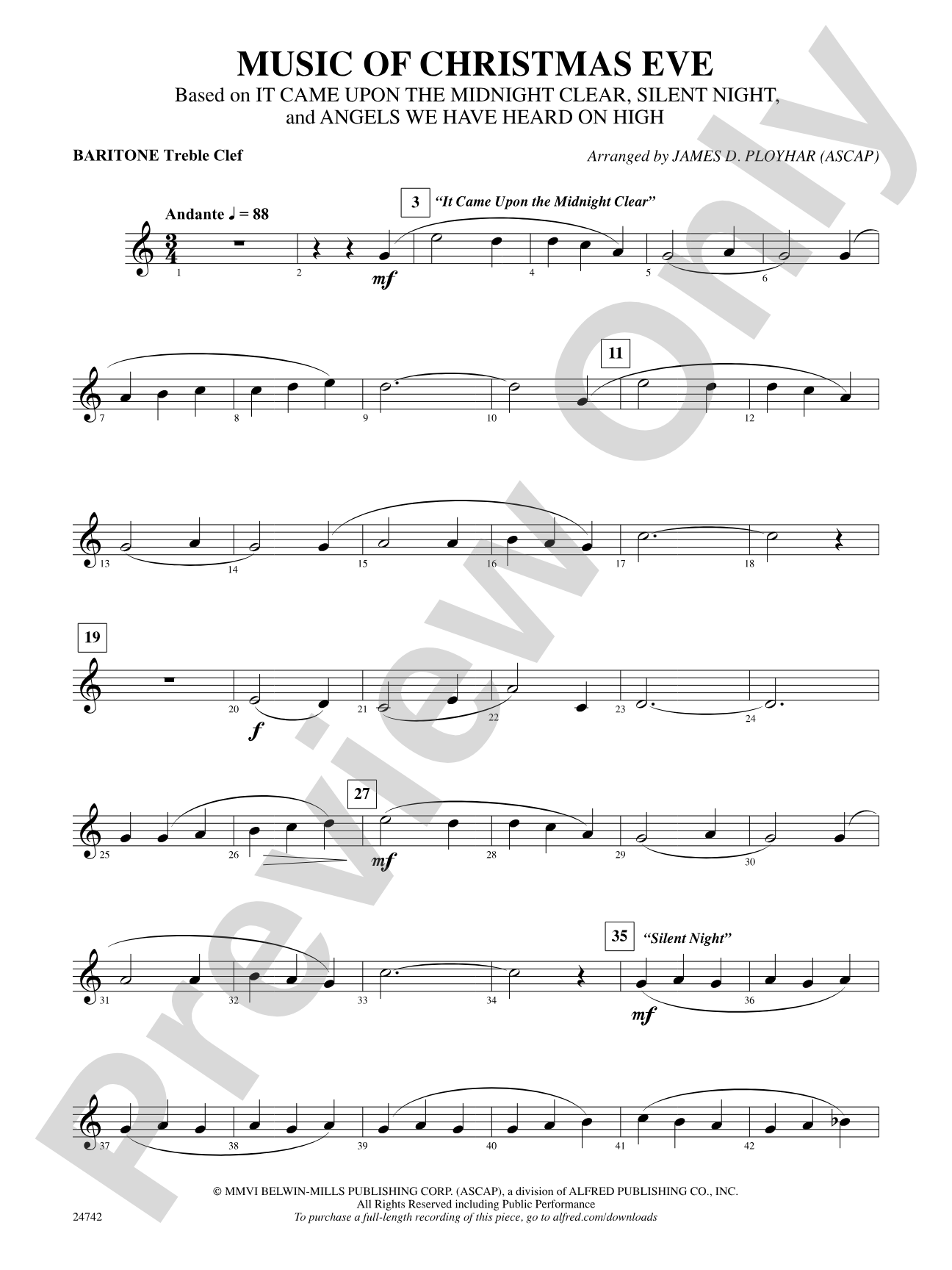

Music of Christmas Eve (Based on "It Came Upon the Midnight Clear," "Silent Night," and "Angels We Have Heard on High"): Baritone T.C.
Based on: It Came Upon the Midnight Clear / Silent Night / Angels We Have Heard on High
Arr. James D. Ployhar
Grade: 2 (Easy)
Item: 00-PC-0000893_BTC1
$3.00
Pickup currently not available
Description
Some of the most beautiful music associated wtih the Christmas season is that of Christmas Eve. Three of these melodies, It Came Upon the Midnight Clear by Richard S. Willis, Franz Gruber's Silent Night and the traditional Angels We Have Heard On High, are combined in this medley arranged by James D. Ployhar. The entire audience should be familiar with these Christmas treasures that are guaranteed to put you into the calming mood of Christmas.


Don't just read it, hear it, play along with it, and watch your students grow with it. In MakeMusic Cloud, Music of Christmas Eve (Based on "It Came Upon the Midnight Clear," "Silent Night," and "Angels We Have Heard on High"): Baritone T.C. comes alive with professional accompaniment, adjustable tempo, and built-in practice tools that turn solo practice into real progress.
Open in the Player
Jump straight in and assign it today.
Start Your Free Trial
Open this title and explore the full library in minutes.
Sample Audio
1
Audio File
--:--
0:00
0:00
Sample Video
No sample videos found.
Additional Details
Series:
Belwin Young Band
Publisher:
Alfred Music
Page Count:
198
SKU:
00-PC-0000893_BTC1
More about this title
About the Arranger: James D. Ployhar
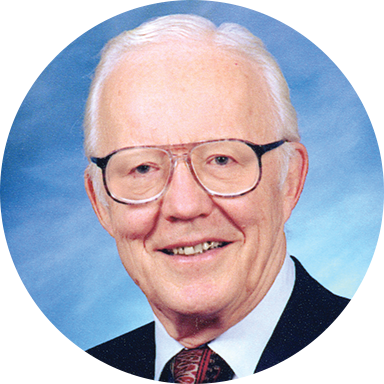
James D. Ployhar has established himself as a prolific voice in music education, with more than 800 published works to his name. His pedagogical contributions include the Contemporary Band Course, now published by Alfred Music and translated into French and Norwegian for use across Norway and beyond. Ployhar studied composition at California State University-Long Beach under Morris Hutchings Ruger and earned degrees from Valley City State University and Northern Colorado University.
Beyond the page, Ployhar spent over 19 years in public school teaching and has maintained an active presence as a clinician and conductor across the United States, Canada, Norway, Germany, and England. His orchestration work draws from collaboration with Knud Havalde of the Danish Royal Philharmonic Orchestra, and his arrangements have reached international audiences in Europe, Japan, and the Pacific Rim. He is a recipient of the National Band Association Citation of Excellence and holds membership in the American Bandmasters Association.
Why we love this
Ployhar's gift for seamless melody blending shines here. Three beloved Christmas carols merge into a single flowing statement without losing the character of any one tune, and at Grade 2, the orchestration keeps every section engaged without overwhelming less experienced players. The arrangement taps into the quiet reverence of Christmas Eve itself, making it a natural centerpiece for holiday programs that value atmosphere over spectacle.
What to expect
Candlelit and serene. The arrangement honors the devotional character of each carol while creating a sense of unified calm. There's comfort in the familiarity of these melodies, combined with the slight magic of hearing them woven together for the first time.
Who it's for
Bands at the Grade 2 level who want to program a reverent, audience-friendly holiday selection that doesn't require advanced technique. Directors seeking music that young ensembles can execute cleanly while still delivering genuine musical depth will find this arrangement particularly rewarding.
How to get the most out of it
- Balance the melodic voices across the band. Since these carols are audience favorites, clarity of tune matters more than dynamic splash. Let the audience recognize each carol as it emerges.
- Shape each melody as a complete phrase rather than stopping at the bar line. These are hymns first, so encourage singing tone and legato through the transitions between sections.
- The low brass and woodwinds anchor the harmonic foundation. Drill chord tuning throughout rehearsal, especially where the three melodies overlap or shift keys.
How to use it
Program this as the opening statement of a winter concert or as the centerpiece of a holiday ceremony. It pairs naturally with lighter secular selections that follow, or stands alone as a complete emotional statement for audiences seeking quiet reflection during the season.
Skills your students will build
- Legato phrasing and breath control across longer melodic lines
- Identifying and balancing multiple melodic strands within a single arrangement
- Tuning moving harmonies and sustained chord voicings
- Reading concert band score and part formats at Grade 2 level
- Interpreting musical character and dynamics from a conductor's interpretation