Music Is Everywhere Sheet Music Preview

Music Is Everywhere: Piano

By Timothy Brown

Item: 98-DW9331

Digital Download
$2.95
Description
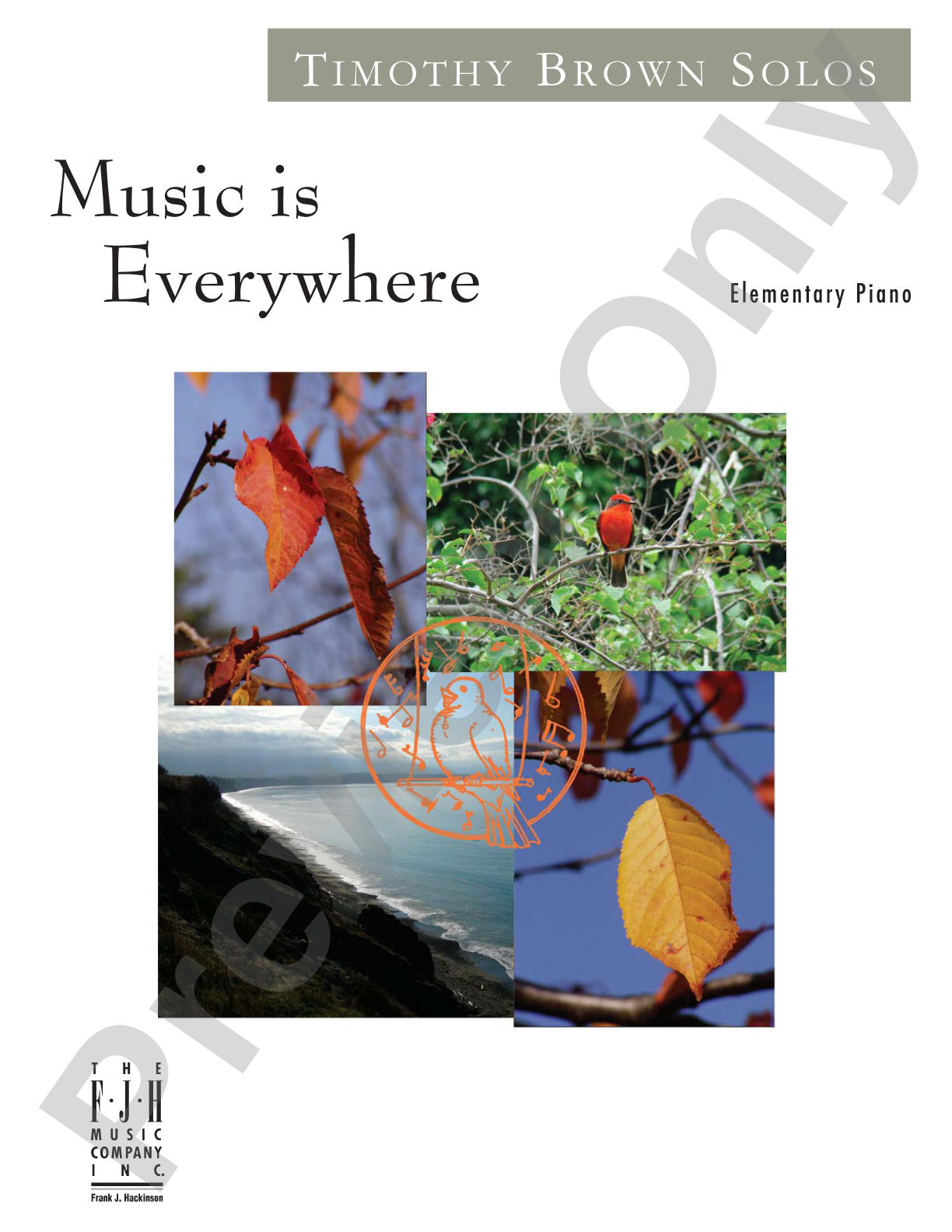
Written in the key of C major with no accidentals, this lyrical solo contains an optional teacher duet part. This piece asks you to listen to the sounds around you, and notice that music is everywhere in nature.

Music Is Everywhere: Piano isn't in MakeMusic Cloud just yet...but it could be. Let us know you'd like to see it, and you'll help shape what comes next. In the meantime, start a free trial and dive into thousands of interactive titles your students can play along with today.

Sample Audio
No sample audio found.
Sample Video
Additional Details
Series: Written For You
Publisher: The FJH Music Company, Inc.
SKU: 98-DW9331

More about this title

Why we love this

This piece captures something essential about music education: the shift from thinking of music as something that happens in a lesson to recognizing it as part of the world around us. Brown's accessible writing in C major removes technical barriers and lets young pianists focus entirely on that listening and noticing. The optional teacher duet transforms a solo into a collaborative experience, turning practice into conversation.

What to expect

Gentle and observant. The piece unfolds like a walk through nature where you stop to really listen, discovering melody in ordinary moments. There's a quiet joy to it, without urgency or drama, inviting you to slow down and pay attention.

Who it's for

Early elementary pianists ready for their first complete pieces in a single key. This solo works for students who are confident with C major technique but still building musical independence and who benefit from repertoire that connects to the world outside the practice room.

How to get the most out of it

  • Listen during rehearsals to the specific sounds the piece asks you to notice: birdsong, wind, water, rustling leaves. Let those real sounds shape your phrasing and dynamics rather than relying on what looks natural on the page.
  • If you're playing the duet version, coordinate with your teacher about dynamic balance. The teacher's part should support your melody without overpowering it, even in moments where both voices move together.
  • Take time between phrases. The lyrical character works best when you allow silence to breathe, letting the listener hear the 'music' in the space between notes as much as in the notes themselves.

How to use it

Pair this with other nature-inspired pieces or with a short talk about where students find music in their daily lives. It works especially well in a recital focused on early elementary repertoire or as part of a thematic program exploring how composers hear the world.

Skills your students will build

  • Playing lyrical passages with steady phrasing in C major
  • Listening for musical elements in non-musical sounds
  • Collaborating with an ensemble partner through the optional duet part
  • Sustaining musical ideas across multiple phrases without stopping

You May Also Like