

Music Is...: 2-Part Choral Octavo
Words and music by Andy Beck
Item: 00-PO-0006357
$2.20
Minimum order quantity: 20 copies
Pickup currently not available
Related Items
Music Is...: 2-Part Choral Octavo |
$2.60
|
View |
Description
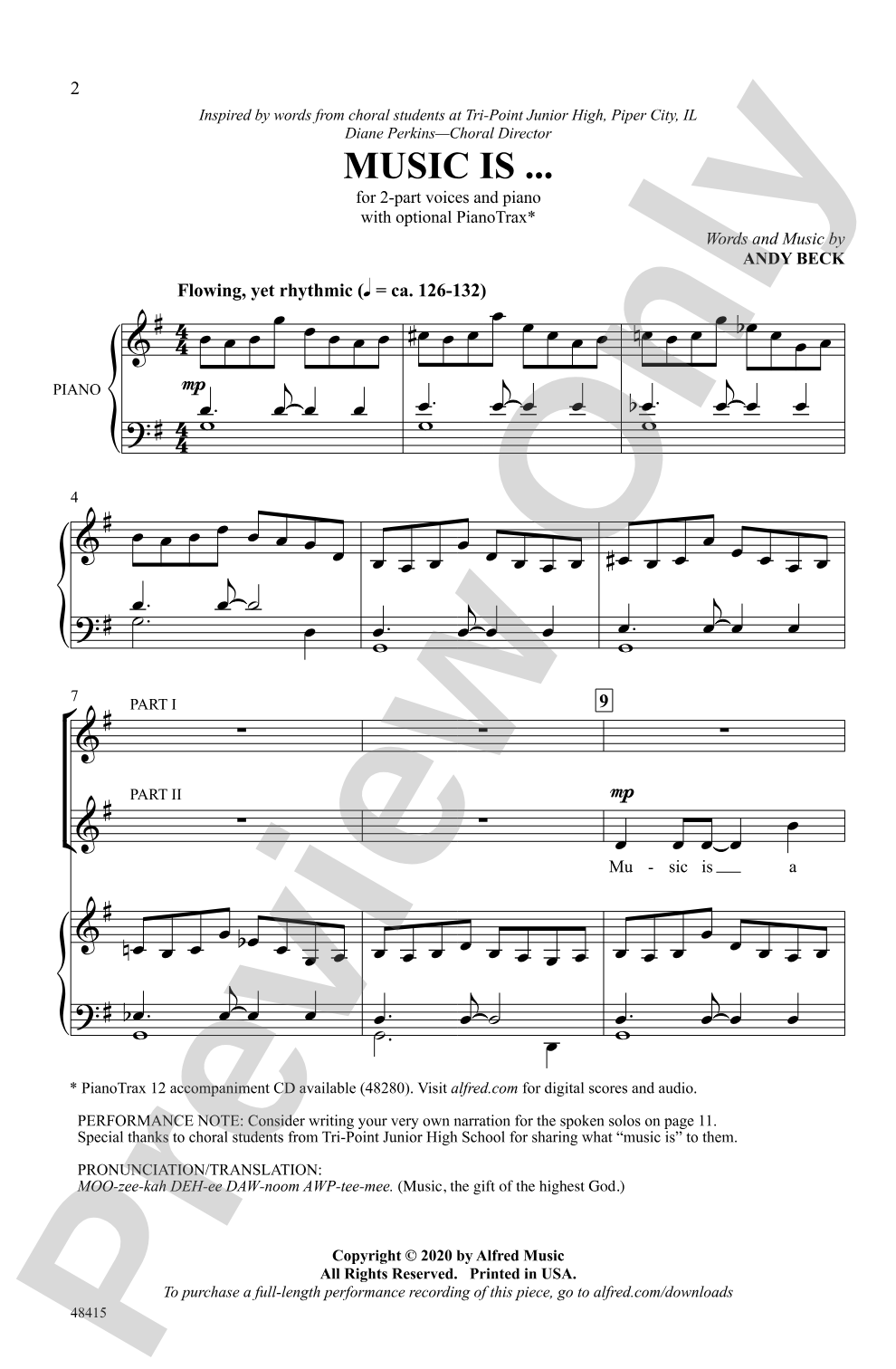
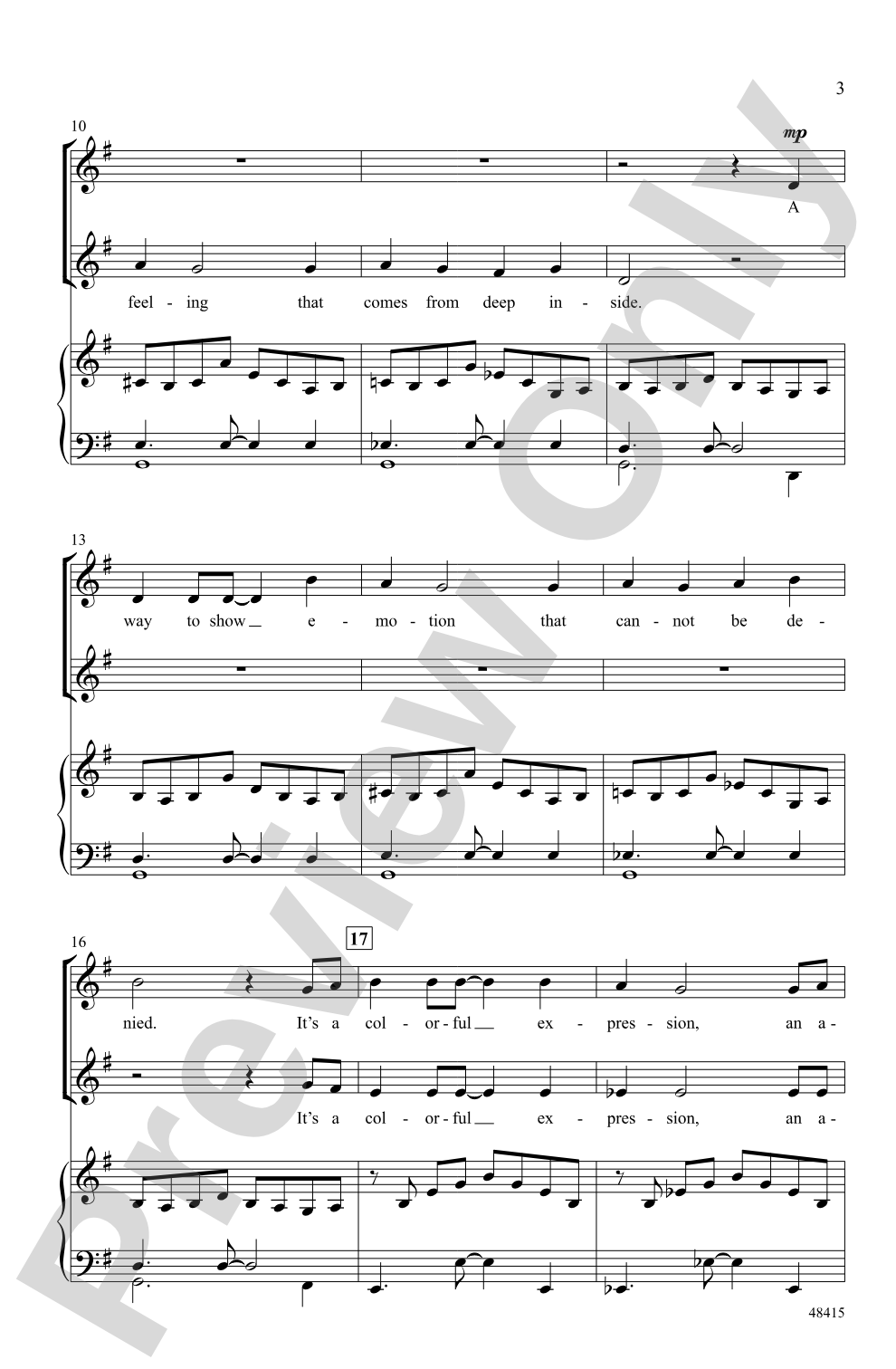
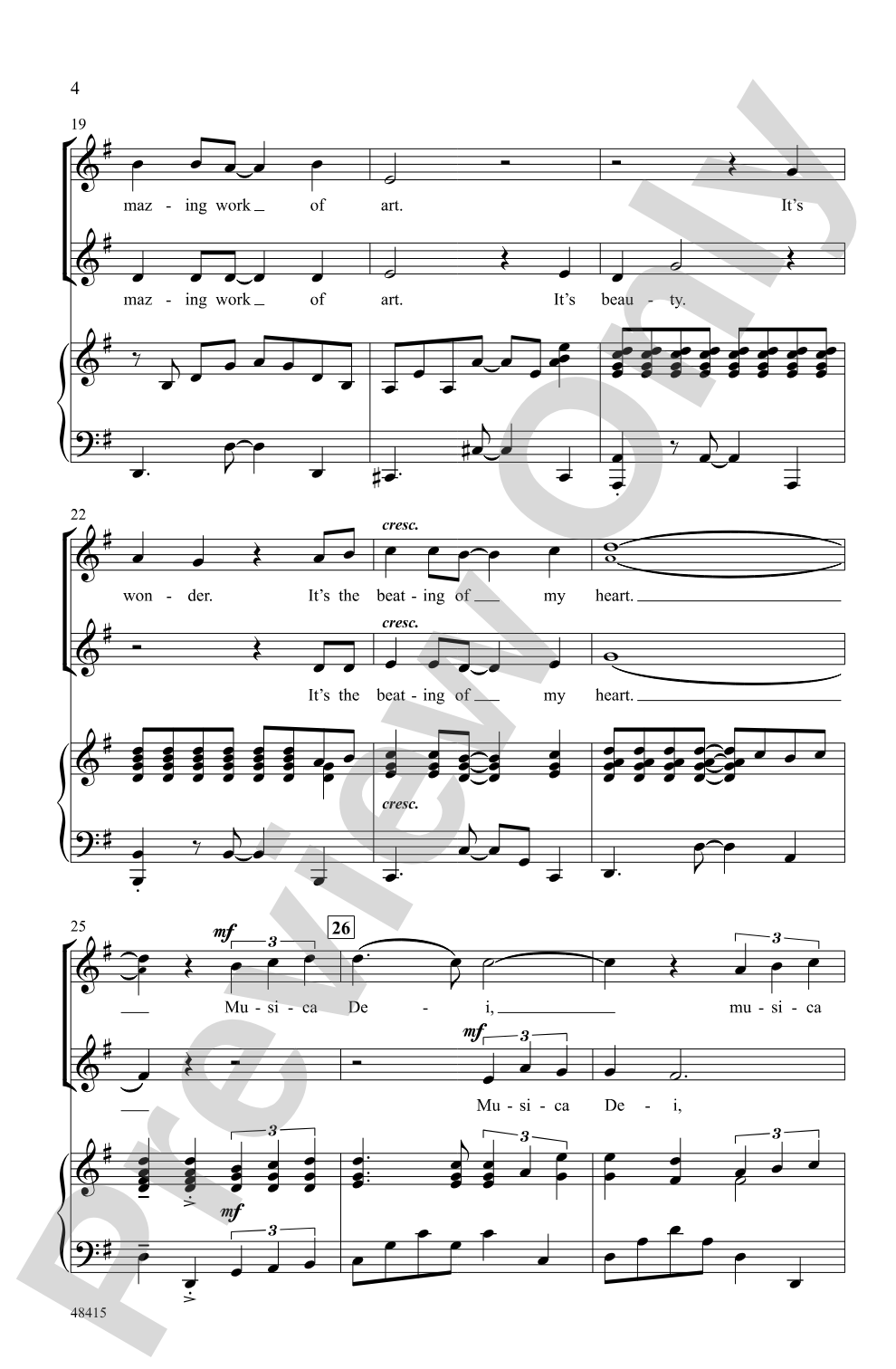
Celebrating the many ways that music touches our lives, the lyrics of this piece were inspired by words from young singers. A spoken section in the middle offers an opportunity for your students to add their own thoughts, or use the provided script. The memorable piano accompaniment provides its own voice while supporting the tuneful lines, and an optional descant brings the final chorus to new heights. Program for Music in Our Schools month, for combined "pyramid" performances, as an advocacy anthem, or as a concert theme.


Music Is...: 2-Part Choral Octavo isn't in MakeMusic Cloud just yet...but it could be. Let us know you'd like to see it, and you'll help shape what comes next. In the meantime, start a free trial and dive into thousands of interactive titles your students can play along with today.
Request This Title
Tell us you want it.
Start Your Free Trial
Explore everything that's ready to play right now.
Sample Audio
1
Audio File
--:--
0:00
0:00
Sample Video
Additional Details
Series:
Alfred Choral Designs
Publisher:
Alfred Music
Page Count:
16
SKU:
00-PO-0006357
More about this title
About the Composer: Andy Beck

Andy Beck leads the choral publications program at Alfred Music and has composed and arranged more than 450 works for singers across all ages and levels. His output spans concert chorales, children's musicals, and foundational vocal resources including Sing at First Sight and Vocalize! 45 Vocal Warm-Ups That Teach Technique. His music circulates globally and he regularly guest conducts honor choirs, serves as a clinician and adjudicator, and works with all-state groups throughout the Southeast.
Beck trained at Ithaca College (Bachelor's in Music Education) and Northwest Missouri State University (Master's in Music Education). He performs as a tenor, directs musical theatre, and has sung with the North Carolina Master Chorale Chamber Choir since 1992. His dual commitment to music literacy and choral artistry shapes both his own compositions and the publications he stewards.
Why we love this
This piece succeeds because it gives students genuine ownership. The built-in flexibility to insert student voices during the spoken section transforms a concert number into a reflection of your choir's own philosophy, making it meaningful in ways a finished composition alone cannot achieve. The optional descant and piano writing are crafted skillfully enough that you can program this confidently at any level, from middle school to community choir.
What to expect
The piece radiates optimism without saccharine sentiment. Tuneful melodies and a responsive piano accompaniment create intimacy in the verses, then bloom into celebration when the full choir voices ideas about what music means. The spoken interlude grounds the music in personal truth, anchoring the final chorus to genuine conviction rather than generic uplift.
Who it's for
This octavo works for any choir seeking meaningful repertoire for general concert programming or Music in Our Schools month events. The two-part voicing makes it accessible to middle school, high school, and community ensembles, while the structural sophistication and optional descant keep advanced singers engaged.
How to get the most out of it
- Invite students to draft their own spoken contributions weeks in advance. The best scripts emerge when singers have time to think about what music means to them personally, rather than improvising at the last rehearsal.
- Balance the two-part texture carefully during verses so that both lines project equally. Unison passages will feel weightier if you've resisted the urge to let one voice dominate earlier.
- The piano part deserves its own rehearsal spotlight. Have an accompanist play through it solo so singers hear how the harmonic language supports and extends their melodic work.
- If you use the optional descant, introduce it only after the main parts are confident. This layering works best when upper voices feel secure and can blend without pulling focus from their own line.
How to use it
Position this as your concert or festival centerpiece during spring programming when advocacy for music education resonates most deeply. It works equally well as a standalone concert opener that sets a reflective tone, or layered into a thematic program with instrumental solos or student compositions that explore what music means to your school community.
Skills your students will build
- Singing sustained lines while maintaining textual clarity and emotional authenticity
- Blending two distinct vocal parts that share equal musical importance
- Interpreting and performing written text with intentional phrasing and dynamics
- Collaborating on improvised or semi-scripted spoken material within a prepared musical framework
- Listening to and balancing with a piano accompaniment that functions as a harmonic partner rather than mere support