

Music in the Water: 3-Part Mixed Choral Octavo
Words from "Water" by Lura Anna Boies, music by Ruth Morris Gray
Item: 00-PO-0003236

$2.05
Minimum order quantity: 20 copies
Pickup currently not available
Description
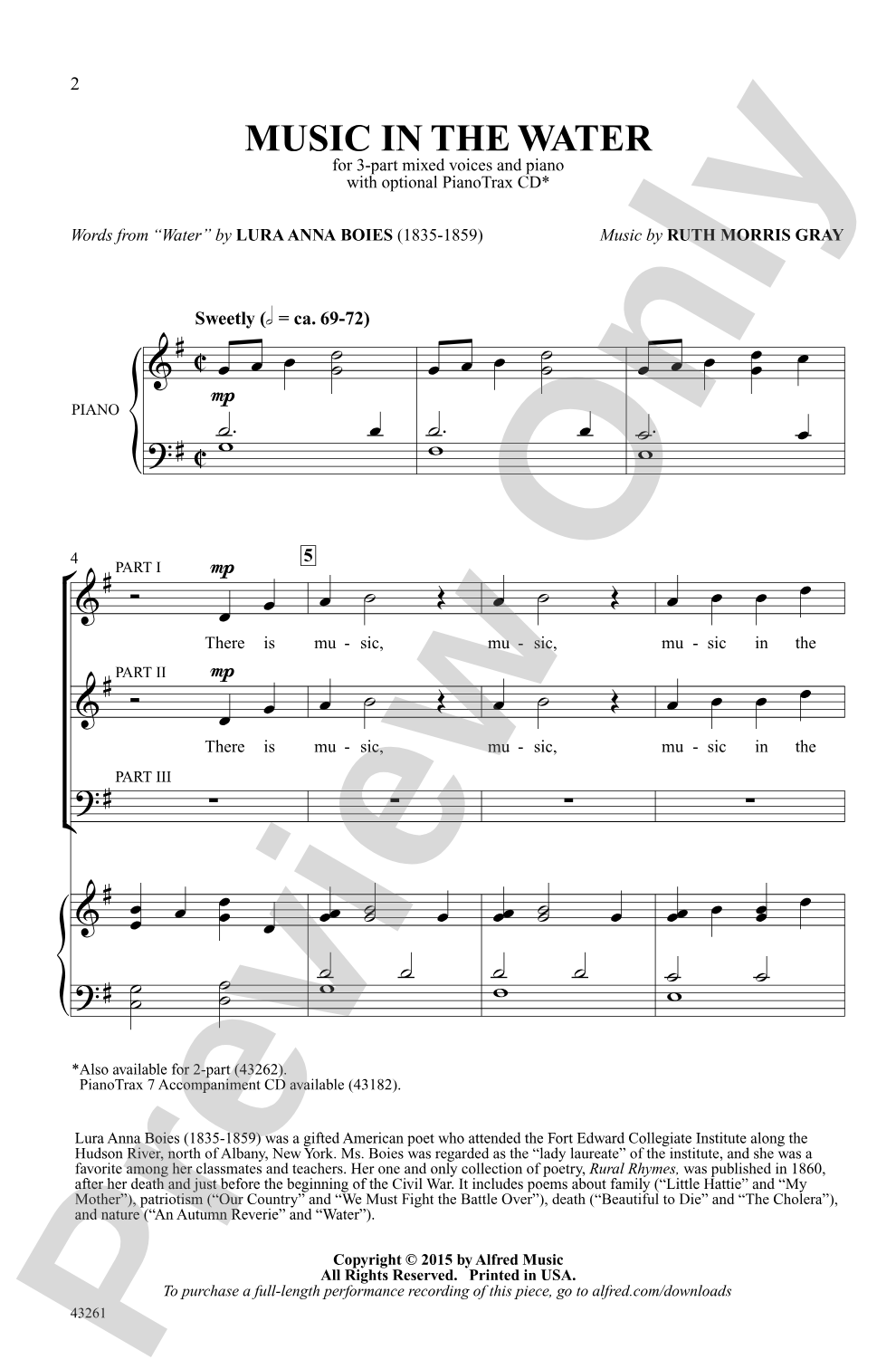
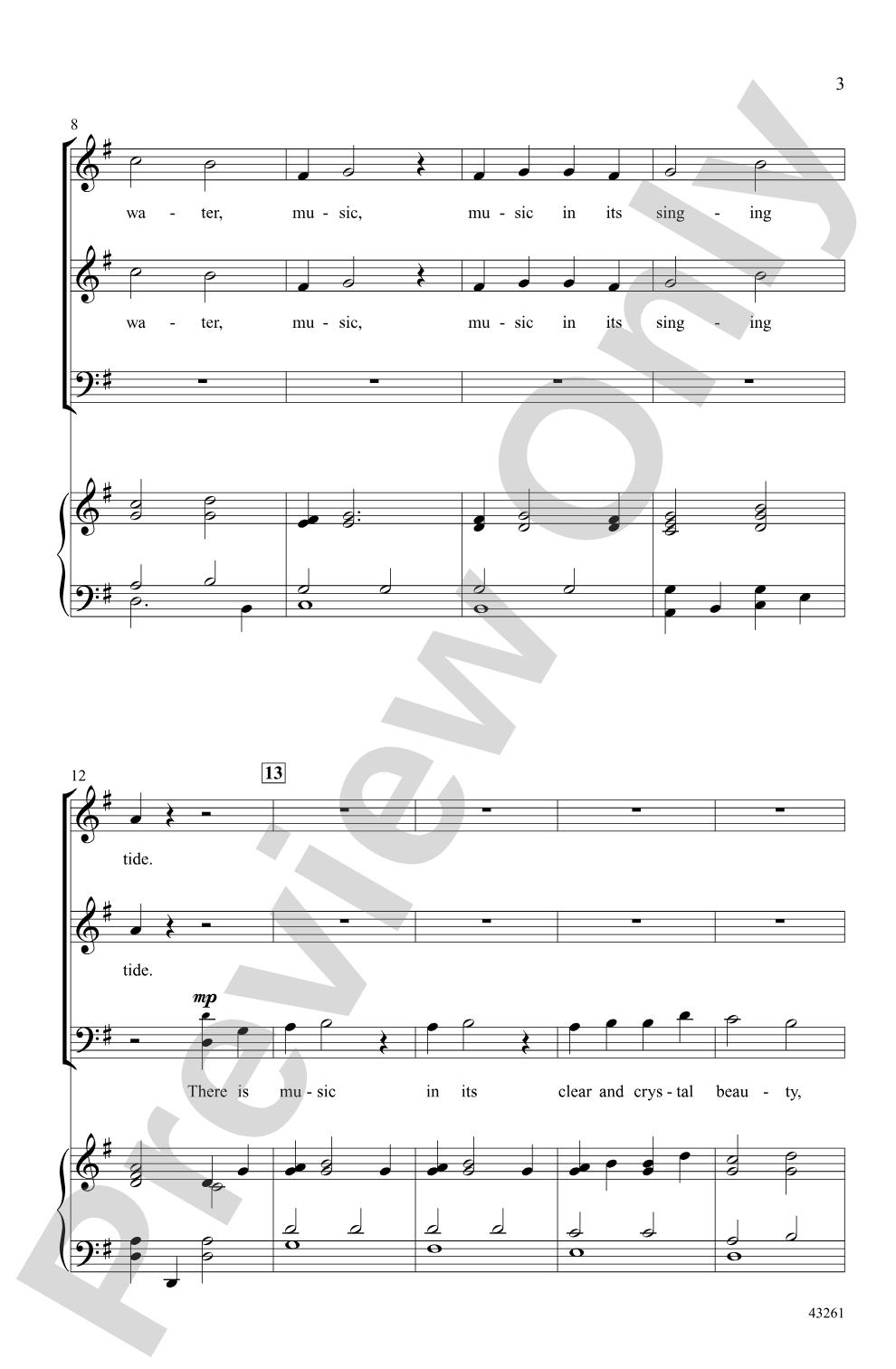
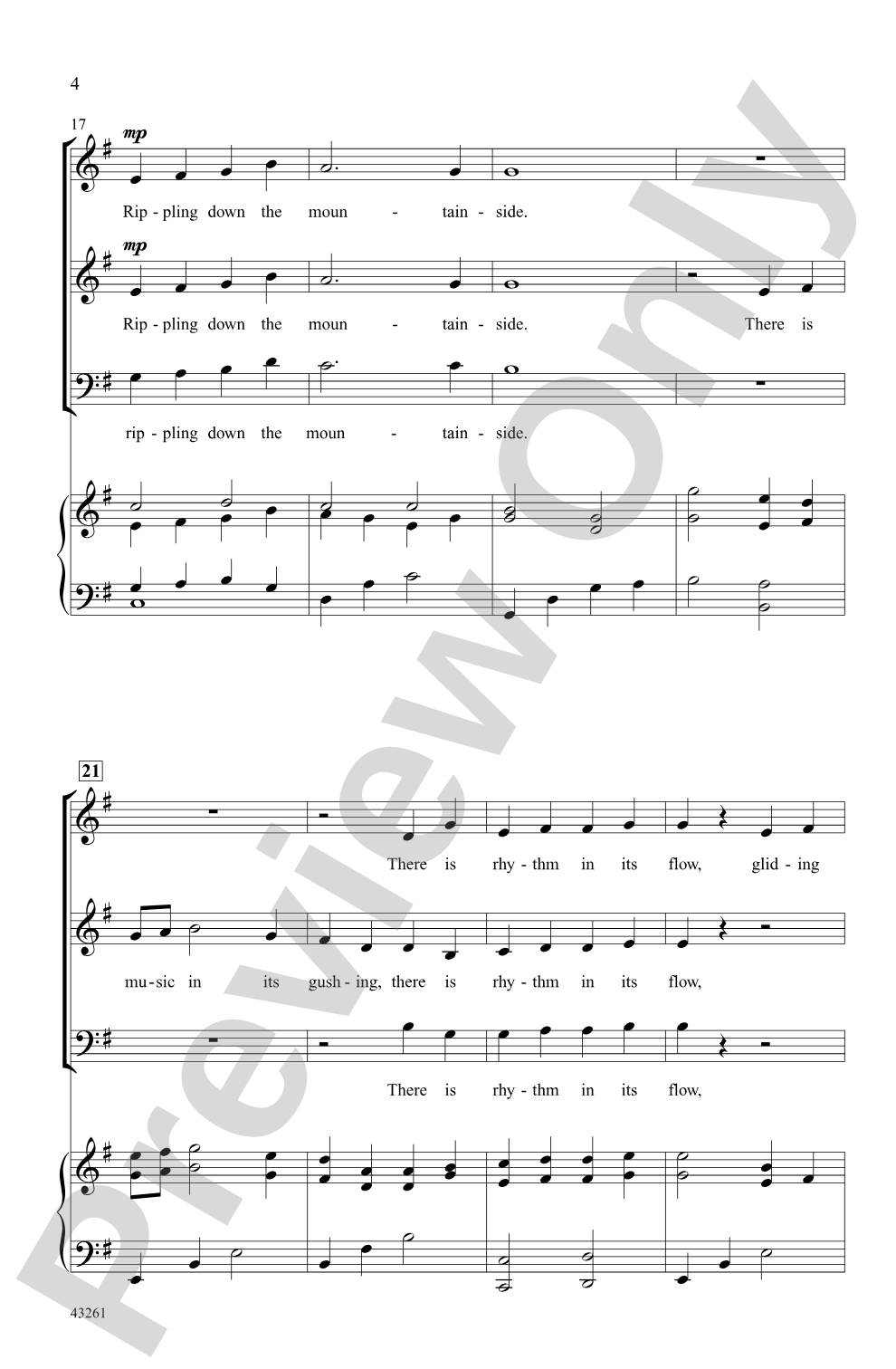
This lesser-known poem by female writer Lura Boies recognizes the inherent artfulness in nature. Imitation in the choral parts replicates rippling waters, and conservative vocal ranges allow every voice to sound its best.


Don't just read it, hear it, play along with it, and watch your students grow with it. In MakeMusic Cloud, Music in the Water: 3-Part Mixed Choral Octavo comes alive with professional accompaniment, adjustable tempo, and built-in practice tools that turn solo practice into real progress.
Open in the Player
Jump straight in and assign it today.
Start Your Free Trial
Open this title and explore the full library in minutes.
Sample Audio
1
Audio File
--:--
0:00
0:00
Sample Video
No sample videos found.
Additional Details
Series:
Alfred Choral Designs
Publisher:
Alfred Music
Page Count:
12
SKU:
00-PO-0003236
More about this title
About the Composer: Ruth Morris Gray

Ruth Morris Gray has directed choirs at Rosemead High School in California since 2004, where she also teaches piano. Her compositional output spans over 100 published works for choral ensembles, reflecting a deep understanding of what voices can accomplish at every level.
Gray holds a Bachelor of Music in Piano Performance and Composition from Biola University and a Master of Arts in Music Composition from UC Santa Barbara. She earned her California Single Subject Music Credential at California State University, Northridge. Beyond the rehearsal room, she is an active performer and finds creative renewal through travel, reading, swimming, and cycling.
Why we love this
Gray's setting uses imitative texture to embody the piece's imagery, transforming a lesser-known poem into something visually alive on the page. The conservative vocal ranges refuse to push singers into uncomfortable territory, which means your whole choir can feel secure and confident singing it well. The result is a piece that sounds sophisticated without requiring heroic effort from any section.
What to expect
The piece evokes calm observation, with voices weaving in and out like light playing across water's surface. There is elegance here, but it feels effortless and serene rather than grand. The conservative ranges allow singers to focus on the poetry and musical texture rather than survival.
Who it's for
This arrangement serves intermediate choral programs looking for repertoire that sounds polished without excessive technical demand. It works well for treble-dominant or mixed choirs that include singers still building confidence with three-part writing.
How to get the most out of it
- Bring out the imitative patterns in rehearsal by isolating each voice part's entrance. Once singers hear how their lines dovetail with others, the water imagery clicks into place.
- Shape the phrases with gentle dynamic contours rather than blocky dynamic changes. These ripples should feel organic, not mechanical.
- Balance the three parts carefully so no single voice dominates. SAB voicing works best when the soprano line doesn't overwhelm the alto and bass lines underneath it.
- Use the text painting as a learning tool. When singers understand that Gray chose specific imitative moments to reflect the poem's meaning, they commit to those gestures with intention.
How to use it
Program this as a complementary piece alongside other nature-themed literature or paired with instrumental chamber works. Its modest length and gentle character make it an excellent choice for spring concerts or programs exploring poetic imagery in music.
Skills your students will build
- Reading and executing imitative texture in three-part writing
- Balancing independent melodic lines while maintaining ensemble unity
- Shaping phrases with text-driven musicality
- Interpreting poetic imagery through compositional technique