
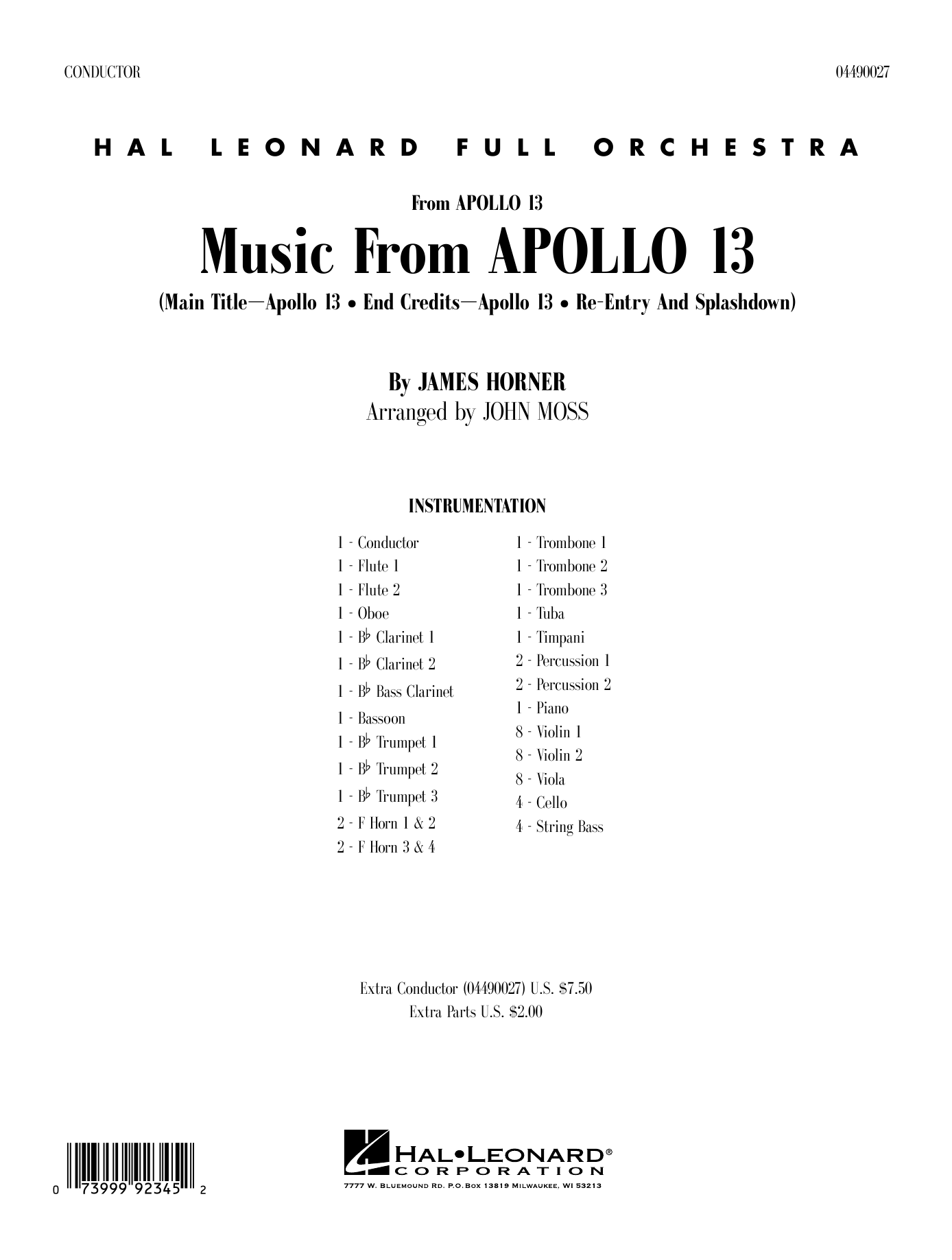

Music from Apollo 13 (arr. John Moss): Full Orchestra Conductor Score & Parts
By James Horner / Arranged by John Moss
Grade: 4
Item: 35-PK01336435
$80.00
Pickup currently not available
Buy Extra Parts (Digital PDF Download)
Parts Added to Cart!
Description
James Horner's magnificent score plays a key role in the emotion and drama of this memorable film with Tom Hanks. John Moss' medley opens with the plaintive solo trumpet theme and includes several of the film score's distinctive and inspiring themes.


Music from Apollo 13 (arr. John Moss): Full Orchestra Conductor Score & Parts isn't in MakeMusic Cloud just yet...but it could be. Let us know you'd like to see it, and you'll help shape what comes next. In the meantime, start a free trial and dive into thousands of interactive titles your students can play along with today.
Request This Title
Tell us you want it.
Start Your Free Trial
Explore everything that's ready to play right now.
Sample Audio
No sample audio found.
Sample Video
No sample videos found.
Additional Details
Publisher:
Hal Leonard
SKU:
35-PK01336435
More about this title
About the Composer: James Horner
James Horner composed some of the most recognizable film scores of the past four decades, earning multiple Oscar nominations and wins through his work on blockbuster films and intimate dramas alike. His gift for melody and orchestration made him a fixture in Hollywood from the 1980s onward, and his scores remain teaching tools for understanding how orchestration serves narrative and emotion in modern music.
Why we love this
This arrangement captures the emotional core of one of cinema's greatest true-story dramas without requiring a massive orchestra. Horner's melodies are singable and memorable, giving young musicians something substantial to play while the Grade 4 scoring keeps technical demands reasonable. The medley structure means your ensemble experiences musical storytelling in a compact, concert-ready package.
What to expect
Soaring and hopeful, with moments of quiet introspection. The writing balances triumphant brass moments against tender, vulnerable melodic passages that resonate with the film's themes of courage and human resilience. The orchestration opens up naturally, never feeling cramped despite the Grade 4 level.
Who it's for
Orchestras at the intermediate level seeking film music that combines accessibility with genuine emotional substance. This works equally well for students who know the film and those encountering Horner's work for the first time, making it a bridge between popular culture and the concert hall.
How to get the most out of it
- Balance the opening trumpet solo carefully; it should soar above the orchestra without forcing the player into an uncomfortable dynamic range. Let the accompaniment sit back and support.
- Pay attention to dynamics as themes return and develop. Horner builds emotional weight through gradual crescendos, so avoid sudden jumps between sections.
- Shape each thematic statement as though it's telling part of the story. These aren't disconnected melodies; they're connected moments from the film that deserve phrasing that reflects their dramatic purpose.
- Ensure the string sections play with long, connected bow strokes during lyrical passages. This is where the arrangement breathes emotionally.
How to use it
Place this in a spring concert focused on film music or stories of survival and achievement. It pairs naturally with other accessible orchestral arrangements and serves as a crowd pleasing finale that audiences instantly recognize and connect with emotionally.
Skills your students will build
- Balancing solo and accompaniment textures
- Sustaining lyrical phrasing across phrase boundaries
- Responding to dramatic dynamic changes and emotional arcs
- Ensemble awareness across multiple instrumental families