
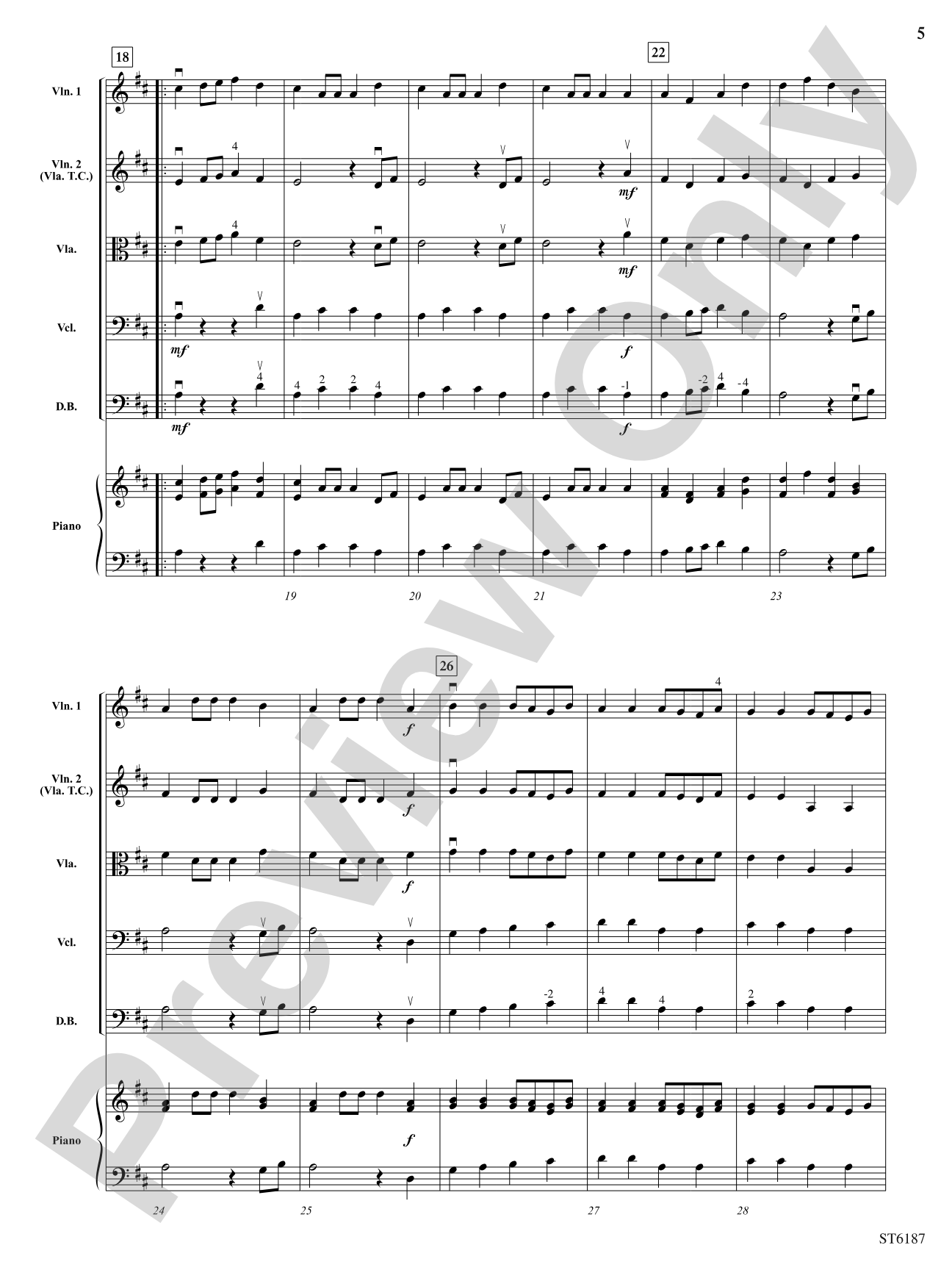
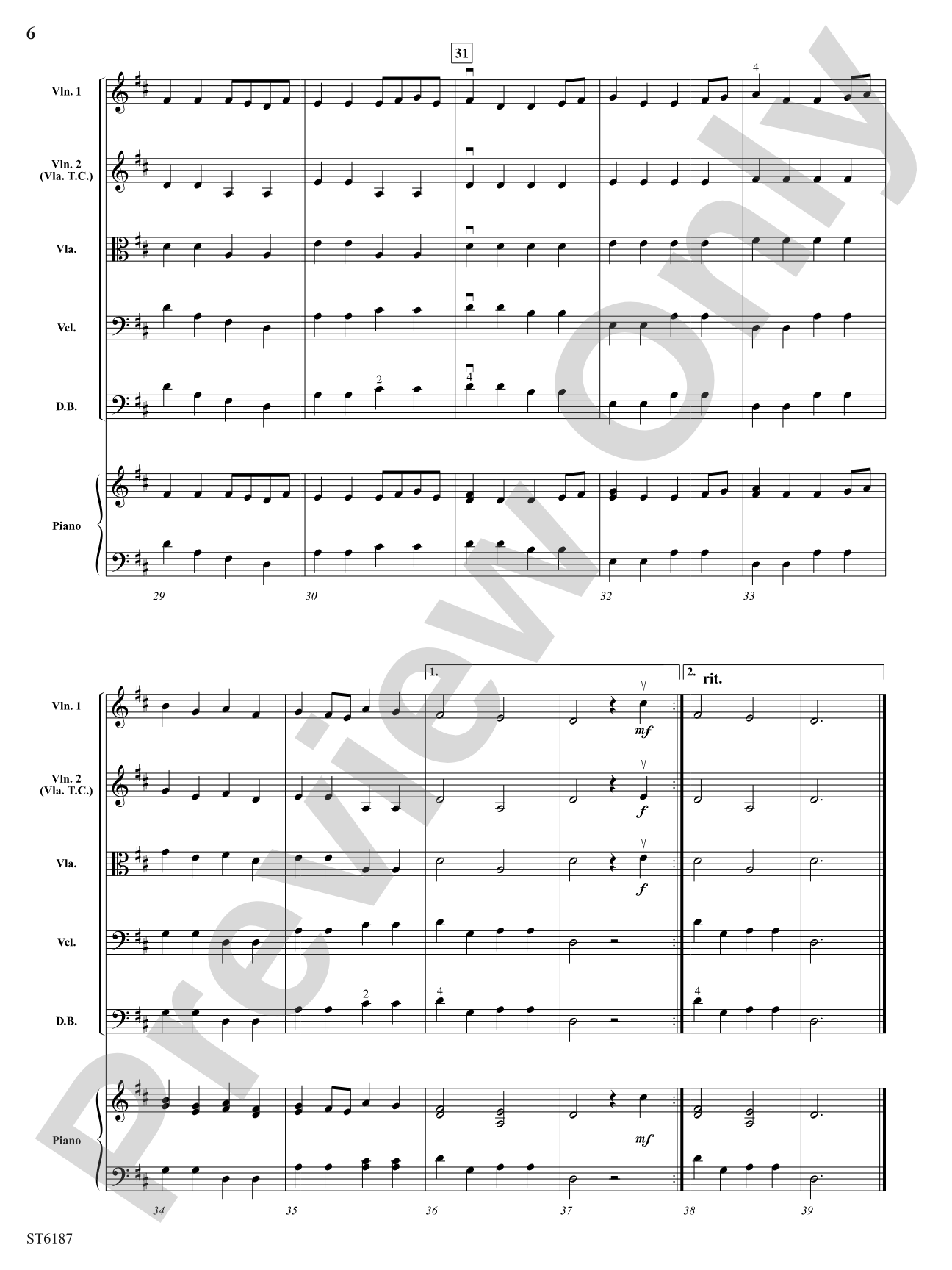
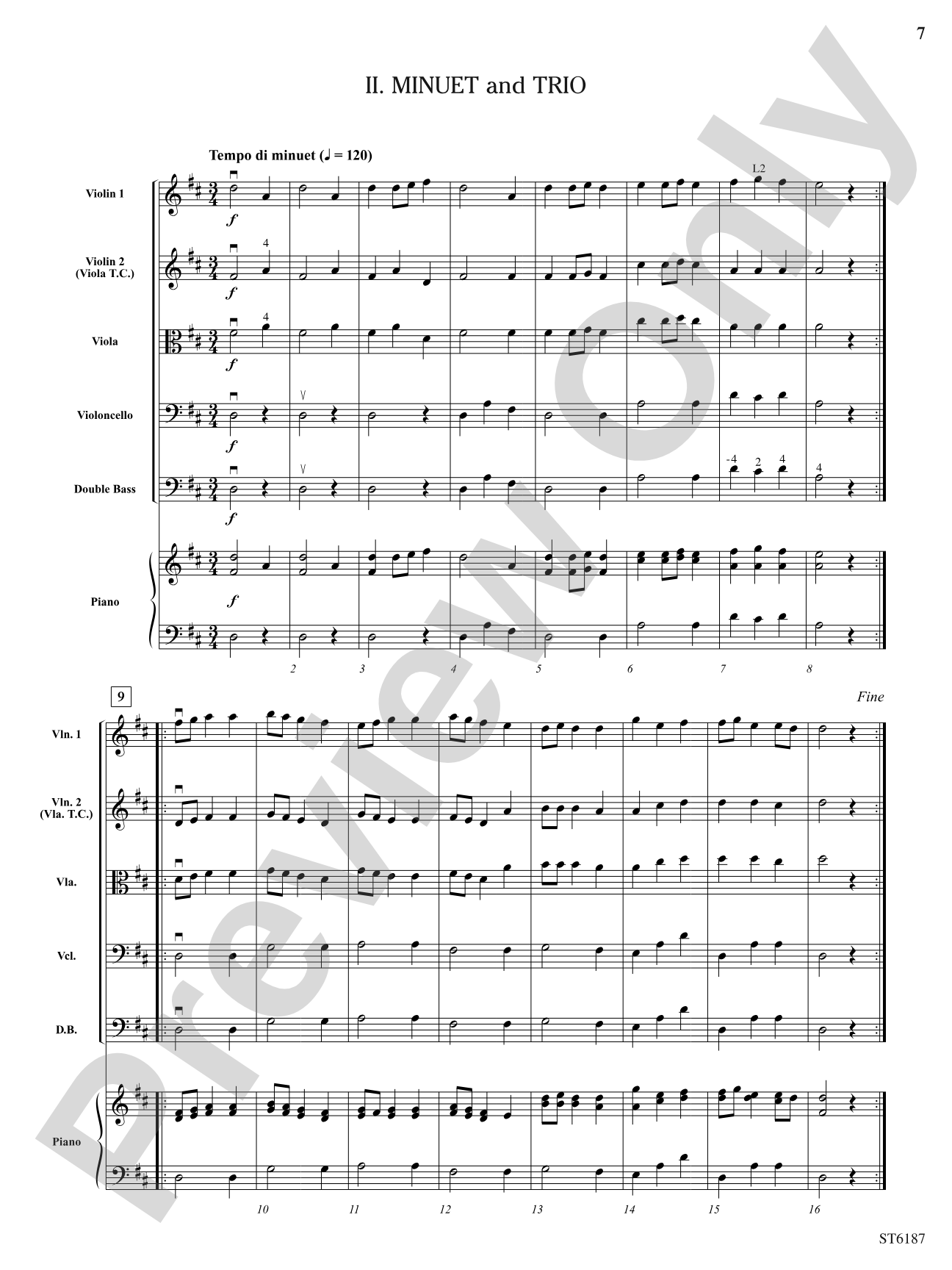
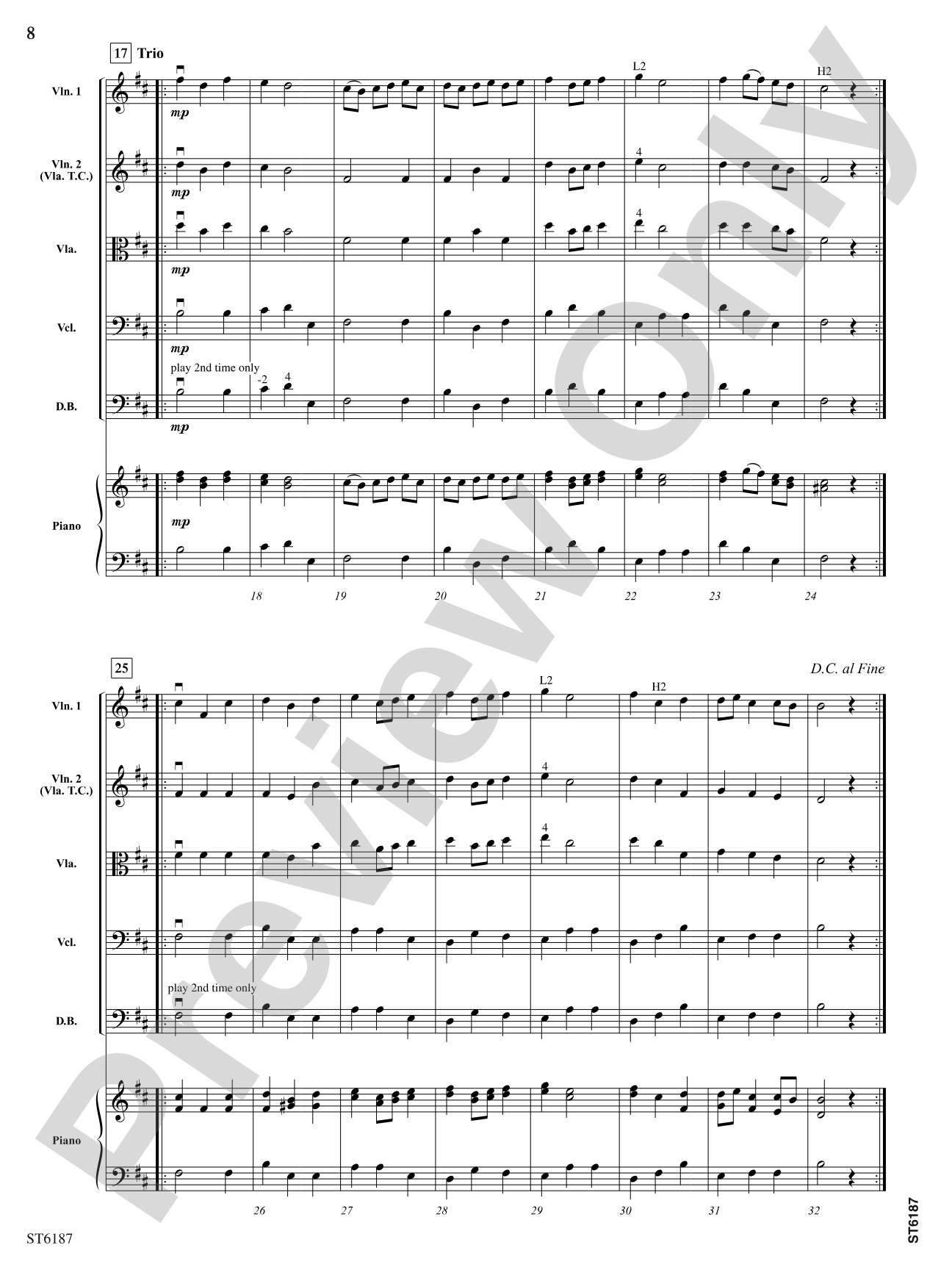

Music for the Royal Fireworks: String Orchestra Conductor Score & Parts
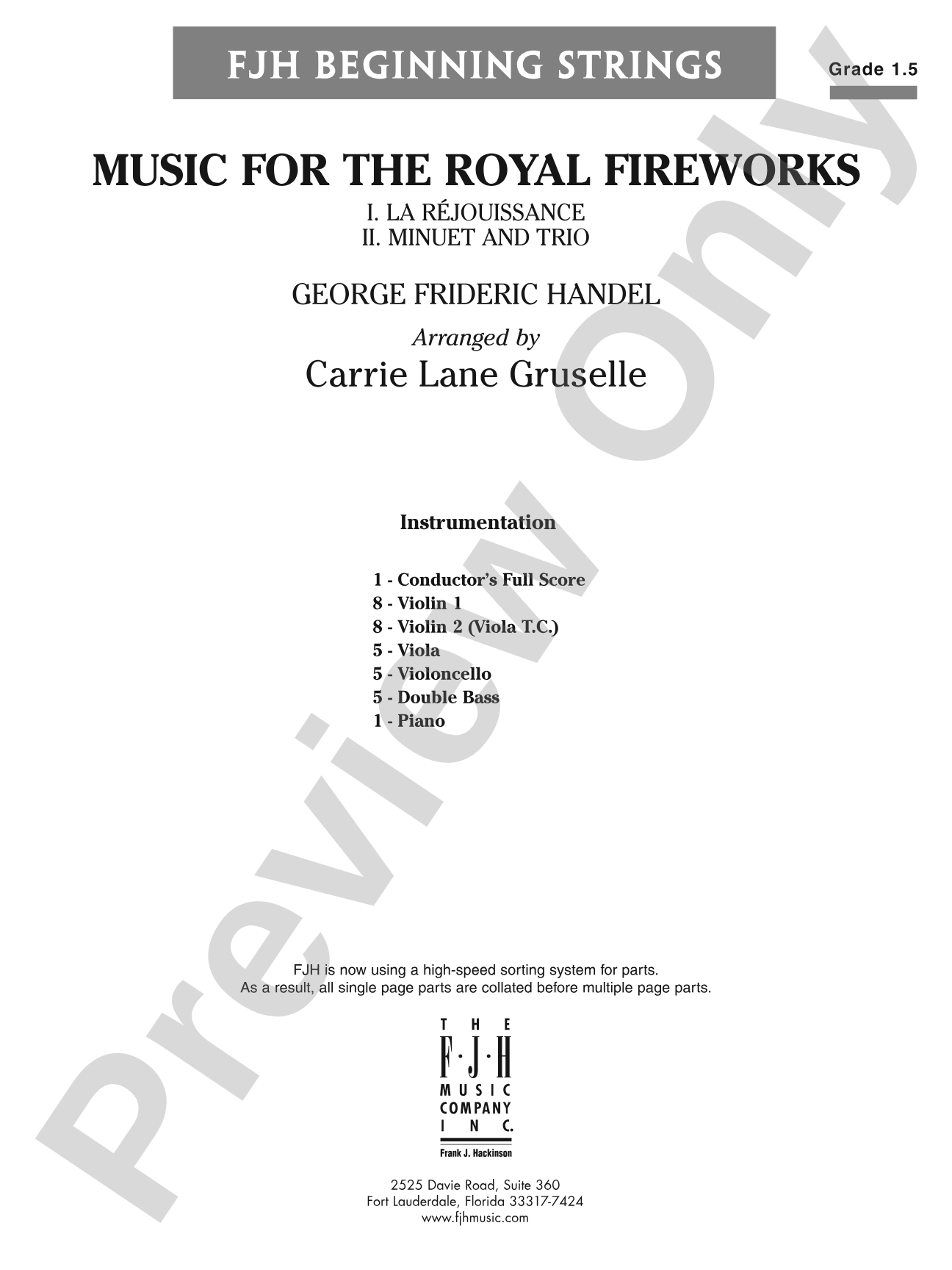
By George Frideric Handel / arr. Carrie Lane Gruselle
Grade: 1.5
Item: 98-DST6187
$45.00
Pickup currently not available
Buy Extra Parts (Digital PDF Download)
| Product | Price | Quantity |
|---|---|---|
| Music for the Royal Fireworks: Score | $5.00 | |
| Music for the Royal Fireworks: Violin 1 | $7.00 | |
| Music for the Royal Fireworks: Violin 2 (Viola T.C.) | $7.00 | |
| Music for the Royal Fireworks: Viola | $7.00 | |
| Music for the Royal Fireworks: Violoncello | $7.00 | |
| Music for the Royal Fireworks: Double Bass | $7.00 | |
| Music for the Royal Fireworks: Piano | $7.00 |
Parts Added to Cart!
Description
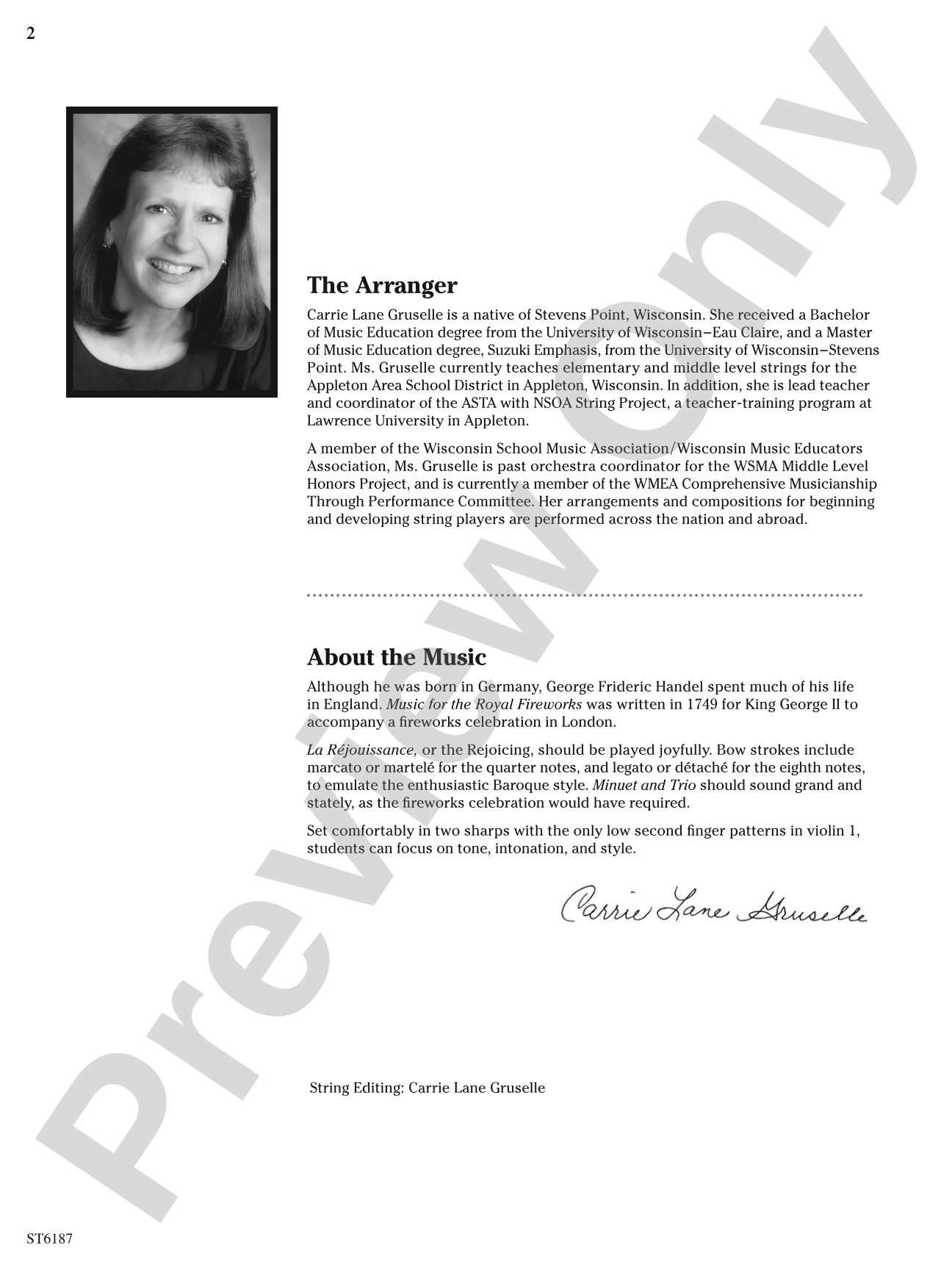
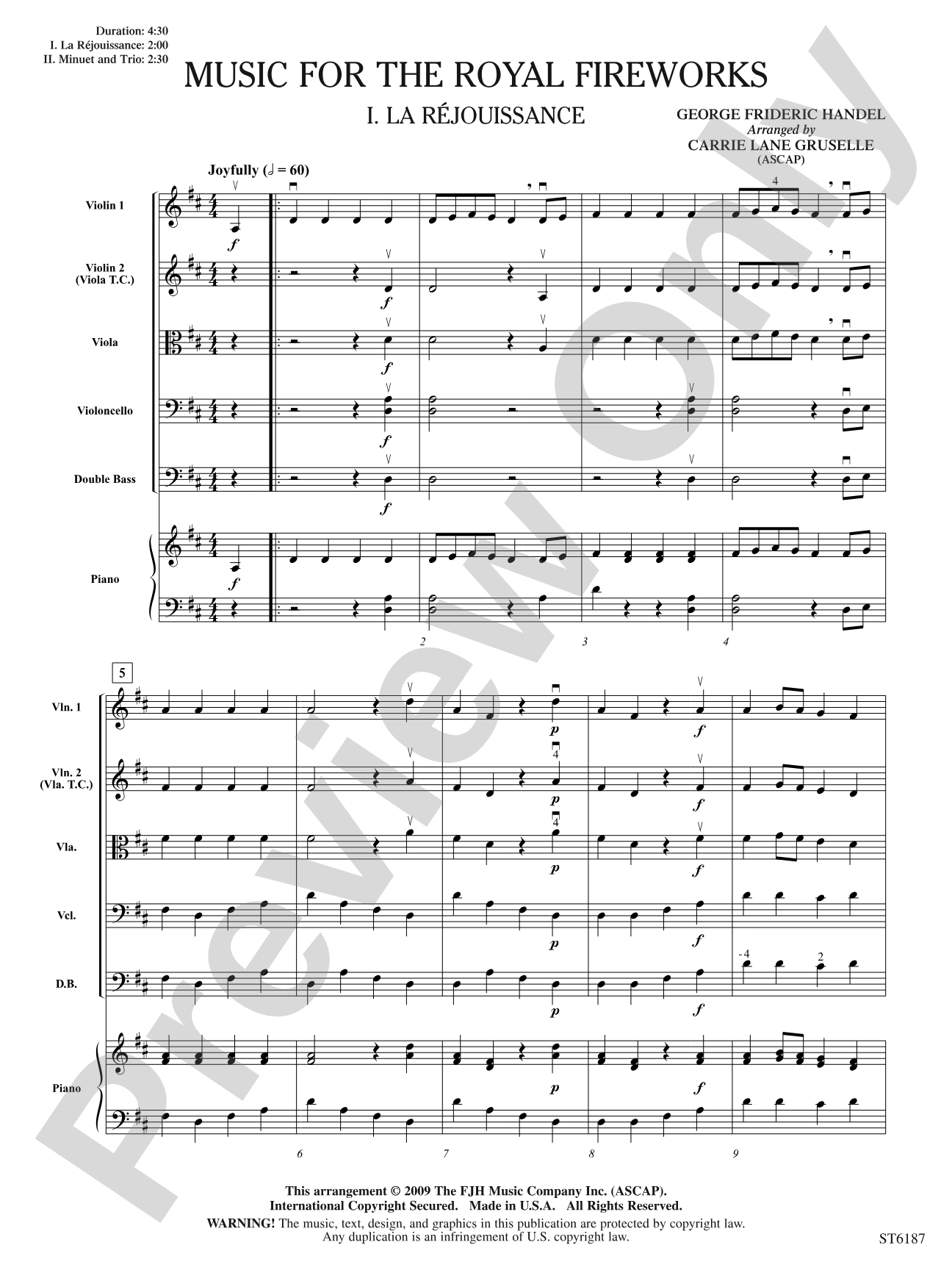
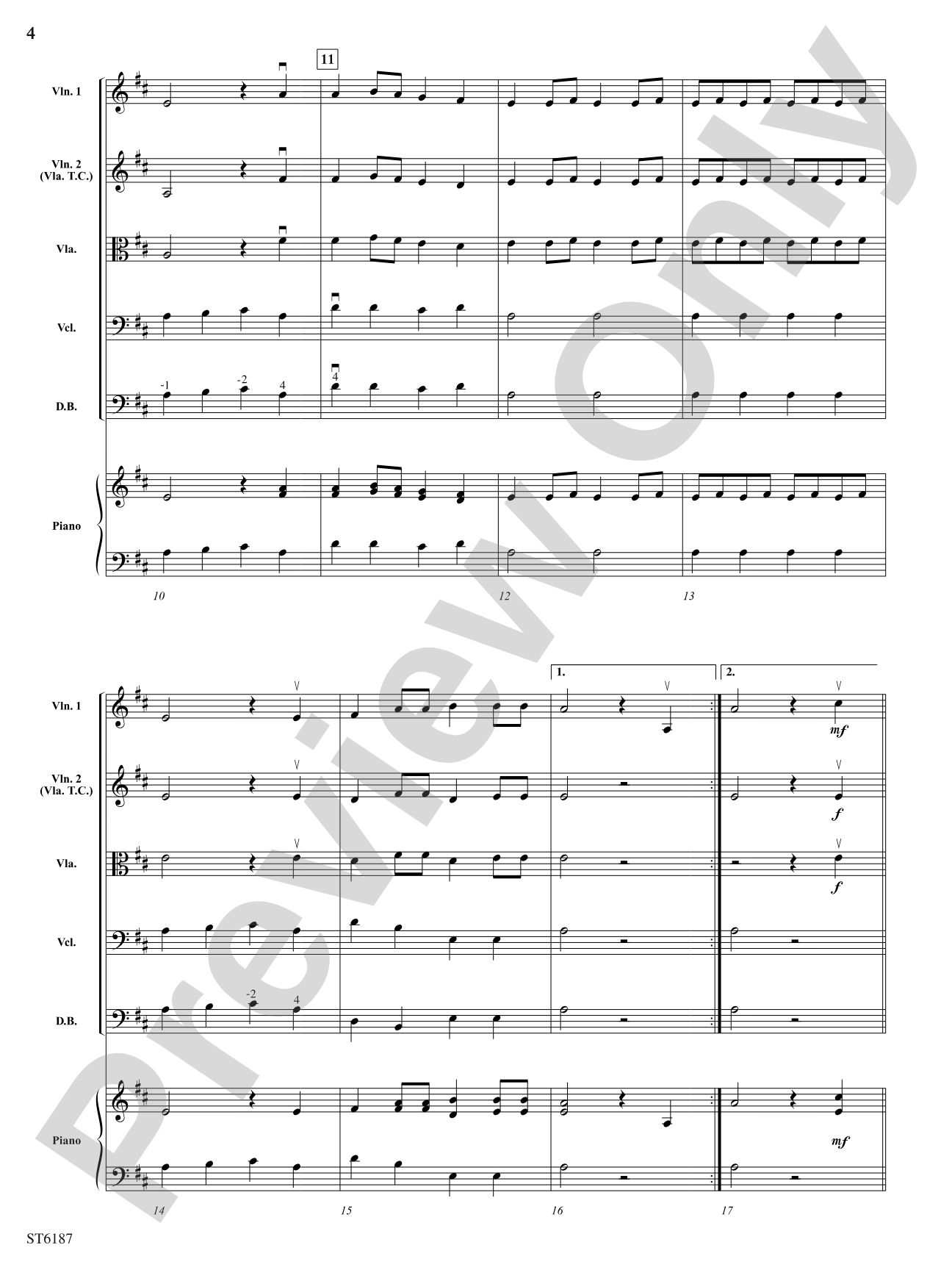
Written in two movements, this work features La Réjouissance and Minuet and Trio from Handel's masterpiece. This arrangement goes further than others at this level by cleverly including the entire Trio section without pushing the students technically. Set comfortably in two sharps with the only low second finger patterns in Violin 1, students can focus on tone, intonation and style.


Music for the Royal Fireworks: String Orchestra Conductor Score & Parts isn't in MakeMusic Cloud just yet...but it could be. Let us know you'd like to see it, and you'll help shape what comes next. In the meantime, start a free trial and dive into thousands of interactive titles your students can play along with today.
Request This Title
Tell us you want it.
Start Your Free Trial
Explore everything that's ready to play right now.
Sample Audio
1
Audio File
--:--
0:00
0:00
Sample Video
No sample videos found.
Additional Details
Series:
FJH Beginning Strings
Publisher:
The FJH Music Company, Inc.
SKU:
98-DST6187
More about this title
About the Composer: George Frideric Handel
George Frideric Handel (1685-1759) built his career across Europe as a master of both opera and instrumental music, eventually settling in London where he became a dominant figure in English musical life. His ability to craft memorable melodies, bold harmonic gestures, and music of genuine ceremonial grandeur made him one of the most celebrated composers of the Baroque era. Music for the Royal Fireworks, originally written for outdoor celebration, endures as one of his most recognizable works precisely because its straightforward elegance and infectious rhythms transcend the concert hall.
Why we love this
This arrangement respects Handel's original architecture while making it genuinely playable for young orchestras. Rather than stripping down the piece to its basics, arranger Carrie Lane Gruselle keeps the complete Trio section intact, trusting that thoughtful fingering choices and a comfortable key placement allow students to engage with authentic Baroque structure without wrestling with technical obstacles.
What to expect
The Réjouissance bounces with celebratory vigor, all bright fanfare rhythms and forward-moving lines that feel like a perpetual procession. The Minuet and Trio shift into intimate elegance, with the Trio section offering a gentle respite before returning to stately grandeur.
Who it's for
Beginning string orchestras at the 1.5 grade level will find this arrangement both achievable and musical. Students who have developed basic bow control and are comfortable reading in first position across all strings can handle the technical demands while focusing energy on tone production and ensemble balance.
How to get the most out of it
- Shape the Réjouissance with clear phrase breathing; the rhythmic drive should feel natural rather than relentless, and the ensemble's entrances need definition to highlight Handel's instrumental dialogue.
- Approach the Minuet and Trio with dance character in mind. The Minuet should have courtly dignity while the Trio offers a chance for lighter articulation and reduced weight, creating genuine contrast.
- Lock intonation in the two-sharp key center early; Handel's harmonic simplicity means tuning problems become immediately apparent, so secure the first and third fingers on all strings before rehearsing full passages.
How to use it
Program this as an encore or a concert opener when you want to establish polish and stylistic range early in the season. Its relatively modest duration and celebratory character make it ideal for spring concerts, educational demonstrations, or family-friendly performances where audiences appreciate both Baroque authenticity and clear, confident student playing.
Skills your students will build
- Reading and executing balanced two-part writing (first and second violin independence)
- Baroque articulation and phrasing, particularly detached and slurred bowings in period context
- Intonation stability within a single key center across all four string parts
- Understanding structural contrast between minuet and trio forms
- Ensemble listening and balance, especially in sustained harmonic accompaniment