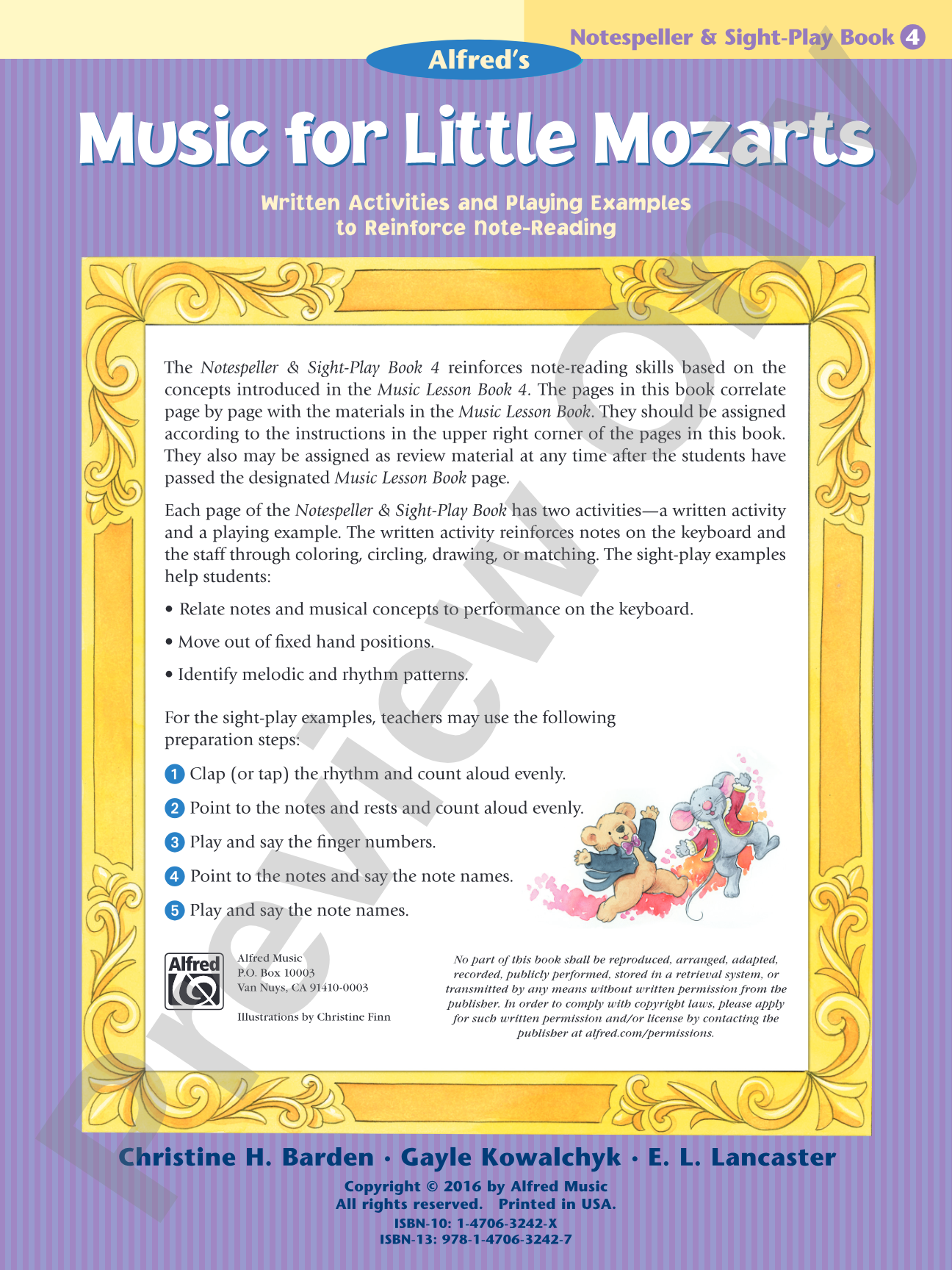
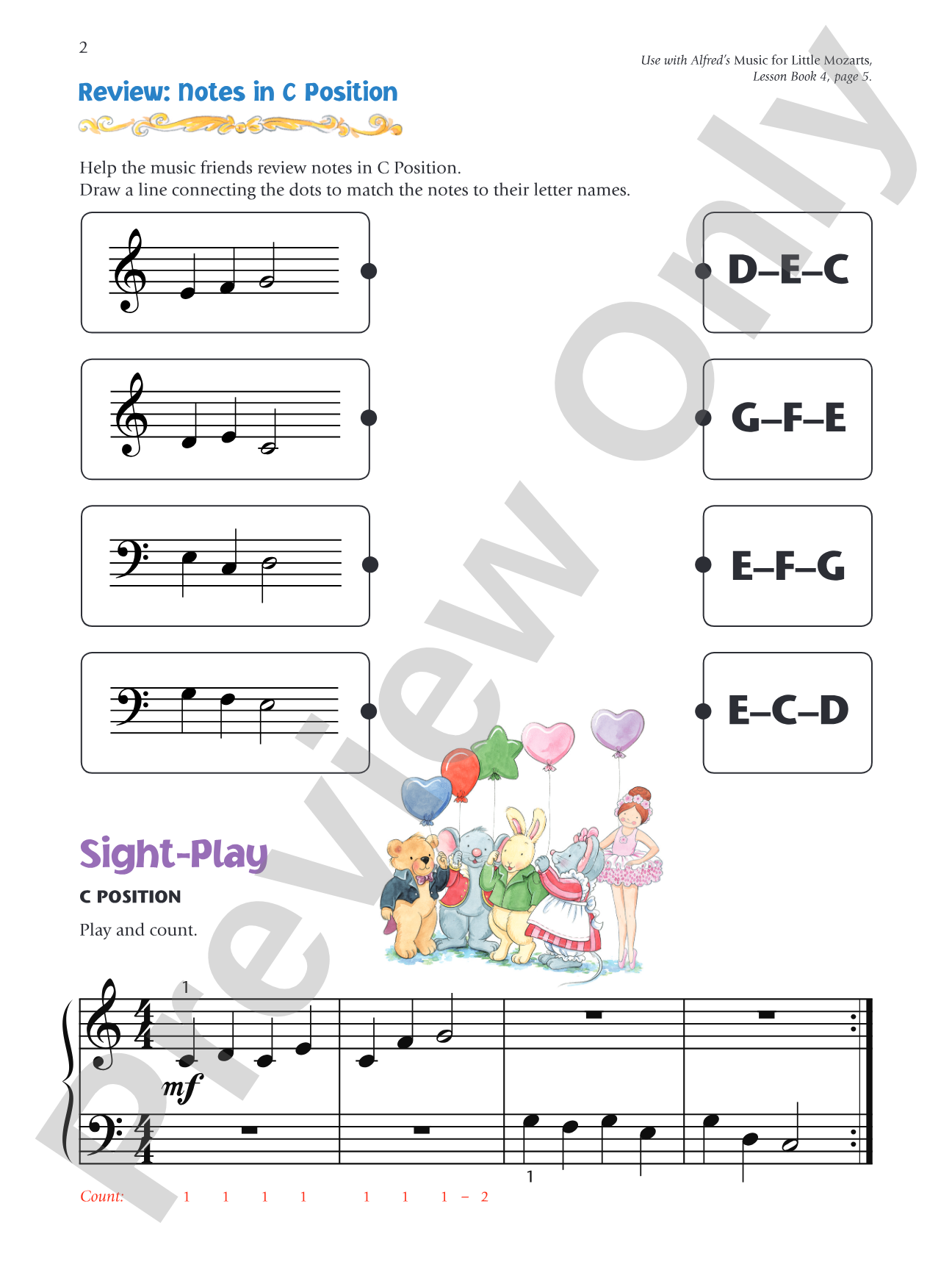
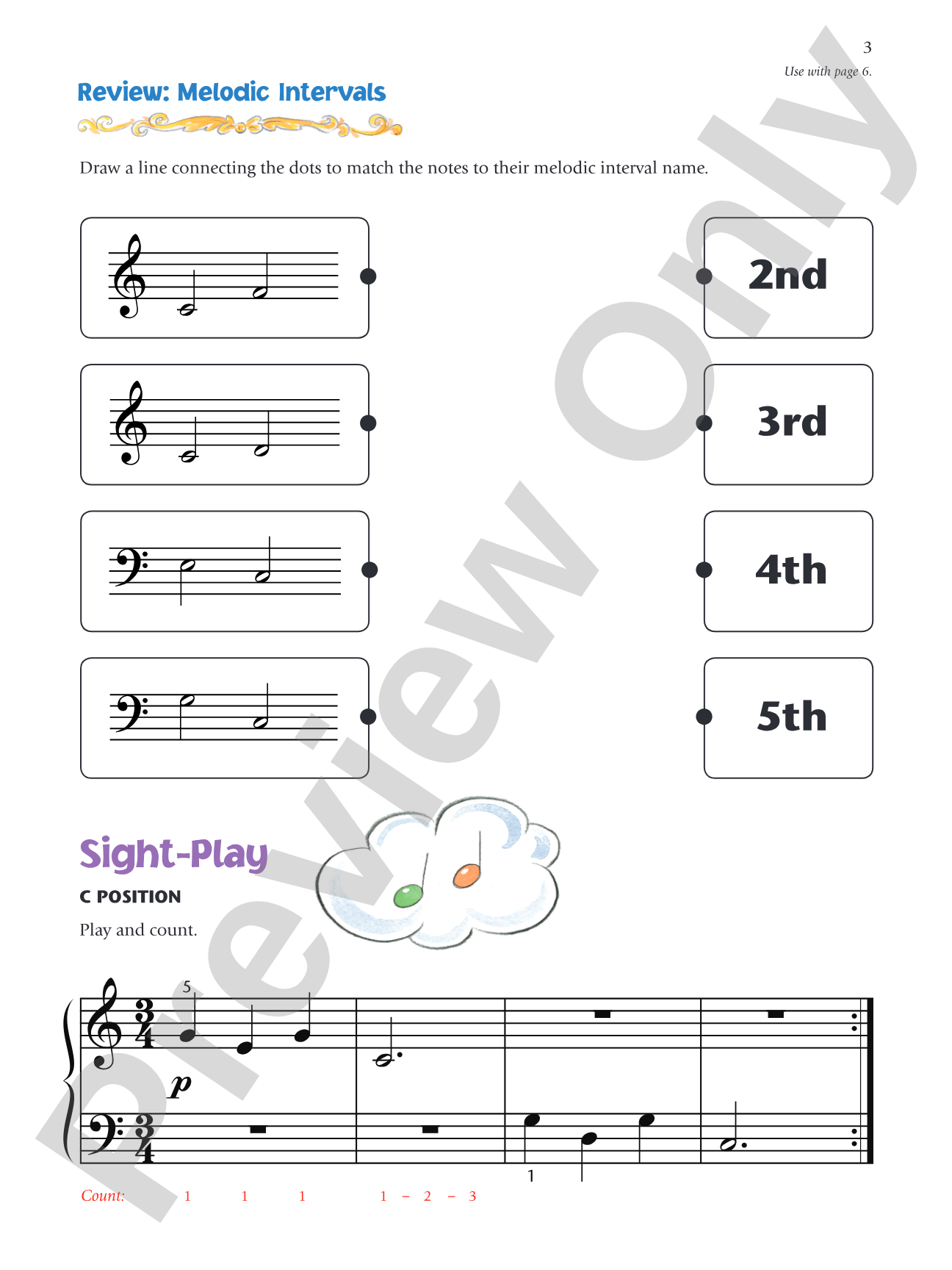
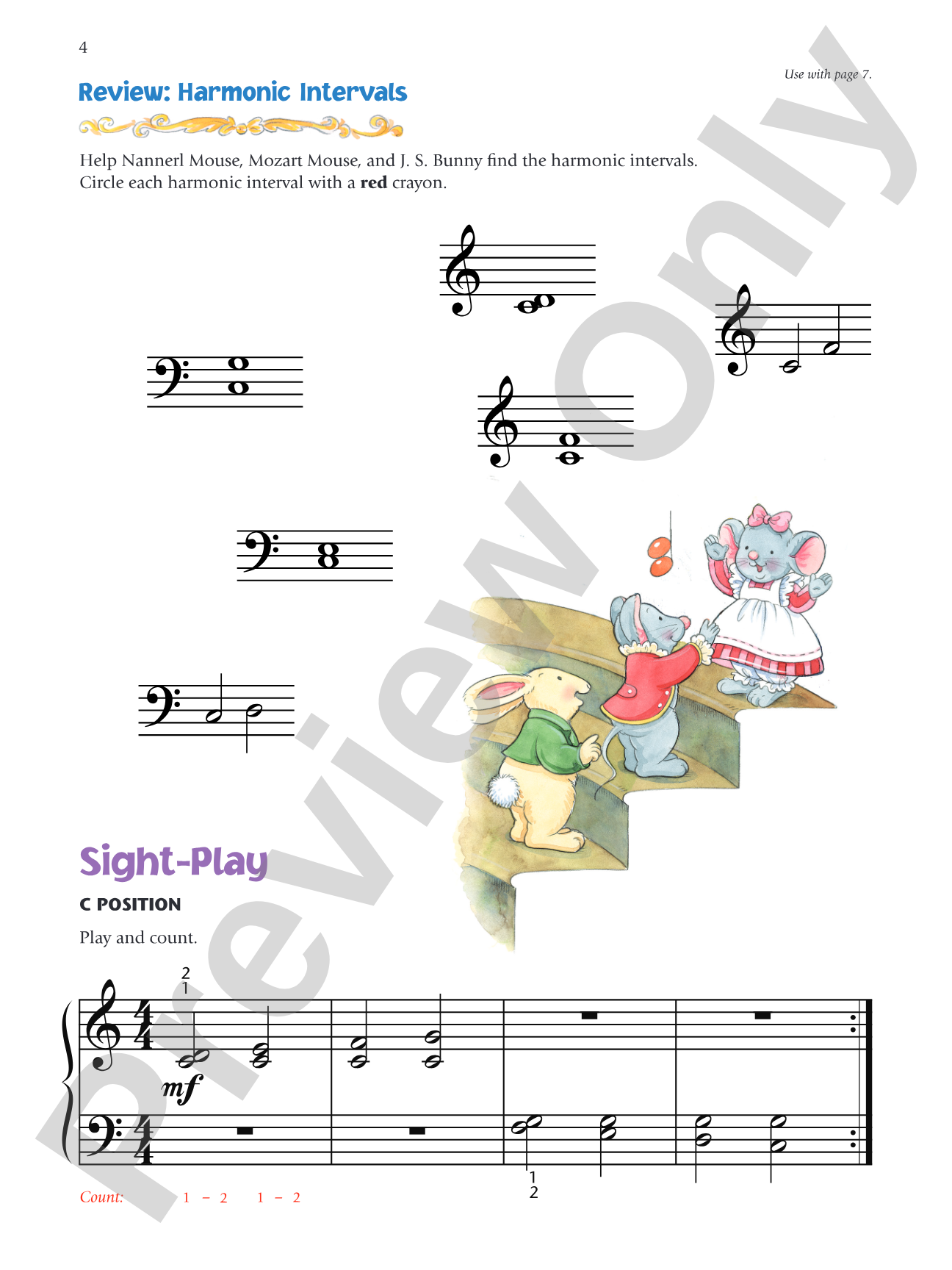
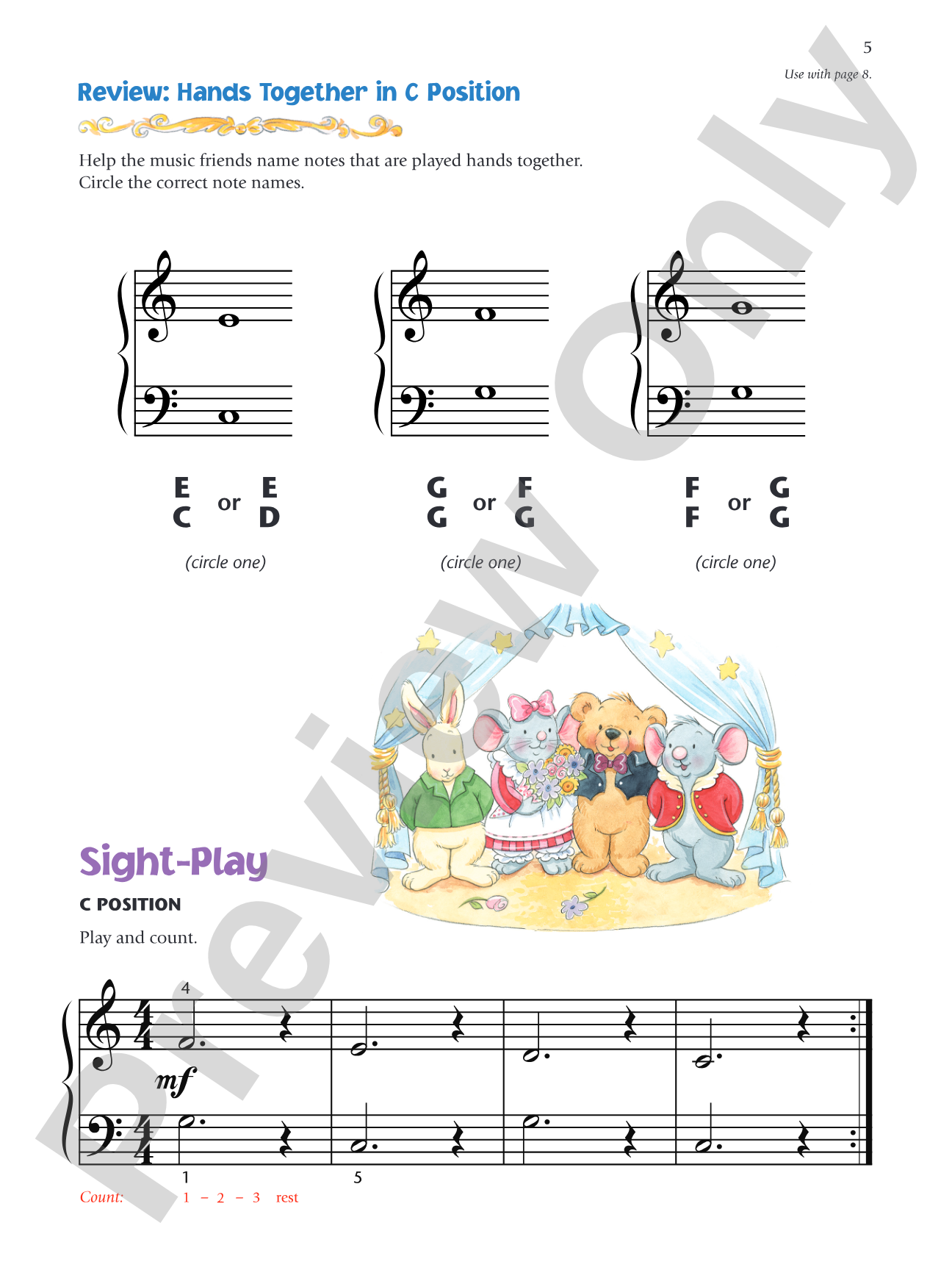
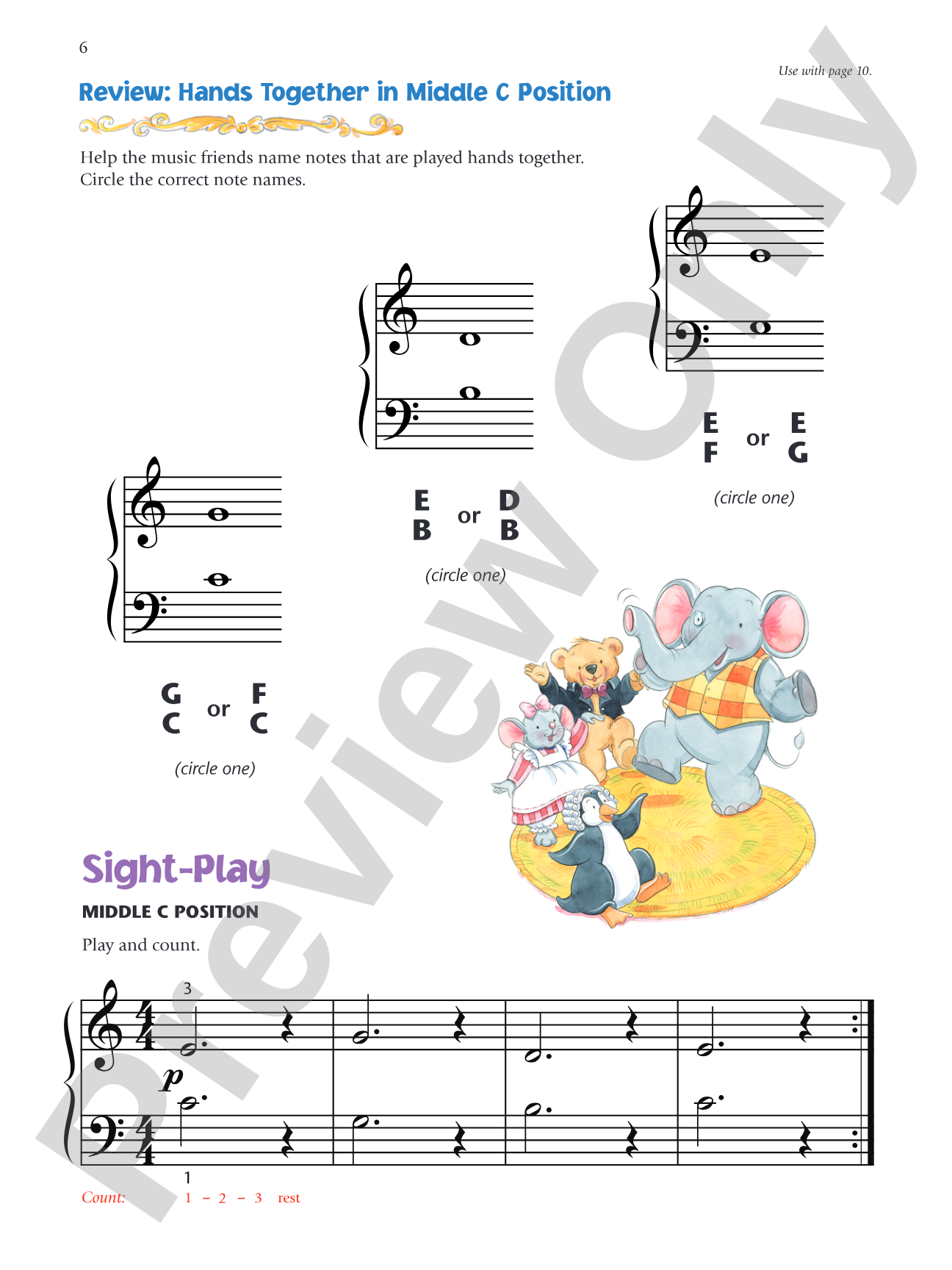
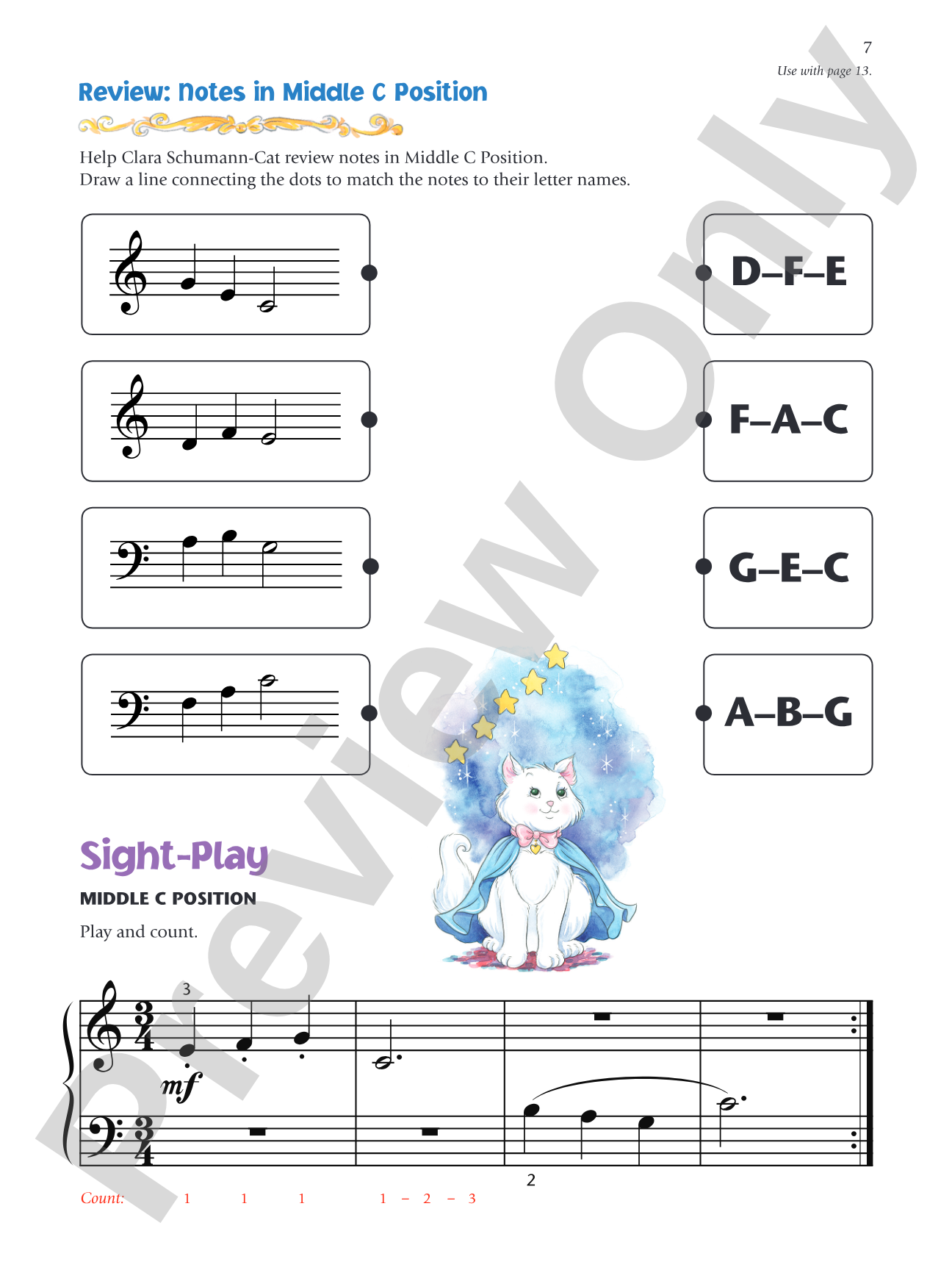
The Notespeller & Sight-Play Book 4 reinforces note-reading skills based on the concepts introduced in the Music Lesson Book 4. Each page has two activities---a written activity and a playing example. The written activity reinforces notes on the keyboard and staff through coloring, circling, drawing, or matching. The sight-play examples help students relate notes and musical concepts to performance on the keyboard, move out of fixed hand positions, and identify melodic and rhythm patterns.
Discover MakeMusic Cloud: thousands of interactive titles your students can play along with today.
Christine H. Barden holds deep expertise in early childhood music pedagogy and serves as co-author of the foundational Music for Little Mozarts method. Her background spans formal piano training at San Francisco State University, mentorship under Vladimir Brenner (pianist with the NBC Symphony Orchestra), and four years of study and teaching across Europe. She was among the first American educators to train with Yamaha Music Foundation instructors in Japan, later becoming a national staff member with Yamaha for 17 years where she directed curriculum and served as National Chief Instructor.
Barden currently teaches private piano students in Reno, Nevada, many of whom have earned recognition at competitions and festivals. Her own compositions have been selected for the National Federation of Music Clubs Junior Festival. A sought-after presenter, she has led workshops for music teachers at conferences across the United States, England, Norway, and Singapore, bringing her perspective on developmentally sound music instruction to educators worldwide.
Why we love this
Students move beyond rote finger patterns when they understand where notes live on the staff and keyboard. This workbook does exactly that through a two-part structure: the written activities cement note recognition through hands-on engagement (coloring, matching, circling), while the sight-play examples immediately translate that knowledge into actual playing. The progression out of fixed hand positions mirrors how real reading develops.
What to expect
Engaging and playful, without sacrificing clarity. The written activities feel like discovery rather than drill, and the sight-play examples reward immediate application. Students experience the joy of moving their hands freely across the keyboard while building genuine reading fluency.
Who it's for
Piano students in Book 4 of the Music for Little Mozarts series who need systematic reinforcement of note-reading and keyboard geography. Teachers looking for supplemental practice materials that bridge the gap between written notation and actual performance will find this workbook essential. Homeschool piano parents appreciate the self-contained, age-appropriate structure.
How to get the most out of it
Have students complete the written activity before attempting the sight-play example so the note relationships feel familiar rather than new.
Pause between sight-play examples to ask students which melodic or rhythmic patterns they noticed repeating; this metacognitive step cements learning.
Encourage students to point at the staff while playing, connecting eyes, hand, and sound in one fluid motion.
How to use it
Assign pages as weekly homework alongside the corresponding Lesson Book 4 pages to ensure concepts stick between lessons. The variety of activity types keeps practice sessions fresh and prevents boredom during the critical foundational years. Use it as a diagnostic tool as well: which activities does a student complete with confidence? Where do they hesitate? Those answers guide your lesson planning.
Skills your students will build
Note identification on both treble staff and keyboard
Visual pattern recognition in melodic and rhythmic sequences
Hand position flexibility and keyboard geography beyond fixed patterns
Sight-reading fluency through repeated, varied examples
Fine motor coordination in note-pointing and keyboard navigation
You May Also Like
Scan to Complete Your Purchase
Use your phone's camera to scan the code below
You'll log in on your phone and the order will be added to your account