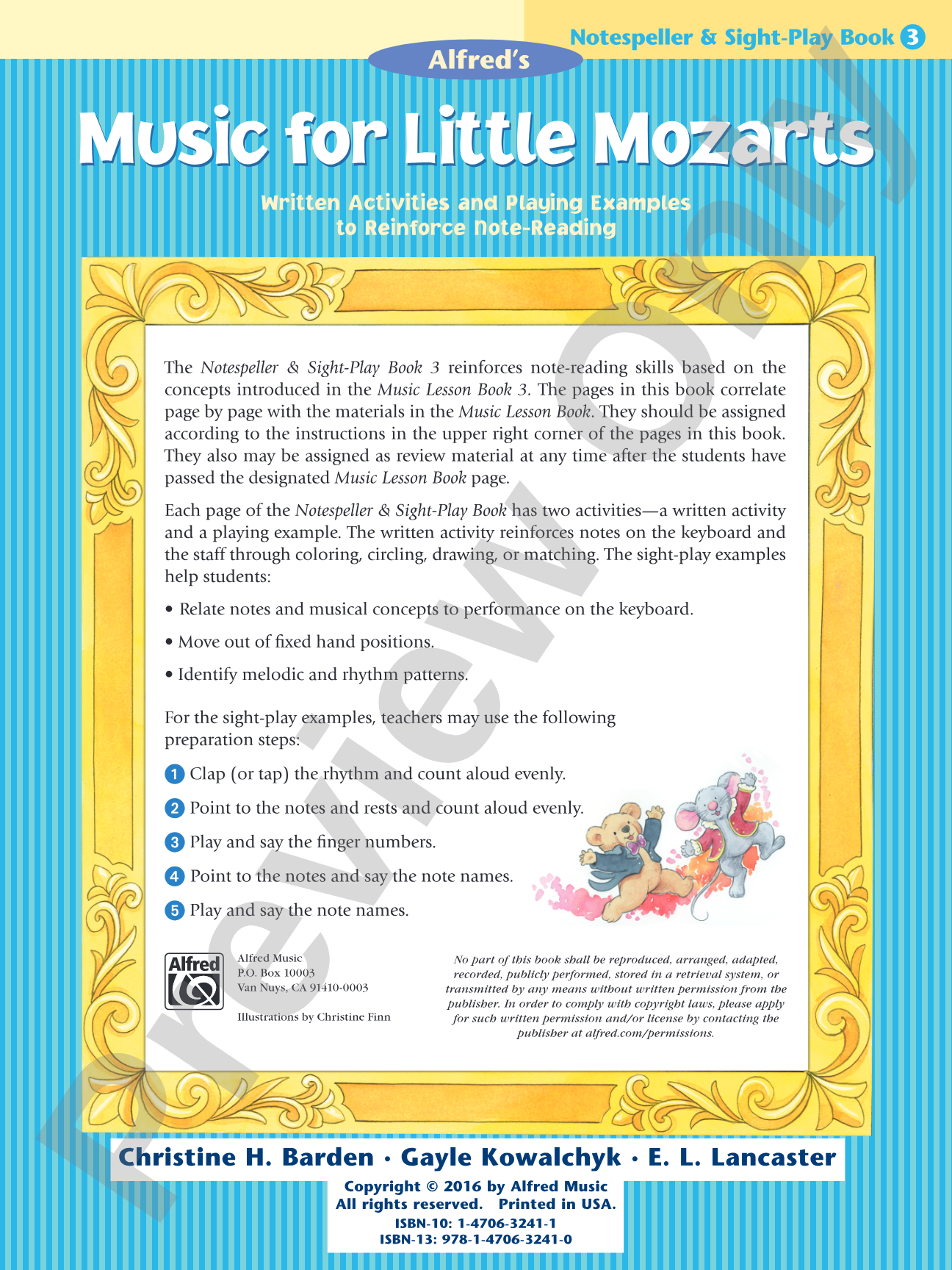
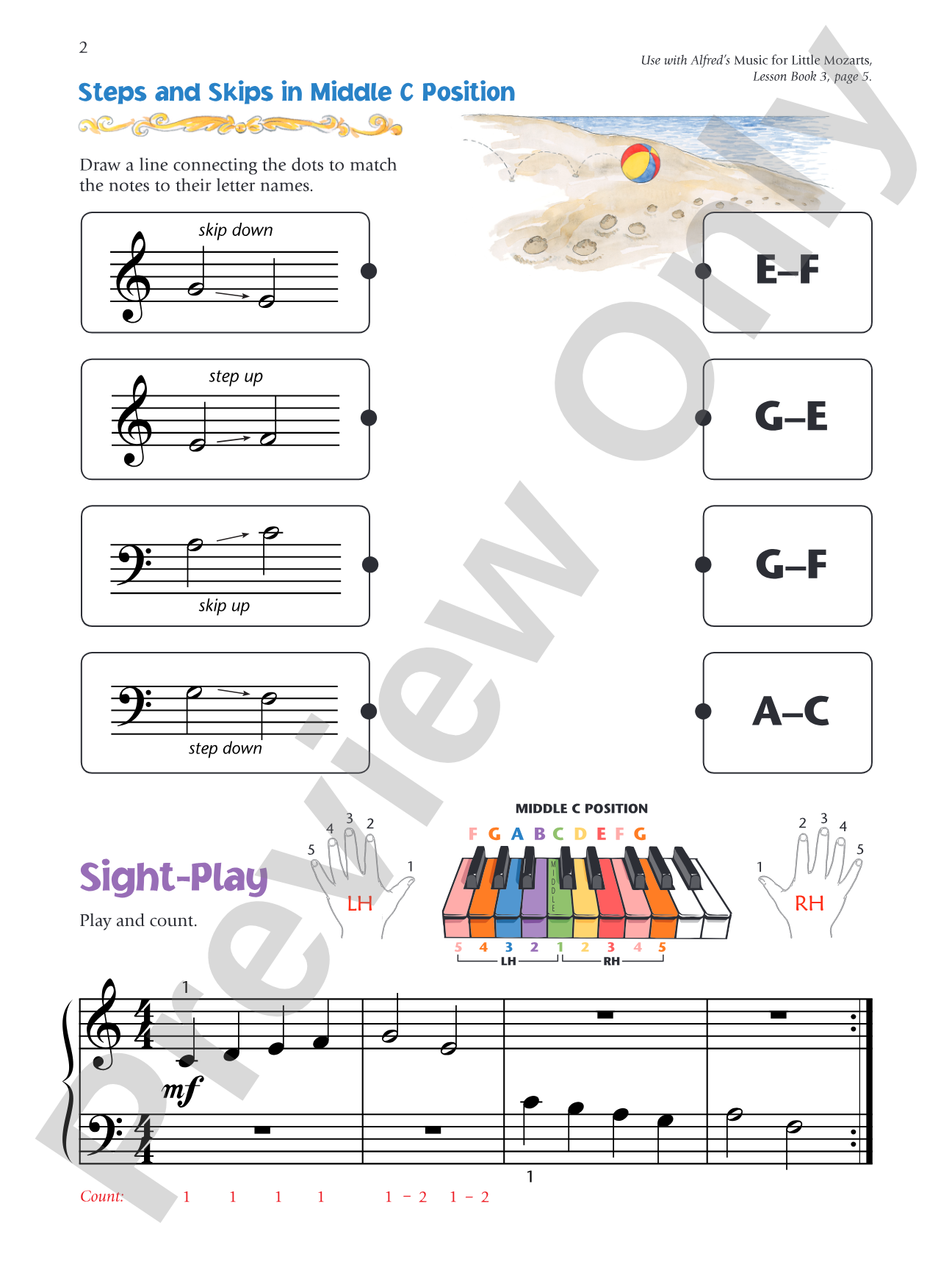
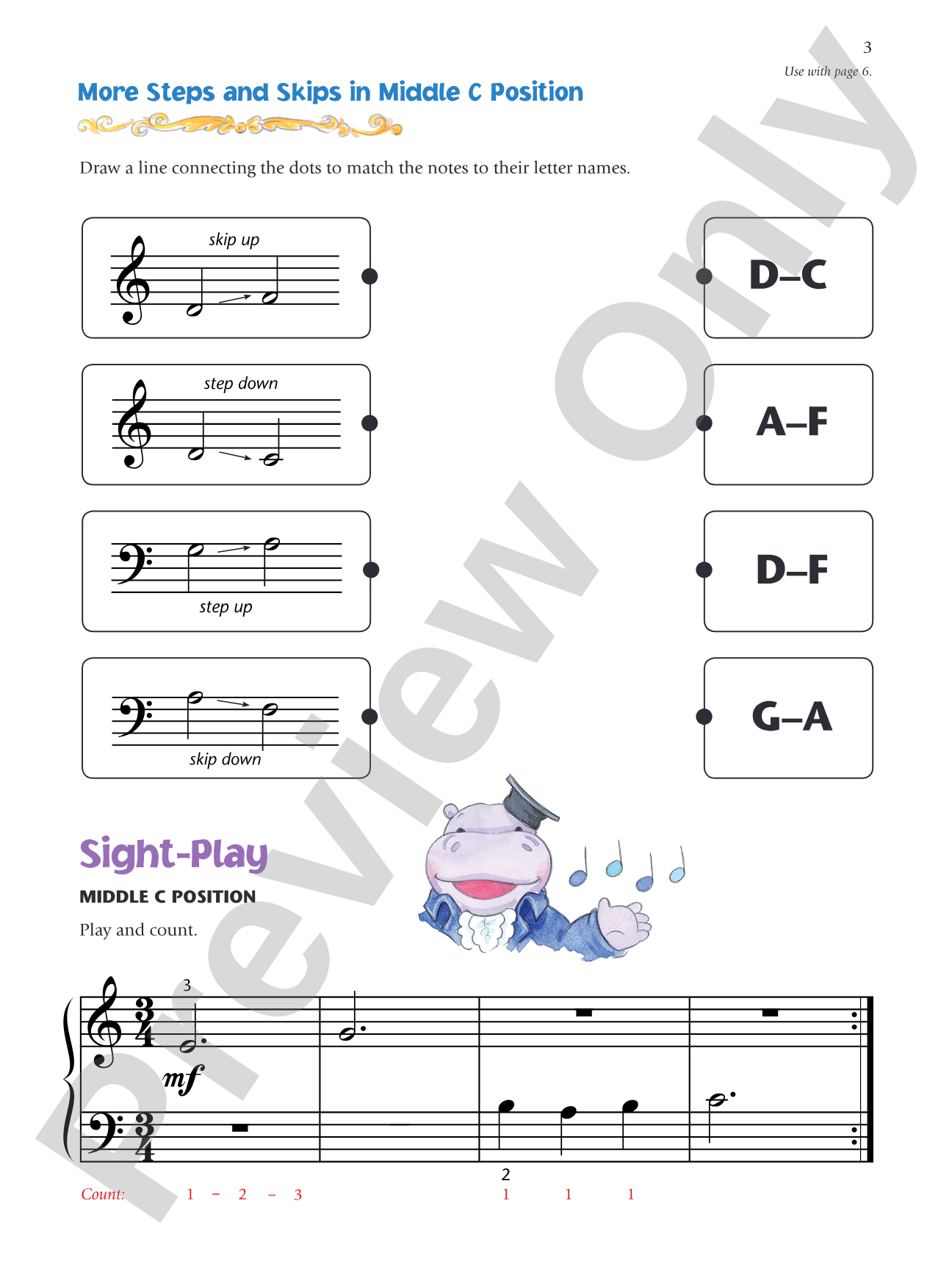
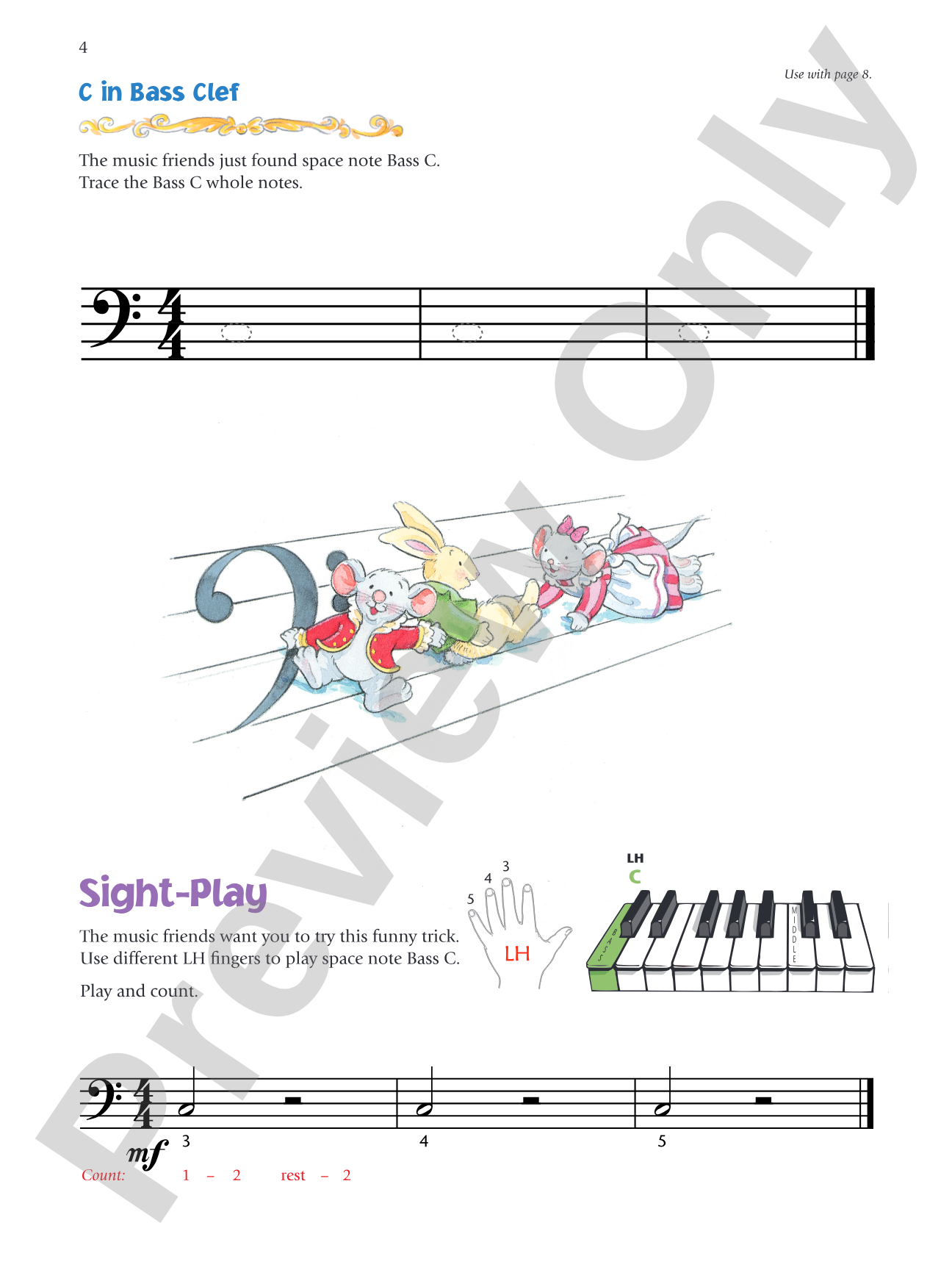
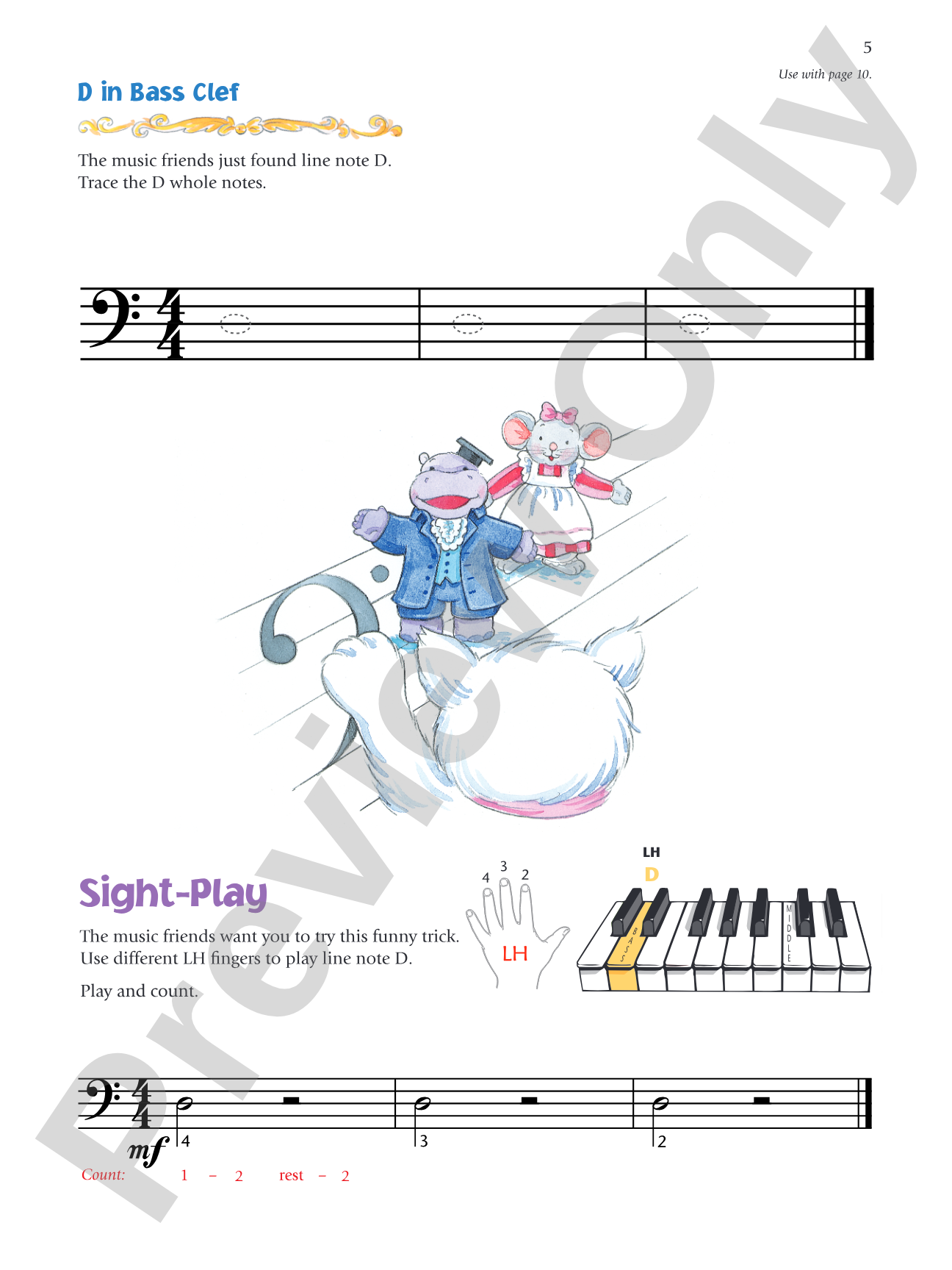
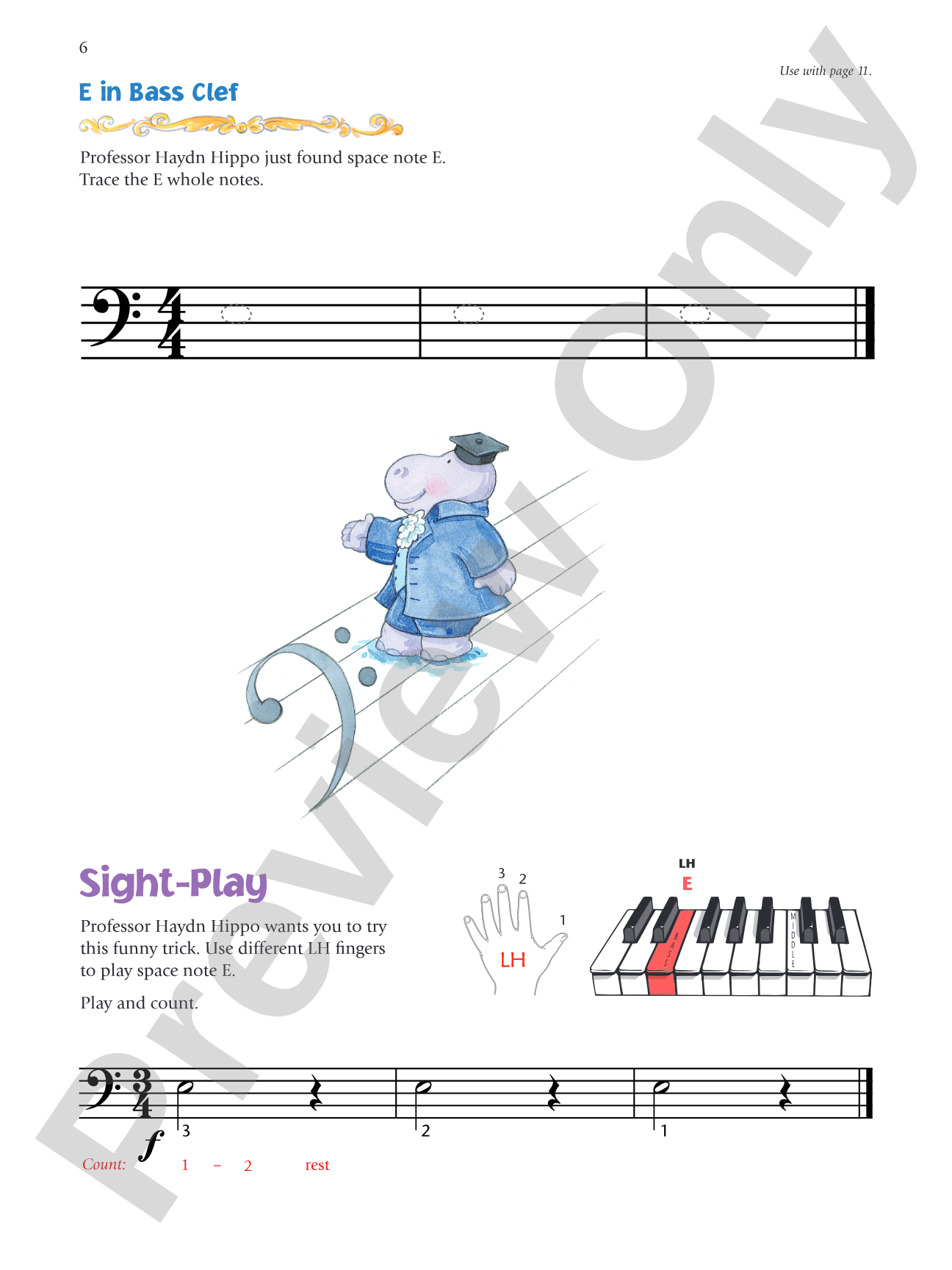
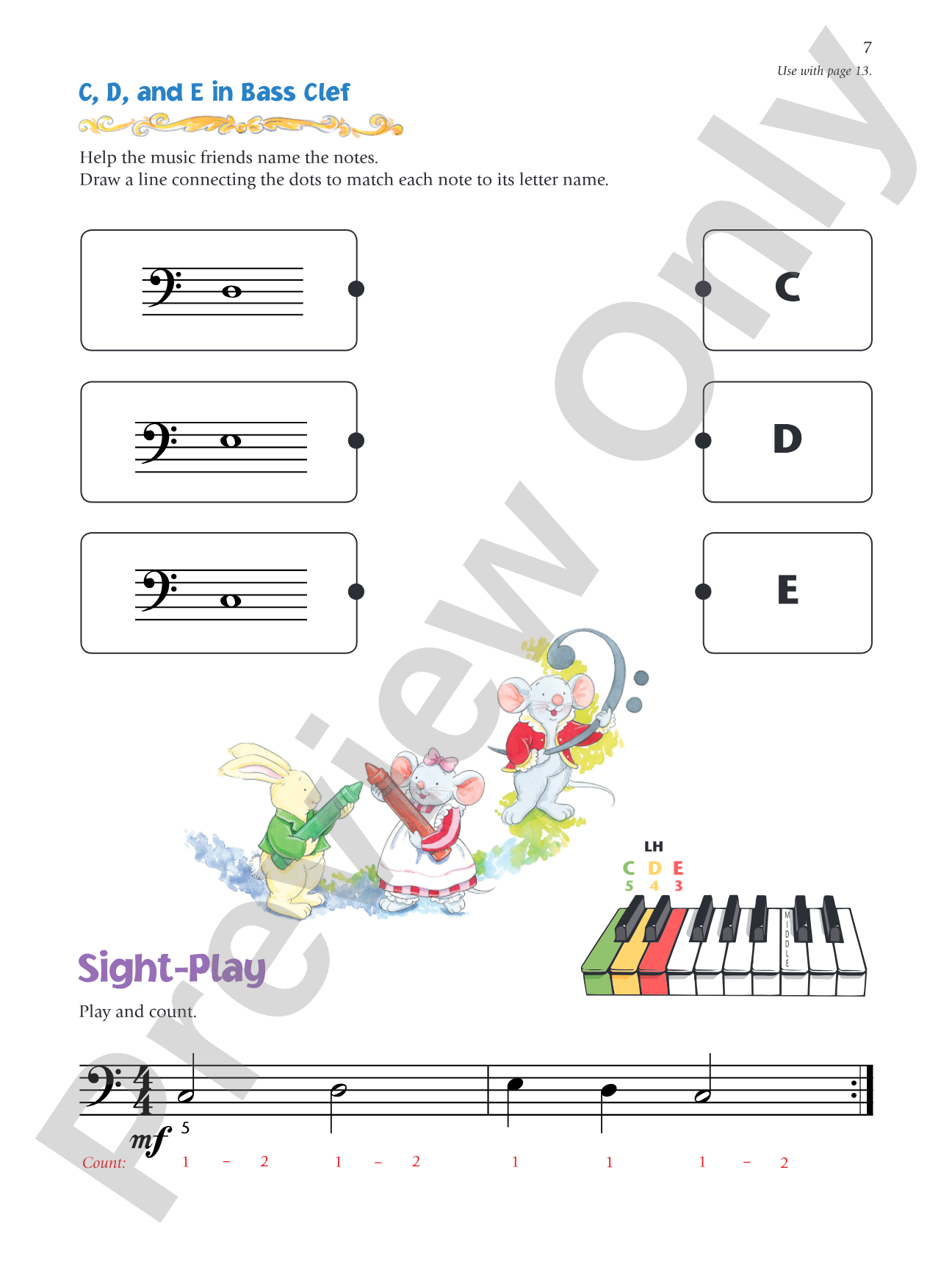
The Notespeller & Sight-Play Book 3 reinforces note-reading skills based on the concepts introduced in the Music Lesson Book 3. Each page of the Notespeller & Sight-Play Book has two activities---a written activity and a playing example. The written activity reinforces notes on the keyboard and staff through coloring, circling, drawing, or matching. The sight-play examples help students relate notes and musical concepts to performance on the keyboard, move out of fixed hand positions, and identify melodic and rhythm patterns.
Discover MakeMusic Cloud: thousands of interactive titles your students can play along with today.
Christine H. Barden brings decades of experience in early childhood music pedagogy to the Music for Little Mozarts series. A piano performance graduate from San Francisco State University, she studied with Vladimir Brenner, pianist for the NBC Symphony Orchestra, and spent four years immersed in European musical training. Her expertise deepened through pioneering work with Yamaha Music Foundation in Japan and a 17-year tenure as a national staff member with Yamaha, where she directed curriculum development and served as National Chief Instructor.
Barden currently teaches piano and composition in Reno, Nevada, where her students consistently win competitions and awards. She has shaped music education across the globe, presenting workshops at professional conferences in the United States, England, Norway, and Singapore. Her published compositions, including the festival-selected "Etude Toccata," reflect her gift for creating music that challenges and inspires young pianists.
Why we love this
This workbook transforms note-reading from abstract symbol recognition into concrete keyboard experience. The two-part structure of each page, pairing written reinforcement with immediate playing application, keeps young students engaged while building genuine fluency. By the time they complete Book 3, students move confidently beyond fixed hand positions and recognize melodic and rhythmic patterns with real musical independence.
What to expect
Playful and purposeful. The variety of activities (coloring, circling, drawing, matching) keeps the page visually interesting while the sight-play examples feel like small victories, each one slightly expanding what the student can do without guidance. Progress feels natural and earned.
Who it's for
Young pianists working through Music for Little Mozarts Book 3 who need structured, engaging reinforcement of note-reading alongside their lesson instruction. Teachers using the Music for Little Mozarts method will find this workbook essential for cementing concepts and building the confidence needed to read independently in unfamiliar pieces.
How to get the most out of it
Rotate which activity you tackle first based on the student's strengths; some benefit from writing and circling before playing, while others play first and then reinforce through drawing
Encourage students to name the notes aloud during sight-play examples before playing them on the keyboard, connecting visual, auditory, and kinesthetic learning
Use the melodic and rhythm pattern identification as a listening game; ask students to spot the same patterns when they appear in their lesson book pieces
How to use it
Assign pages weekly alongside the corresponding lesson book units to ensure steady concept review without overwhelming practice time. The workbook's 32 pages fit naturally into a year-long curriculum when paired with regular lessons, reinforcing learning before moving to the next level.
Skills your students will build
Identifying notes on the treble staff and corresponding piano keys
Reading melodic patterns and recognizing them across different contexts
Tracking rhythm patterns while developing consistent meter sense
Moving between different hand positions on the keyboard
Connecting written notation directly to keyboard execution
You May Also Like
Scan to Complete Your Purchase
Use your phone's camera to scan the code below
You'll log in on your phone and the order will be added to your account