
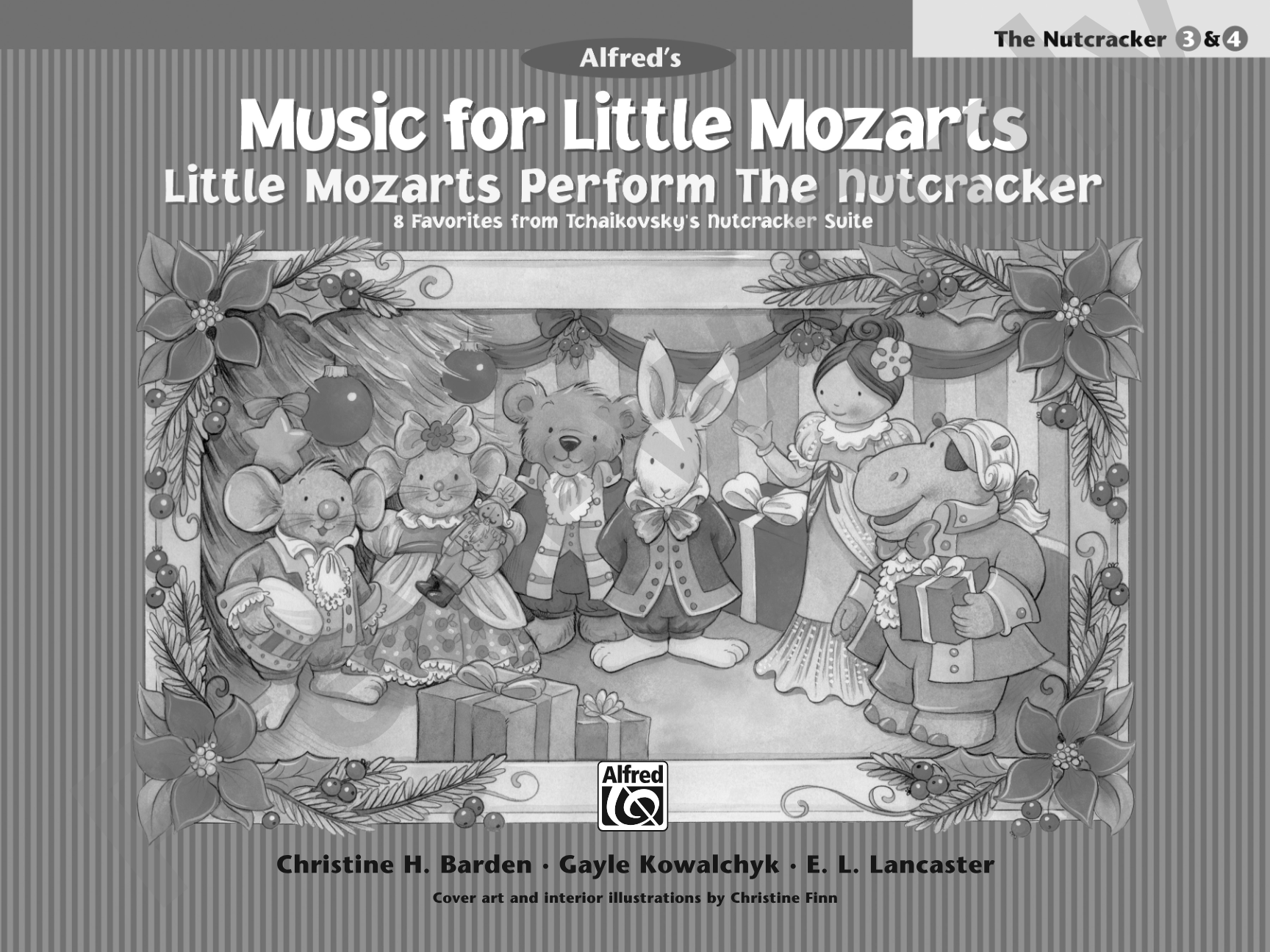
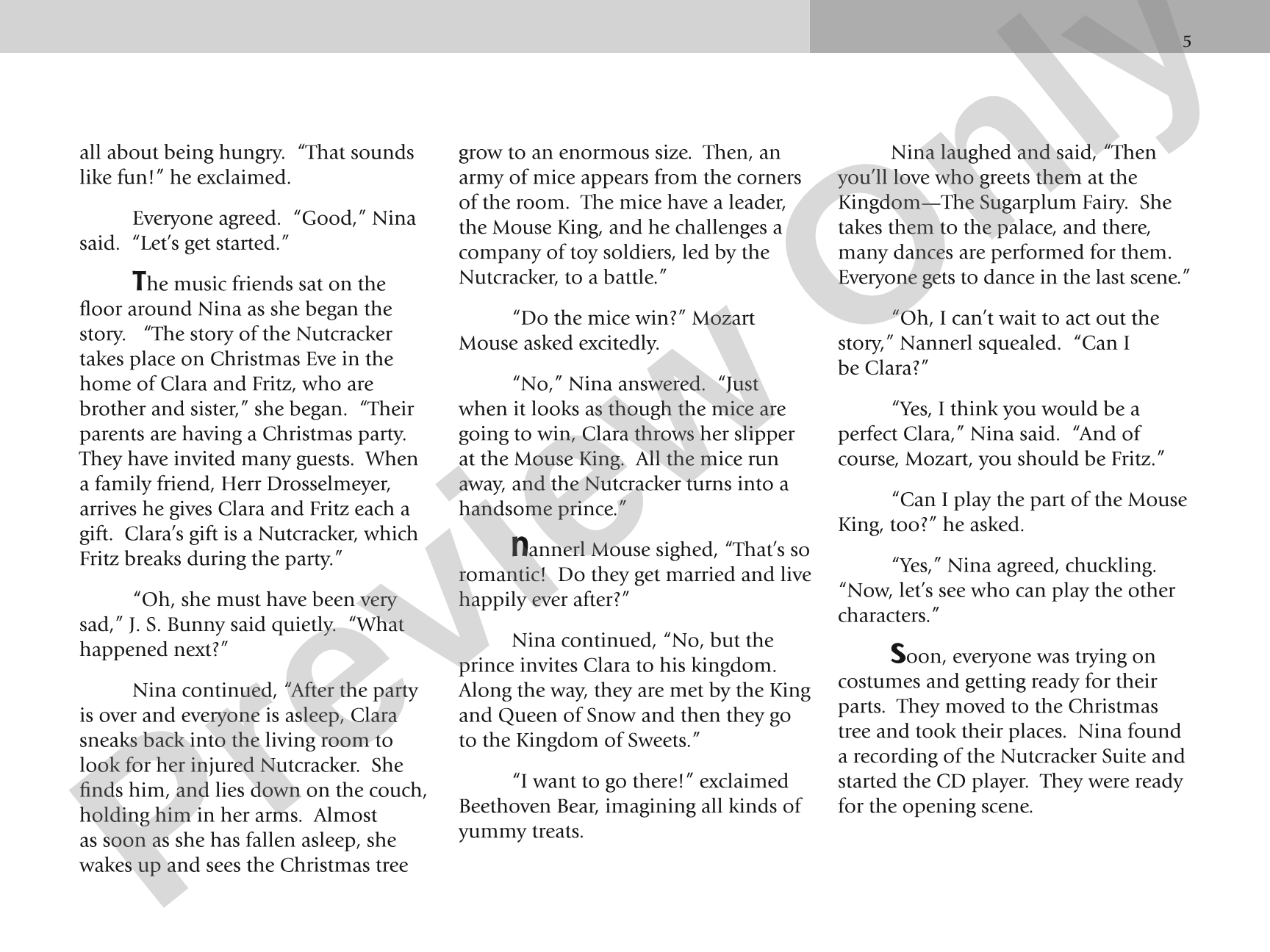

Music for Little Mozarts: Little Mozarts Perform The Nutcracker: 8 Favorites from Tchaikovsky's Nutcracker Suite: Piano
8 Favorites from Tchaikovsky's Nutcracker Suite
Arr. Christine H. Barden, Gayle Kowalchyk, and E. L. Lancaster
Item: 00-PB-0001806
$8.99
Pickup currently not available
Related Items
Music for Little Mozarts: Little Mozarts Perform The Nutcracker: Piano Book |
$8.99
|
View |
Description
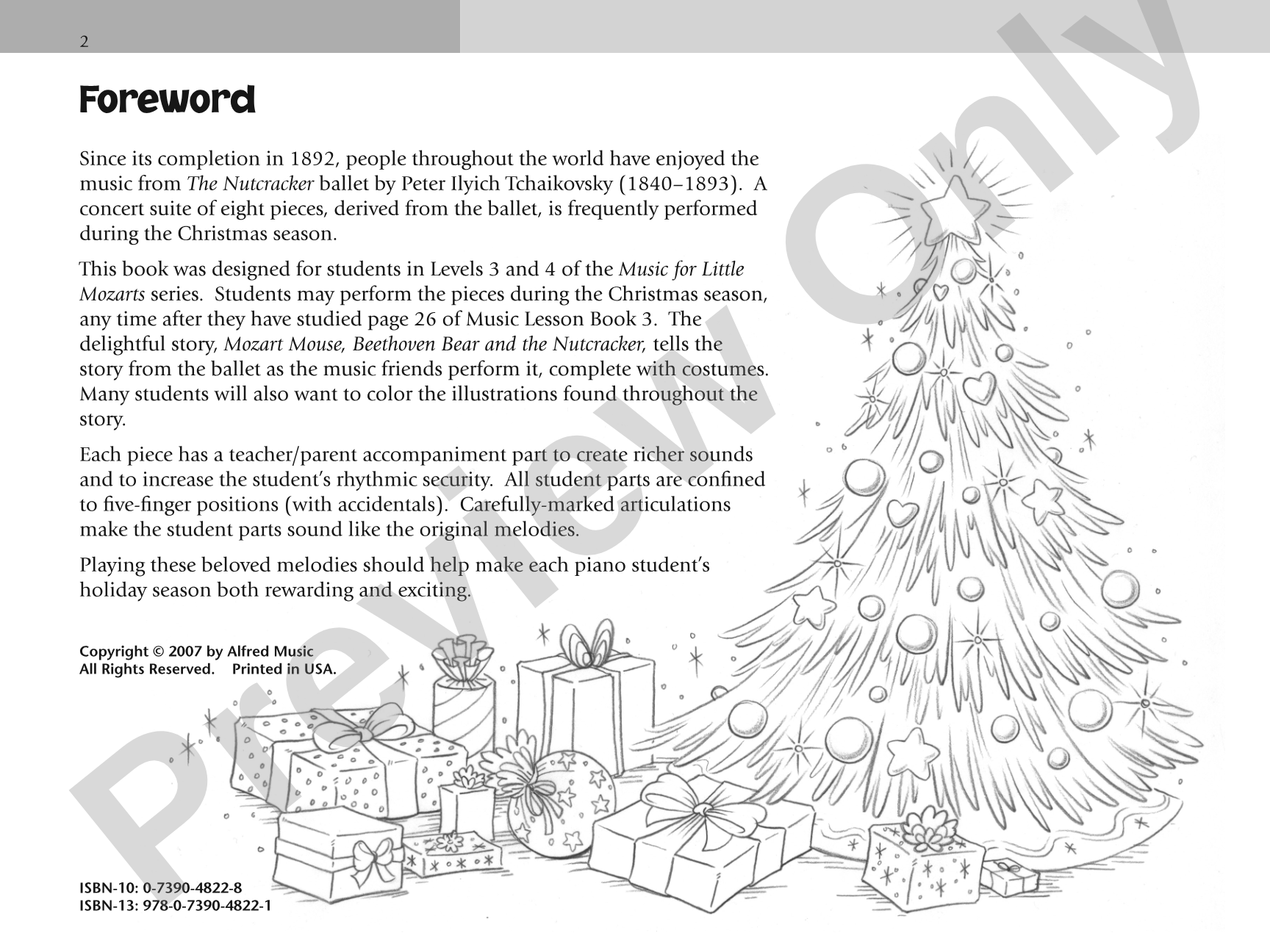
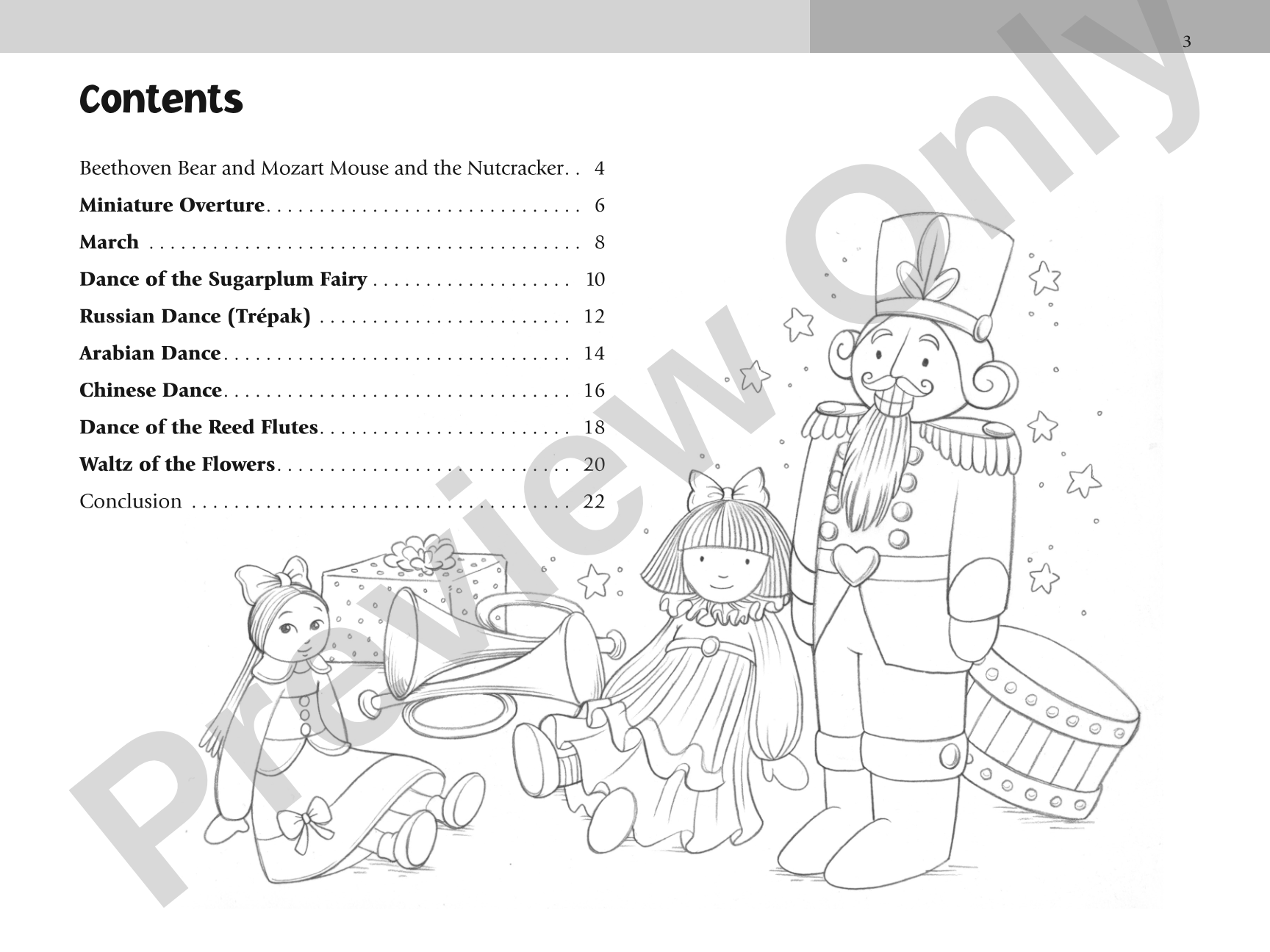
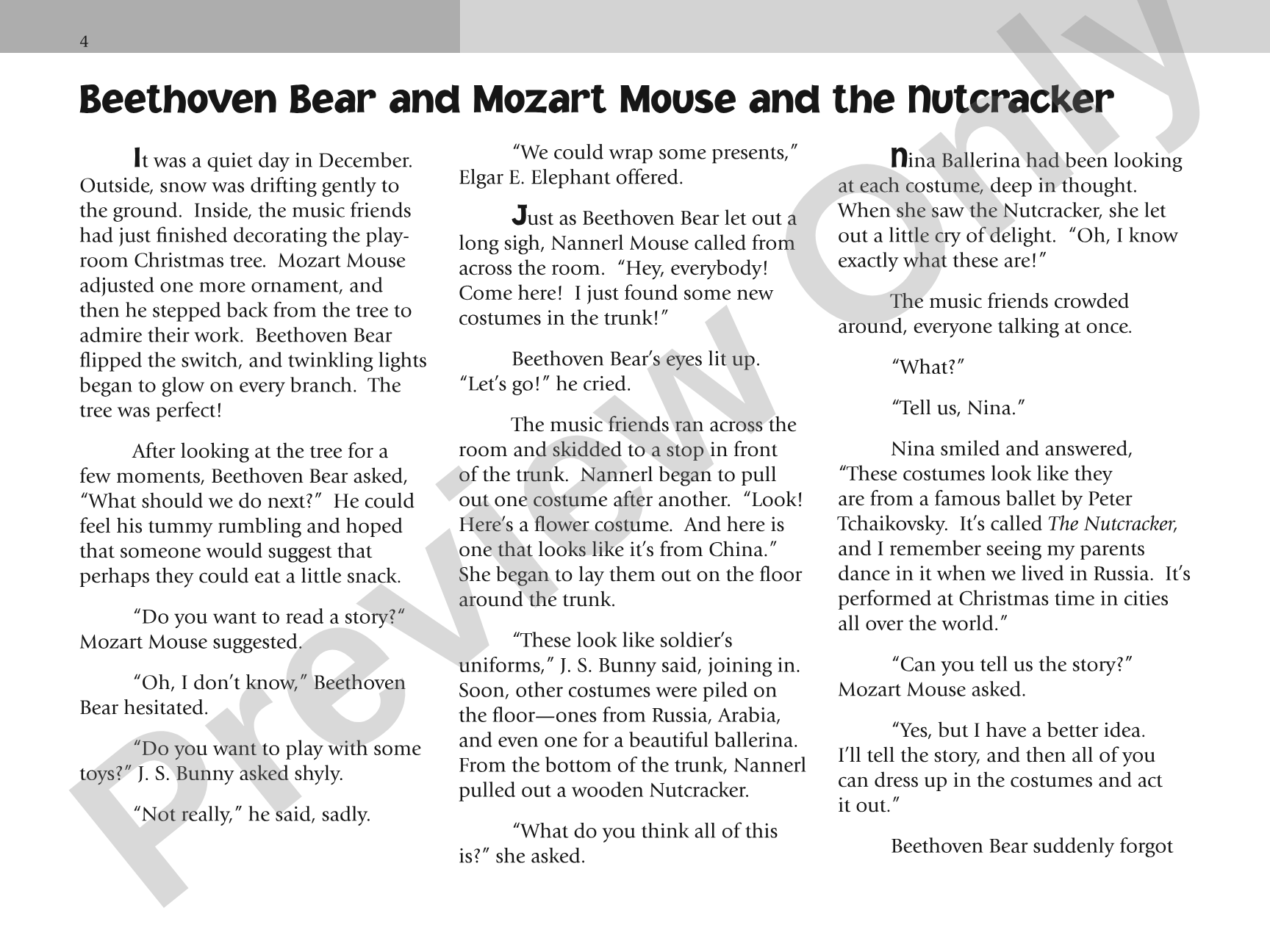
Designed for students in Levels 3 and 4, this delightful book includes eight arrangements of pieces from Tchaikovsky's celebrated Nutcracker Suite. An engaging storyline, full illustrations, and all the favorite characters from Music for Little Mozarts serve to bring the Nutcracker to life! Titles: Miniature Overture * March * Dance of the Sugarplum Fairy * Russian Dance (Trépak) * Arabian Dance * Chinese Dance * Dance of the Reed Flutes * Waltz of the Flowers.


Music for Little Mozarts: Little Mozarts Perform The Nutcracker: 8 Favorites from Tchaikovsky's Nutcracker Suite: Piano isn't in MakeMusic Cloud just yet...but it could be. Let us know you'd like to see it, and you'll help shape what comes next. In the meantime, start a free trial and dive into thousands of interactive titles your students can play along with today.
Request This Title
Tell us you want it.
Start Your Free Trial
Explore everything that's ready to play right now.
Sample Audio
No sample audio found.
Sample Video
No sample videos found.
Additional Details
Series:
Music for Little Mozarts
Publisher:
Alfred Music
Page Count:
24
SKU:
00-PB-0001806
More about this title
About the Arranger: Christine H. Barden
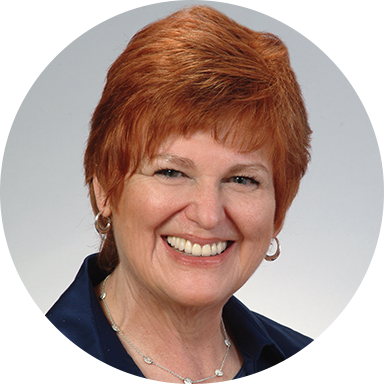
Christine H. Barden shaped early childhood music education as co-author of Alfred's Music for Little Mozarts method, establishing herself as a leading voice in preschool piano pedagogy. Her career spans decades of teaching, curriculum development, and teacher training; she earned her piano performance degree from San Francisco State University, studied with Vladimir Brenner (pianist for the NBC Symphony), and spent formative years in Europe deepening her artistry. Barden's work with Yamaha Music Foundation gave her 17 years of national leadership, including roles as Director of Curriculum and National Chief Instructor for their education system.
Based in Reno, Nevada, Barden maintains an active private studio where she teaches composition and piano while directing Music for Little Mozarts preschool classes. Her arrangements and original compositions appear regularly in Alfred's catalogs, and her work "Etude Toccata" earned recognition as a Junior Festival selection from the National Federation of Music Clubs. She remains a sought-after clinician, delivering workshops to music educators across the United States, England, Norway, and Singapore.
Why we love this
These arrangements capture the cinematic sweep of Tchaikovsky's original without overwhelming young pianists. The narrative thread and character illustrations keep students emotionally invested in pieces that might otherwise feel distant or abstract, while the familiar Music for Little Mozarts cast transforms the Nutcracker story into something these early learners already know and love.
What to expect
These pieces shimmer with the magic of Tchaikovsky's orchestrations, translated into textures young hands can manage. You'll hear sparkle in the Sugarplum Fairy, swagger in the Trépak, and grandeur in the Waltz of the Flowers, with each arrangement preserving the personality of the original.
Who it's for
Students completing Levels 3 and 4 of the Music for Little Mozarts curriculum benefit most from this collection, as these arrangements build directly on concepts they've already mastered. Teachers seeking thematic repertoire for winter recitals or holiday programs will find eight ready-made crowd pleasers in one book.
How to get the most out of it
- Balance the melody line so it sings over the accompaniment; young hands often need reminding to lighten the left hand when both hands carry important material
- Approach the Russian Dance and Arabian Dance with character contrasts in mind, allowing tempo and dynamics to shift the mood rather than racing through either piece
- Record a video performance of each piece for students to watch before learning it; the visual context of the story makes the music stick faster in their memory
How to use it
Program this book strategically as a winter concert suite, performing several pieces in sequence to tell the story without requiring spoken narration. Alternatively, extract individual pieces for holiday recitals throughout December, or use the full collection as a performance assessment tool at the end of Level 4, giving students a substantial repertoire goal to work toward across several weeks.
Skills your students will build
- Phrasing across both hands simultaneously
- Pedal technique and tonal color management
- Character and tempo variation within a single piece
- Reading intervallic leaps in both treble and bass clefs
- Hand independence in contrasting rhythmic patterns