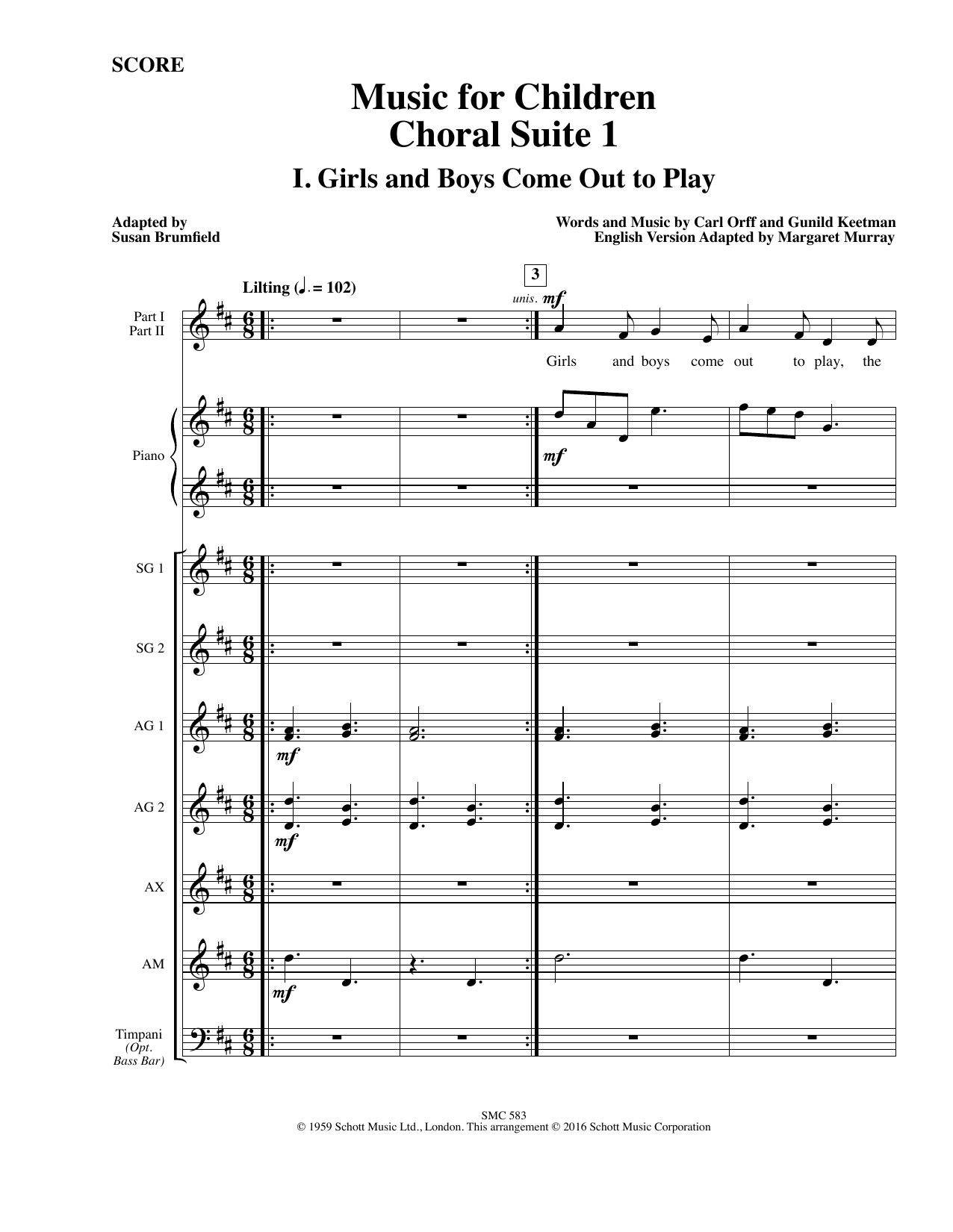
Carl Orff revolutionized music education by creating a pedagogical system that places rhythm, melody, and movement at the center of learning. His Music for Children collection, developed in collaboration with Gunild Keetman, emerged from decades of experimentation with instruments, folk songs, and ensemble playing in German schools. Orff believed that music education should begin with the voice and simple percussion before progressing to more complex instrumental work, a philosophy that shaped music curricula worldwide.
The Orff-Schulwerk approach treats children as active musicians from day one, not passive listeners waiting to be "ready" for real music. By pairing accessible melodies with authentic instruments and collaborative ensemble work, Orff created a system where every student could participate meaningfully. His influence extends far beyond the classroom; educators continue to adapt his materials and methods because they work.