

Museum Masterpieces, Book B: 10 Piano Solos Inspired by Great Works of Art: Piano
10 Piano Solos Inspired by Great Works of Art
By Catherine Rollin
Level: Late Elementary / Early Intermediate
Item: 00-PB-0000557
$9.99
Pickup currently not available
Related Items
Museum Masterpieces, Book B: Piano Book |
$9.99
|
View |
Description
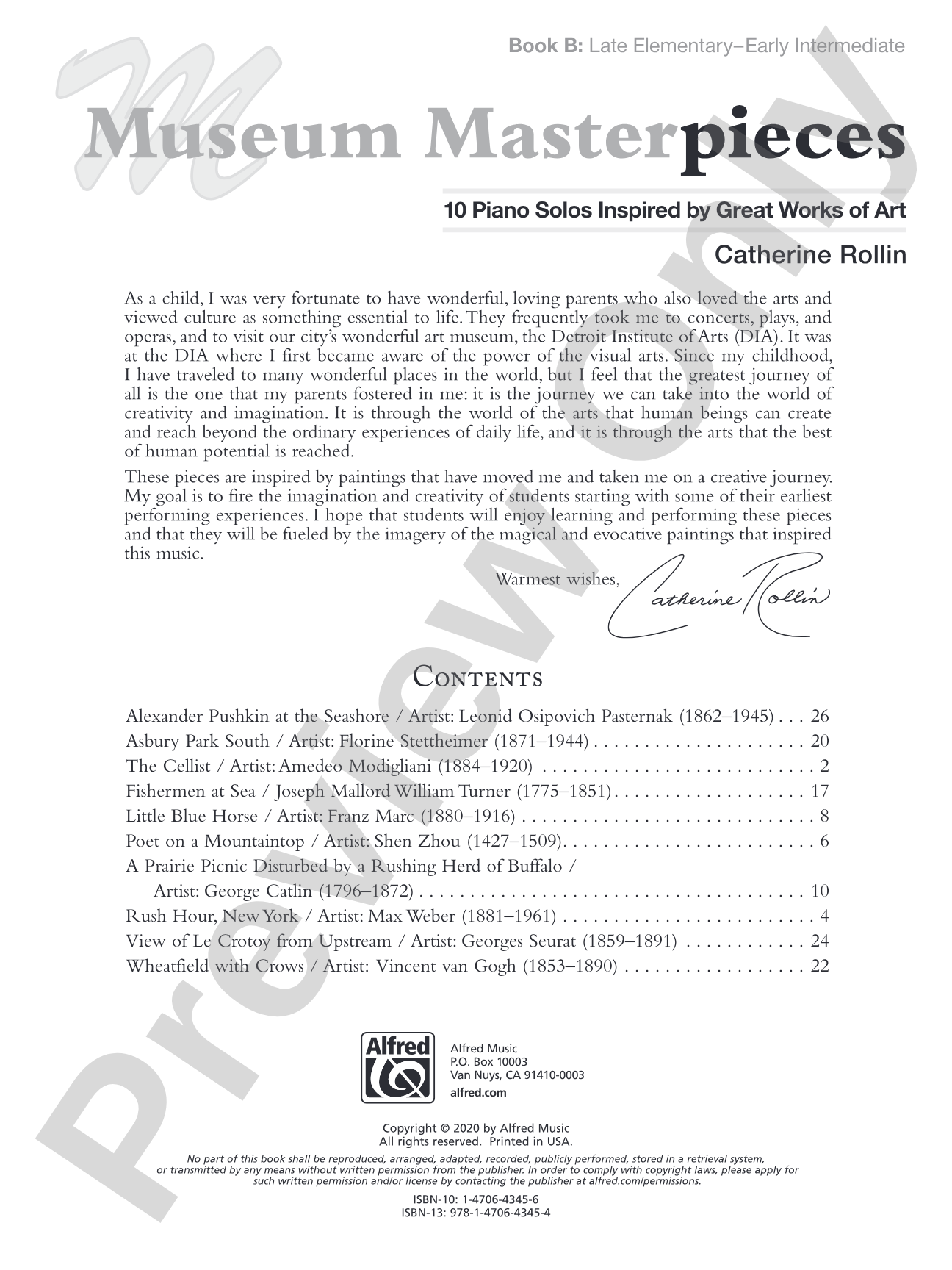
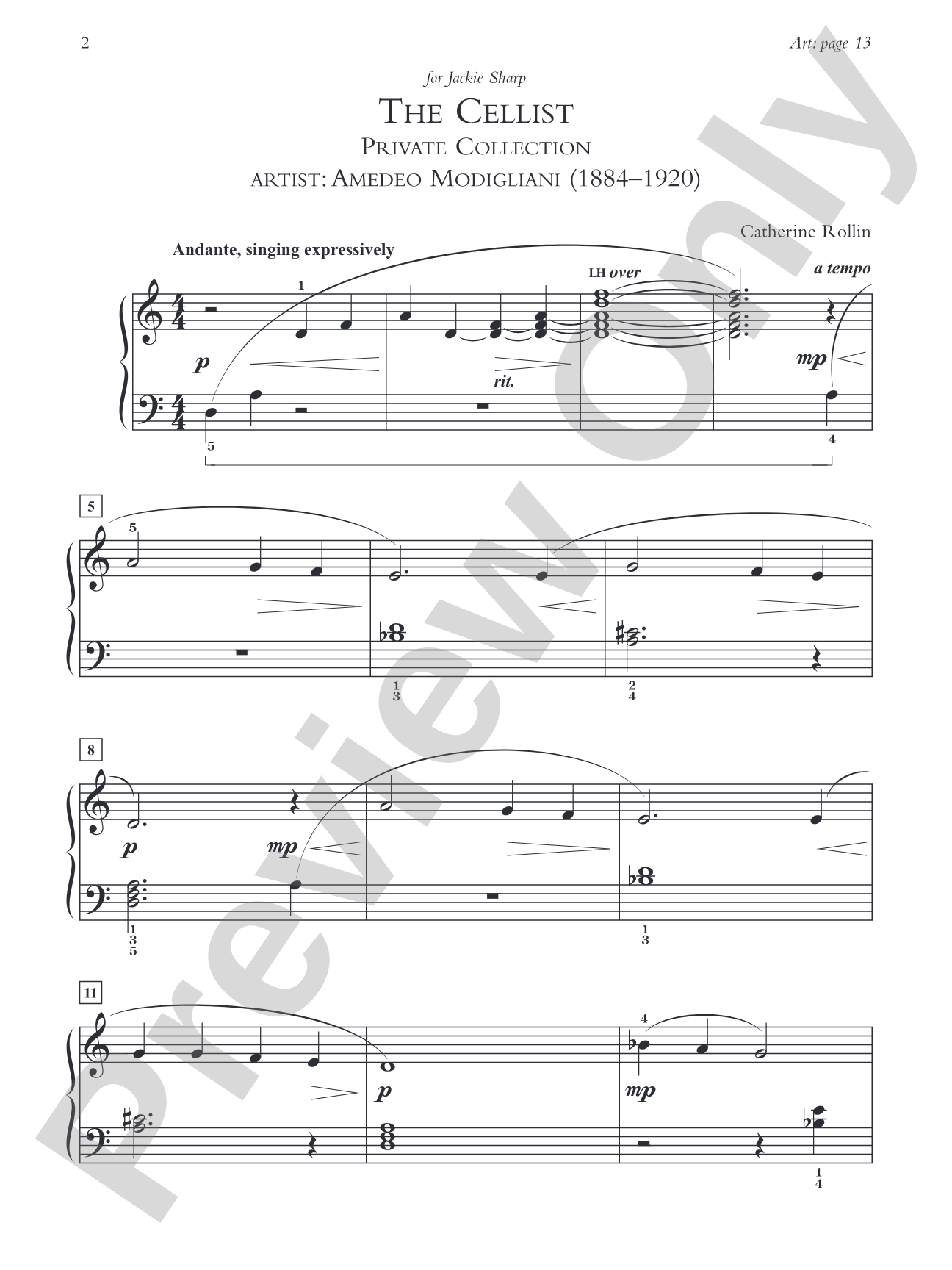
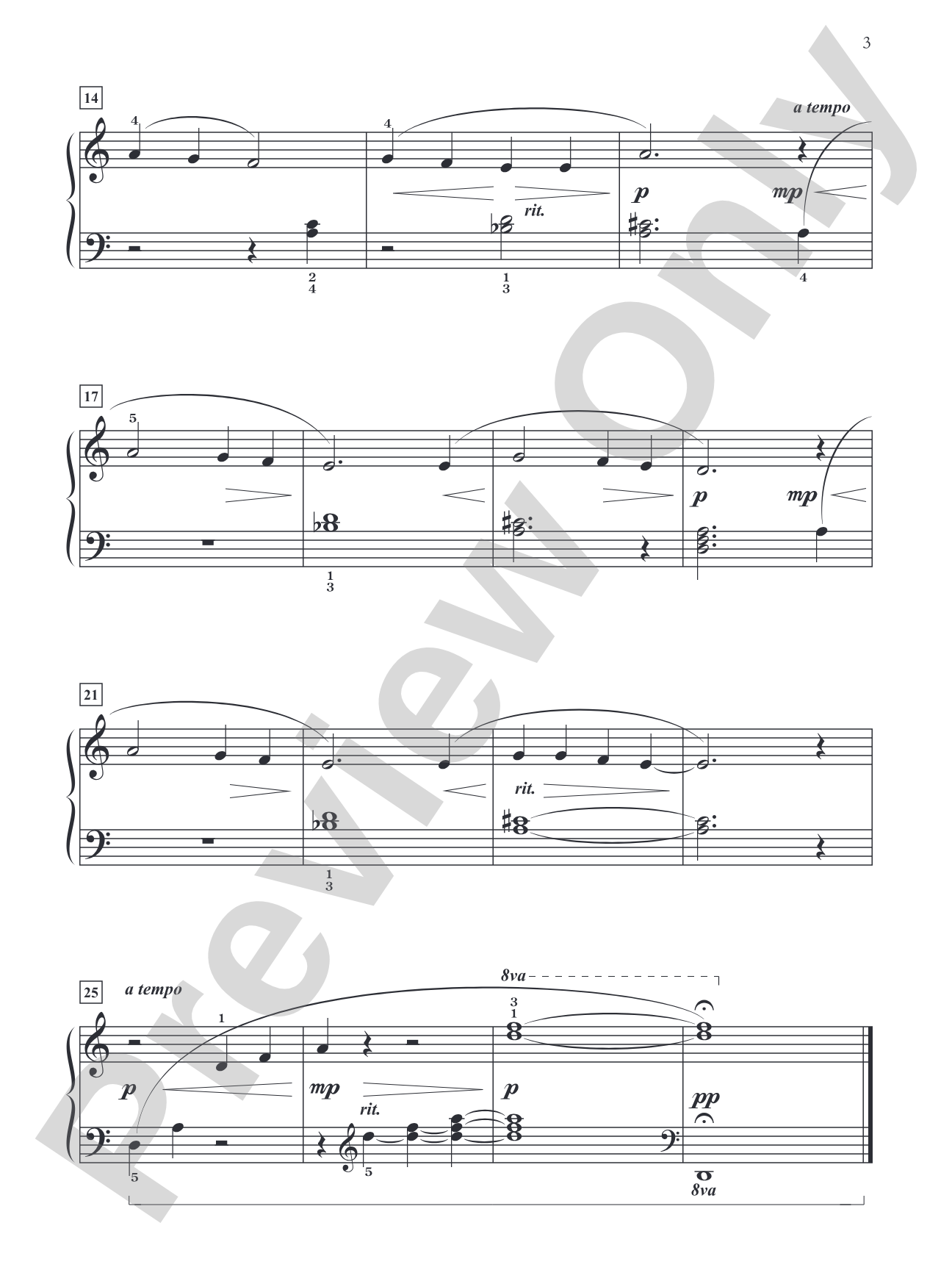
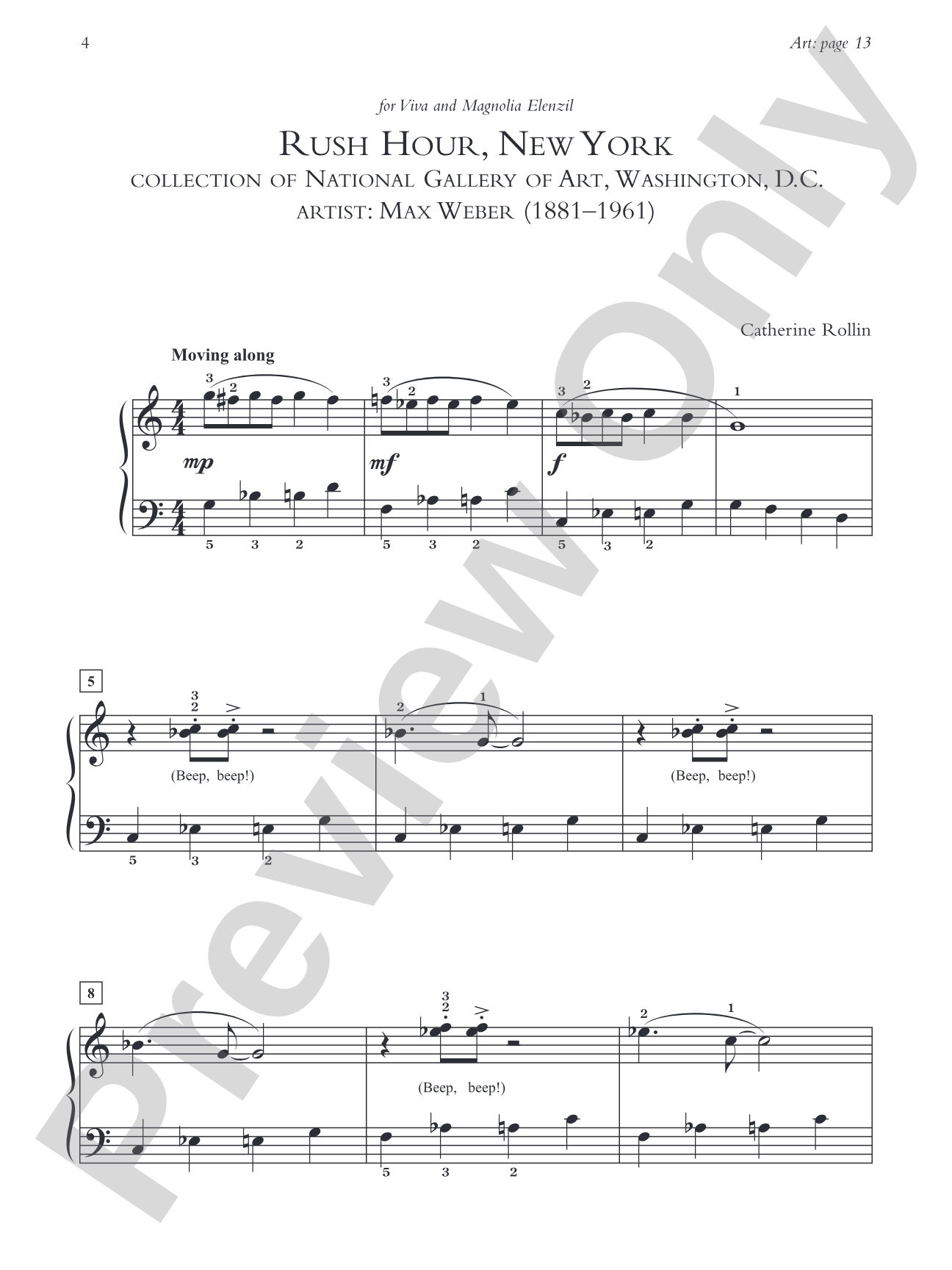
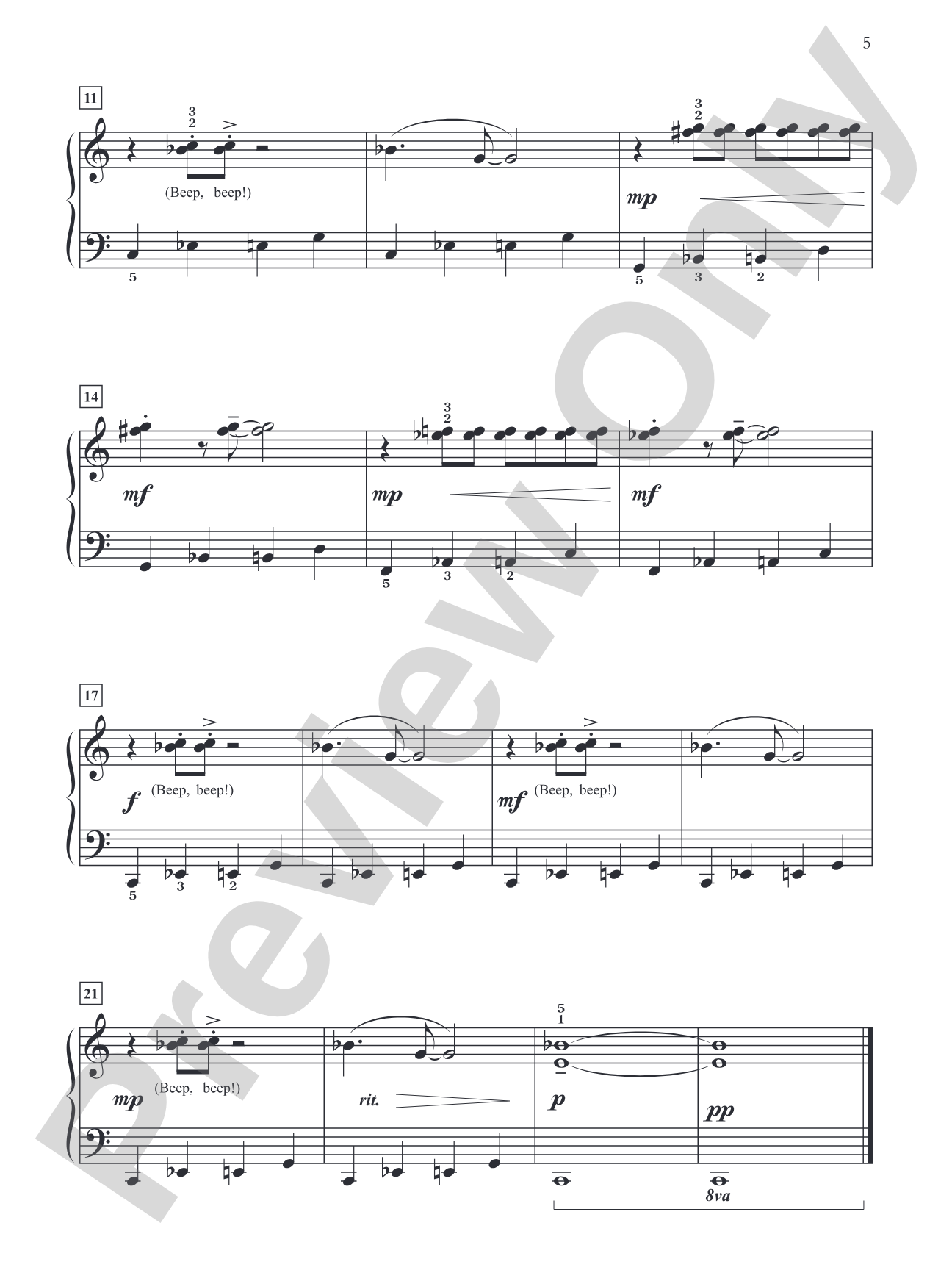
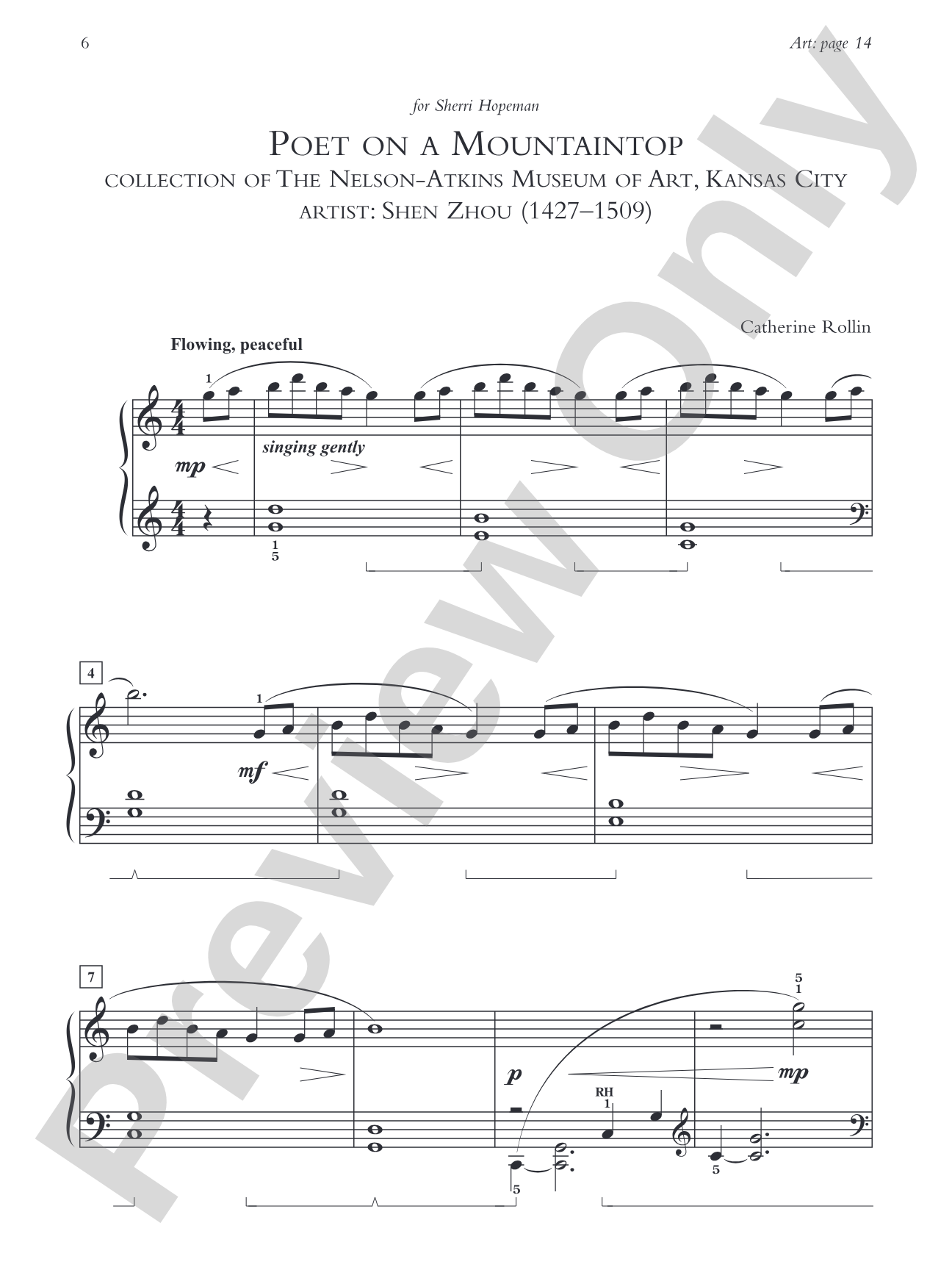
In Museum Masterpieces, Book B, composer Catherine Rollin has created musical expressions of some of the great works of art found in museums throughout the world. The paintings that inspired these pieces are beautifully displayed on a four-page color insert at the center of the book, along with historical notes about each painting. Titles: Alexander Pushkin at the Seashore (Leonid Osipovich Pasternak) * Asbury Park South (Florine Stettheimer) * The Cellist (Amedeo Modigliani) * Fishermen at Sea (Joseph Mallord William Turner) * Little Blue Horse (Franz Marc) * Poet on a Mountaintop (Shen Zhou) * A Prairie Picnic Disturbed by a Rushing Herd of Buffalo (George Catlin) * Rush Hour, New York (Max Weber) * View of Le Crotoy from Upstream (Georges Seurat) * Wheatfield with Crows (Vincent van Gogh). A Federation Festivals 2024-2028 selection.


Museum Masterpieces, Book B: 10 Piano Solos Inspired by Great Works of Art: Piano isn't in MakeMusic Cloud just yet...but it could be. Let us know you'd like to see it, and you'll help shape what comes next. In the meantime, start a free trial and dive into thousands of interactive titles your students can play along with today.
Request This Title
Tell us you want it.
Start Your Free Trial
Explore everything that's ready to play right now.
Sample Audio
No sample audio found.
Sample Video
1 / 2
Additional Details
Series:
Museum Masterpieces
Publisher:
Alfred Music
Page Count:
28
SKU:
00-PB-0000557
More about this title
About the Composer: Catherine Rollin
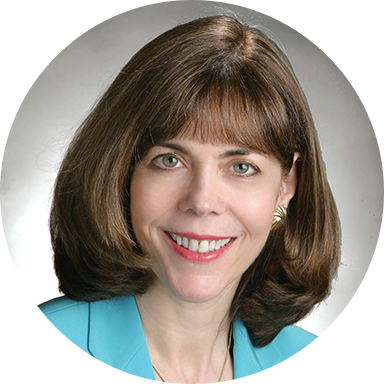
Catherine Rollin balances an active performance schedule with mentoring students who regularly place in major competitions. Her teaching and composing have taken her across North America and Asia, where she leads workshops and masterclasses that explore the intersection of technique, musicality, and creative thinking.
Rollin earned her Bachelor of Musical Arts with distinction from the University of Michigan and her Master of Music from Oakland University School of Performing Arts. Her commissions span prestigious organizations including the Music Teachers National Association, the Michigan Music Teachers Association, and Clavier Companion magazine. She was selected to compose for MTNA's From the Pen to the Premiere series, which premiered at the 2018 national conference. The Steinway Society honored her in concert as both pianist and composer, prominently featuring her ASCAP award-winning Museum Masterpieces series.
Why we love this
Rollin has engineered something genuinely difficult: ten distinct pieces that each capture a painting's emotional core without relying on obvious program music clichés. The inclusion of four full-color pages showing the actual artworks, paired with historical context, transforms this into a conversation between visual and musical literacy. Students don't just learn notes; they learn how artists across centuries and continents solve similar expressive problems.
What to expect
Each piece inhabits a different emotional landscape. You'll encounter the contemplative stillness of a poet on a mountain, the frenetic energy of a New York street, the melancholic beauty of a seascape, and the raw power of a stampeding herd. Rollin's piano writing captures light, movement, and mood with remarkable economy of means.
Who it's for
Students in late elementary through early intermediate levels who respond well to imagery and storytelling. This collection works for students building confidence with pieces that demand careful listening and expressive control without overwhelming technical difficulty.
How to get the most out of it
- Study the paintings before you play. Spend time with the actual artwork (Rollin provides the images) and notice what drew the composer to that particular moment or scene. Your interpretive choices will deepen when you understand the visual inspiration.
- Track the harmonic language piece by piece. Rollin's vocabulary shifts with each painting, from impressionistic color washes to more angular modern idioms. Identifying these shifts helps you shape phrasing that feels organic rather than generic.
- Tempo flexibility matters more than you'd expect. Many of these pieces benefit from small, natural fluctuations that mirror the movement within the paintings themselves; don't lock into a metronomic pulse.
- Lean into the textural variety. Whether it's the shimmering surface of water or the restless energy of a city street, Rollin uses the keyboard as a painter uses a brush. Let your touch respond to these different demands.
How to use it
Museum Masterpieces works beautifully as a thematic recital or as a series of elegant interludes throughout a longer program. It also serves as a bridge between pure technique and musical interpretation, making it valuable for students preparing for festival competitions or developing their ability to sustain artistic narratives across a set of pieces.
Skills your students will build
- Translating visual imagery into musical gesture and texture
- Harmonic analysis across different compositional idioms (impressionism, expressionism, modernism)
- Pedal technique for creating atmospheric colors and sustaining harmonies
- Hands-together independence and control at moderate tempo
- Musical phrasing that responds to structural and programmatic content rather than relying on mechanical patterns
- Reading and responding to dynamic gradation and articulation as expressive tools