

Museum Masterpieces, Book 1: 10 Piano Solos Inspired by Great Works of Art: Piano
10 Piano Solos Inspired by Great Works of Art
By Catherine Rollin
Level: Early Intermediate
Item: 00-PB-0000556
$10.99
Pickup currently not available
Related Items
Museum Masterpieces, Book 1: Piano Book |
$10.99
|
View |
Description
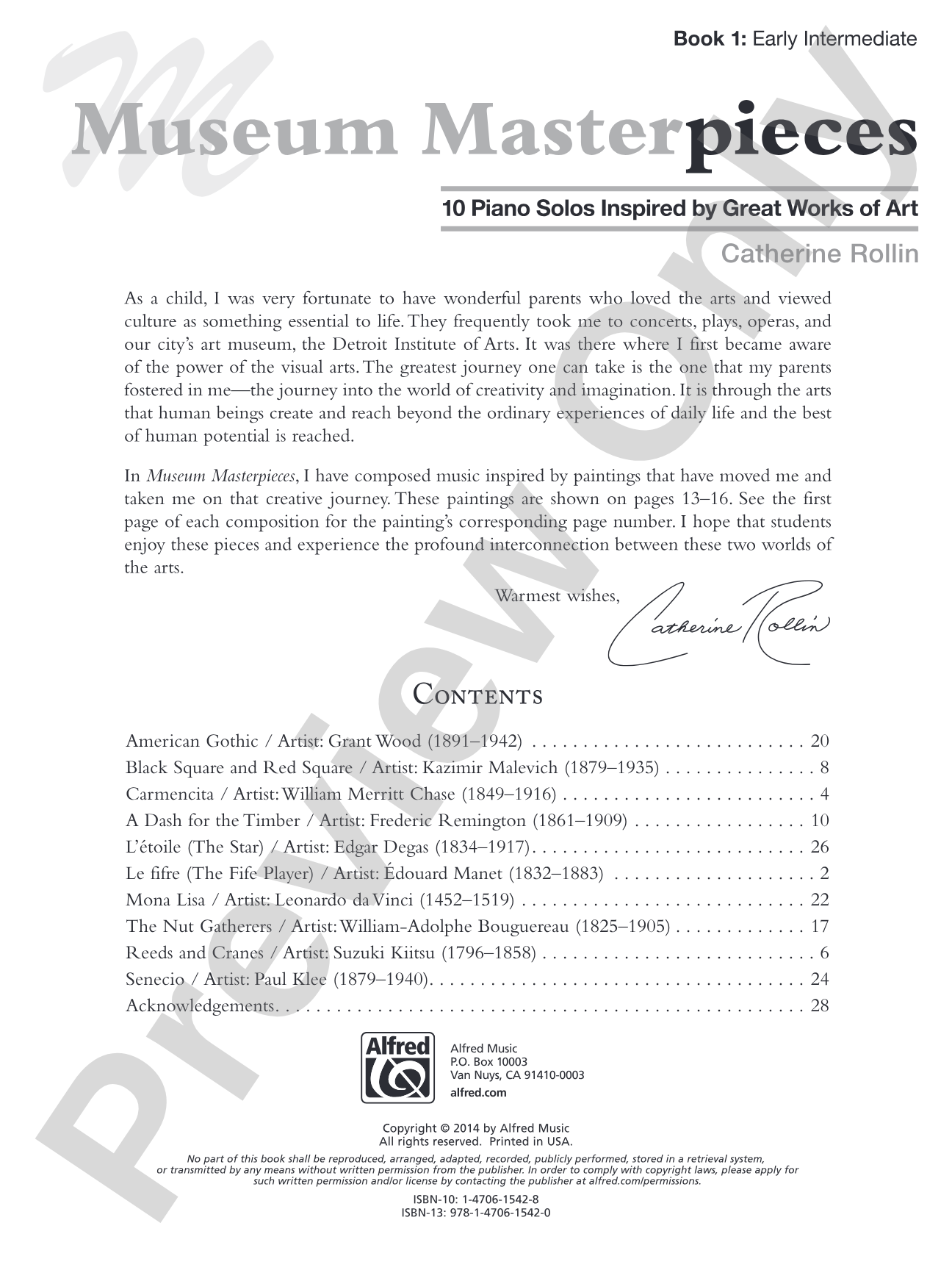
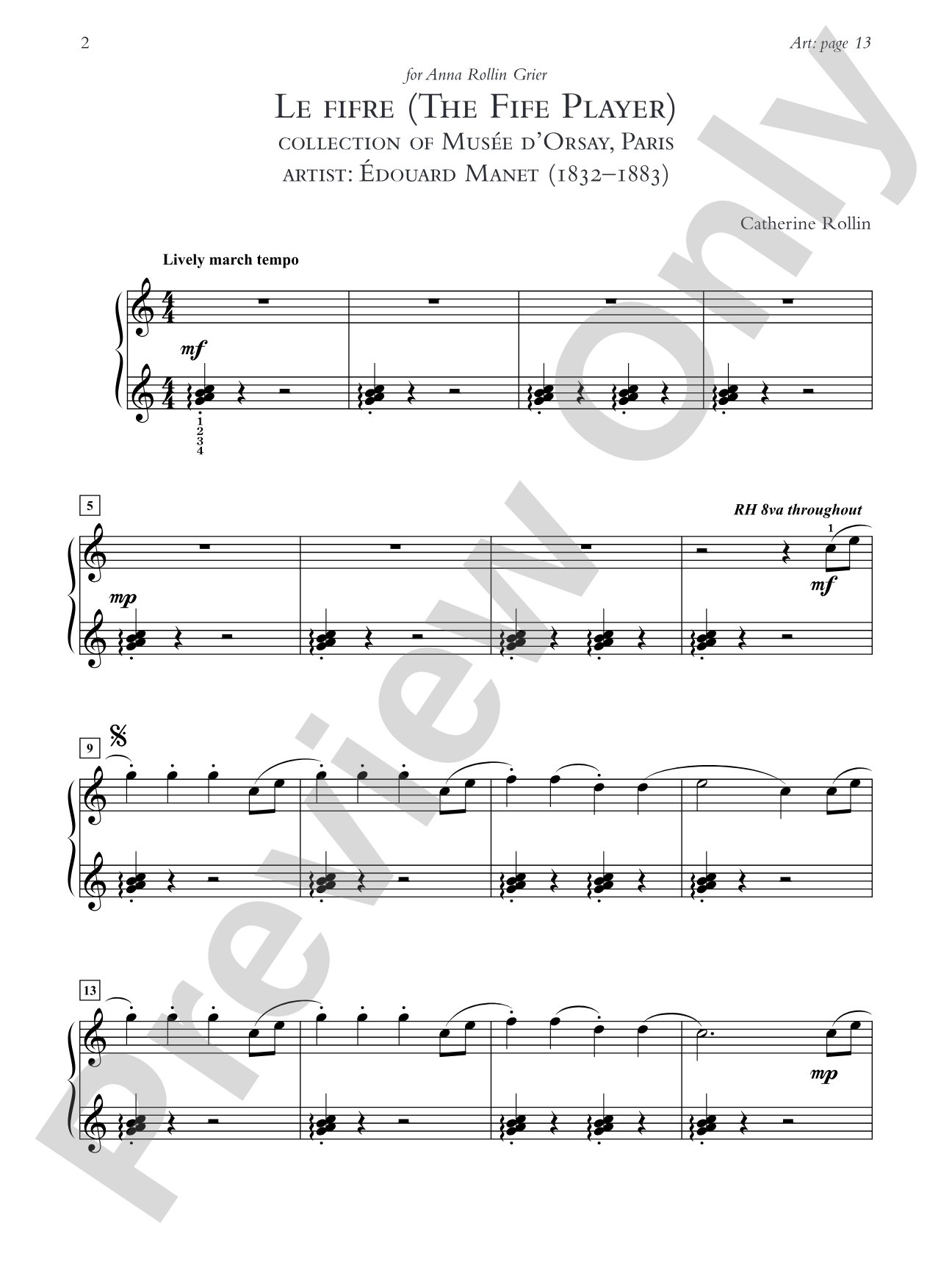
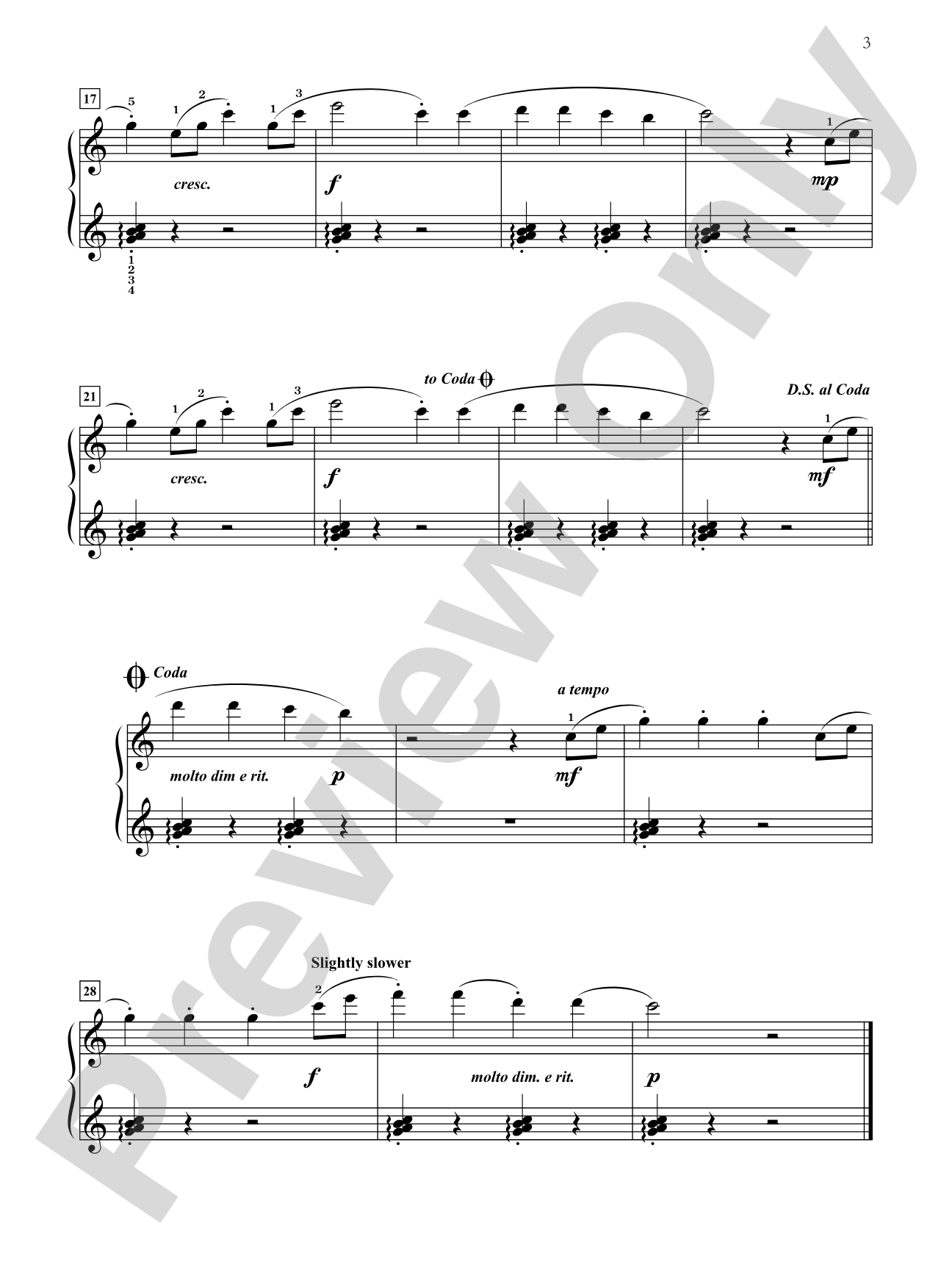
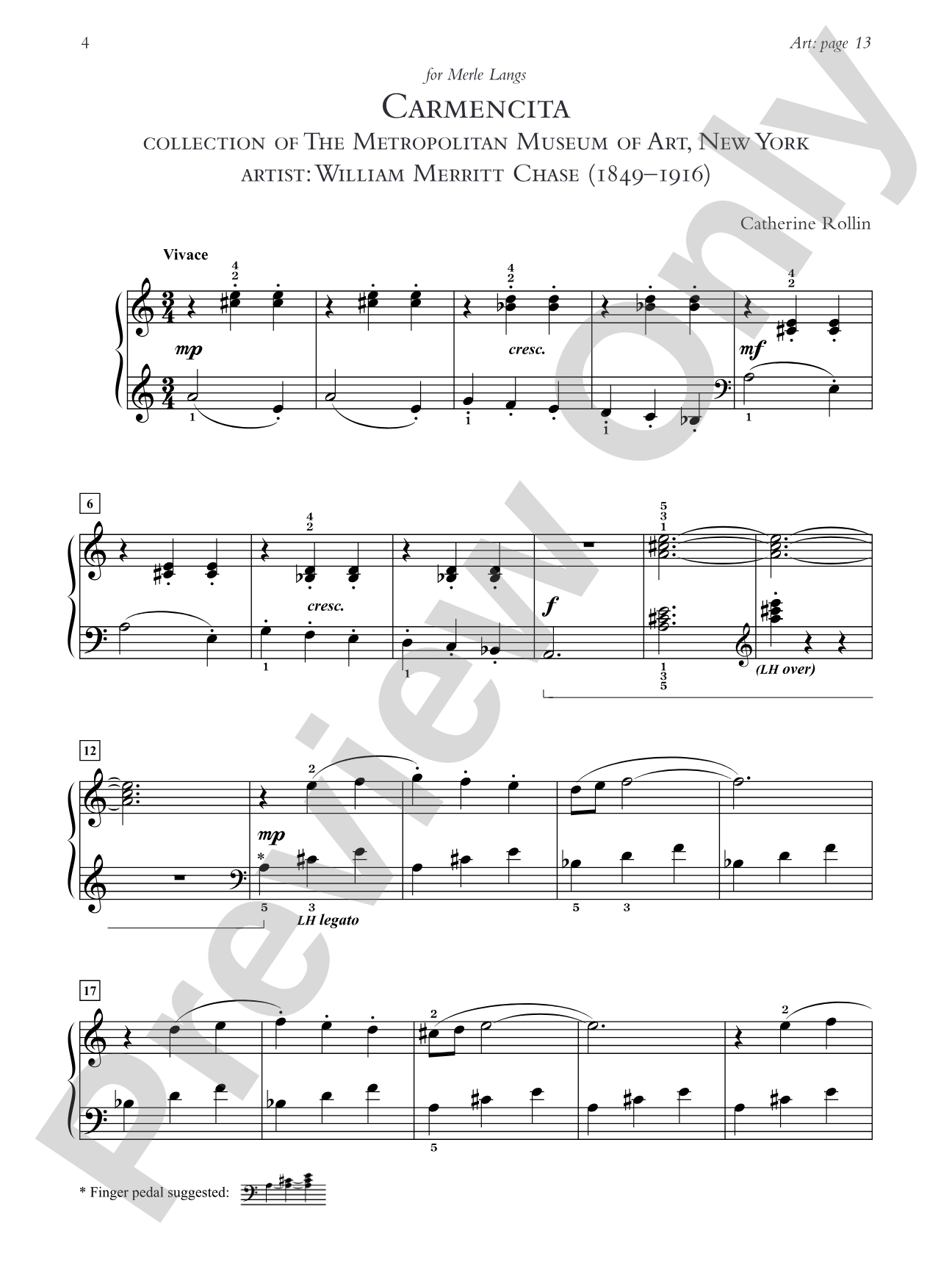
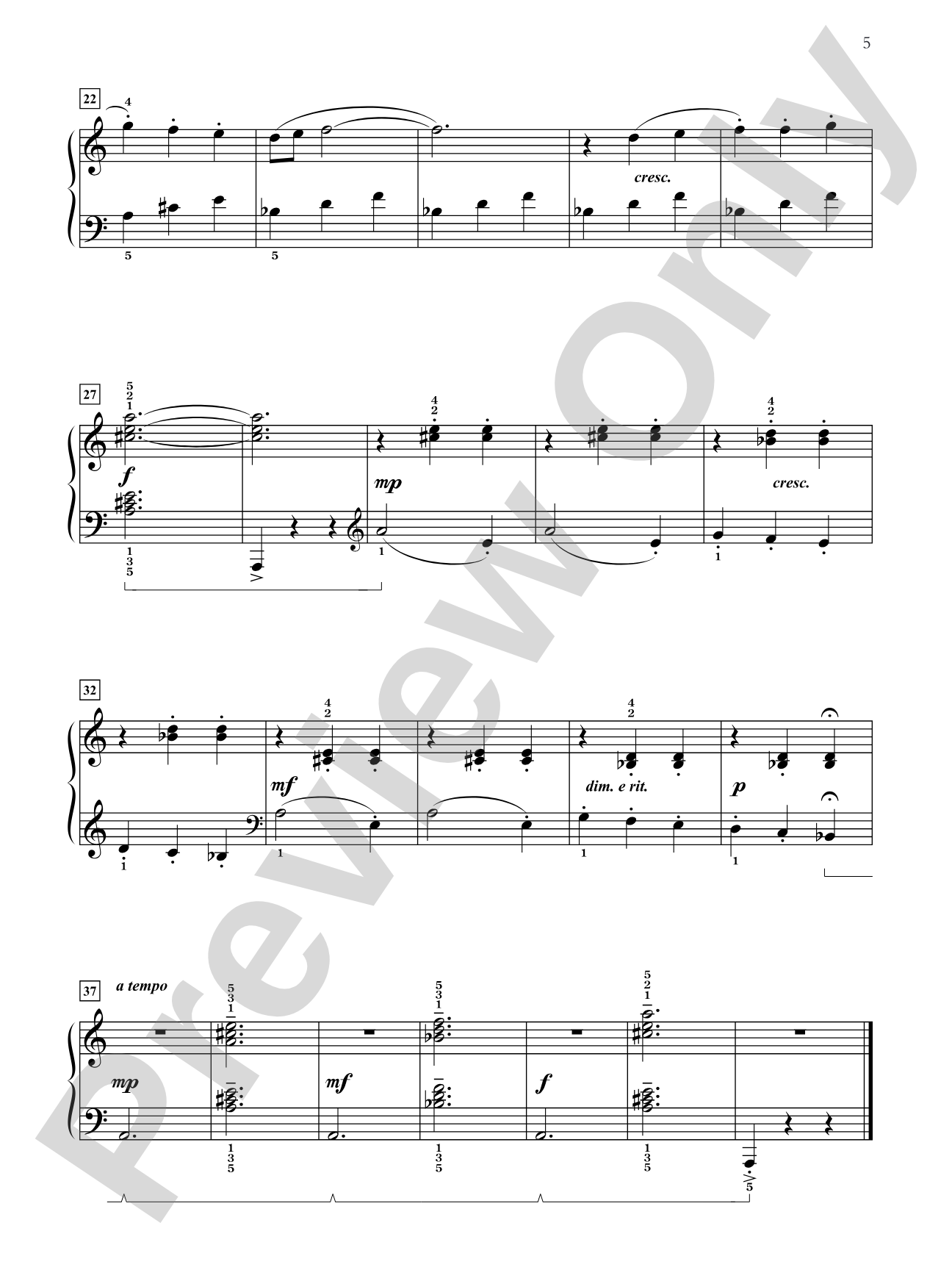
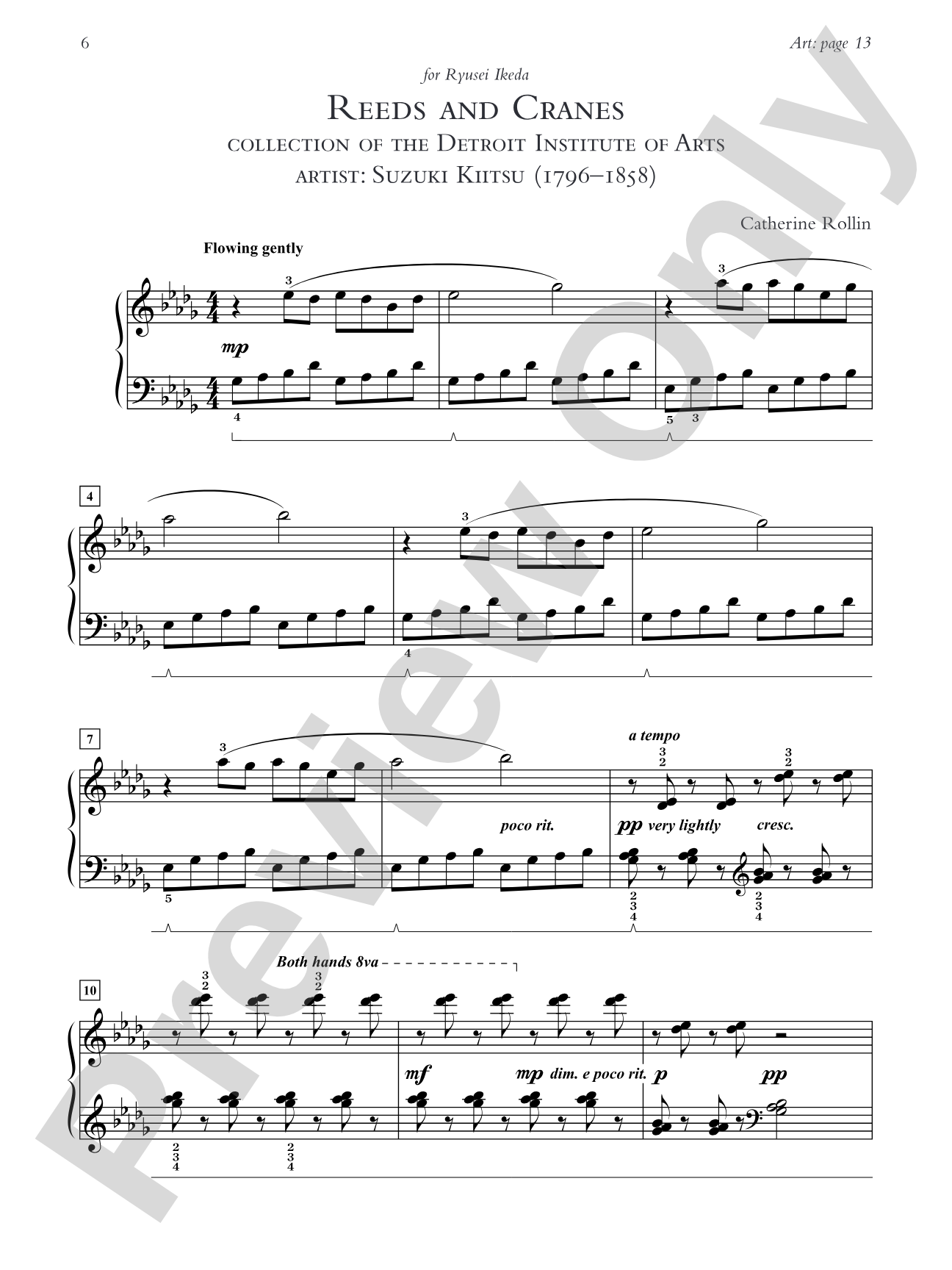
In Museum Masterpieces, Book 1, composer Catherine Rollin has created musical expressions of some of the great works of art found in museums throughout the world. The paintings that inspired these pieces are beautifully displayed on a four-page color insert at the center of the book, along with historical notes about each painting. Titles: American Gothic (Grant Wood) * Black Square and Red Square (Kazimir Malevich) * Carmencita (William Merritt Chase) * A Dash for the Timber (Frederic Remington) * L'étoile (The Star) (Edgar Degas) * Le fifre (The Fife Player) (Édouard Manet) * Mona Lisa (Leonardo da Vinci) * The Nut Gatherers (William-Adolphe Bouguereau) * Reeds and Cranes (Suzuki Kiitsu) * Senecio (Paul Klee). A Federation Festivals 2024-2028 selection.


Museum Masterpieces, Book 1: 10 Piano Solos Inspired by Great Works of Art: Piano isn't in MakeMusic Cloud just yet...but it could be. Let us know you'd like to see it, and you'll help shape what comes next. In the meantime, start a free trial and dive into thousands of interactive titles your students can play along with today.
Request This Title
Tell us you want it.
Start Your Free Trial
Explore everything that's ready to play right now.
Sample Audio
No sample audio found.
Sample Video
No sample videos found.
Additional Details
Series:
Museum Masterpieces
Publisher:
Alfred Music
Page Count:
28
SKU:
00-PB-0000556
More about this title
About the Composer: Catherine Rollin

Catherine Rollin splits her time between the concert stage and the studio, where she mentors students who consistently place in major competitions. She holds degrees from the University of Michigan and Oakland University's School of Performing Arts, and her teaching and performing schedule has taken her to more than 200 cities across North America and Asia.
Rollin's compositions have earned commissions from the Music Teachers National Association, the Michigan Music Teachers Association, and Clavier Companion magazine. Her work appears regularly on the National Federation of Music Clubs Festivals Bulletin, and she has judged at the national level for both the MTNA Student Composition Competition and the Lynn Freeman Olson Composition Contest. In 2018, she premiered Suite Detroit, a flute, alto saxophone, and piano trio commissioned for MTNA's prestigious From the Pen to the Premiere series, and the Steinway Society featured her in concert as both composer and pianist.
Why we love this
Rollin has found something genuinely special here: a collection that treats great paintings as serious compositional prompts rather than mere decorative themes. Each piece reflects the visual character of its source artwork with musical specificity, making this an ideal bridge between art history and keyboard technique. Students gain real exposure to major works by Wood, Degas, da Vinci, and others while developing early intermediate skills in a repertoire that feels both culturally enriching and pianistically rewarding.
What to expect
These pieces breathe with artistic intention. You'll encounter moments of quiet observation (Degas' dancer frozen in time), angular modernist energy (Klee's geometric exploration), and vivid narrative drama (Remington's Wild West urgency). Throughout, the writing balances lyrical passage work with thoughtful harmonic color, creating music that respects both the painting and the player.
Who it's for
Early intermediate pianists ready to expand their musical vocabulary and encounter repertoire that connects keyboard study to the visual arts. Directors and teachers searching for recital material that engages students intellectually while remaining accessible in technique.
How to get the most out of it
- Study the full-color reproductions of each painting before diving into the score. The visual details will inform phrasing choices and help you hear the music's connection to the artwork.
- Pay attention to how Rollin uses harmonic color to capture the palette and mood of each painting; these choices often guide your pedal work and dynamic shaping.
- Record yourself playing through the collection in sequence. Hearing all ten pieces in context reveals how each work stands distinctly on its own while contributing to a larger artistic arc.
- Use the historical notes provided to frame each piece for your audience. Context transforms these from clever character pieces into genuine windows onto art and music history.
How to use it
Build a thematic recital around visual art, pairing these pieces with other compositions inspired by painting or sculpture. Alternatively, select individual movements to open concerts or create intermission breaks that reset the audience's focus. The collection's range makes it especially useful for student recitals where you need repertoire that captures attention and demonstrates growth across multiple musical styles.
Skills your students will build
- Connecting abstract musical choices to extra-musical inspiration and imagery
- Pedal control in varied harmonic contexts
- Balance and voicing in early intermediate textures
- Stylistic distinction across modernist, impressionist, realist, and traditional Asian aesthetic frameworks
- Interpretive confidence in character pieces with narrative or visual underpinnings