

Musetta's Waltz: SSA Choral Octavo
(Quando Me'n Vo')
Words and music by Giacomo Puccini / arr. Douglas E. Wagner
Item: 00-PO-0007206
$2.20
Minimum order quantity: 20 copies
Pickup currently not available
Description
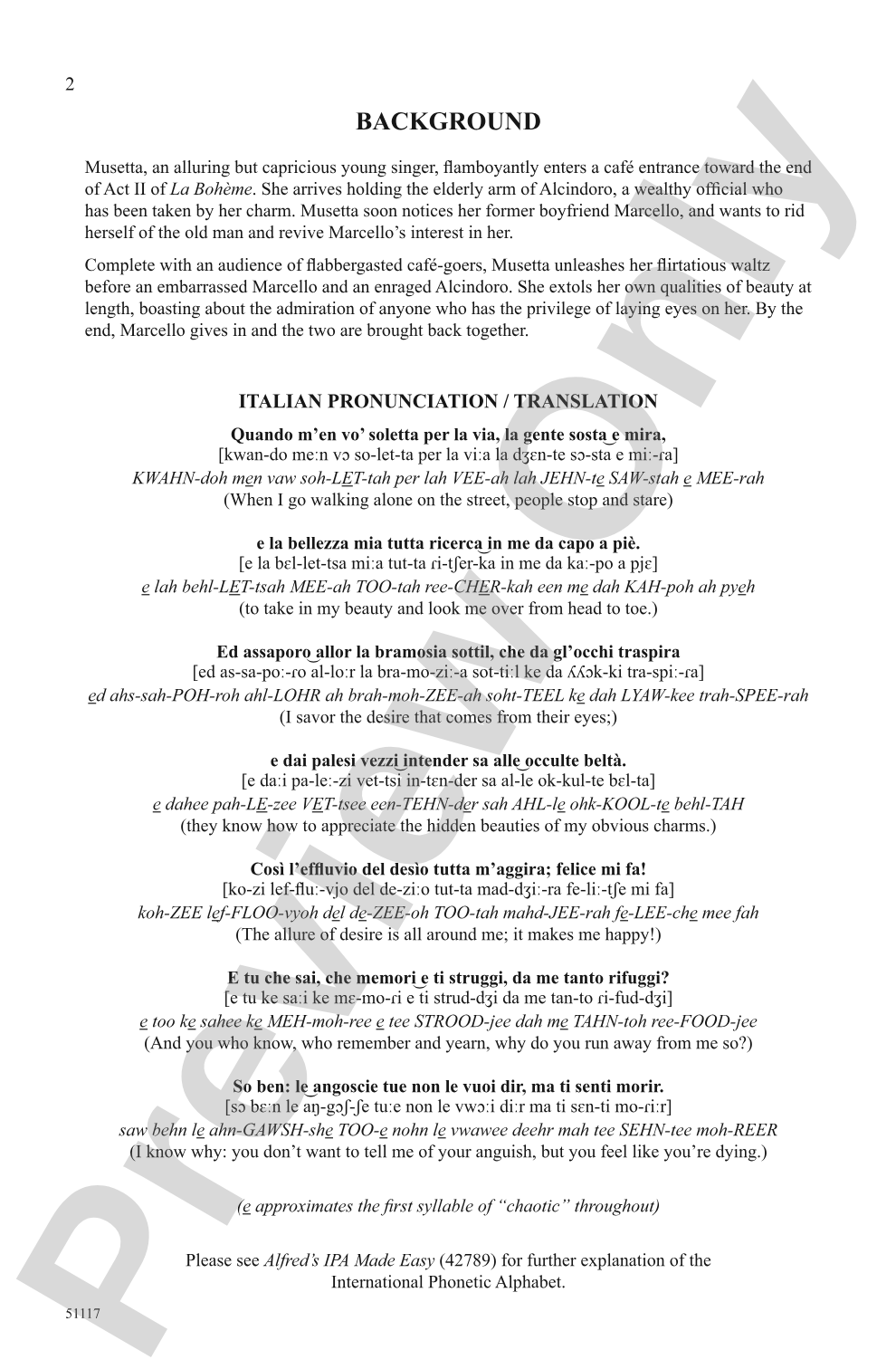
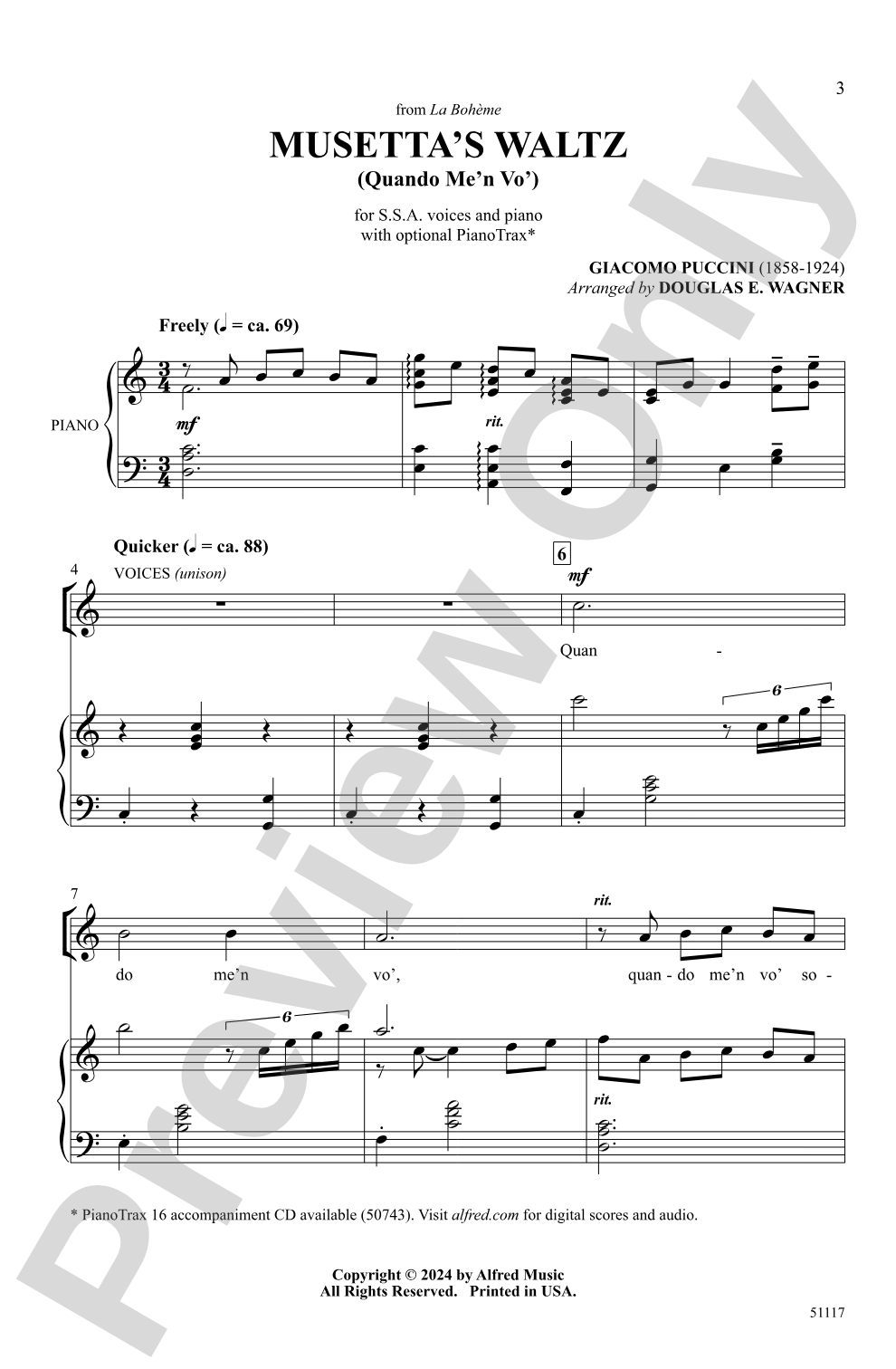
This beloved aria appears in Act II of Puccini's La Bohème showcases Musetta's over-the-top confidence. Here's an approachable two-minute arrangement of the flirtatious waltz fitted with glorious three-part harmonies that complement the world-famous score. An Italian pronunciation and translation guide is included in the publication.


Musetta's Waltz: SSA Choral Octavo isn't in MakeMusic Cloud just yet...but it could be. Let us know you'd like to see it, and you'll help shape what comes next. In the meantime, start a free trial and dive into thousands of interactive titles your students can play along with today.
Request This Title
Tell us you want it.
Start Your Free Trial
Explore everything that's ready to play right now.
Sample Audio
1
Audio File
--:--
0:00
0:00
Sample Video
Additional Details
Series:
Alfred Choral Designs
Publisher:
Alfred Music
Page Count:
8
SKU:
00-PO-0007206
More about this title
About the Composer: Giacomo Puccini
Giacomo Puccini (1858-1924) was an Italian composer whose operatic works defined the Romantic era and continue to dominate concert stages worldwide. His gift for lyrical melody and emotional directness made him a master of the human voice, whether writing for soloists or ensembles. Puccini's operas, including La Bohème, Tosca, and Madama Butterfly, remain central to music education because they combine sophisticated orchestration with deeply accessible storytelling.
For choral musicians, Puccini's work offers rich material for developing musicality. His melodies reward careful phrasing and vocal control, while his harmonies provide the foundation for understanding late-Romantic harmonic practice. Studying arrangements of his arias gives singers exposure to some of the most performed music in the classical repertoire.
Why we love this
This arrangement captures everything that makes Musetta's entrance unforgettable: the character's swagger, the lilting waltz rhythm, and the infectious charm of one of opera's most famous moments. Wagner's three-part writing sits beautifully for SSA voices without sacrificing the melody's character or the harmonic richness of the original. Programming this gives your choir access to a masterwork that audiences recognize and singers genuinely enjoy performing.
What to expect
Musetta's Waltz practically dances off the page. The melody sparkles with confidence and charm, while the underlying waltz meter creates a sense of movement and joy. Even in this choral arrangement, you sense the character's flirtatiousness and the theatrical energy that makes this aria unforgettable in its original context.
Who it's for
This arrangement suits intermediate to advanced treble choirs seeking a show-stopping concert piece that connects singers to canonical opera literature. It works equally well for festival or contest performance, where audiences appreciate both the musical sophistication and the immediate appeal of the melody.
How to get the most out of it
- Shape the melody with Musetta's personality in mind. This character demands confidence and a touch of playfulness; let your sopranos sing with lift and personality rather than restraint.
- Balance the waltz rhythm naturally. Avoid over-conducting the triple meter; instead, let the melody breathe in phrases while keeping the accompaniment rhythmically steady.
- Use the included pronunciation guide and translation to ground the singers in the text. Even in arrangement form, the Italian words deserve attention and clear articulation.
- Work the altos' harmonic line independently before full rehearsal. Their part provides essential color and support; singers need confidence in their own line to blend effectively with the sopranos.
How to use it
Pair this with other arrangements of operatic arias to build a concert exploring vocal masterworks across the Romantic era. As a standalone showcase piece, it works beautifully mid-program where its energy and recognizability can lift the concert's momentum. It also fits naturally into contests or festivals where treble choirs are looking for pieces with immediate audience connection.
Skills your students will build
- Singing Italian text with accurate pronunciation and clear diction
- Maintaining triple meter while shaping lyrical phrases
- Balancing three-part SSA harmony while supporting a dominant melody
- Interpreting character and dramatic intent through vocal expression
- Reading and performing Romantic-era harmonic language