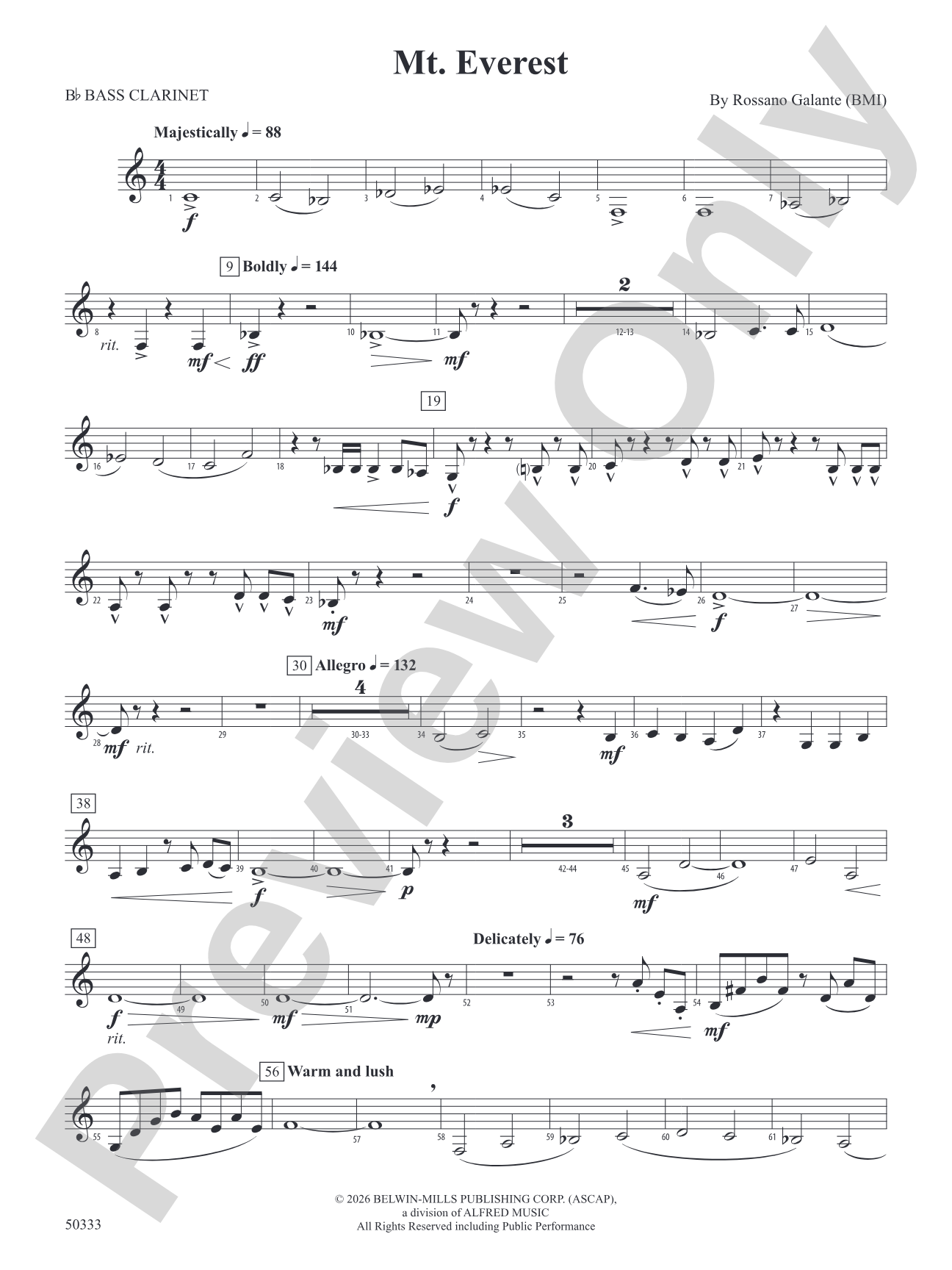
This programmatic work embarks on a musical journey to the summit of the world's highest peak, Mt. Everest. The piece opens with a bold trumpet statement, supported by rhythmic ostinati in the winds, setting the stage for an ascent both daring and triumphant. The main theme, first introduced in the horns, is later taken up by the trumpets with a soaring horn obligato. A reflective, lyrical passage offers a moment of serenity before the music builds toward a powerful recapitulation. The piece culminates in a grand, majestic fanfare, evoking the awe-inspiring grandeur of Everest. This orchestral arrangement was inspired by composer Chris Bernotas.
Discover MakeMusic Cloud: thousands of interactive titles your students can play along with today.
Rossano Galante studied trumpet performance at SUNY Buffalo, graduating in 1992, then earned acceptance to USC's prestigious Film Scoring Program that same year. There he studied under Jerry Goldsmith, the Academy Award-winning composer of The Omen, launching a career that would span orchestration for over eighty studio films including the Marvel Cinematic Universe, Fast X, A Quiet Place, and The Super Mario Brothers Movie.
Based in California, Galante has collaborated with two-time Oscar-nominated composer Marco Beltrami and worked alongside composers Christophe Beck, Brian Tyler, and Christopher Lennertz on major studio productions. Beyond his film work, he maintains an active presence in concert music, receiving commissions from ensembles worldwide and publishing over 68 compositions through Alfred, Schirmer, Hafabra, C.L. Barnhouse, and other leading music publishers.
Why we love this
Galante brings the craft of film orchestration to concert music here, and it shows in the narrative clarity and orchestral sophistication of Mt. Everest. The piece balances accessibility at Grade 4 with genuinely engaging orchestral writing—bold trumpet fanfares, idiomatic horn lines, and purposeful wind rhythms that keep players engaged without overwhelming younger ensembles. Directors looking for contest or festival material that feels substantial rather than superficial will find this delivers both musical and technical growth.
What to expect
Mt. Everest captures the physical and emotional arc of mountaineering—the bold, determined push upward through wind and rhythm, moments of breathless reflection where you sense the altitude, and the triumphant realization of reaching the summit. The music evokes both the grandeur of the landscape and the personal triumph of the climbers, moving from struggle to majesty.
Who it's for
This piece is designed for intermediate to advancing young orchestras at the Grade 4 level who are ready for programmatic storytelling and multi-movement structural thinking. Ensembles preparing for festival or contest contexts will find this work balances technical accessibility with musical substance, rewarding rehearsal time with clear progress in orchestral balance, sectional independence, and ensemble cohesion.
How to get the most out of it
Balance the opening trumpet statement with the wind ostinati rather than letting the winds disappear; they establish the rhythmic foundation of the entire ascent and should remain audible.
Shape the horn theme as the emotional core of the piece; this melody carries the journey, so encourage players to phrase through the line rather than mechanically executing notes.
Use the reflective, lyrical passage to reset the ensemble's energy and focus before building toward the recapitulation; this moment is your rehearsal opportunity to refine dynamics and tone quality.
The grand fanfare demands precision from the full orchestra; lock the brass attacks together in rehearsal and ensure the entire ensemble understands this is the summit moment—technically and dramatically.
How to use it
Program this as a centerpiece for a concert celebrating nature, exploration, or human achievement. Its narrative structure makes it an excellent gateway piece for audiences less familiar with concert music, while its Grade 4 demands keep it accessible for mid-year festival seasons. The piece also pairs well on thematic programs with other orchestral works exploring landscapes or journeys.
Skills your students will build
Maintaining independent rhythmic ostinati across wind sections while tracking melodic lines in brass
Balancing transparent orchestration with dynamic control across full ensemble
Executing brass fanfare passages with precision and unified articulation
Following programmatic arc through multi-section form with contrasting tempos and textures
Responding to expressive conducting in lyrical passages alternating with rhythmically driven sections
You May Also Like
Scan to Complete Your Purchase
Use your phone's camera to scan the code below
You'll log in on your phone and the order will be added to your account