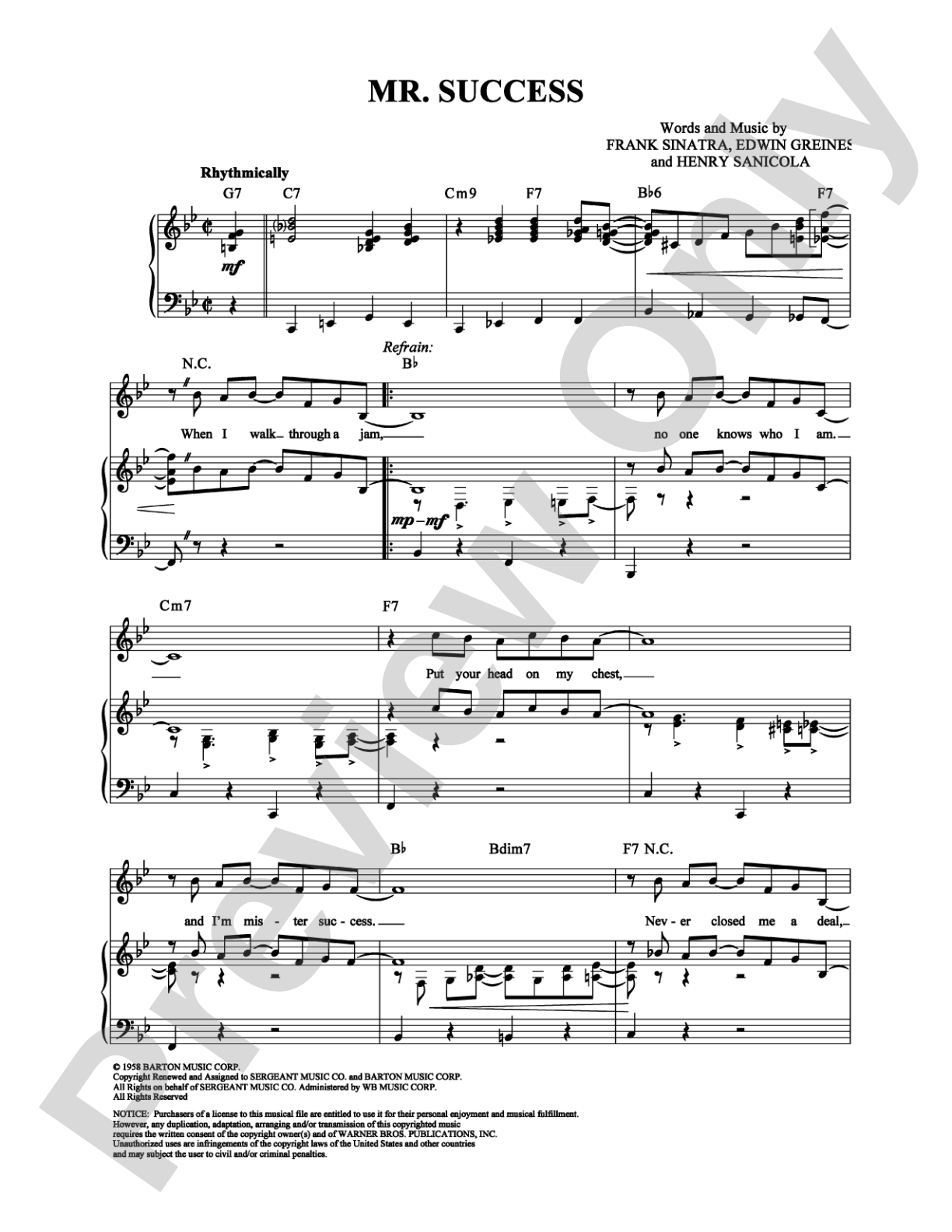
Mr. Success: Piano/Vocal/Chords Digital Sheet Music

Mr. Success: Piano/Vocal/Chords Digital Sheet Music

Frank Sinatra, Henry Sanicola, Edwin Greines

Item: 00-PS-0009303

Digital Download
$3.99
Description

Mr. Success: Piano/Vocal/Chords Digital Sheet Music isn't in MakeMusic Cloud just yet...but it could be. Let us know you'd like to see it, and you'll help shape what comes next. In the meantime, start a free trial and dive into thousands of interactive titles your students can play along with today.

Sample Audio
No sample audio found.
Sample Video
Additional Details
SKU: 00-PS-0009303

More about this title

About the Artist: Frank Sinatra

Frank Sinatra (1915-1998) transformed American popular song into an art form. His phrasing, breath control, and interpretive sensitivity set the standard for vocal jazz and standards singing that continues to influence musicians across genres today. For educators, Sinatra's recordings remain essential listening for understanding how to shape a melodic line, navigate chord changes with musicality, and sustain engagement across a full phrase.

Why we love this

Sinatra's repertoire gives pianists and singers a direct entry into the American songbook at a manageable technical level. The melody sits naturally for most voices, the chord changes are logical enough to support learning but sophisticated enough to stay interesting, and the song's cultural weight means students engage with genuine artistry rather than exercise material.

What to expect

The song carries an easy confidence, the kind of relaxed competence Sinatra embodied. It moves with conversational ease; nothing feels strained or overwrought, just a smooth assertion that things are going well.

Who it's for

Piano and voice students working with jazz standards and American songbook repertoire will find this a straightforward, playable resource. Teachers using it should expect students to have basic piano/vocal reading skills and familiarity with lead-sheet notation.

How to get the most out of it

  • Treat the melody as speech first, music second. Sinatra's genius lay in conversational phrasing, so shape the vocal line with the naturalness of someone telling a story rather than hitting every note with equal emphasis.
  • Listen closely to how the piano comp supports the voice. The accompaniment should breathe with the singer, leaving space rather than filling every moment.
  • Let the chord movement guide your harmonic color. These changes aren't there by accident; slight rubato and dynamic shaping around key harmonic moments make the difference between reading the chart and performing it.

How to use it

This works well in a jazz or standards-focused recital, solo or as part of a set featuring mid-century American popular song. Pianists can perform it as a solo piece, or pair it with a vocalist for a duet context.

Skills your students will build

  • Reading and interpreting lead-sheet chord symbols
  • Vocal phrasing and breath placement over longer melodic phrases
  • Accompanying a vocalist with sensitivity to pacing and space
  • Navigating jazz harmony through functional chord changes

You May Also Like