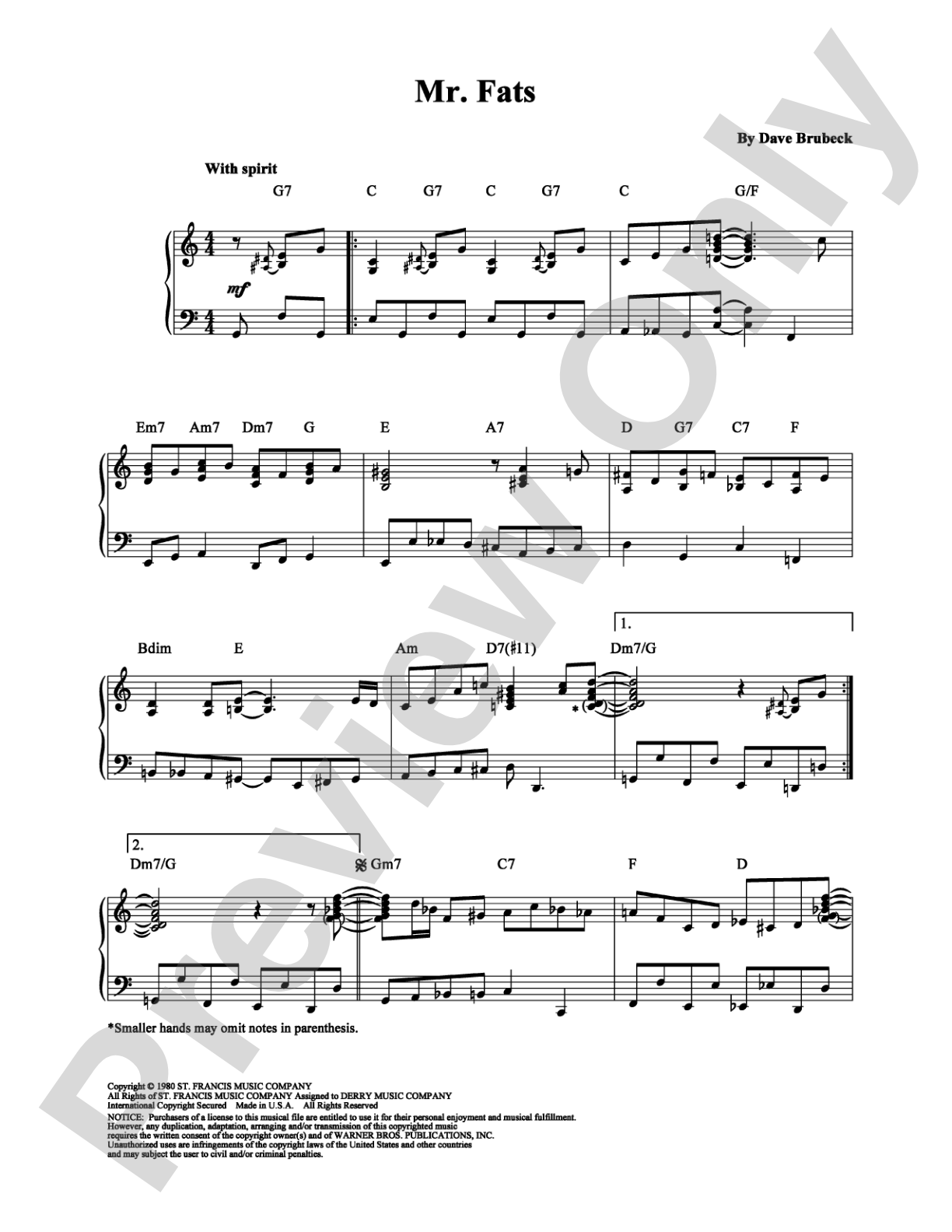
Mr. Fats: Piano Digital Sheet Music

Mr. Fats: Piano Digital Sheet Music

Dave Brubeck

Item: 00-PS-0000944

Digital Download
$3.99
Description

Mr. Fats: Piano Digital Sheet Music isn't in MakeMusic Cloud just yet...but it could be. Let us know you'd like to see it, and you'll help shape what comes next. In the meantime, start a free trial and dive into thousands of interactive titles your students can play along with today.

Sample Audio
No sample audio found.
Sample Video
Additional Details
SKU: 00-PS-0000944

More about this title

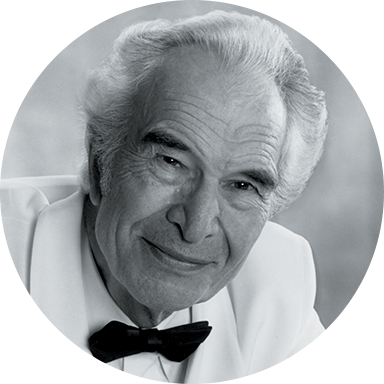
About the Artist: Dave Brubeck

Dave Brubeck

Dave Brubeck built his reputation as a pianist through spontaneous performance, yet his legacy extends far beyond improvisation. He composed across nearly every classical form: masses, oratorios, chamber works, ballet suites, and large-scale orchestral pieces. His education under Darius Milhaud at Mills College shaped his compositional philosophy, fusing jazz language with classical structure, a synthesis that defined his artistic output for decades.

Beyond music, Brubeck broke racial barriers in mid-20th-century America and received recognition from presidents and institutions worldwide. His album "Time Out" became the first jazz record to exceed a million copies, while works like "To Hope!" and "Pange Lingua Variations" have been performed by major orchestras and choral ensembles internationally. In 2003 he was elected to the American Classical Music Hall of Fame, capping a career that earned him a Grammy Lifetime Achievement Award and multiple presidential honors.

Why we love this

Brubeck's piano writing combines accessible jazz vocabulary with sophisticated harmonic language, making it rewarding for pianists who want to explore jazz idioms without sacrificing musical depth. The piece offers a genuine window into how a master improviser notates his own music, preserving the spontaneity and character of his playing in written form. Programming Brubeck connects students directly to a transformative figure in American music history.

What to expect

The piece radiates the warm humor and bounce that defined Brubeck's writing. Playful but never frivolous, it moves with an easy swing and uses harmonic color to create character without demanding the listener's full attention, perfect for settings where sophistication and accessibility need to coexist.

Who it's for

This piece suits pianists comfortable reading jazz notation and those interested in studying how a legendary jazz composer writes for his own instrument. Advanced high school students and college pianists will find both technical challenge and historical significance in exploring Brubeck's own work.

How to get the most out of it

  • Let the groove breathe. Don't rush the rhythm section; Brubeck's pieces thrive on a relaxed pocket rather than metronomic precision.
  • Shape the melody with dynamics. The top line needs character and phrasing, not just note accuracy, treat it like you're singing over the changes.
  • Explore the harmony in context of the changes. Brubeck writes chords with purpose; understanding what each voicing does harmonically makes the interpretation richer.

How to use it

Feature this as a jazz solo recital piece or include it in a concert exploring American jazz composers and their notated works. It pairs well with other Brubeck compositions or with contemporary jazz pieces, offering audiences a direct connection to Brubeck's artistry beyond his most famous recordings.

Skills your students will build

  • Reading jazz chord symbols and performing idiomatic jazz voicings
  • Interpreting swing rhythm and jazz articulation from written notation
  • Applying harmonic substitutions and reharmonization techniques at the keyboard
  • Balancing improvisation within a composed framework
  • Understanding how a jazz artist's compositional voice reflects their playing style

You May Also Like