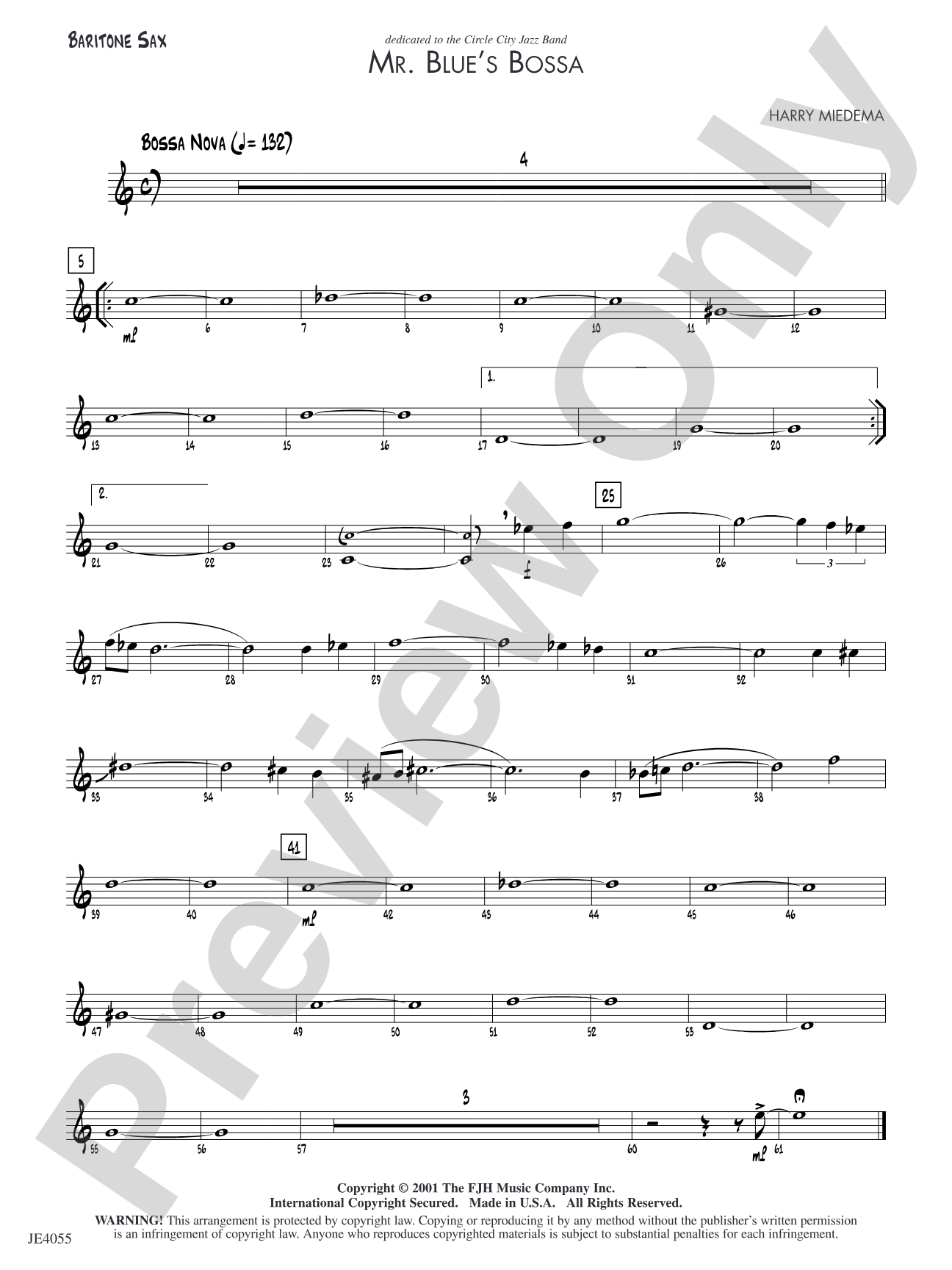
For your developing group, here's a very easy bossa nova chart to fit any group's playing level. No solos are needed to play this one, and rhythmic reading consists of mostly whole notes and half notes. Harry Miedema's great changes flow over the Brazilian bossa beat in the rhythm section. An excellent change-of-pace tune for your beginning jazzers.
Discover MakeMusic Cloud: thousands of interactive titles your students can play along with today.
Harry Miedema has established himself as a composer and arranger with a keen ear for what student ensembles need to learn and enjoy. His work across multiple genres and levels demonstrates a practical understanding of pedagogical sequencing and the musical interests of developing musicians.
Why we love this
Miedema writes with a clear ear for what developing ensembles need: accessible voicings that sound sophisticated without requiring soloists or complex rhythmic demands. The chart prioritizes ensemble cohesion and the pleasure of grooving together over technical fireworks, making it ideal for building confidence in your rhythm section while the horns learn to lock into a Latin pocket.
What to expect
Sunny, relaxed, and groove-forward. The bossa nova rhythm carries the tune with effortless Brazilian warmth while Miedema's harmonic changes give the ensemble something interesting to voice without overwhelming younger players. It feels like a seasoned chart scaled down, not a simplified one.
Who it's for
Beginning jazz ensemble directors looking for an accessible entry into Latin jazz repertoire. This chart works for ensembles still building reading confidence and rhythm section maturity, as it removes solo pressure and simplifies rhythmic notation while keeping the arrangement musically rewarding.
How to get the most out of it
Establish the bossa rhythm crisply in the rhythm section before adding horns. Piano, bass, and drums should settle into the groove during a full section run-through without the front line.
Keep the time loose and swinging within the bossa beat rather than metronomic. This style lives between straight timekeeping and swing feel.
Balance the horn parts so that no single voice dominates the changes. Miedema's voicings are lean by design; let each chord voice breathe.
How to use it
Program this early in the concert set as a change of pace from swing standards or bebop lines, or use it midway through rehearsals as a confidence builder after working through more demanding technical material. It's also an ideal teaching tool for introducing Latin jazz concepts without the coordination challenges of more complex Latin rhythms.
Skills your students will build
Reading and executing the bossa nova rhythmic feel
Voice balance and blend in simple jazz voicings
Listening to and locking with a rhythm section groove
Understanding harmonic changes through horn part movement
Ensemble coordination without relying on featured solos
You May Also Like
Scan to Complete Your Purchase
Use your phone's camera to scan the code below
You'll log in on your phone and the order will be added to your account