
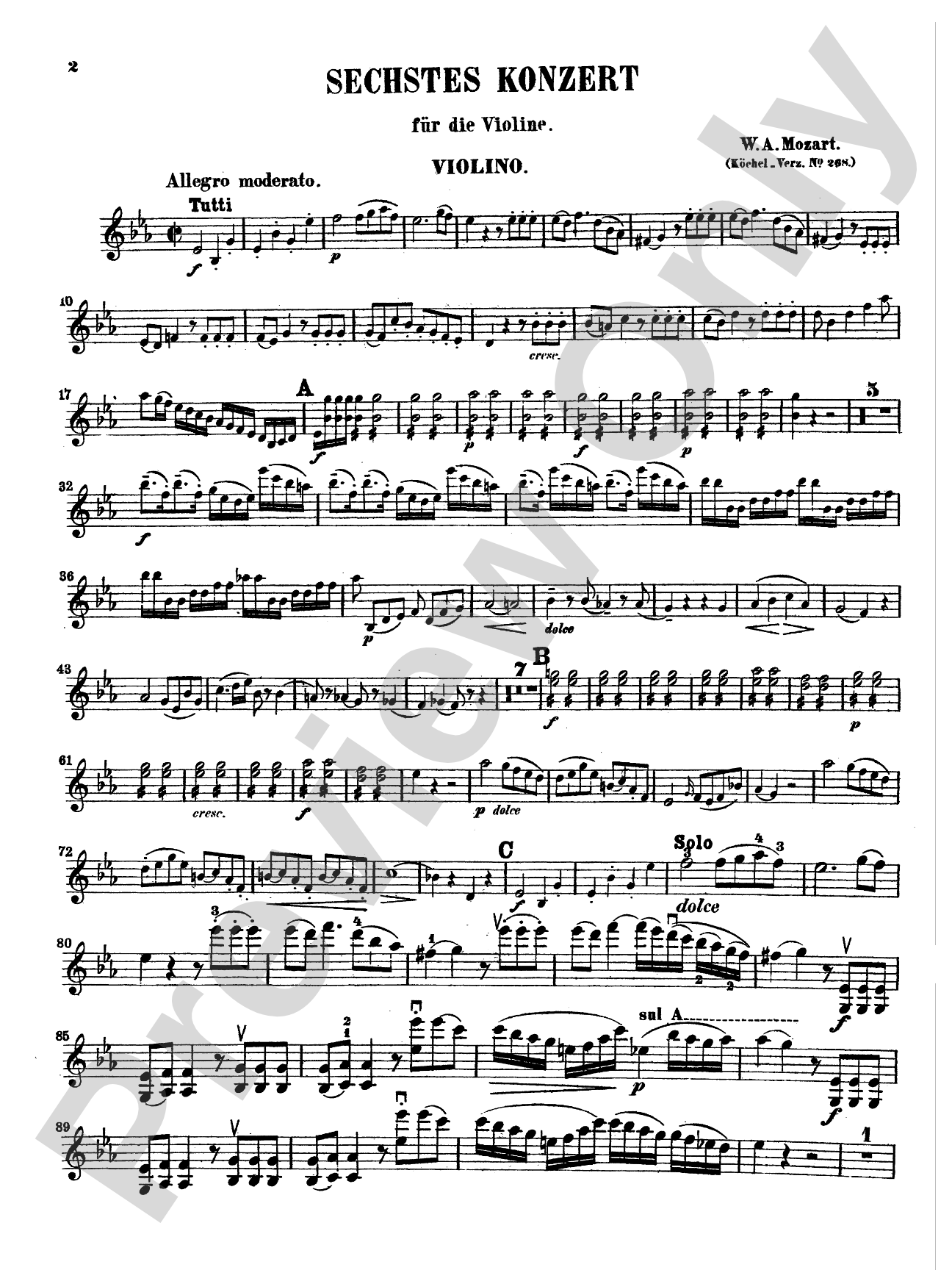
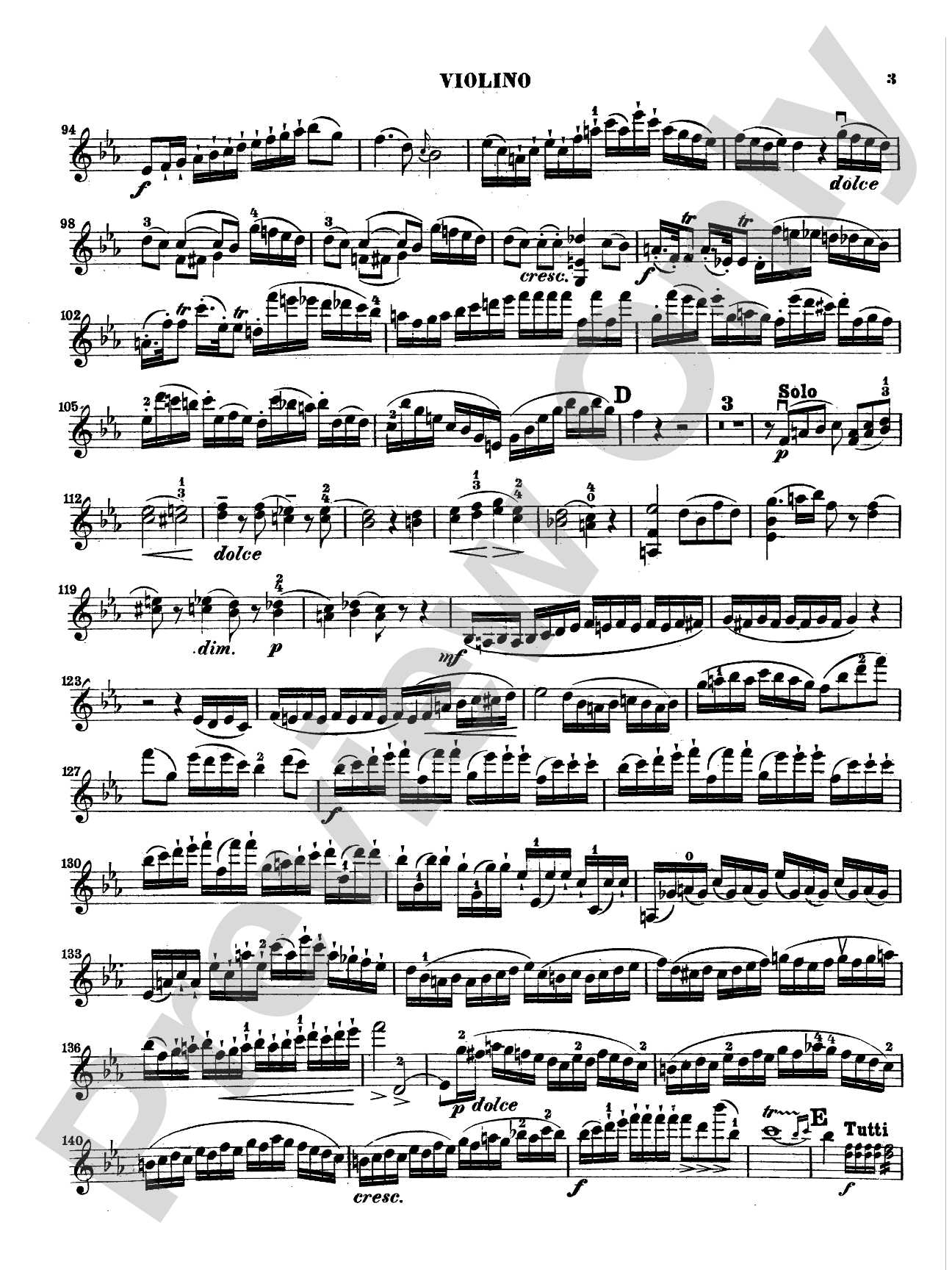
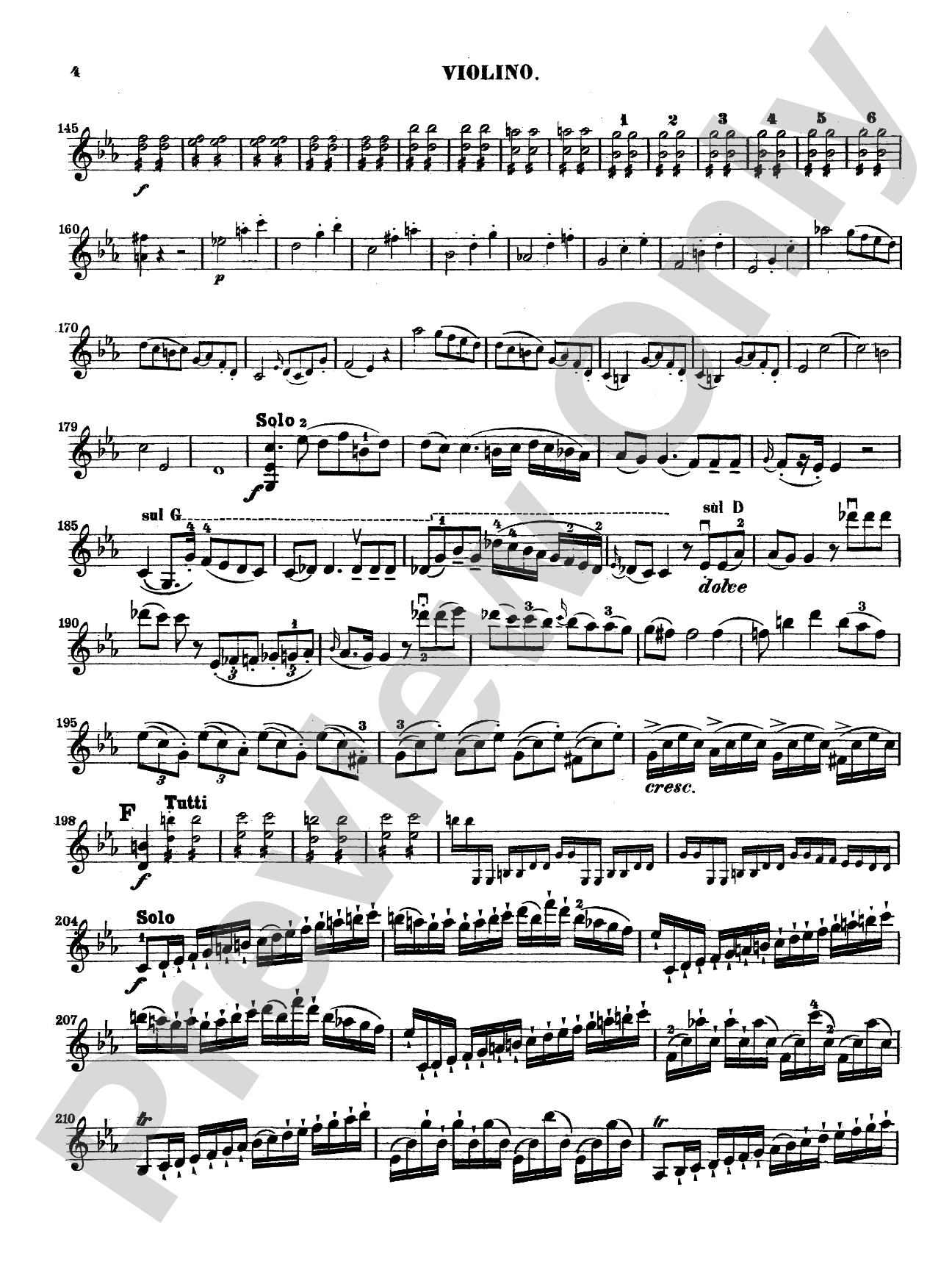
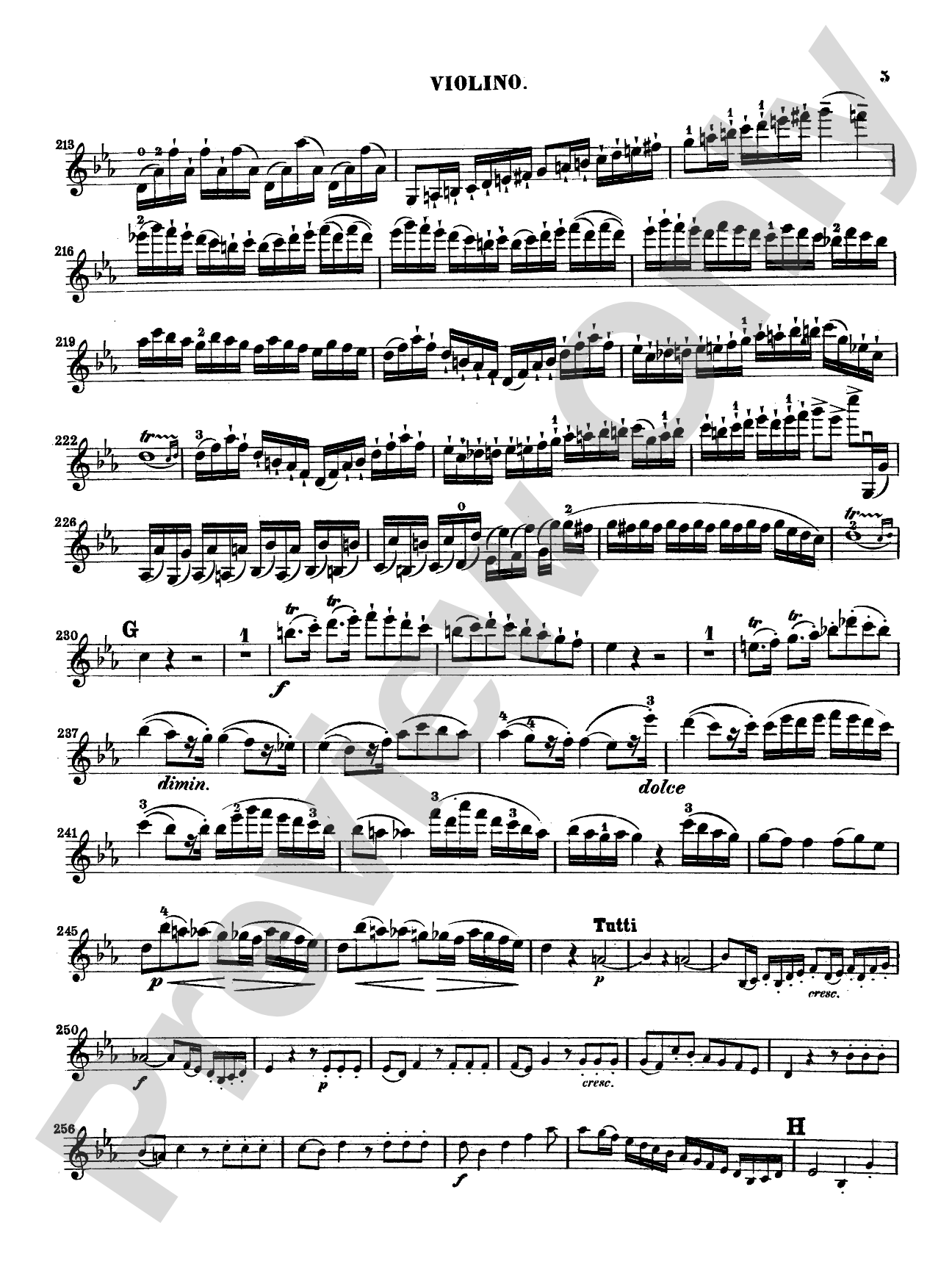
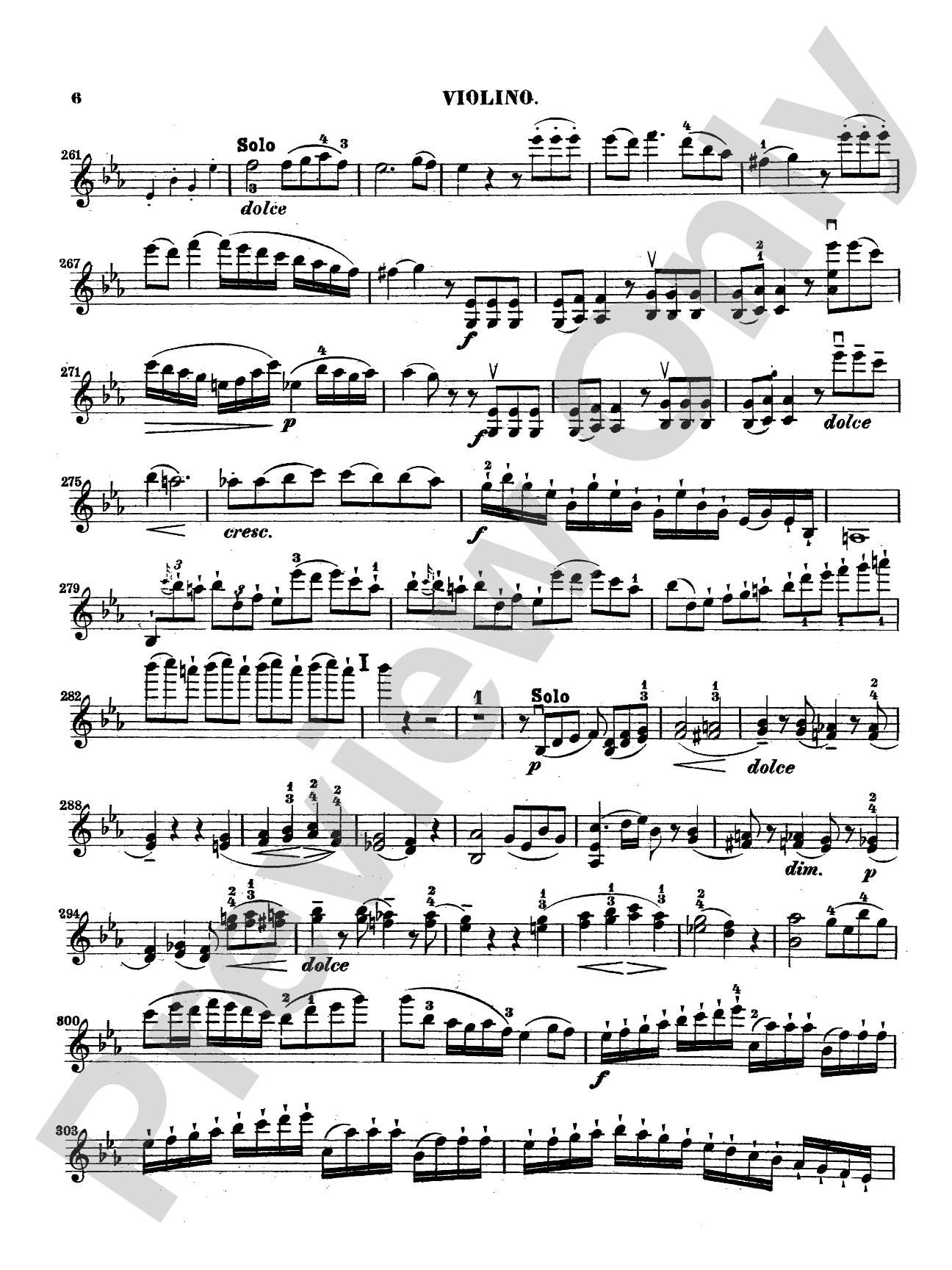
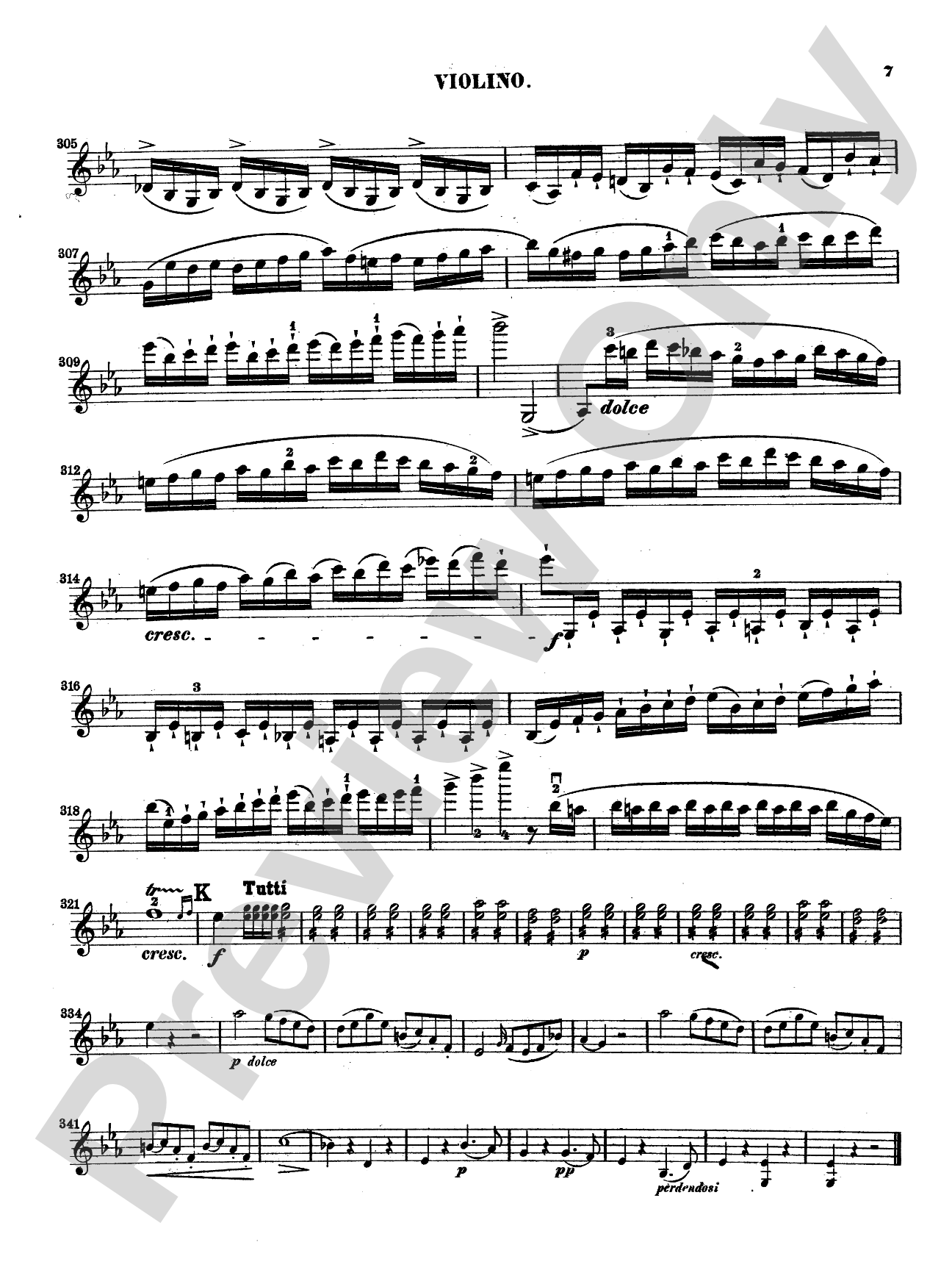
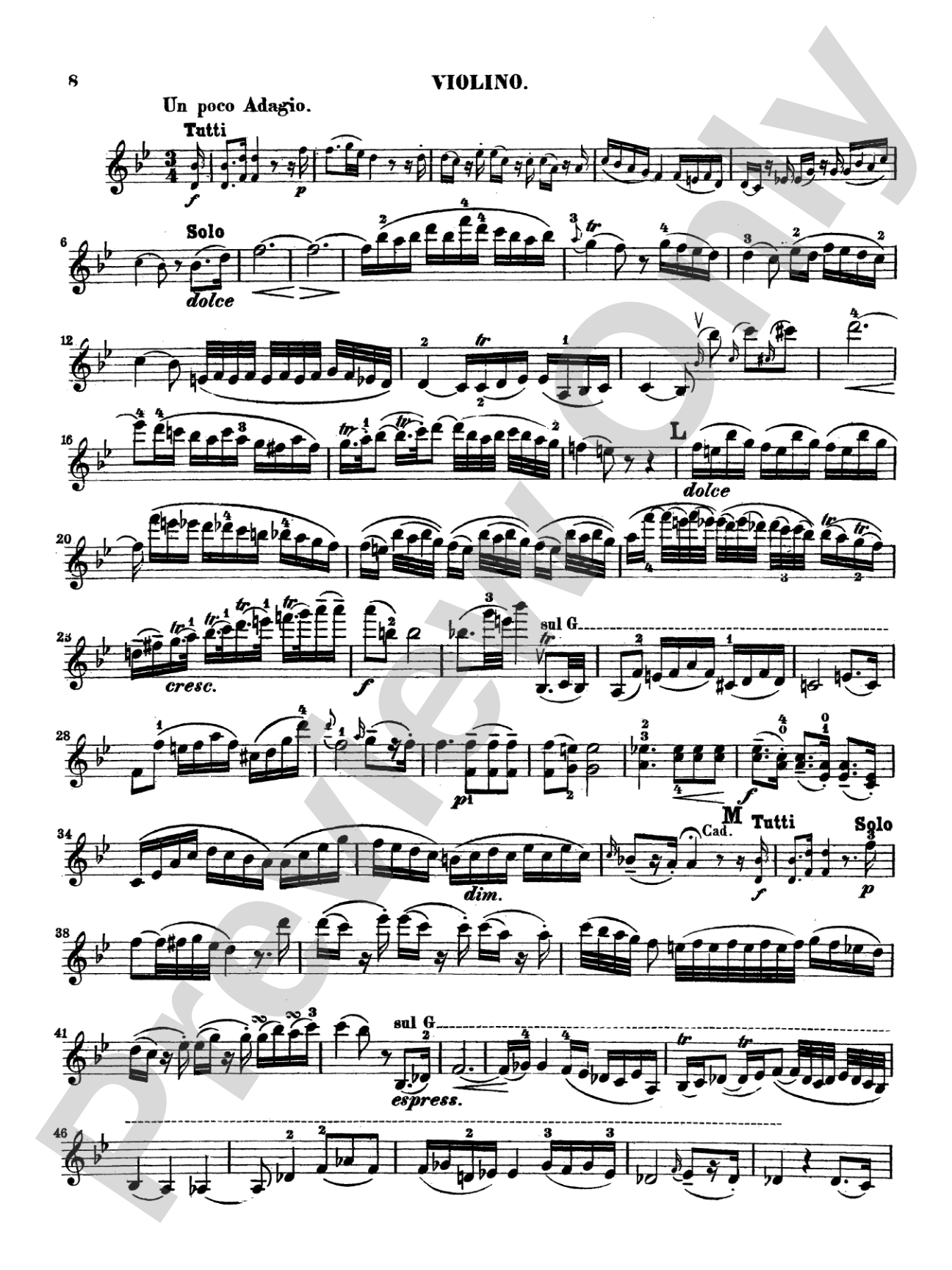
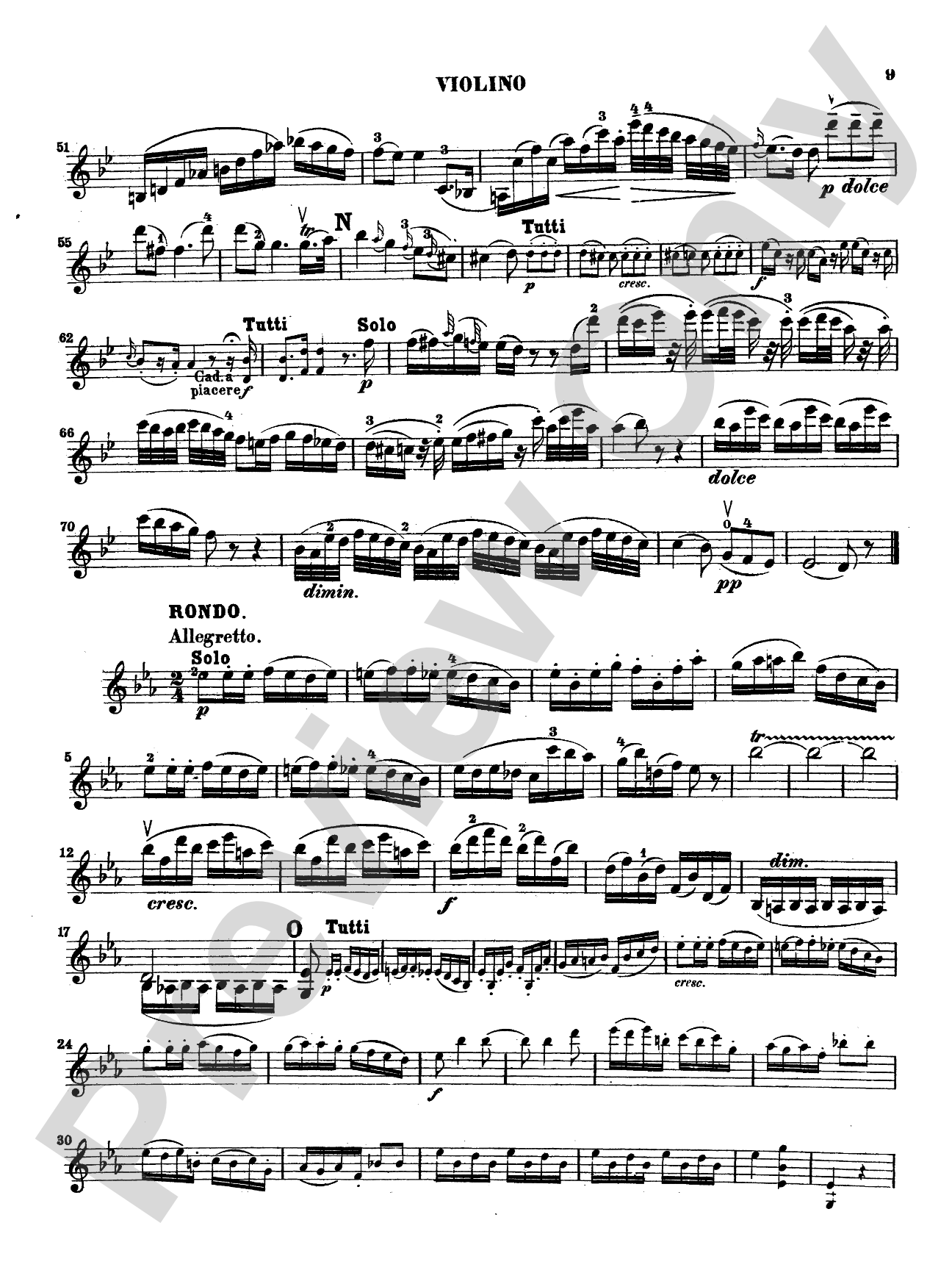
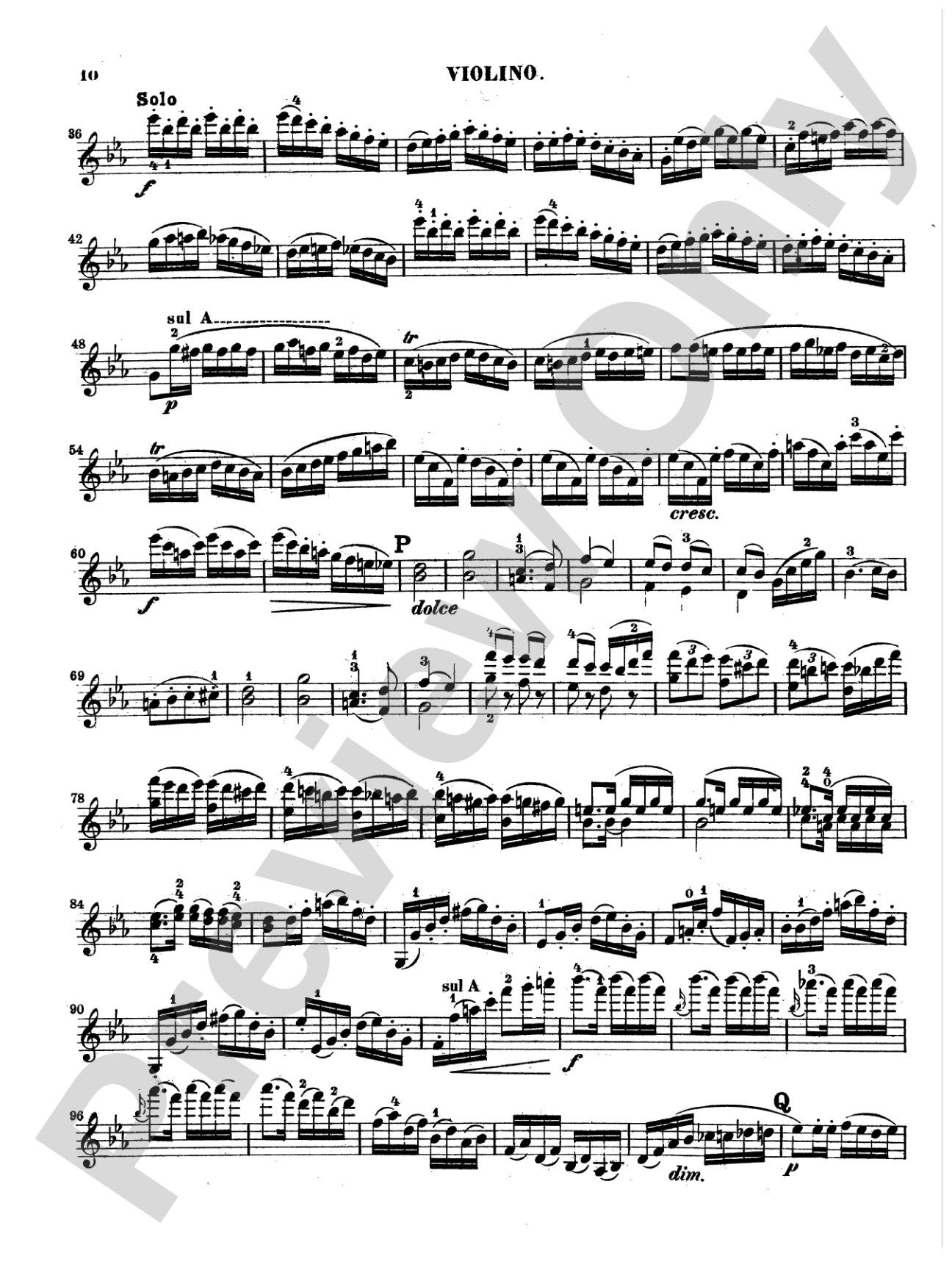
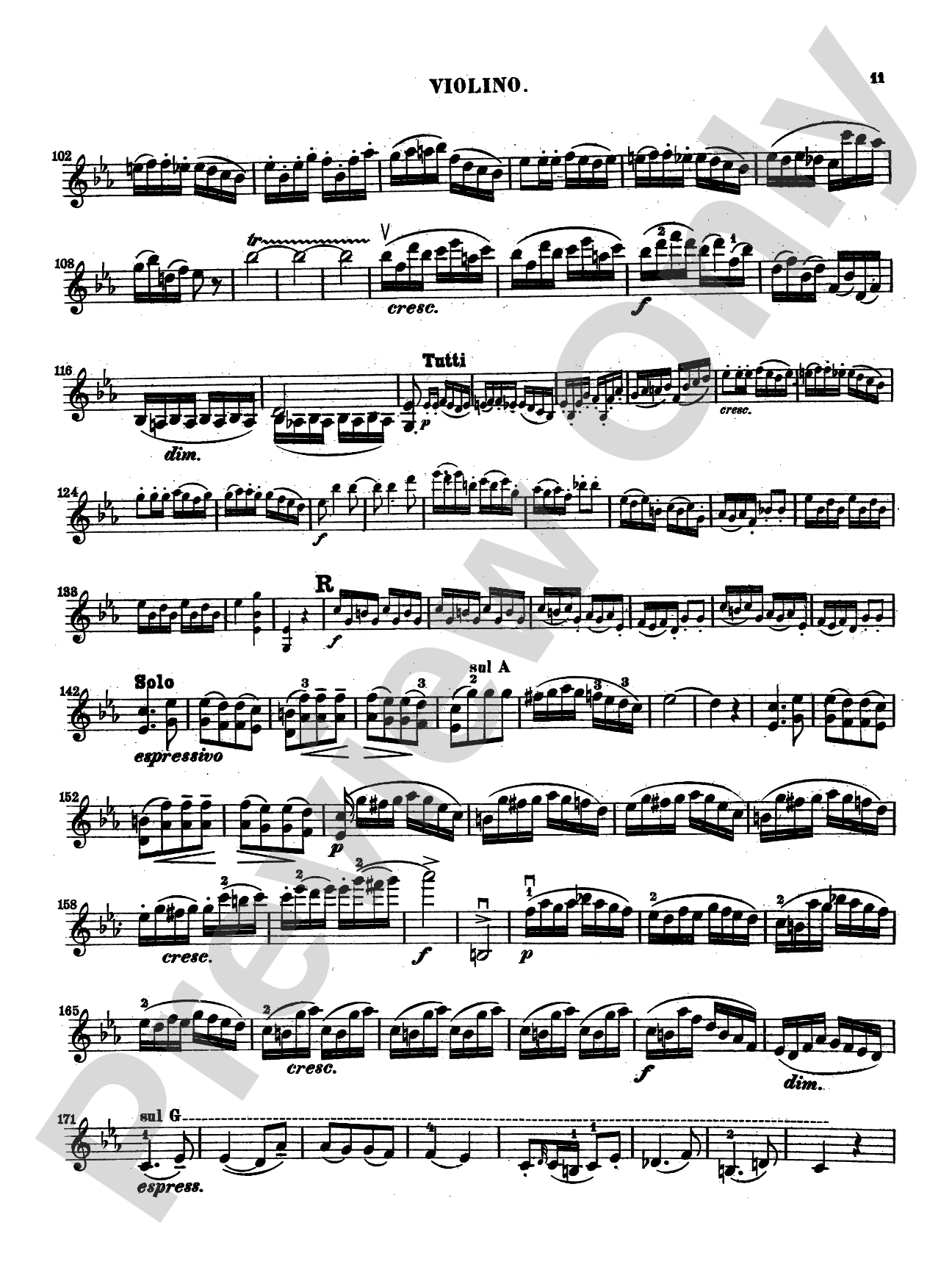
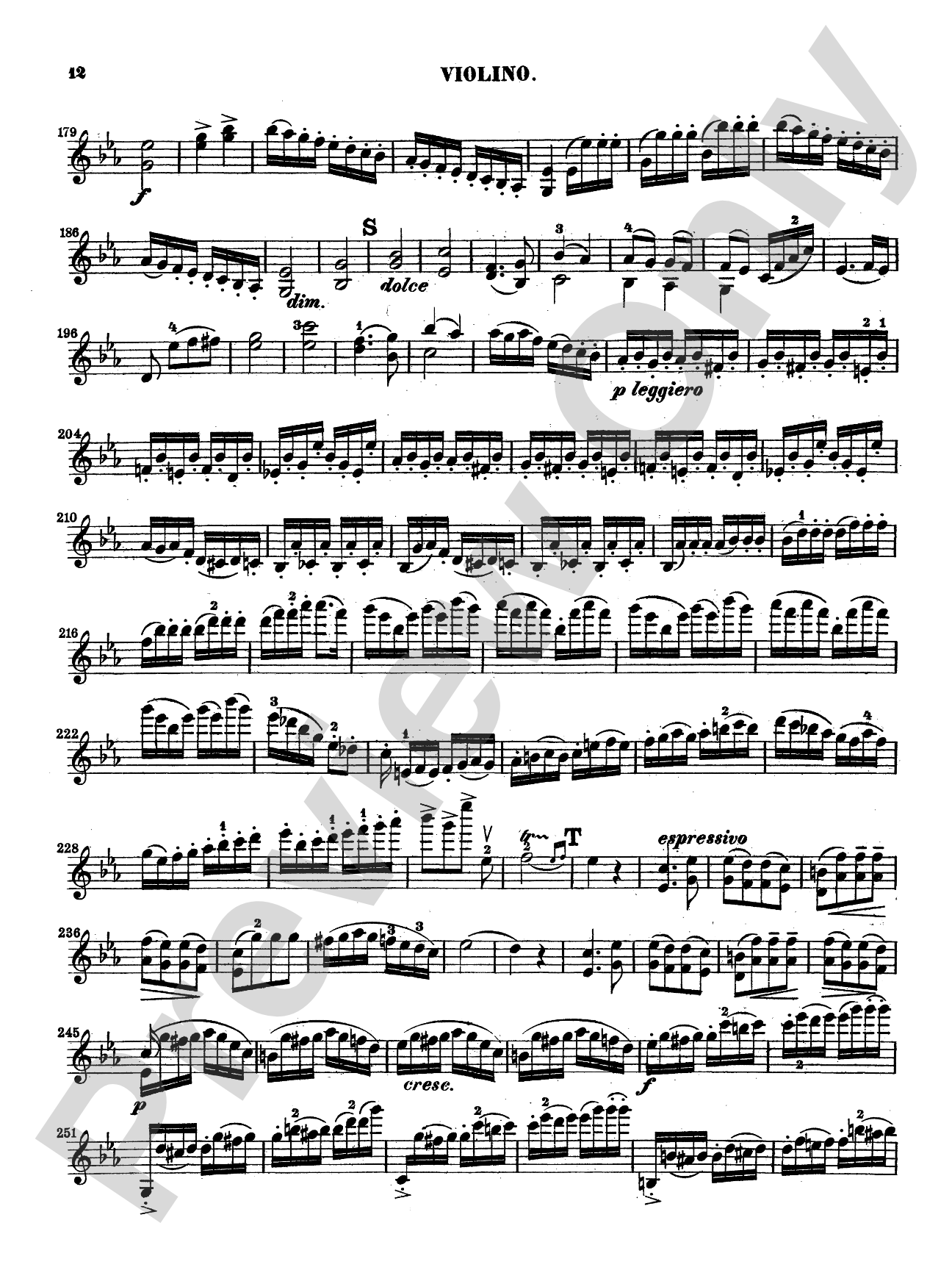
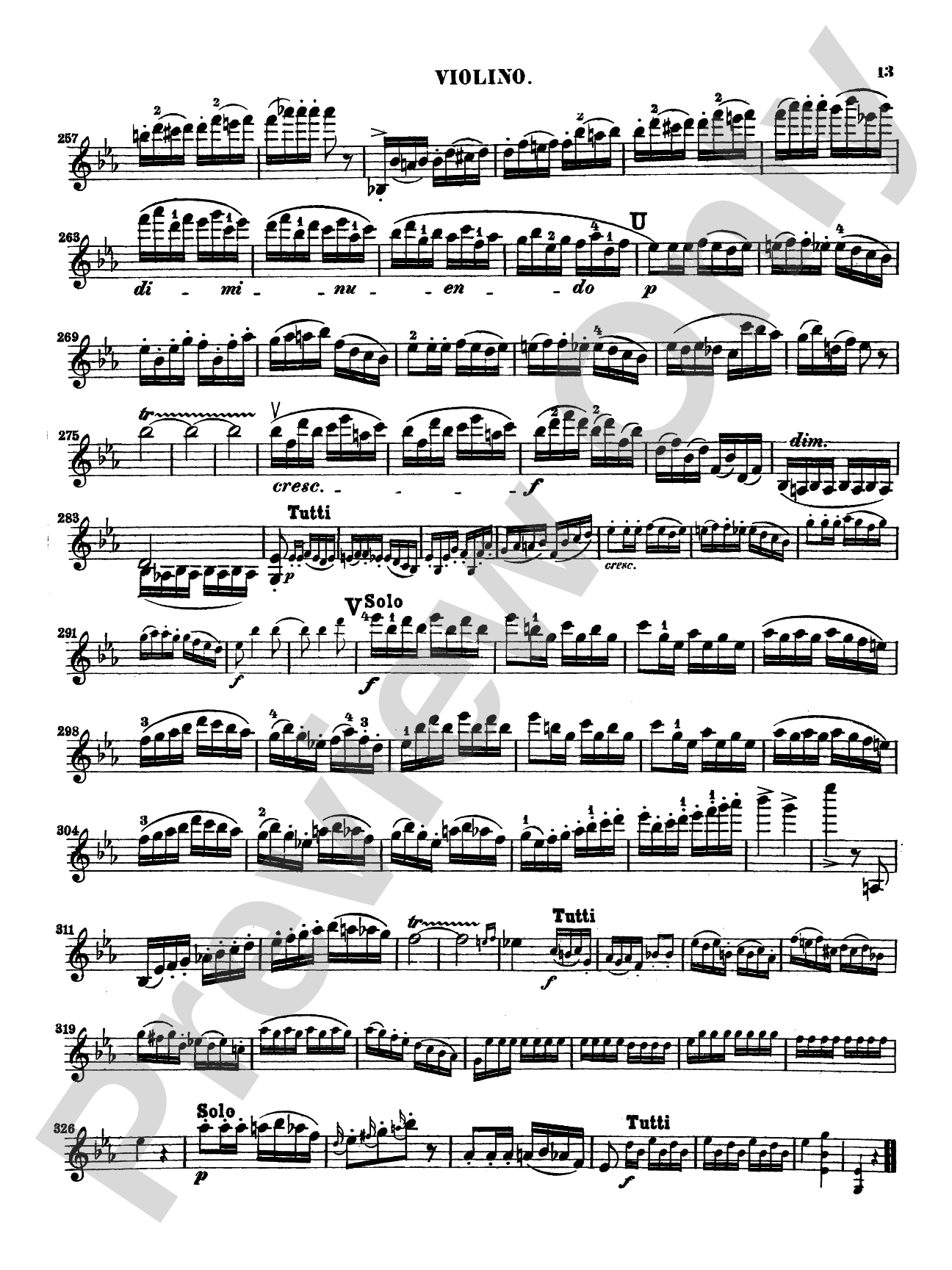




Mozart: Violin Concerto No. 6 in E flat Major, K. 268: Violin Book
By Wolfgang Amadeus Mozart
Item: 00-PK-0003261

$9.99
Pickup currently not available
Buy Extra Parts (Digital PDF Download)
| Product | Price | Quantity |
|---|---|---|
| Mozart: Violin Concerto No. 6 in E flat Major, K. 268 | $3.99 | |
| Mozart: Violin Concerto No. 6 in E flat Major, K. 268 | $3.95 |
Parts Added to Cart!
Related Items
Violin Concerto No. 6, K. 268: Violin Book |
$9.95
|
View |
Description
A Violin solo with Piano Accompaniment composed by Wolfgang Amadeus Mozart.


Don't just read it, hear it, play along with it, and watch your students grow with it. In MakeMusic Cloud, Mozart: Violin Concerto No. 6 in E flat Major, K. 268: Violin Book comes alive with professional accompaniment, adjustable tempo, and built-in practice tools that turn solo practice into real progress.
Open in the Player
Jump straight in and assign it today.
Start Your Free Trial
Open this title and explore the full library in minutes.
Sample Audio
No sample audio found.
Sample Video
No sample videos found.
Additional Details
Series:
Kalmus Edition
Publisher:
Alfred Music
Page Count:
44
SKU:
00-PK-0003261
More about this title
About the Composer: Wolfgang Amadeus Mozart
Wolfgang Amadeus Mozart (1756-1791) composed over 600 works across every major genre during his brief life, fundamentally shaping the Classical era. His six violin concertos, written in the 1770s when he was in his late teens and early twenties, remain cornerstones of the violin repertoire and exemplars of elegant melodic writing paired with sophisticated harmonic language.
Mozart's approach to the violin concerto balances technical display with lyrical beauty. His works demand both virtuosity and musical maturity from performers, rewarding careful attention to phrasing, intonation, and the interplay between soloist and accompaniment. These concertos have educated countless violinists in the fundamentals of Romantic-era interpretation while maintaining complete artistic integrity.
Why we love this
K. 268 sits at the sweet spot between technical challenge and musical accessibility, making it ideal for advanced high school violinists and emerging college students preparing for festivals or competitions. The three-movement architecture gives performers a complete performance arc without overwhelming length, and the E-flat major tonality produces a warm, singing quality that rewards good tone production. Mozart's orchestration here is lean and supportive, never overshadowing the soloist, which makes accompanying and coaching straightforward even in less-than-ideal venues.
What to expect
The work radiates elegance and clarity characteristic of Mozart at his most refined. The opening movement launches with charm and energetic figuration, punctuated by moments of quiet lyricism; the slow movement invites introspection and vocal-like beauty; the finale dances with grace and requires secure rhythmic partnership with the keyboard. Throughout, the writing sits naturally under the fingers and feels immediately rewarding once the notes are secure.
Who it's for
This concerto suits violinists with solid intonation, secure position work through fifth position, and enough bow control to execute both rapid passagework and sustained lyrical passages. It works well for advanced high school players entering competitions, pre-conservatory students building core repertoire, and college violinists exploring the Concerto tradition before moving into more virtuosic nineteenth-century works.
How to get the most out of it
- Shape the opening theme with long-range harmonic direction rather than local accent; Mozart's melodic lines breathe across phrases, and phrasing that respects the harmonic progression will sound more naturally Classical.
- Balance passage work in the fast movements by keeping the bow contact consistent and using finger dexterity rather than relying on arm speed; this allows passagework to remain transparent and prevents fatigue.
- In the Adagio, establish a sustained, singing tone from the outset and protect simplicity in the melodic line; the movement's beauty comes from purity of sound and minimal vibrato variance.
- Coordinate with the accompanist on tempo stability in the cadenza sections and first-movement returns; Mozart expects the soloist to own these moments, but ensemble confidence beforehand prevents rehearsal tension.
How to use it
Program this as a complete concerto in a faculty or student recital to anchor a Classical-era segment, or feature the Adagio movement alone as a contrasting choice between heavier Romantic repertoire. It also fits naturally into competition programming where a complete three-movement work demonstrates musical maturity and historical awareness. For schools building a nineteenth-century violin curriculum, this concerto establishes the harmonic and stylistic foundation that Mendelssohn, Bruch, and later composers built upon.
Skills your students will build
- Intonation in higher positions and across shifting passages in E-flat major
- Sustained singing tone and vibrato control in the Adagio
- Rhythmic coordination and ensemble listening with piano accompaniment
- Rapid passage work, scalar runs, and technical finger dexterity in the fast movements
- Phrasing control and harmonic awareness in Classical-era melodic writing
- Interpretation of ornaments and stylistically appropriate tempo modulation