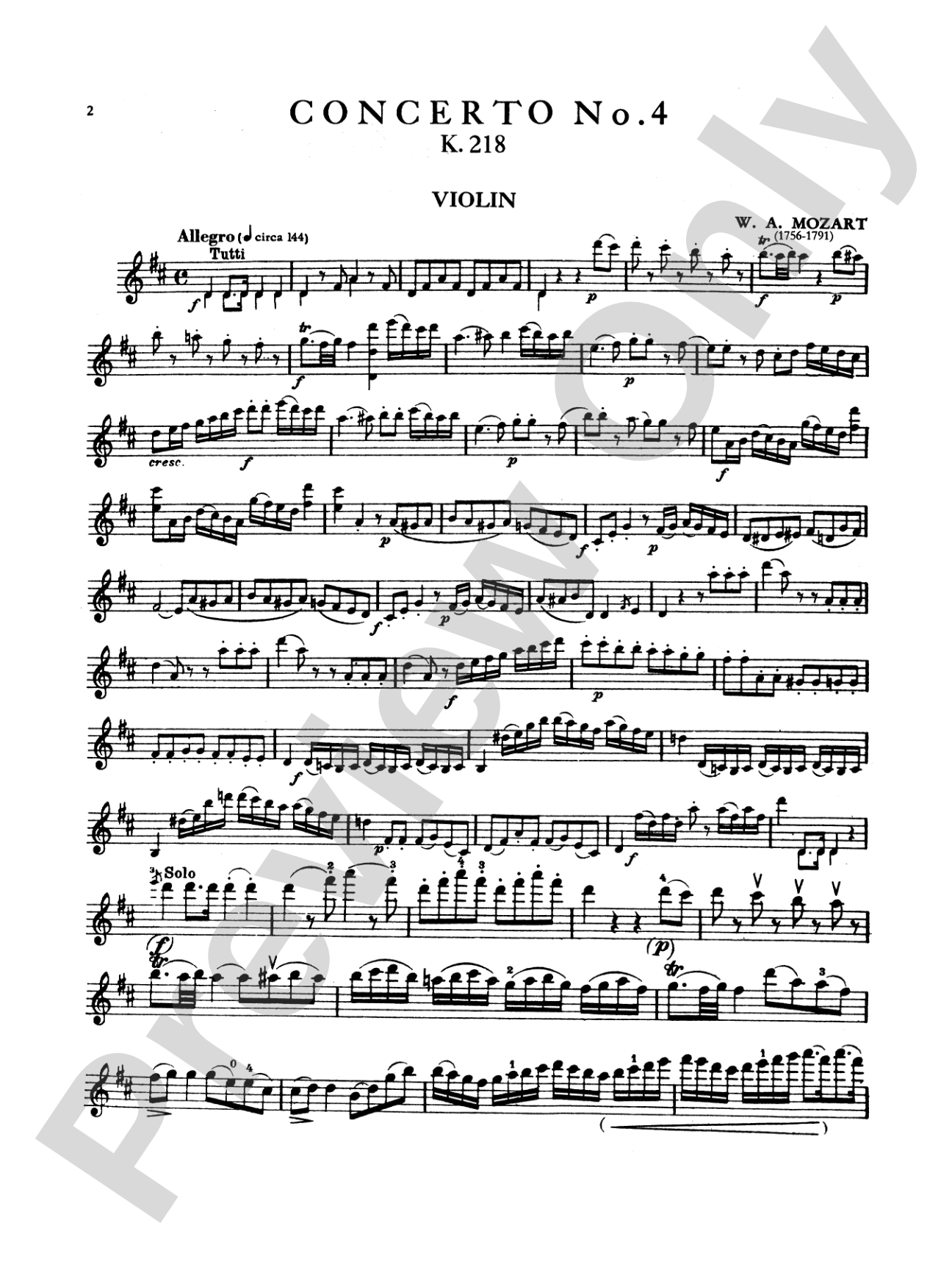
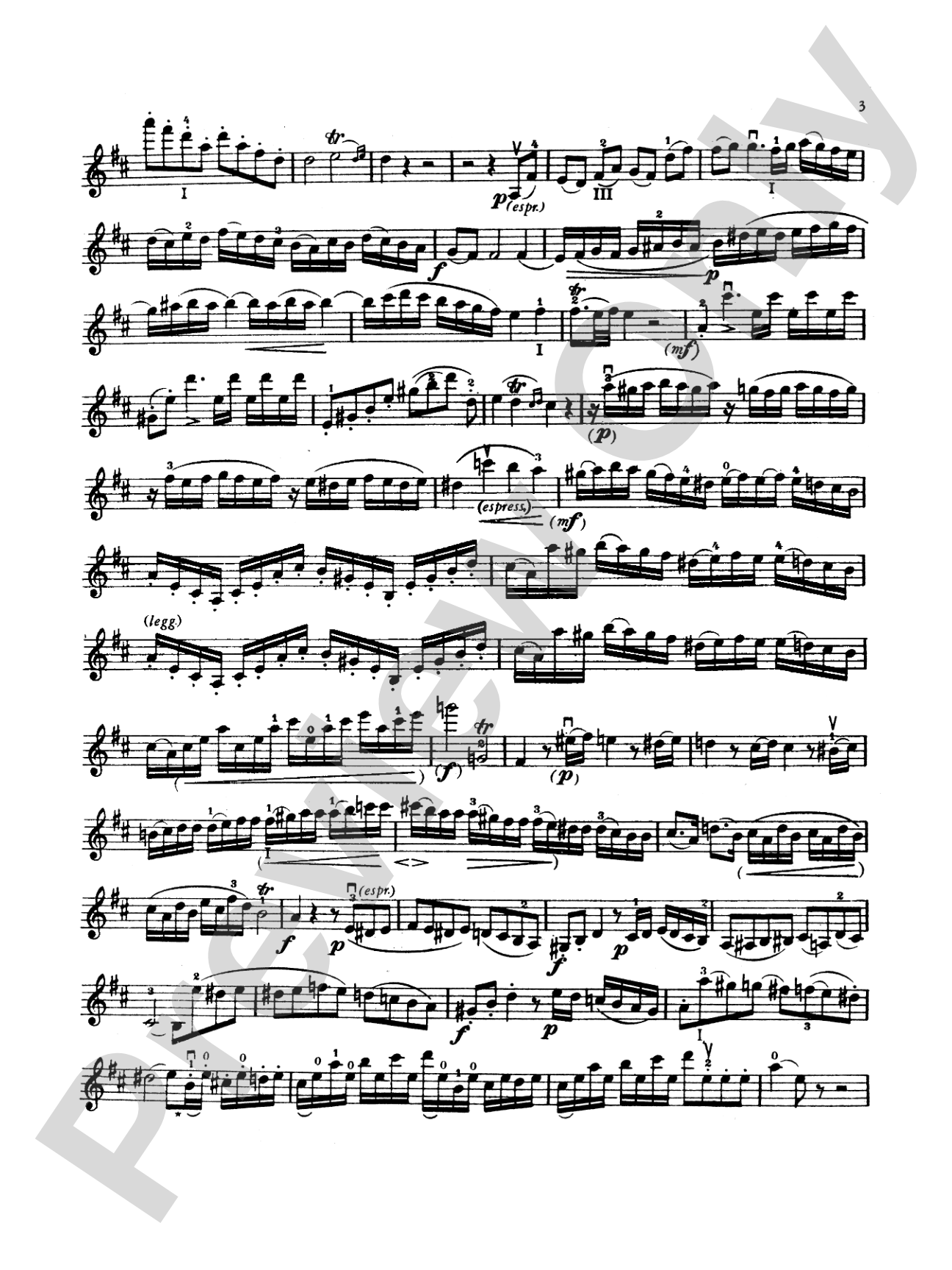
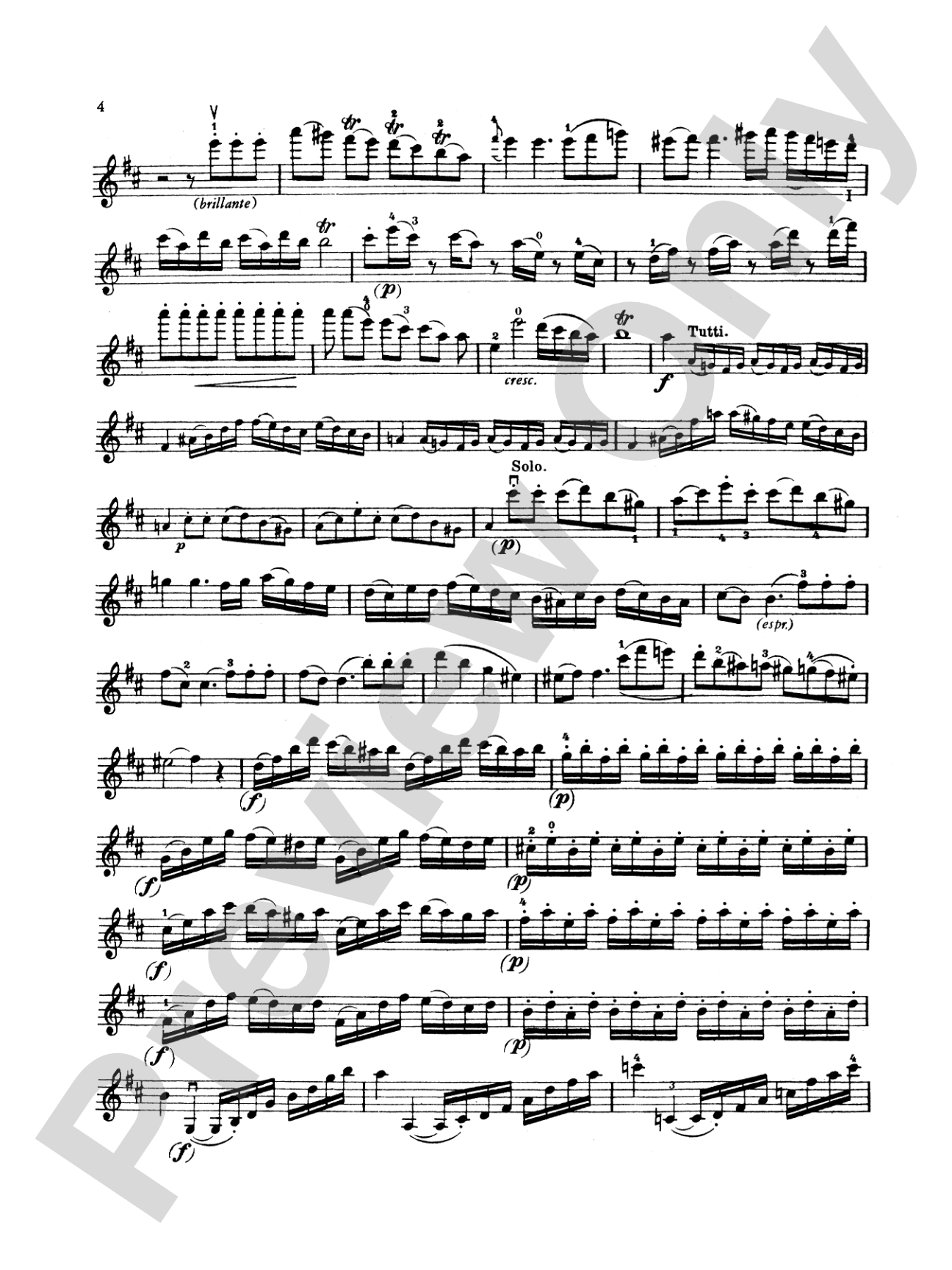
Mozart: Violin Concerto No. 4 in D Major, K. 218 Sheet Music Preview

Mozart: Violin Concerto No. 4 in D Major, K. 218

By Wolfgang Amadeus Mozart

Item: 00-PC-0008757

Digital Download
$3.99
Description
Expertly arranged Violin with Piano Accompaniment music by Wolfgang Amadeus Mozart from the Kalmus Edition series. This is from the Classical era.

Don't just read it, hear it, play along with it, and watch your students grow with it. In MakeMusic Cloud, Mozart: Violin Concerto No. 4 in D Major, K. 218 comes alive with professional accompaniment, adjustable tempo, and built-in practice tools that turn solo practice into real progress.

Sample Audio
No sample audio found.
Sample Video
Additional Details
Series: Kalmus Edition
Publisher: Alfred Music
Page Count: 44
SKU: 00-PC-0008757

More about this title

About the Composer: Wolfgang Amadeus Mozart

Wolfgang Amadeus Mozart (1756-1791) composed 29 violin concertos between 1773 and 1775, creating a cornerstone of the standard repertoire. His violin writing balances technical brilliance with lyrical beauty, establishing conventions that define the Classical concerto form and remain central to string education today.

Why we love this

Concerto No. 4 sits at the ideal intersection of accessibility and substance for advancing violinists. The work demands secure Classical technique and style awareness without the extreme virtuosity of later concertos, making it an excellent festival choice that rewards thoughtful musical preparation.

What to expect

Sunlit and graceful, with moments of surprising depth. The outer movements pulse with Classical elegance and efficient orchestration, while the Andante invites genuine lyrical expression. The overall impression is one of refinement and clarity rather than dramatic intensity.

Who it's for

Violinists preparing for contests, festivals, or recitals who have solid intonation, secure hand position, and comfort with Classical style conventions. This work suits musicians typically at the intermediate-advanced level seeking a substantial yet manageable full concerto.

How to get the most out of it

  • Shape the main theme with singing bow strokes that respect the phrase contours; Mozart's melodies ask for vocal quality, not mechanical repetition.
  • Observe all articulations and dynamic markings precisely. The dialogue between soloist and piano accompaniment sharpens when every accent and hairpin serves the musical argument.
  • Navigate the passagework in the first movement with clarity and forward motion; resist the urge to rush through running sixteenths, which should sound effortless rather than hurried.
  • In the Andante, allow space for the lyrical material to breathe. The slow movement's intimacy depends on restraint and attention to the accompaniment's harmonic support.

How to use it

Include this concerto on a recital that pairs well with Baroque or contemporary works, allowing the Classical language to anchor the program. It also serves as a strong festival or competition entry that impresses adjudicators while remaining within reach of serious student violinists.

Skills your students will build

  • Consistent intonation in D major and related keys across all registers
  • Baroque and Classical bow articulation and phrasing
  • Balance and blend with piano accompaniment
  • Efficient passagework and finger dexterity at moderate tempi
  • Stylistic understanding of form and phrasing in the Classical concerto

You May Also Like