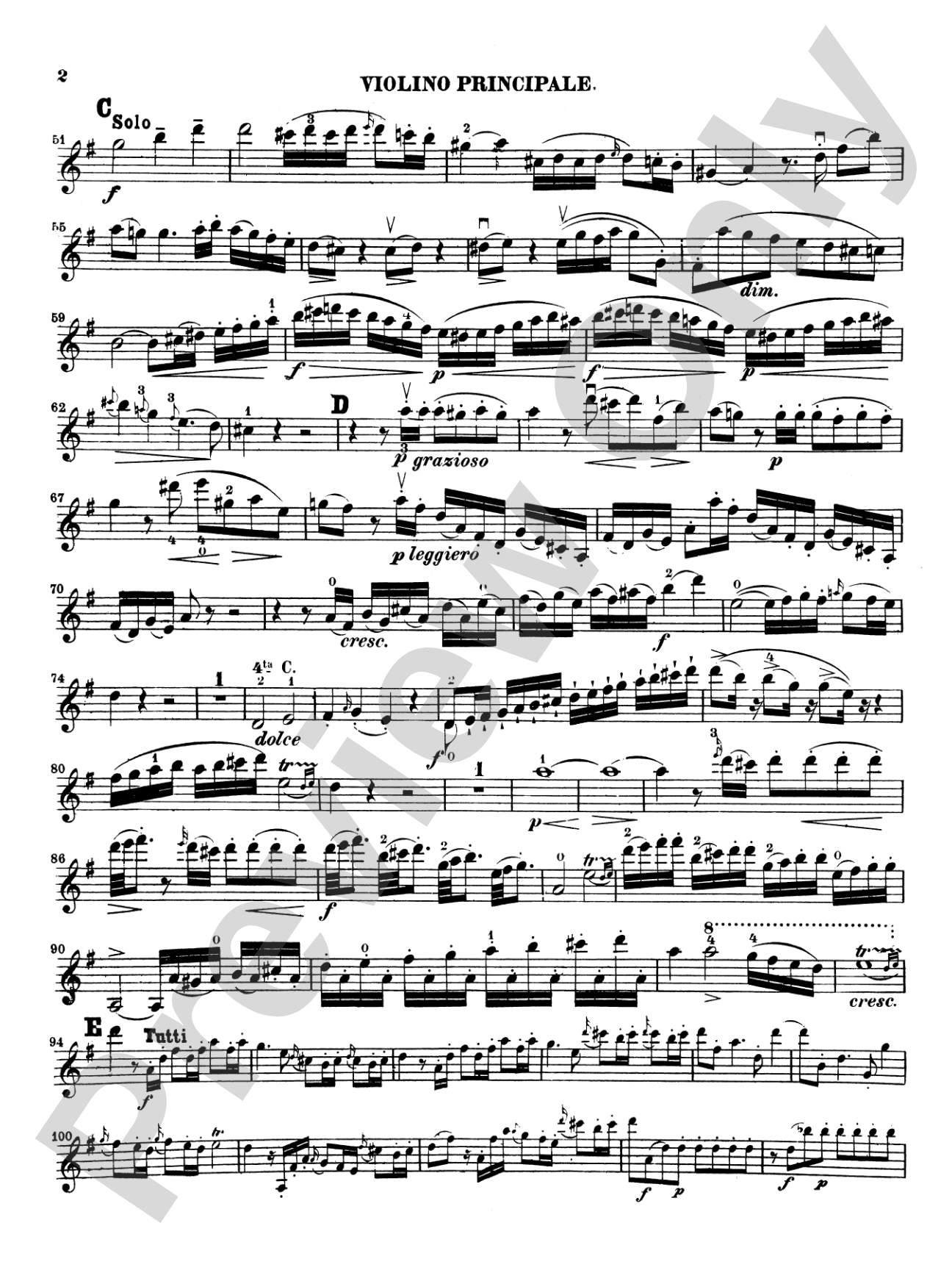
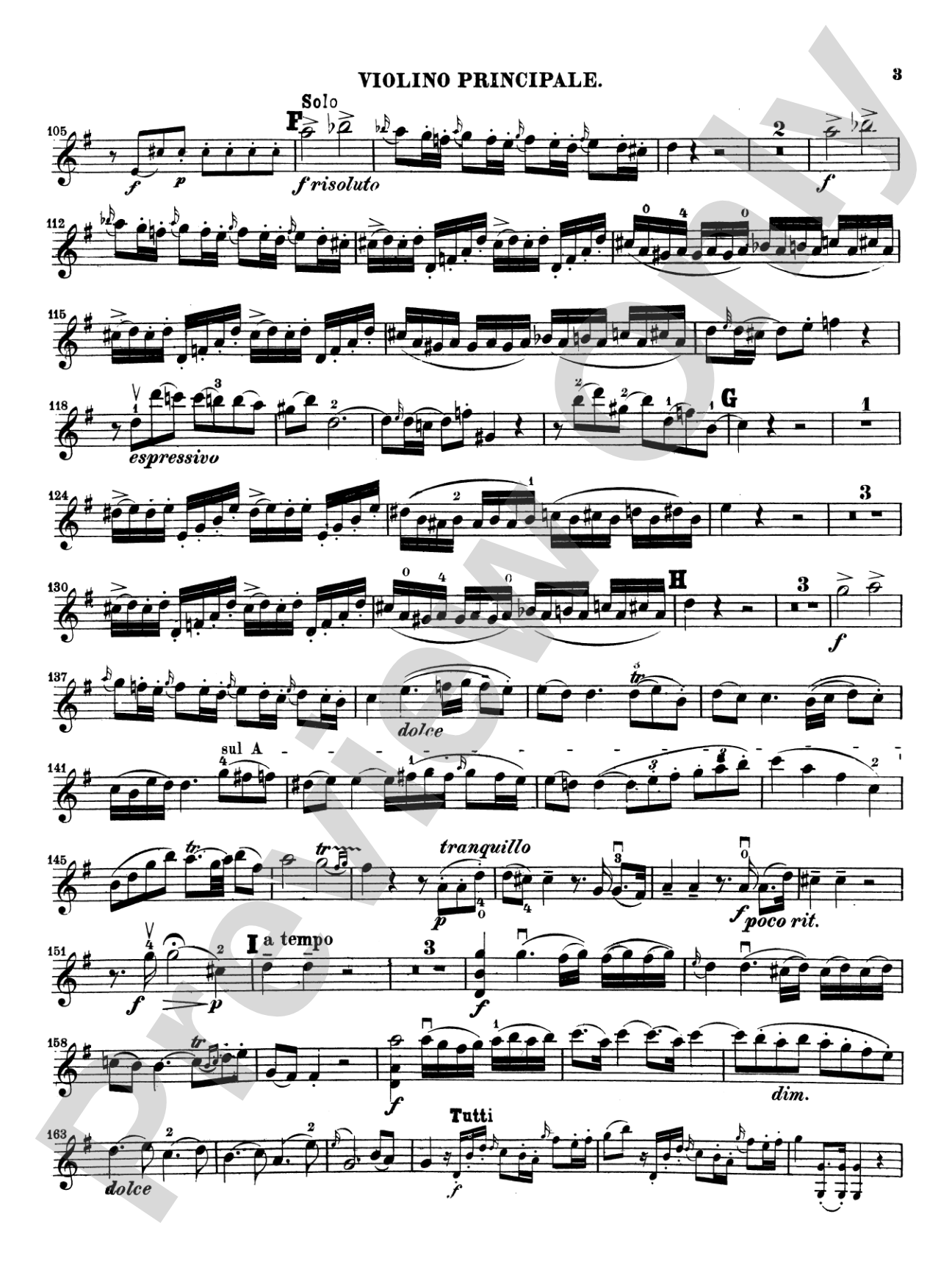
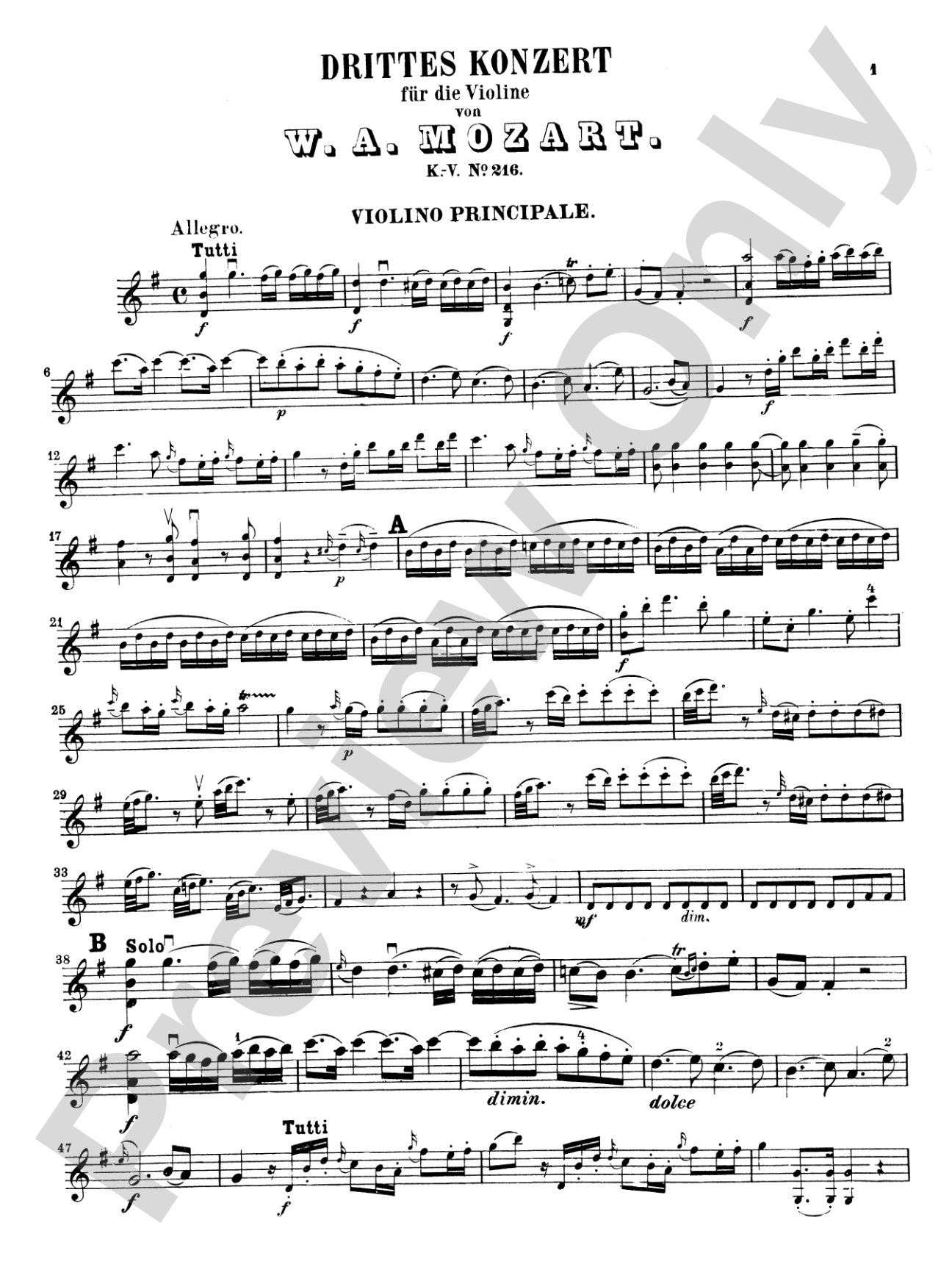
Mozart: Violin Concerto No. 3 in G Major, K.216 Sheet Music Preview

Mozart: Violin Concerto No. 3 in G Major, K.216

By Wolfgang Amadeus Mozart

Item: 00-PC-0008755

Digital Download
$3.99
Description
Expertly arranged violin solo by Wolfgang Amadeus Mozart from the Kalmus Edition Series.

Don't just read it, hear it, play along with it, and watch your students grow with it. In MakeMusic Cloud, Mozart: Violin Concerto No. 3 in G Major, K.216 comes alive with professional accompaniment, adjustable tempo, and built-in practice tools that turn solo practice into real progress.

Sample Audio
No sample audio found.
Sample Video
Additional Details
Series: Kalmus Edition
Publisher: Alfred Music
Page Count: 40
SKU: 00-PC-0008755

More about this title

About the Composer: Wolfgang Amadeus Mozart

Wolfgang Amadeus Mozart (1756-1791) composed five violin concertos during his early career in Salzburg, establishing himself as a master of the form while still in his teens. His violin writing combines brilliant technical display with the elegance and clarity that define the Classical style, balancing virtuosity with lyrical beauty in ways that remain unmatched in the repertoire.

Mozart's concertos reflect his deep understanding of the violin as both a virtuosic and singing instrument. These works have served as cornerstones of violin pedagogy and performance for centuries, offering students and professionals alike a direct path into Classical concerto tradition.

Why we love this

This concerto strikes an ideal balance between technical brilliance and musical substance. The G Major setting allows the violin to shine across its full range, and Mozart's architecture moves through movements that build interpretive depth without overwhelming developing players. Contest judges and festival adjudicators consistently recognize this work as a benchmark for Classical style and secure technique.

What to expect

Mozart's Third Concerto radiates the warmth and clarity of G Major while maintaining the formal sophistication of the Classical concerto. The outer movements combine virtuosic passage work with genuinely singing themes that reward careful phrasing and intonation control. The central Adagio offers intimate beauty, with opportunities to develop the deeper, more expressive side of the Classical language.

Who it's for

Advanced high school violinists preparing for youth competitions and festival performances, college-level students working toward auditions, and adult amateur musicians returning to serious repertoire study. This concerto serves violinists who have solid command of position work, shifting, and Classical style conventions.

How to get the most out of it

  • Shape the first movement's lyrical passages by shaping longer phrase lines rather than breaking them into smaller units. This reveals Mozart's harmonic architecture and gives weight to the melodic material.
  • Pay attention to the double-stop passages in the first and third movements. These require clean intonation and controlled pressure to avoid muddying the ensemble sound.
  • In the Adagio, resist the urge to add vibrato on every note. Mozart's writing benefits from selective vibrato that colors key structural moments rather than obscures the transparent orchestration.
  • Work the cadenza passages rhythmically first, mapping where the technical figuration falls within the harmonic framework before adding interpretive nuance.

How to use it

This concerto works beautifully on competitions and festival showcases where judges expect both technical polish and interpretive maturity. It also pairs naturally with other Classical works on a chamber or solo recital, offering a substantial centerpiece that doesn't require a full orchestral backup (pianist as accompanist). Advanced high school students performing solo literature benefit from the work's technical and musical demands without overstepping into Romantic-era challenges.

Skills your students will build

  • Triple and double-stop intonation and technique
  • Shifting between positions with clarity and control
  • Phrasing and harmonic analysis in Classical style
  • Executing technical figuration (scales, arpeggios, rapid passages) with precision
  • Dynamic shaping and vibrato control as expressive tools rather than defaults
  • Cadenza improvisation and stylistic ornamentation

You May Also Like