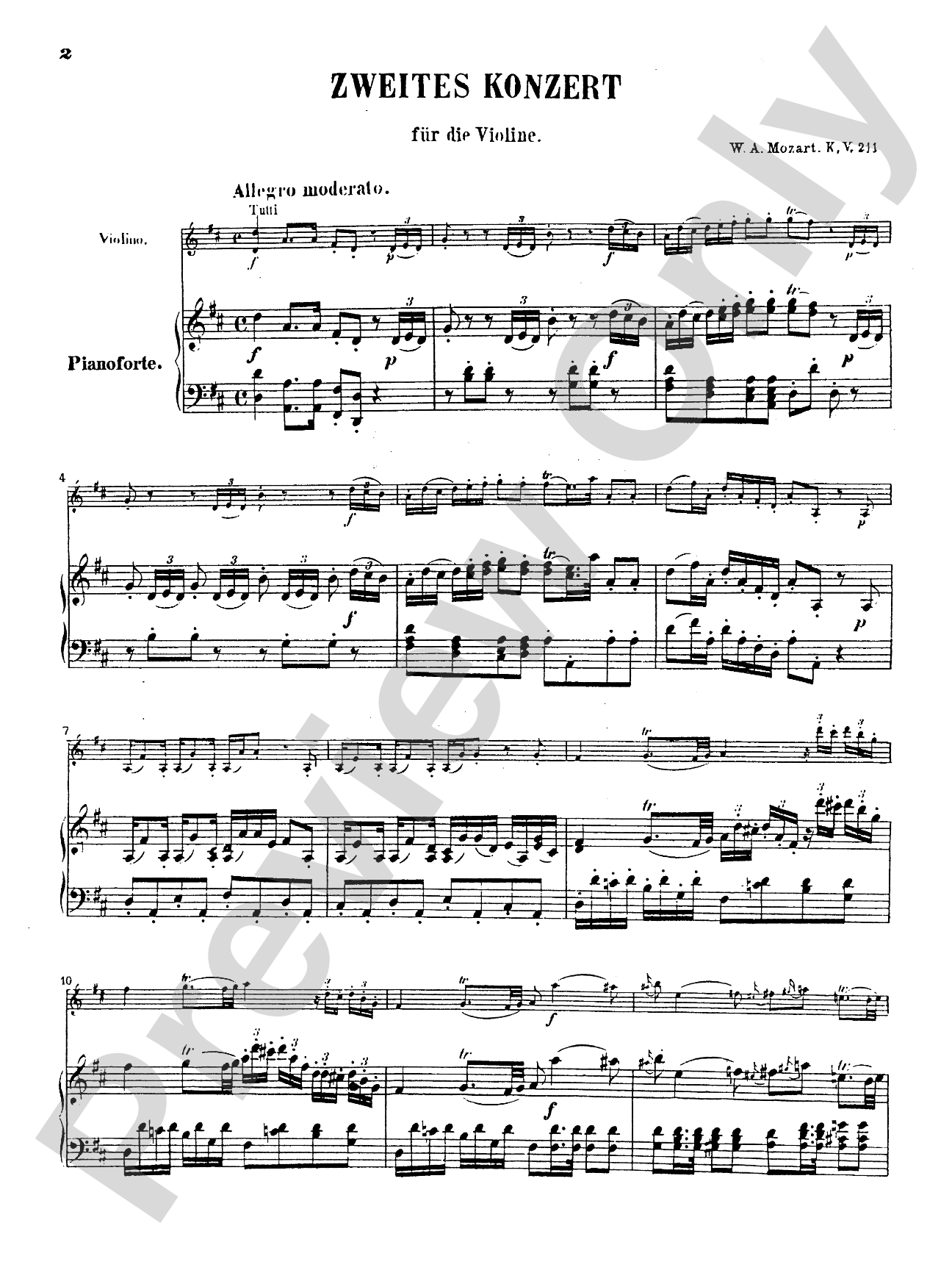
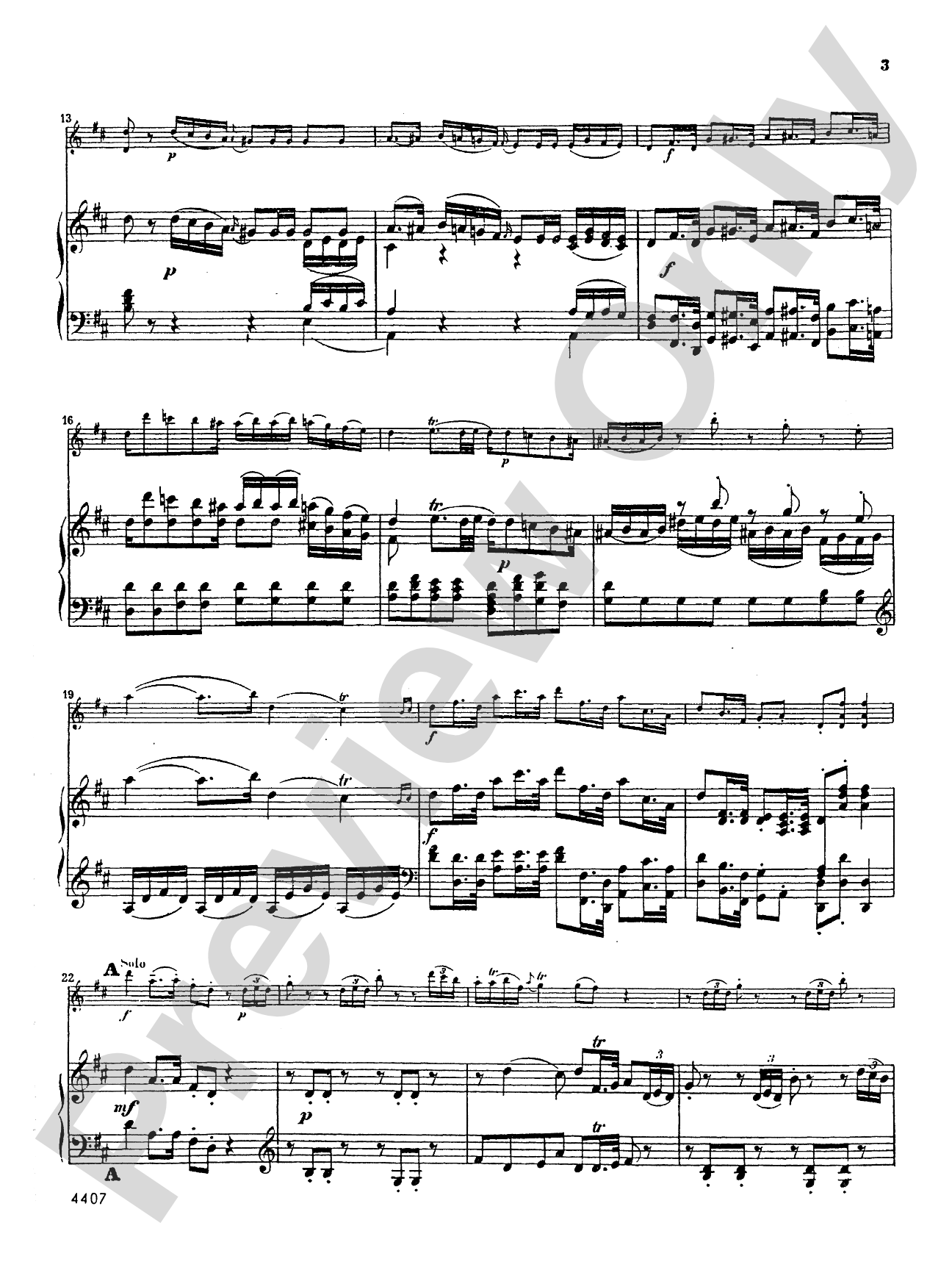
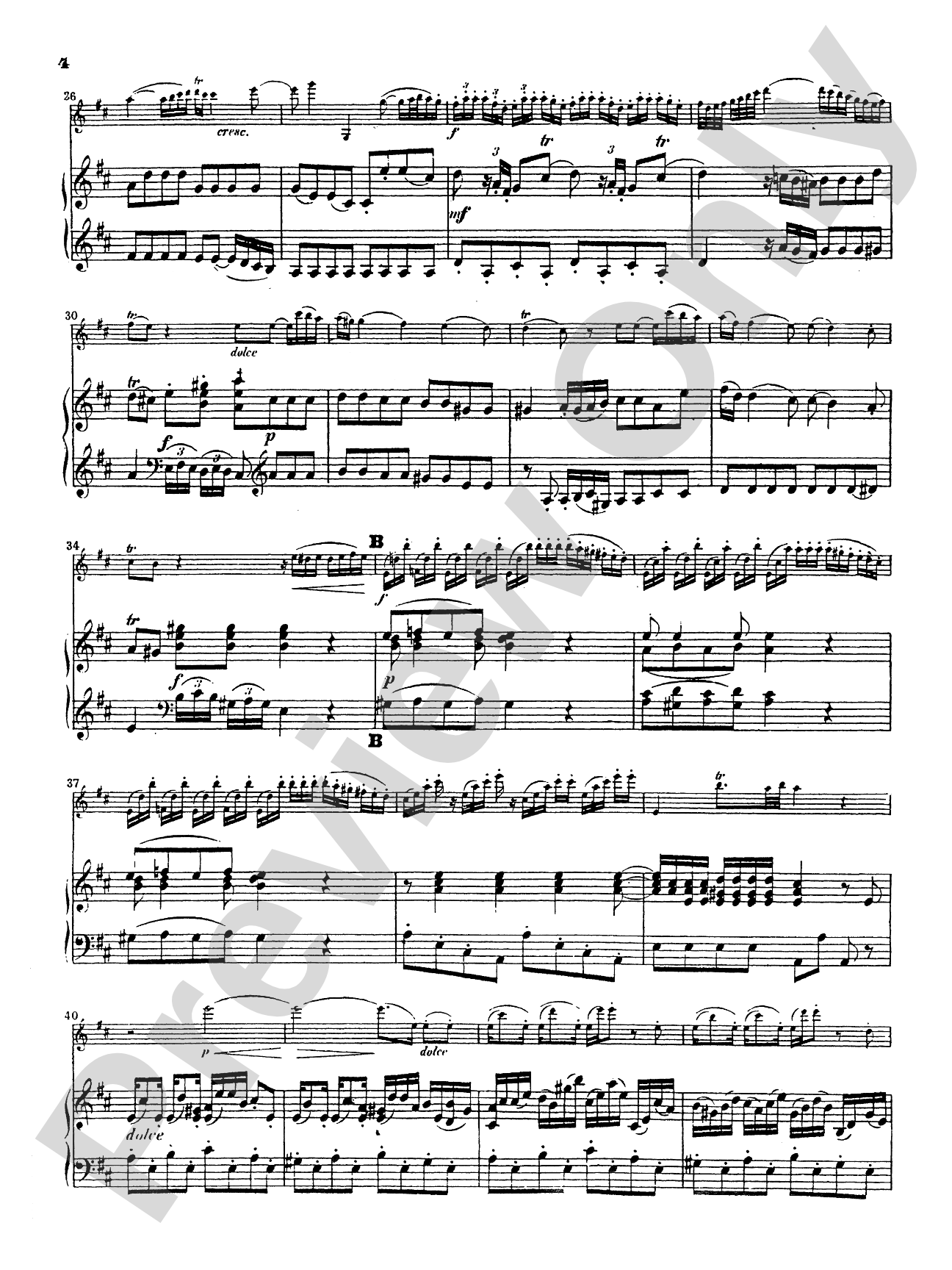
Mozart: Violin Concerto No. 2 in D Major, K. 211 Sheet Music Preview

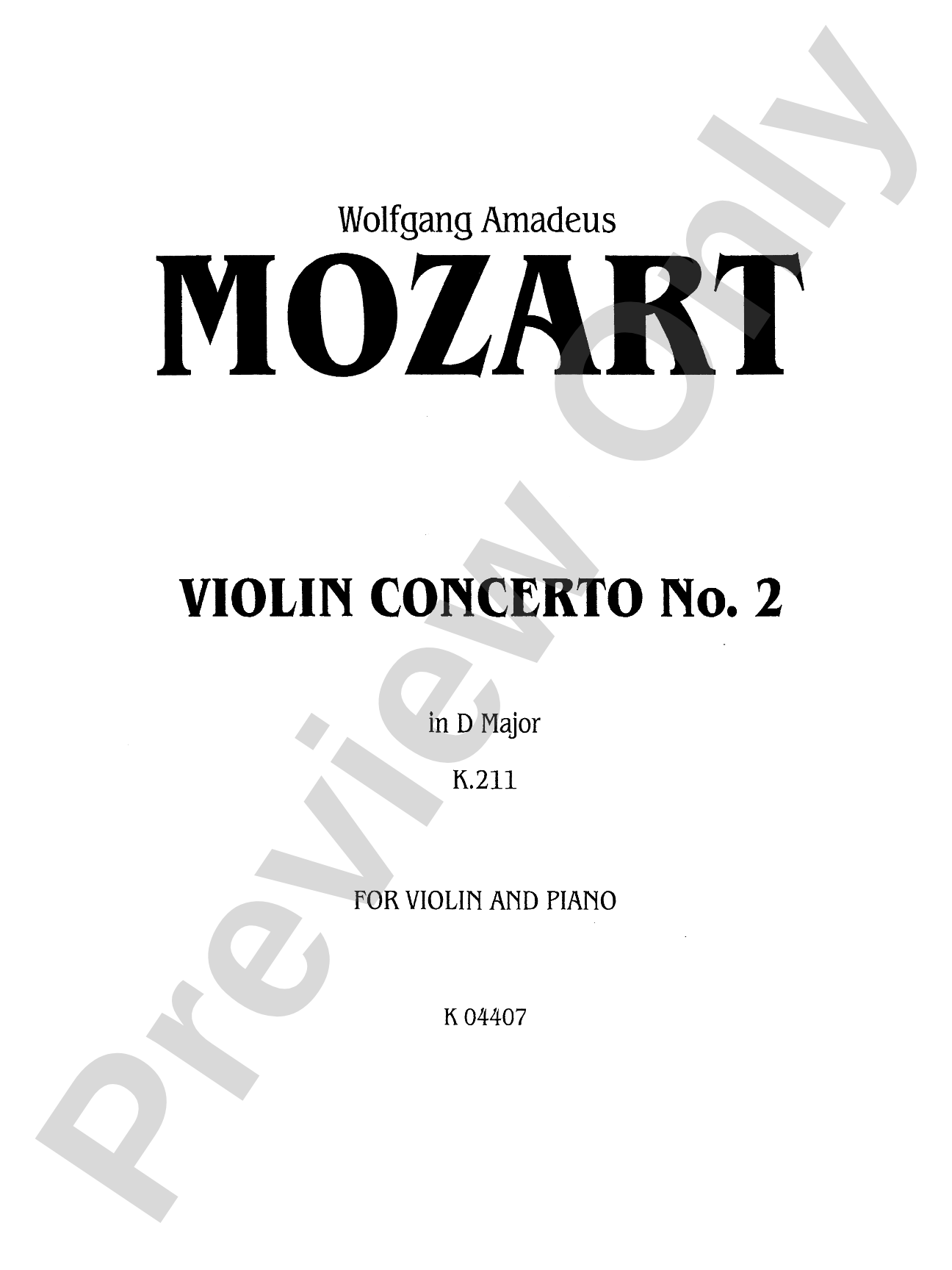
Mozart: Violin Concerto No. 2 in D Major, K. 211

By Wolfgang Amadeus Mozart

Item: 00-PC-0010355

Digital Download
$3.99
Description
A Violin solo with Piano Accompaniment composed by Wolfgang Amadeus Mozart.

Don't just read it, hear it, play along with it, and watch your students grow with it. In MakeMusic Cloud, Mozart: Violin Concerto No. 2 in D Major, K. 211 comes alive with professional accompaniment, adjustable tempo, and built-in practice tools that turn solo practice into real progress.

Sample Audio
No sample audio found.
Sample Video
Additional Details
Series: Kalmus Edition
Publisher: Alfred Music
Page Count: 28
SKU: 00-PC-0010355

More about this title

About the Composer: Wolfgang Amadeus Mozart

Wolfgang Amadeus Mozart (1756-1791) composed over 600 works across every major genre during his short life, establishing himself as one of the most influential figures in Western music. His five violin concertos, written early in his career while he was still in his teens, remain central to the violin repertoire and showcase his gift for lyrical melody combined with sophisticated harmonic language. Mozart's approach to the violin concerto balanced virtuosic display with genuine musical substance, creating works that reward both performer and listener.

For music educators, Mozart's violin concertos represent an essential bridge between the Baroque and Romantic eras. They demand technical facility while emphasizing singing tone and musical intelligence, making them ideal vehicles for developing violinists to cultivate artistry alongside technique. His transparent orchestration and clear formal structure provide students with models of classical composition that remain relevant to modern pedagogy.

Why we love this

The D Major Concerto combines everything that makes Mozart essential for advancing violinists: brilliant passagework in the first movement, a singing cantabile slow movement that builds expressive maturity, and a spirited rondo finale that demands rhythmic clarity and articulation. This piece has the pedagogical muscle of a major competition work while remaining deeply musical rather than merely showy, and it fits naturally into programs alongside both baroque and early romantic repertoire.

What to expect

The Concerto opens with elegant, aristocratic phrasing that invites you into Mozart's world of graceful melody and witty orchestral dialogue. The Adagio draws you inward with its lyrical beauty, demanding the kind of focused singing tone that reveals a violinist's musicality. The finale bubbles with playful energy and light, buoyant rhythms that make the virtuosity feel effortless and joyful.

Who it's for

This concerto serves violinists at the advanced high school and early college levels who have solid intonation, secure shifting, and command of single and double stops. Performers preparing for youth orchestra auditions, chamber music festivals, and violin competitions will find this work both immediately rewarding and substantive enough to sustain serious preparation.

How to get the most out of it

  • Shape the opening theme with thoughtful phrasing rather than rushing the sixteenth-note figures; Mozart's lines sing best when you allow space for breath between musical ideas
  • Listen carefully to the piano accompaniment during rehearsals to understand harmonic context and support your intonation in chromatic passages
  • In the Adagio, establish a consistent vibrato speed early and maintain it across the entire movement to create warmth without wavering the pitch
  • Prepare the rapid scalar passages in the finale by practicing them at a slower tempo with clear articulation before bringing them to performance speed

How to use it

Feature this concerto as a solo showcase in a concert celebrating the classical period, or pair it with a baroque solo work and a romantic piece to demonstrate the evolution of violin style. For a full orchestra concert, it works beautifully alongside Mozart symphonies, or it can anchor a chamber-orchestra concert that includes his serenades and divertimenti.

Skills your students will build

  • Intonation in fast scalar passages and chromatic runs
  • Vibrato control and sustained tone in the slow movement
  • Rhythmic precision and articulation in rapid figurations
  • Shifting between multiple positions within a musical phrase
  • Musical phrasing and style appropriate to the classical period
  • Collaboration with a piano accompanist in a concerto format

You May Also Like