Mozart Variations: 2nd Violin Sheet Music Preview

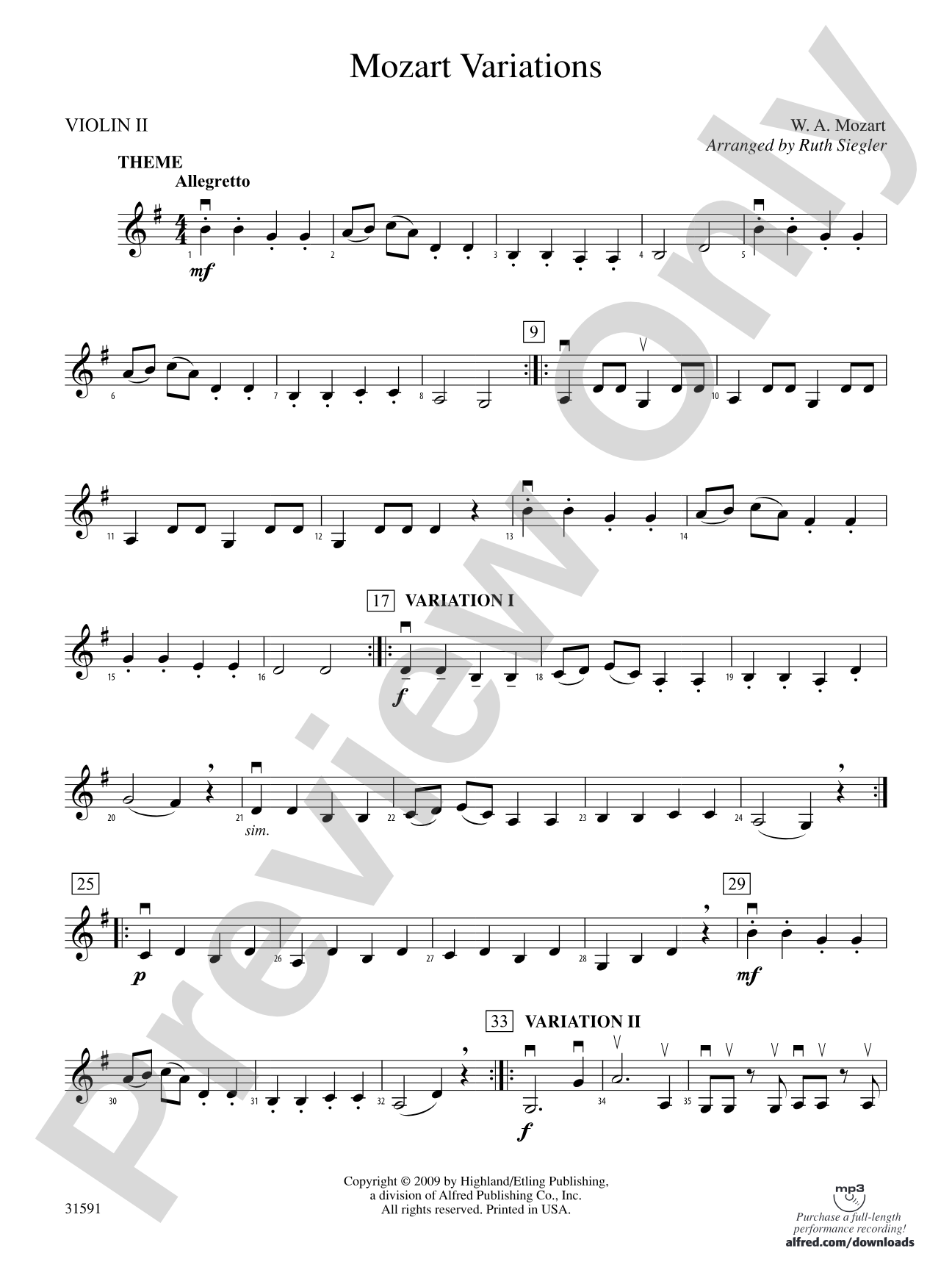
Mozart Variations: 2nd Violin

By Wolfgang Amadeus Mozart / arr. Ruth Siegler

Grade: 2

Item: 00-PC-0001758_VN2

Digital Download
$5.99
Description
Young string players will be captivated by the sophisticated but innocent quality of this music. Written by history's most famous child superstar, this charming piece is an arrangement from the Clarinet Quintet in A major, K. 581. Theme and variations including a G minor section, a slow section in which to develop vibrato, and a rollicking finale provide a multitude of teaching opportunities. This title is available in MakeMusic Cloud.

Don't just read it, hear it, play along with it, and watch your students grow with it. In MakeMusic Cloud, Mozart Variations: 2nd Violin comes alive with professional accompaniment, adjustable tempo, and built-in practice tools that turn solo practice into real progress.

Sample Audio
0:00
0:00
Sample Video
Additional Details
Series: Highland/Etling String Orchestra
Publisher: Alfred Music
Page Count: 122
SKU: 00-PC-0001758_VN2

More about this title

About the Composer: Wolfgang Amadeus Mozart

Wolfgang Amadeus Mozart (1756-1791) began composing and performing publicly before age five, eventually traveling across Europe as a prodigy violinist and keyboard player. He mastered every musical form of his era and produced over 600 works across his short lifetime, establishing conventions that would define Classical music for generations. His gift for melody and structural clarity makes his music enduringly accessible to student musicians while remaining inexhaustibly rich for advanced study.

Why we love this

Ruth Siegler has adapted one of Mozart's most graceful chamber works into an arrangement that honors the original's elegance while remaining entirely within reach for young string players. The theme and variations format naturally builds ensemble musicianship as each section adds new technical and interpretive demands, and the G minor episode provides welcome textural contrast without overwhelming a Grade 2 orchestra.

What to expect

This music radiates the charm and sophistication that made Mozart a household name even as a child. The opening theme floats with effortless grace, the variations unfold with logical clarity, and the G minor section introduces a touch of introspection before the finale celebrates with infectious delight.

Who it's for

Young string orchestras at the intermediate level will find this arrangement both musically satisfying and technically achievable. Conductors seeking repertoire that combines famous masterwork material with genuine teaching moments will appreciate how the variation structure naturally invites discussion about form, orchestration, and musical expression.

How to get the most out of it

  • Shape the main theme with gentle dynamic contours in the opening statement; young players often play straight through without phrase direction, so mark your score with clear crescendos and diminuendos.
  • Use the slow section as an opportunity to develop focused vibrato work. Ask players to sustain longer notes with consistent, controlled oscillation rather than rushing into the next section.
  • Balance the first violin line against the supporting voices in each variation. This piece rewards careful attention to voice independence, which strengthens ensemble listening overall.
  • Keep the finale energetic but controlled; the rollicking character can encourage players to rush, so establish a rock-solid tempo with the first violins and cellos from the downbeat.

How to use it

Program this as a concert opener or mid-program piece when you want to showcase your ensemble's musicality without taxing their stamina. The variations structure makes it an excellent teaching demonstration for young audiences learning about musical form, and it pairs naturally with other Classical-era masterwork arrangements at similar difficulty levels.

Skills your students will build

  • Identifying and executing theme and variation form
  • Playing in minor keys (G minor section)
  • Sustaining longer note values with vibrato control
  • Balancing primary and secondary melodic lines within an ensemble
  • Maintaining ensemble tempo during rhythmically active passages
  • Interpreting dynamic and expressive markings in a Classical style context

You May Also Like