Mozart: Twelve Little Pieces from the Notebook of Wolfgang Mozart Sheet Music Preview

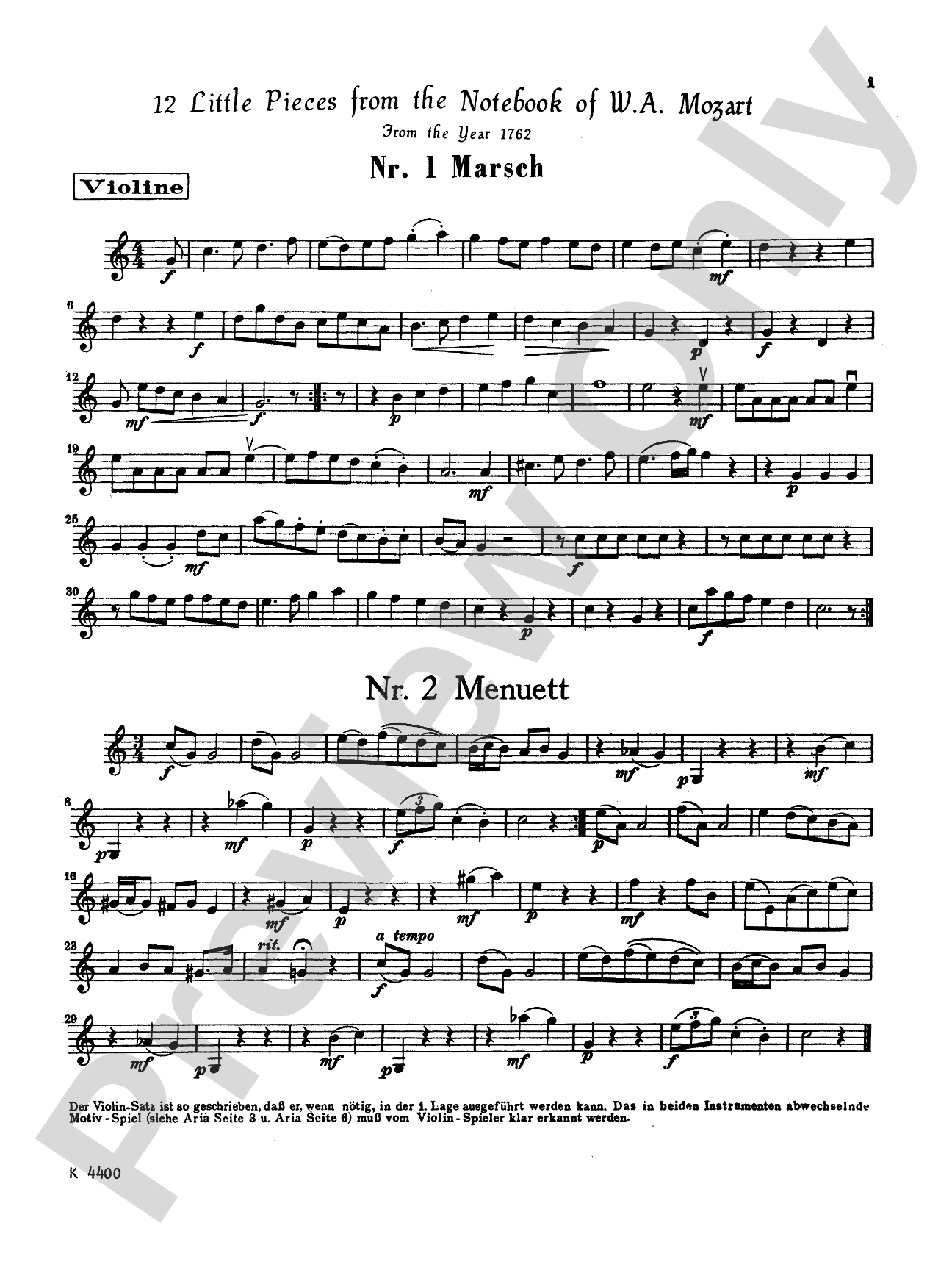
Mozart: Twelve Little Pieces from the Notebook of Wolfgang Mozart

By Leopold Mozart

Item: 00-PC-0010301

Digital Download
$0.99
Description
A Violin solo with Piano Accompaniment composed by Leopold Mozart.

Don't just read it, hear it, play along with it, and watch your students grow with it. In MakeMusic Cloud, Mozart: Twelve Little Pieces from the Notebook of Wolfgang Mozart comes alive with professional accompaniment, adjustable tempo, and built-in practice tools that turn solo practice into real progress.

Sample Audio
No sample audio found.
Sample Video
Additional Details
Series: Kalmus Edition
Publisher: Alfred Music
Page Count: 24
SKU: 00-PC-0010301

More about this title

About the Composer: Leopold Mozart

Leopold Mozart (1719-1787) was a respected violinist, composer, and pedagogue in Salzburg who shaped the musical foundation of his son Wolfgang. Beyond his role in Wolfgang's early training, Leopold established himself as a significant composer of instrumental works, publishing a violin method that became influential across Europe. His own compositions reveal a craftsman's attention to clarity, melodic grace, and technical instruction woven seamlessly together.

These twelve pieces from Wolfgang's notebook reflect Leopold's pedagogical philosophy: music that serves both the developing musician and the engaged listener. They bridge the gap between study material and genuine artistic expression, a distinction Leopold understood deeply as both a father and a working composer.

Why we love this

Leopold's little pieces offer something genuinely difficult to find at this level: short works that are musically complete and genuinely engaging for both player and audience, rather than feeling like exercises in disguise. These pieces appear in Wolfgang's early notebook for good reason—they capture the Classical style at its most approachable without sacrificing musical substance or the discipline required to play them well.

What to expect

These pieces radiate the clarity and elegance of the Classical era, with melodies that sit naturally under the fingers and sit naturally in the ear. They feel like little conversations between violin and piano rather than showcases, and they carry a genuine warmth that suggests they were written by someone who understood both young musicians and genuine music.

Who it's for

Young violinists (roughly grades 2-4) working toward solid technical foundations and musical independence, as well as intermediate students seeking short recital pieces that sound more sophisticated than their technical demands might suggest. Teachers looking for repertoire that develops musicality without requiring virtuosic facility will find these pieces invaluable.

How to get the most out of it

  • Approach the articulation with clarity and purpose. Leopold's style benefits from distinct note separation that lets the melodic line breathe, particularly in the faster passages.
  • Balance the violin line against the piano accompaniment by listening carefully during rehearsal. These pieces work best when the piano supports without overwhelming.
  • Pay attention to phrase shaping even in brief pieces. Find the natural arc of each phrase and shape toward the musical goal rather than playing mechanically from note to note.
  • Work on consistent bow control in the slower movements. The simplicity of the material makes any unevenness in tone or pressure immediately apparent.

How to use it

Ideal for student recitals where you want pieces that satisfy without demanding excessive preparation time. Consider pairing them with other Classical repertoire for a short program, or use them as encores that end a recital on a graceful, unpretentious note.

Skills your students will build

  • Sustained melodic phrasing in Classical style
  • Balance between articulation and legato within a single line
  • Stylistically appropriate ornamentation and embellishment
  • Listening skills for maintaining ensemble balance with accompaniment
  • Interpretation of simple dynamic and tempo markings

You May Also Like