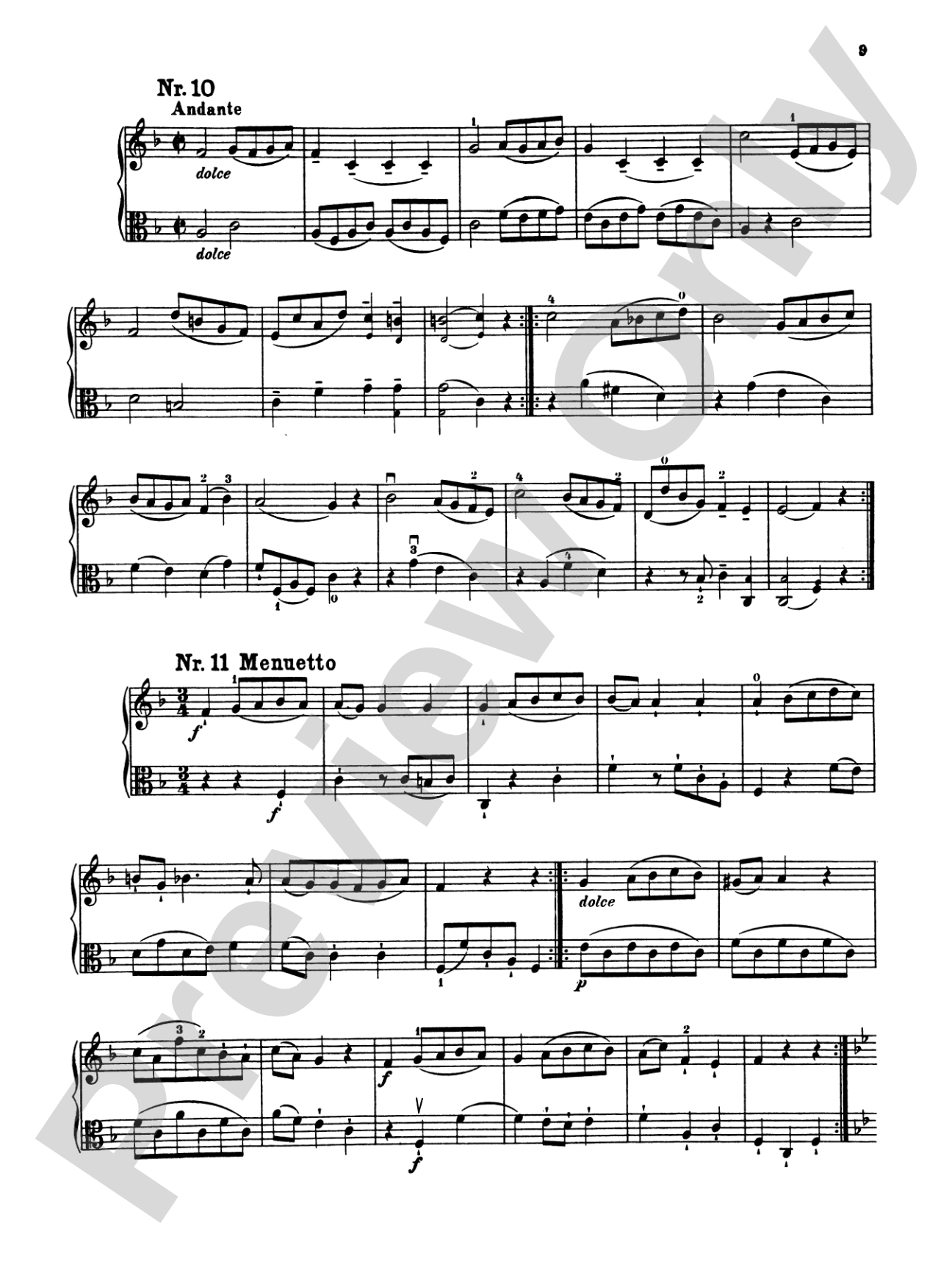
Mozart: Twelve Duets, K. 487 (Arranged) Sheet Music Preview

Mozart: Twelve Duets, K. 487 (Arranged)

By Wolfgang Amadeus Mozart

Item: 00-PC-0010915

Digital Download
$0.99
Description
A String Duet for Violin and Viola, composed by Wolfgang Amadeus Mozart.

Don't just read it, hear it, play along with it, and watch your students grow with it. In MakeMusic Cloud, Mozart: Twelve Duets, K. 487 (Arranged) comes alive with professional accompaniment, adjustable tempo, and built-in practice tools that turn solo practice into real progress.

Sample Audio
No sample audio found.
Sample Video
Additional Details
Series: Kalmus Edition
Publisher: Alfred Music
Page Count: 12
SKU: 00-PC-0010915

More about this title

About the Composer: Wolfgang Amadeus Mozart

Wolfgang Amadeus Mozart (1756-1791) composed with a facility that seemed almost supernatural to his contemporaries. Born in Salzburg and trained by his father Leopold, Mozart mastered every genre of his era before reaching adulthood, writing operas, symphonies, concertos, and chamber works of enduring brilliance. His ability to blend structural sophistication with immediate melodic appeal remains unsurpassed in the Classical tradition.

Mozart's chamber music represents some of the most rewarding repertoire for ensemble musicians at every level. His duets, trios, and larger chamber works balance technical challenge with genuine lyricism, making them ideals for teaching students how clarity of voice and musical conversation between players create compelling performances.

Why we love this

These twelve duets showcase Mozart's genius for writing idiomatically for strings while keeping the musical material singable and direct. The violin and viola pairing creates a warm, transparent texture that highlights the independence of each part without requiring virtuosic display, making them ideal for chamber music festivals and student competitions. The collection gives violists the rare gift of genuinely equal partnership with a violin partner in substantial, beautiful works.

What to expect

Mozart's duets balance Classical elegance with genuine warmth. The writing feels conversational, with phrases that dance and intertwine rather than dominate; the melodic lines are immediate and memorable, yet the harmonies surprise with their sophistication. There is playfulness here alongside moments of real tenderness, the hallmark of Mozart's ability to write music that sounds effortless yet reveals new details with each reading.

Who it's for

Intermediate to advanced high school string students and adult amateurs seeking accessible yet substantial chamber literature. Violists gain rare opportunities to perform as equal partners in Classical masterworks, while violinists refine their ability to listen and adapt within an ensemble context. These duets suit students preparing for chamber music festivals, competitions, or simply seeking rewarding music to explore beyond the standard method book repertoire.

How to get the most out of it

  • Establish a clear hierarchical listening relationship before rehearsal begins. Decide which part leads in each section and commit to that choice so the musical line emerges with intention rather than accident.
  • Balance the viola's natural tendency to sit back in the texture by encouraging the violist to voice each phrase as if performing a solo, not accompanying. Mozart wrote both parts as conversation partners.
  • Pay attention to Mozart's slurring and articulation marks as structural signposts. Each marking defines the character of a phrase; honor them precisely rather than imposing your own shaping.
  • Attend to intonation with particular care in the slower movements. The proximity of the two voices means tuning inconsistencies are audible immediately; use sustained notes as tuning anchors.

How to use it

Feature a single duet as an intermission piece or opening number to showcase your emerging chamber musicians in a focused, intimate context. Alternatively, program several duets across a season as part of a recital exploring Classical string literature, or use them as sight-reading warmups in sectional rehearsals where the transparency of texture teaches ensemble listening in immediate, musical terms.

Skills your students will build

  • Balanced listening and responding to another player's phrasing in real time
  • Shaping phrases as an ensemble unit while maintaining individual voice clarity
  • Understanding Classical phrase structure and harmonic movement through participation
  • Intonation accuracy in sustained intervals and harmonic contexts
  • Viola part independence and equal partnership in chamber music settings

You May Also Like