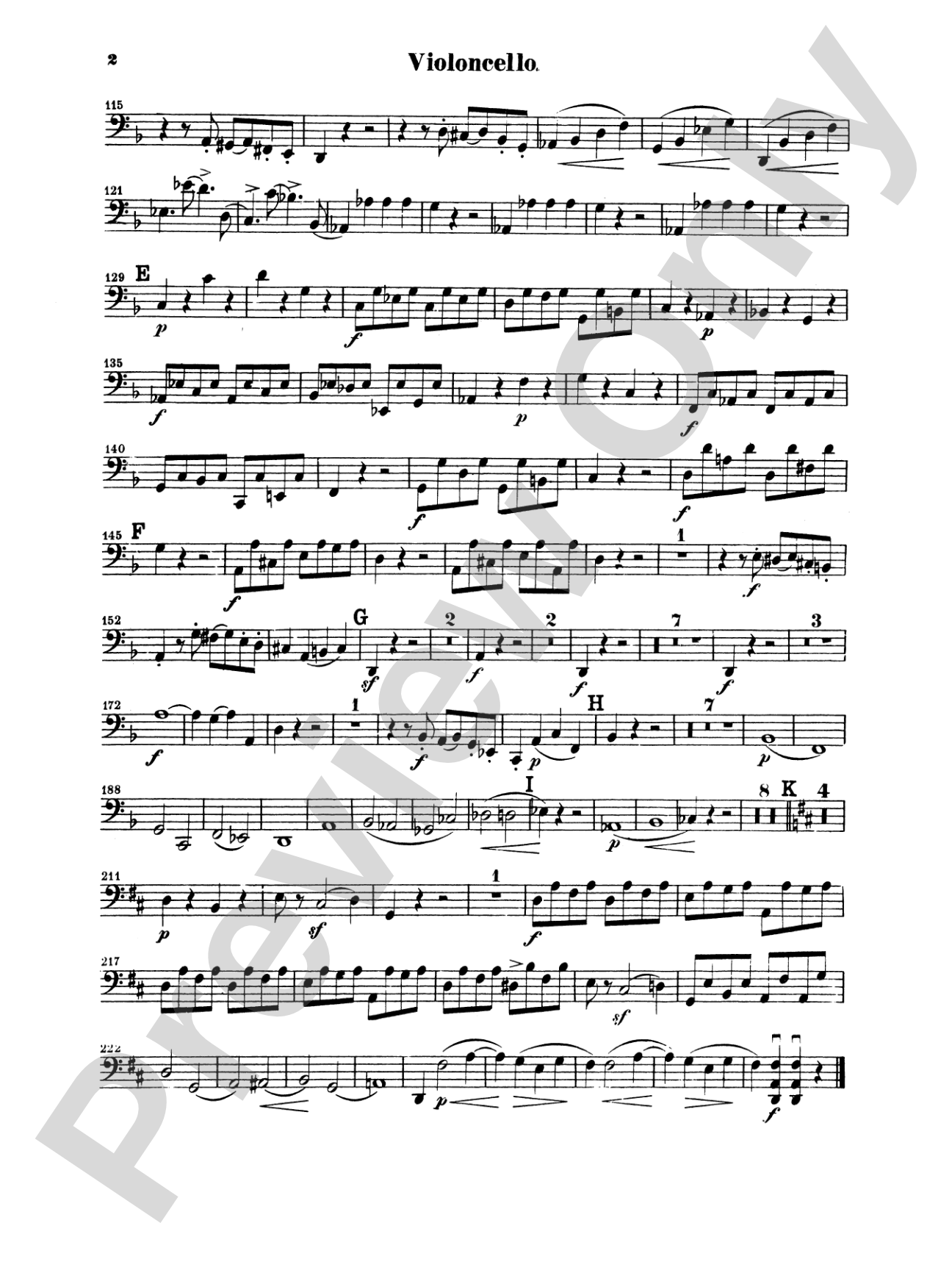
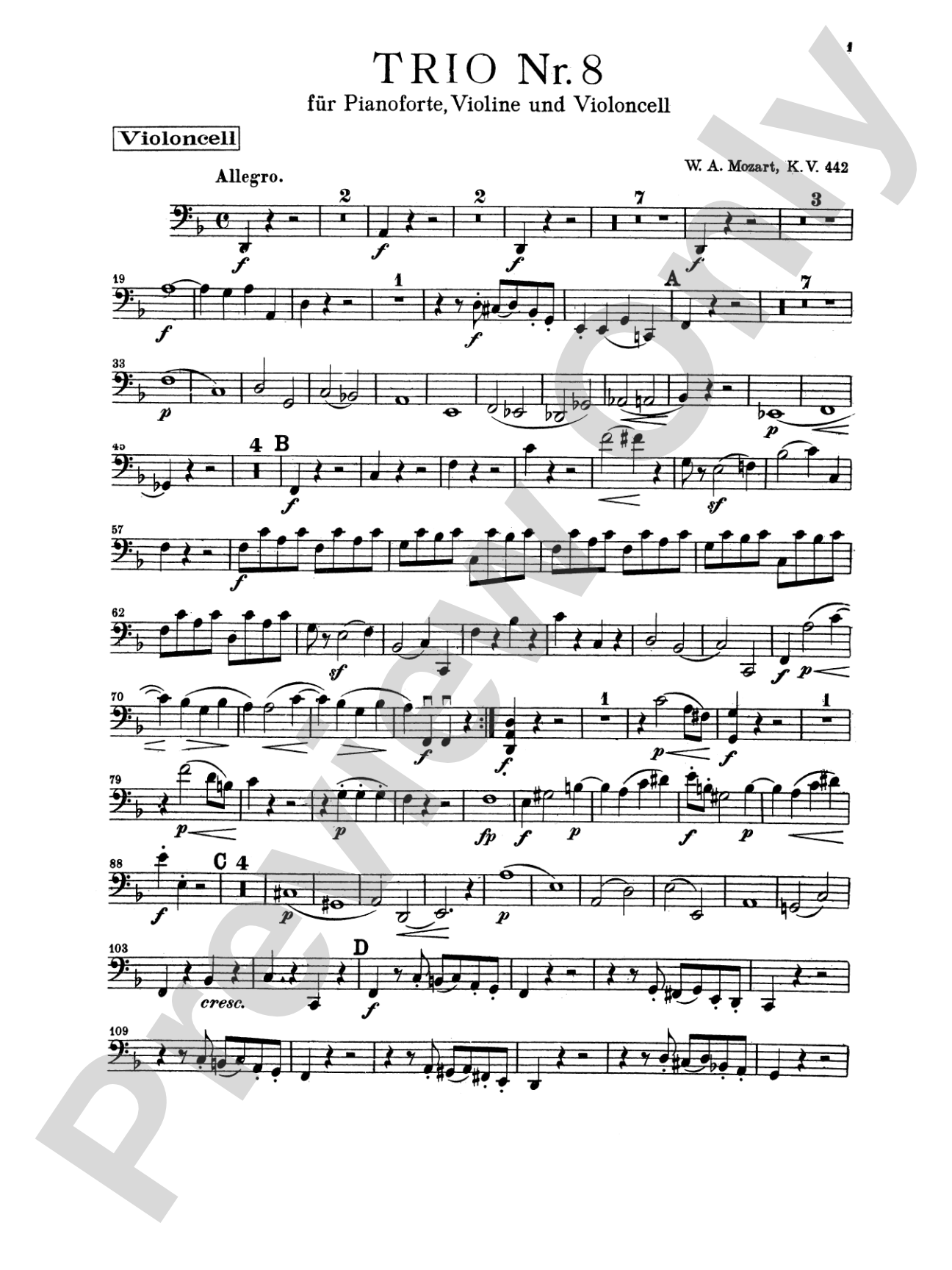
Mozart: Trio No. 8 in D Minor, K. 442 Sheet Music Preview

Mozart: Trio No. 8 in D Minor, K. 442

By Wolfgang Amadeus Mozart

Item: 00-PC-0012947

Digital Download
$3.99
Description
Composed by Wolfgang Amadeus Mozart, this trio is written for Violin, Cello, and Piano.

Don't just read it, hear it, play along with it, and watch your students grow with it. In MakeMusic Cloud, Mozart: Trio No. 8 in D Minor, K. 442 comes alive with professional accompaniment, adjustable tempo, and built-in practice tools that turn solo practice into real progress.

Sample Audio
No sample audio found.
Sample Video
Additional Details
Series: Kalmus Edition
Publisher: Alfred Music
Page Count: 52
SKU: 00-PC-0012947
Instrumentation: Piano, Violin & Cello

More about this title

About the Composer: Wolfgang Amadeus Mozart

Wolfgang Amadeus Mozart (1756-1791) transformed chamber music into a vehicle for both technical brilliance and emotional depth. His prolific output across all genres established conventions that composers still follow today, and his understanding of instrumental color and dialogue made him a master of the trio form.

Mozart's chamber works reveal a composer equally comfortable writing for intimate gatherings and large audiences. He treated each instrument as a conversational partner rather than a supporting voice, a principle that demands serious musicianship from every player in the ensemble.

Why we love this

This D Minor trio showcases Mozart's gift for writing demanding yet singable lines that feel inevitable once you know them. The emotional weight of the key signature combined with the Classical forms creates a work that contests and festivals respect deeply, while the piano part prevents the piece from sounding like a mere duet with accompaniment.

What to expect

The D Minor tonality gives this work a searching quality that never tips into despair; instead, Mozart balances introspection with Classical clarity. The interplay between strings and keyboard creates moments of intimate conversation punctuated by passages where all three voices move together in unified purpose.

Who it's for

This trio suits advanced high school ensembles and college chamber groups preparing for competitions or formal recitals. Players need solid intonation, secure rhythm reading, and the ability to listen across three independent lines simultaneously.

How to get the most out of it

  • Balance the melodic initiatives between violin and cello carefully; neither should dominate, and the piano's role in shaping phrase direction matters as much as its harmonic support.
  • Pay attention to Mozart's slur markings and articulation patterns; they define the character of each section and reveal how voices should relate to one another.
  • Rehearse the development section as a dialogue puzzle rather than as background music, since Mozart fragments themes across all three parts to maintain forward momentum.
  • Use the Kalmus edition's clear voicing to identify where your part carries the primary material versus when you're providing context; this distinction changes frequently and requires constant attention.

How to use it

Program this as the centerpiece of a chamber recital featuring Classical trios, or pair it with a lighter Mozart work to frame a concert that explores different moods within the era. The 52-page score makes it substantial enough to anchor a chamber competition program or festival submission.

Skills your students will build

  • Balancing three independent melodic lines in a Classical texture
  • Responding to harmonic direction set by the piano
  • Executing Mozart's articulation and phrasing conventions
  • Sustaining intonation across extended developmental passages
  • Ensemble communication without a conductor

You May Also Like