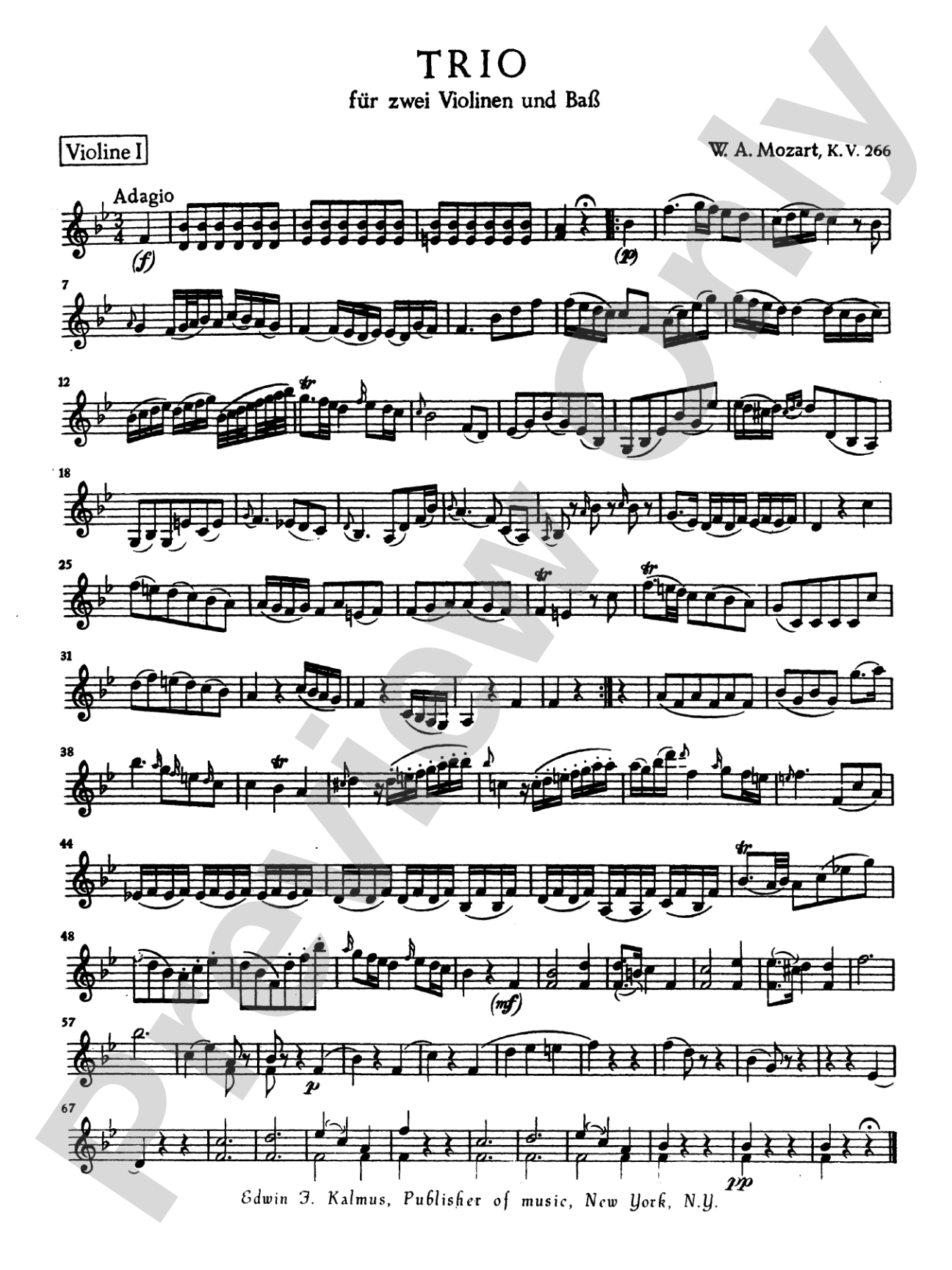
Mozart: Trio, K. 266 Sheet Music Preview

Mozart: Trio, K. 266

By Wolfgang Amadeus Mozart

Item: 00-PC-0011056

Digital Download
$1.99
Description
For two violins and bass

Mozart: Trio, K. 266 isn't in MakeMusic Cloud just yet...but it could be. Let us know you'd like to see it, and you'll help shape what comes next. In the meantime, start a free trial and dive into thousands of interactive titles your students can play along with today.

Sample Audio
No sample audio found.
Sample Video
Additional Details
Series: Kalmus Edition
Publisher: Alfred Music
Page Count: 12
SKU: 00-PC-0011056

More about this title

About the Composer: Wolfgang Amadeus Mozart

Wolfgang Amadeus Mozart (1756-1791) was an Austrian composer whose prolific output spanned every major genre of his time. A child prodigy who performed across Europe before his teens, Mozart combined technical brilliance with emotional depth, leaving a legacy that fundamentally shaped Western classical music. His chamber works reveal a mastery of counterpoint and harmonic innovation that continues to challenge and inspire performers.

Why we love this

K. 266 demonstrates why Mozart's chamber writing remains the gold standard for string trio repertoire. The part writing balances the two violins with genuine dialogue rather than relegating the bass to accompaniment, creating an engaging score that rewards close listening and careful ensemble work.

What to expect

K. 266 combines the elegance and formal precision of the Classical period with genuine warmth in its melodic material. The writing feels conversational between the instruments, with moments of lyrical beauty balanced against energetic passagework that keeps performers engaged throughout its twelve pages.

Who it's for

Advanced student trios preparing for contest or festival performance will find an authentic Classical masterwork that sits comfortably within competition expectations. This trio also serves experienced chamber ensembles seeking repertoire that demands genuine musical partnership without the scale of larger works.

How to get the most out of it

  • Establish clarity between the two violin lines from rehearsal one; they are often in counterpoint, and even slight imbalance will obscure Mozart's carefully constructed texture.
  • Shape each phrase with appropriate breathing points, even on an instrument without lungs; this articulation will clarify the harmonic progression and maintain forward momentum.
  • Balance the bass line so it functions as a full harmonic partner rather than background support; Mozart writes in the bass register with intention, not filler.

How to use it

Program this as a standalone work on a recital or competition concert where you want to represent the Classical chamber tradition with authentic, high-quality material. It pairs naturally on festival programs alongside other Mozart chamber works or as a contrasting piece to larger Romantic trio repertoire.

Skills your students will build

  • Reading and executing balanced counterpoint between two melodic voices
  • Maintaining ensemble intonation through harmonic voice leading
  • Balancing a bass line as an equal partner in three-part texture
  • Executing Classical-era articulation and phrasing conventions
  • Navigating the formal structures typical of Classical trio writing

You May Also Like